
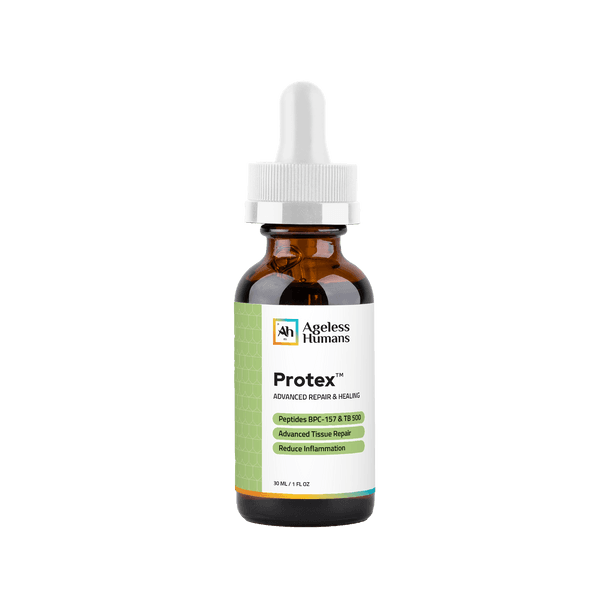
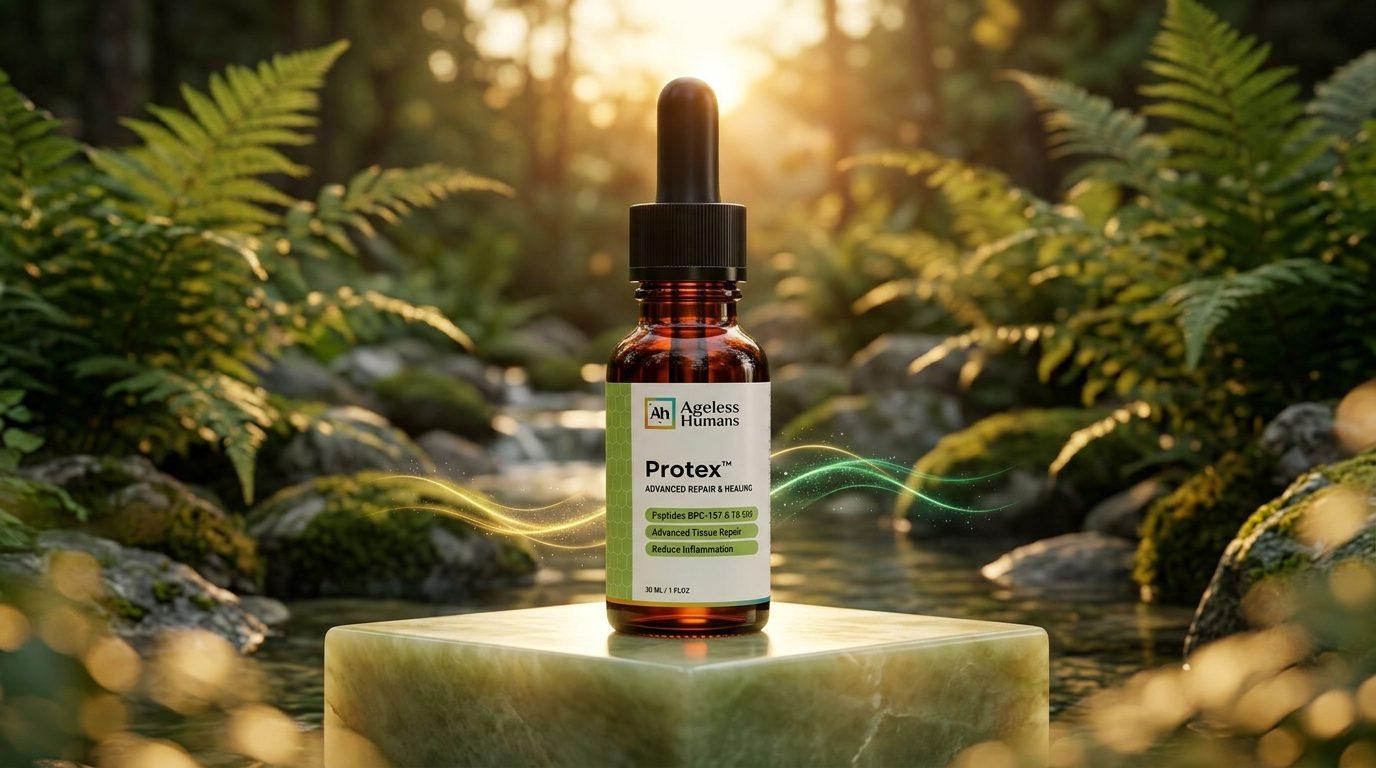
Protex™ Advanced Tissue Recovery & Repair
★★★★ 4 (16)BPC-157 + TB-500 oral sublingual — recovery support without needles
$89.99$71.99 subscribed
FDA-registered facility · Carlsbad, CA · Third-party lab testedUpdated 2026-11-14 · Reviewed by the Ageless Humans editorial team · Third-party tested products
Retatrutide is an investigational injectable peptide drug developed by Eli Lilly that acts on three hormone receptors involved in appetite and metabolism: GLP-1, GIP, and glucagon. It is being studied in clinical trials, is not an approved medication or a dietary supplement, and is not a skin-care peptide. Ageless Humans does not sell retatrutide. This page explains what it is so you can make informed decisions.
BPC-157 + TB-500 oral sublingual — recovery support without needles
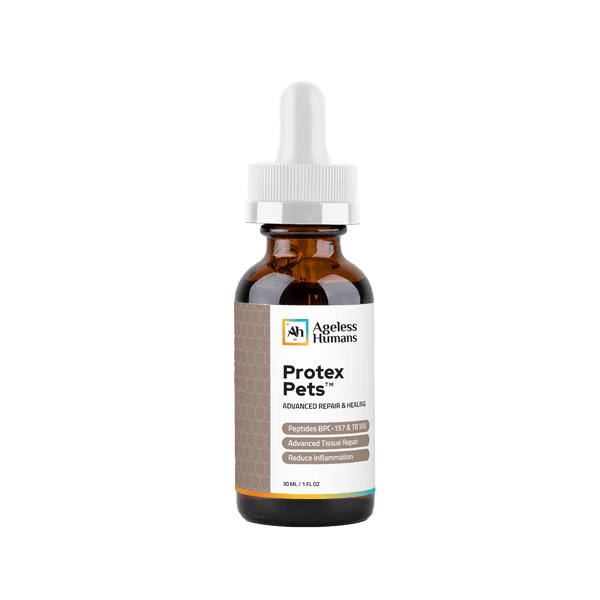

The same repair science, formulated for dogs
Retatrutide is an experimental peptide medication, not a cosmetic ingredient or supplement. It was developed by Eli Lilly under the research code LY3437943. In clinical trials it is given as a once-weekly injection.
It belongs to a newer class of compounds often called "triple agonists." A single molecule activates three different hormone receptors at once:
These receptors normally respond to hormones your body releases around meals and between them. Researchers are studying retatrutide because acting on all three may influence appetite, energy use, and blood sugar handling in ways single-target compounds do not.
If you want to understand peptides in general, including the difference between prescription peptide drugs and peptide-containing supplements, start with our primer on [what peptides are and how they work](/blogs/news/what-are-peptides).
Retatrutide mimics hormones that help regulate hunger, insulin response, and energy expenditure. Each target plays a different role.
GLP-1 receptor. GLP-1 is released by the gut after eating. It signals fullness to the brain, slows how fast the stomach empties, and supports the body's insulin response to a meal. This is the same pathway targeted by older drugs such as [liraglutide](/pages/liraglutide-peptide).
GIP receptor. GIP is another gut hormone released after meals. It also takes part in the insulin response and is thought to influence how the body handles and stores fat. Researchers believe combining GIP and GLP-1 activity may produce effects that differ from GLP-1 alone.
Glucagon receptor. Glucagon is usually associated with raising blood sugar between meals, but it also influences how the body burns energy and processes fat in the liver. Adding glucagon activity is the newest part of retatrutide's design, and it's what makes it a "triple" agonist.
The short version: retatrutide is built to act on appetite and metabolism. It is not designed to act on skin, collagen, or wound healing.
An earlier version of this page described retatrutide as a skin-rejuvenation peptide. That was wrong, and we've replaced it. There is no basis for describing retatrutide as a collagen booster, a hydration aid, a scar treatment, or a topical skincare ingredient.
We hold our education pages to a simple standard: tell you what a compound actually is, what it is being studied for, and where the evidence stands. The previous content didn't meet that standard. If you landed here looking for skin-support peptides, retatrutide is not one of them.
What's accurate:
No. Retatrutide is investigational and is not approved by the FDA for any use as of this writing. It is available only to people enrolled in clinical trials. It is not a dietary supplement and cannot legally be sold as one.
You may see websites selling "retatrutide research peptide" vials labeled "not for human consumption." These products are unregulated. There is no reliable way to know what is in the vial, how pure it is, or whether it was made or stored properly. Injecting an unverified compound carries real risks.
If you're interested in metabolic-focused medications, the right move is a conversation with a licensed clinician who can review your health history, discuss approved options, and tell you whether a clinical trial might be a fit.
Retatrutide differs from earlier compounds mainly in how many hormone receptors it targets. A simple way to compare:
More targets doesn't automatically mean "better" for everyone. Each added pathway brings its own effects and trade-offs, which is exactly what ongoing trials are designed to measure. Until that research is complete and reviewed by regulators, retatrutide's long-term profile isn't fully known.
You'll also see unrelated peptides discussed in body-composition circles, such as [HGH Fragment 176-191](/pages/hgh-fragment-176-191-peptide). These work through entirely different mechanisms and shouldn't be confused with incretin-based drugs like retatrutide.
No. Ageless Humans does not sell retatrutide, and we won't while it remains an investigational drug. This page is for educational purposes only.
We make supplements that support the body's normal functions, and we keep those two categories separate. A prescription-pathway drug that acts on hormone receptors belongs under a clinician's care. A daily supplement belongs in a wellness routine.
Where peptides do show up in our lineup, it's in products formulated around structure/function support, such as tissue recovery after training or everyday wear and tear.
Peptide-based supplements are tools for supporting normal body functions, not replacements for medication. The most-searched example is BPC-157, a peptide studied for its role in the body's natural tissue-repair processes. It's often paired with TB-500 in recovery-focused formulas. Learn more in [what BPC-157 is and why people use it](/blogs/news/what-is-bpc-157) and our [BPC-157 peptide overview](/pages/bpc-157-peptide).
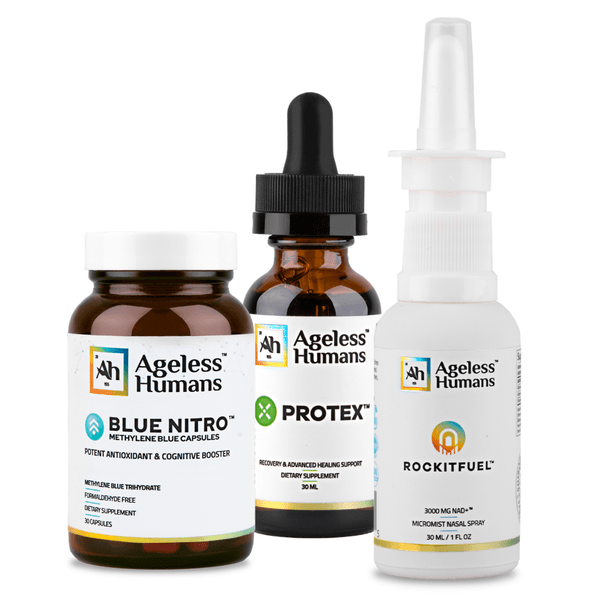
Our recommendation: If you came here interested in peptides for an active, long-lived body, Protex™ BPC-157 & TB-500 oral drops are our go-to. They're formulated to support the body's natural recovery and tissue repair processes after training and daily activity. No injections, just oral drops taken according to label directions.
For households with active or aging pets, Protex Pets™ brings the same recovery-support approach to dogs and cats, formulated for animal use.
As with any supplement, talk with your healthcare provider (or your veterinarian, for pets) before starting, especially if you take prescription medications.
Retatrutide is an investigational injectable peptide drug developed by Eli Lilly. It activates three hormone receptors involved in appetite and metabolism: GLP-1, GIP, and glucagon. It is being studied in clinical trials and is not an approved medication or a dietary supplement.
No. Retatrutide is not a skincare peptide and has no established role in collagen, skin hydration, or wrinkles. Its research focus is appetite, body weight, and metabolic health. Any source describing it as a skin-rejuvenation ingredient is inaccurate.
As of this writing, retatrutide is not FDA approved for any use. It is available only through clinical trials run under medical supervision. Check current FDA announcements or ask a licensed clinician for the latest status.
A triple agonist is a single molecule that activates three different receptors. Retatrutide acts on the GLP-1, GIP, and glucagon receptors, which play roles in fullness signals, the body's insulin response to meals, and energy use. Earlier compounds target one or two of these receptors.
Products sold online as "research peptides" are unregulated and not intended for human use. There's no reliable way to verify their identity, purity, or sterility, and injecting them carries real risk. Anyone interested in retatrutide should speak with a licensed clinician about approved options or clinical trials.
No. Ageless Humans does not sell retatrutide, and its retatrutide page is for educational purposes only. The brand offers dietary supplements formulated for structure/function support, such as Protex™ BPC-157 & TB-500 oral drops for supporting the body's natural recovery processes.
Retatrutide is an investigational drug that acts on appetite and metabolic hormone receptors and is given by injection in clinical trials. BPC-157 is a peptide studied for its role in the body's natural tissue-repair processes and is found in some recovery-focused supplements. They have different purposes, mechanisms, and regulatory status.
Liraglutide acts on a single target, the GLP-1 receptor. Retatrutide acts on three: GLP-1, GIP, and glucagon. Liraglutide is an established prescription medication, while retatrutide is still investigational.
Third-party tested longevity supplements, shipped from the USA within 24 hours. 60-day money-back guarantee.