
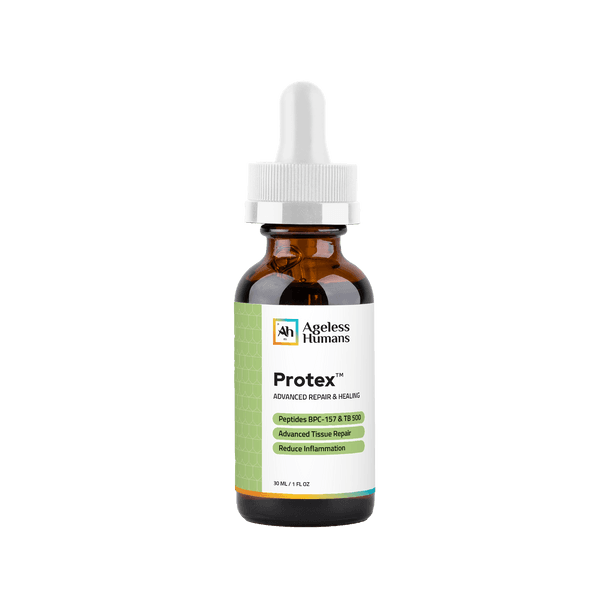
Protex™ Advanced Tissue Recovery & Repair
★★★★ 4 (16)BPC-157 + TB-500 oral sublingual — recovery support without needles
$89.99$71.99 subscribed
FDA-registered facility · Carlsbad, CA · Third-party lab testedUpdated 2026-11-14 · Reviewed by the Ageless Humans editorial team · Third-party tested products
Sermorelin is a synthetic peptide made from the first 29 amino acids of growth hormone-releasing hormone (GHRH). It signals the pituitary gland to release the body's own growth hormone instead of supplying growth hormone directly. In the U.S., sermorelin is a prescription compound, not a dietary supplement, and Ageless Humans does not sell it. This page is for education only.
BPC-157 + TB-500 oral sublingual — recovery support without needles
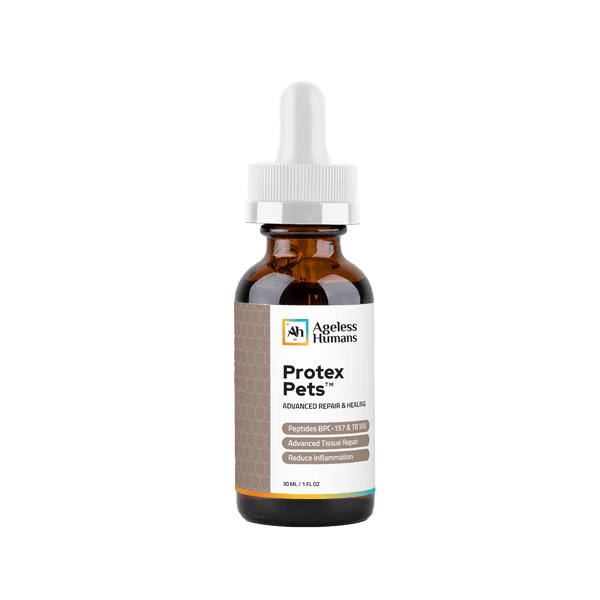
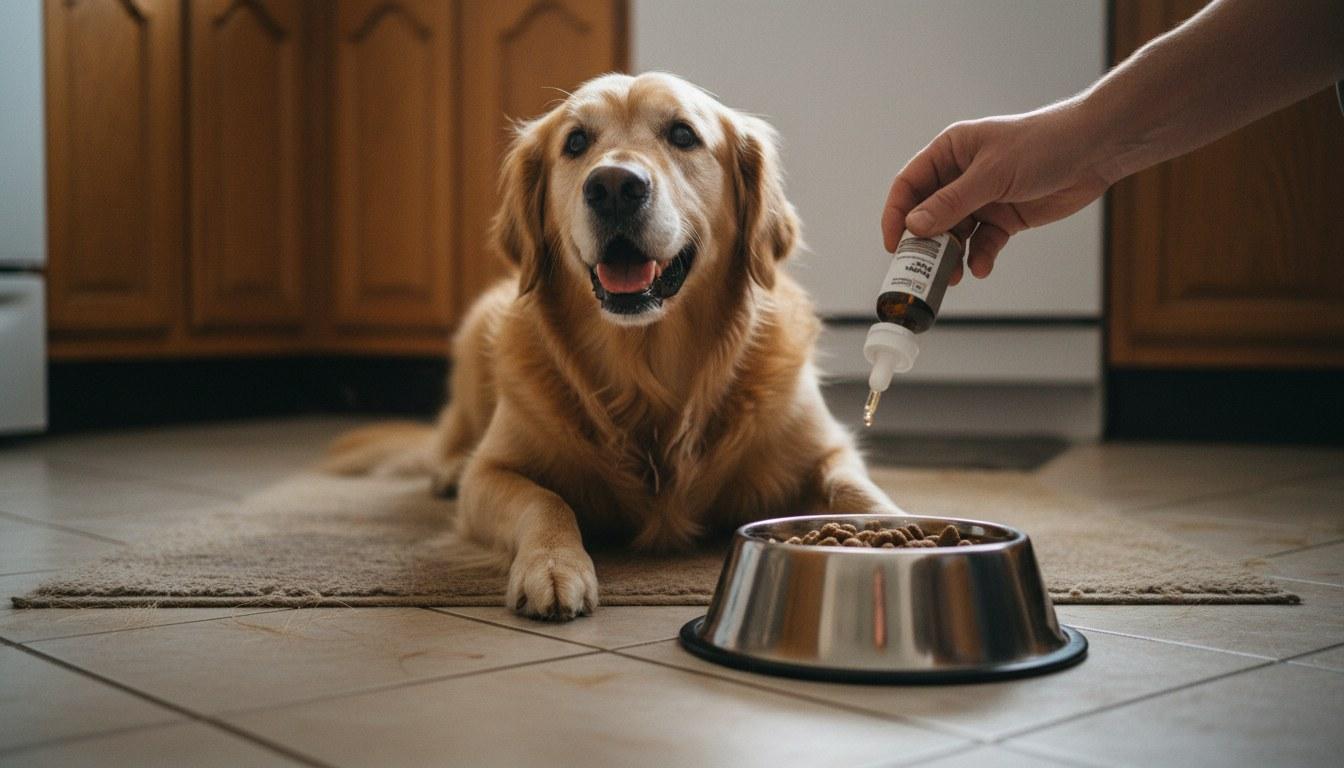
The same repair science, formulated for dogs
Sermorelin is a lab-made copy of the active portion of growth hormone-releasing hormone (GHRH). GHRH is a natural signaling molecule made in the hypothalamus. Sermorelin reproduces the first 29 amino acids of that hormone, which is the part responsible for its signaling activity. You may also see it called GRF 1-29.
The key idea is that sermorelin works upstream. It does not contain growth hormone. It acts as a messenger that tells the pituitary gland to make and release growth hormone on its own schedule.
Important: Ageless Humans does not sell sermorelin by itself or in any product. Several of our formulas contain other peptides. To learn what peptides are and how they differ from one another, start with our guide [what are peptides](/blogs/news/what-are-peptides).
Sermorelin binds to GHRH receptors on the pituitary gland, which prompts the gland to release growth hormone in pulses. The body normally releases growth hormone in bursts rather than in a steady stream. Many of these bursts happen during deep sleep.
The body's own feedback loops still apply when sermorelin is present. The main ones are:
Because sermorelin works through this existing system, the pituitary still controls how much growth hormone is actually released. That is the main reason researchers find it interesting. It is also why its effects depend heavily on the individual.
The core difference is mechanism. Sermorelin sends a signal to release growth hormone, while direct growth hormone supplies the hormone itself. Direct growth hormone skips the pituitary entirely. Sermorelin depends on the pituitary responding to its signal.
This distinction matters for anyone researching the topic:
Some pages online describe sermorelin as automatically "safer" or "natural." Be cautious with that framing. Any compound that affects hormone signaling carries considerations that should be weighed with a qualified healthcare provider. You can compare a different growth-hormone-related peptide, which is studied for a very different purpose, on our [HGH Fragment 176-191 peptide page](/pages/hgh-fragment-176-191-peptide).
Researchers have studied sermorelin mainly as a way to understand how the pituitary responds to GHRH signaling, including how that response changes with age. Natural growth hormone output tends to decline as people get older. This has led scientists to ask whether stimulating the body's own release could be meaningful.
Areas researchers have looked at include:
The evidence is still developing. Results vary across studies and populations, and none of this research makes sermorelin a wellness product you can buy over the counter. Claims you may see elsewhere about guaranteed energy, faster recovery, sharper focus, heart benefits, or fat loss go beyond what you can responsibly promise. Treat such claims with skepticism.
Sermorelin is a prescription compound in the U.S. It is not a legal dietary supplement ingredient. Any legitimate use goes through a licensed clinician and a regulated pharmacy.
This is why Ageless Humans does not sell it. It also explains why you should be wary of:
If you are curious about sermorelin for yourself, talk with a qualified healthcare provider who can review your health history and explain whether it is appropriate for you.
The most reliable ways to support your body's natural growth hormone rhythm are consistent, high-quality sleep and regular exercise. These habits work with the same pituitary signaling that sermorelin acts on, and you don't need a prescription for them.
These basics also make any supplement routine more effective. Supplements are meant to support the fundamentals, not replace them.
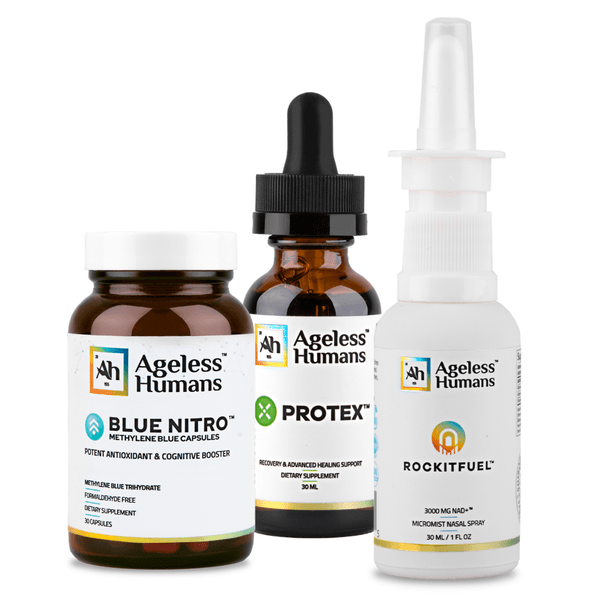
If your real goal is recovering well from training and daily wear-and-tear, a peptide supplement focused on recovery may be a better match than a prescription hormone signaler. Protex™ BPC-157 & TB-500 oral drops combine two well-studied peptides in a convenient oral format. The formula is designed to help support the body's natural tissue recovery and repair processes.
Protex works through a different pathway than sermorelin. It does not target growth hormone. Instead, it pairs BPC-157 and TB-500, two peptides researched for their role in the body's own recovery signaling. Learn more in [what is BPC-157](/blogs/news/what-is-bpc-157) and on our [BPC-157 peptide page](/pages/bpc-157-peptide).
For active dogs and cats, Protex Pets™ brings the same recovery-support concept into a pet-specific formula. Always follow label directions and check with your veterinarian or healthcare provider if you have questions.
If longevity peptides interest you more broadly, our [Epithalon peptide overview](/pages/epithalon-peptide-cellular-rejuvenation) explains another peptide that researchers study in the context of cellular aging.
Sermorelin is a synthetic peptide that copies the first 29 amino acids of growth hormone-releasing hormone (GHRH). It signals the pituitary gland to release the body's own growth hormone rather than supplying growth hormone directly. In the U.S., it is a prescription compound, not a dietary supplement.
Sermorelin binds to GHRH receptors on the pituitary gland, which prompts the gland to release growth hormone in natural pulses. The body's own feedback signals, including somatostatin and IGF-1, still help regulate how much is released. Because of this, results depend heavily on how each person's pituitary responds.
No. HGH is growth hormone itself. Sermorelin is a signaling peptide that tells the pituitary to release its own growth hormone. Both are prescription-only in the U.S. and should only be used under a licensed clinician's care.
No. Sermorelin is a prescription compound in the U.S. and is not a legal dietary supplement ingredient. Products sold as over-the-counter sermorelin supplements or "research only" vials for personal use should be treated with caution. Speak with a qualified healthcare provider if you are interested in it.
No. Ageless Humans does not sell sermorelin, either alone or in any product. This page is for educational purposes only. Some Ageless Humans products, such as Protex™ BPC-157 & TB-500 oral drops, contain other peptides formulated to support the body's natural recovery processes.
Research has mainly explored how the pituitary responds to GHRH-type signaling, including how that response changes with age. Researchers have also looked at growth hormone release patterns, sleep, and body composition markers. Findings vary, and the evidence is still developing.
Consistent, deep sleep and regular exercise are the most reliable everyday habits, because much of the body's growth hormone release happens during deep sleep and in response to intense training. Avoiding heavy meals right before bed and eating enough protein also support healthy recovery. These habits form the foundation that any supplement routine builds on.
If your main goal is recovering from training or everyday physical demands, Protex™ BPC-157 & TB-500 oral drops are formulated to help support the body's natural tissue recovery and repair processes. They work through a different pathway than sermorelin and do not target growth hormone. For pets, Protex Pets™ offers a pet-specific version. Use as directed on the label.
Third-party tested longevity supplements, shipped from the USA within 24 hours. 60-day money-back guarantee.