
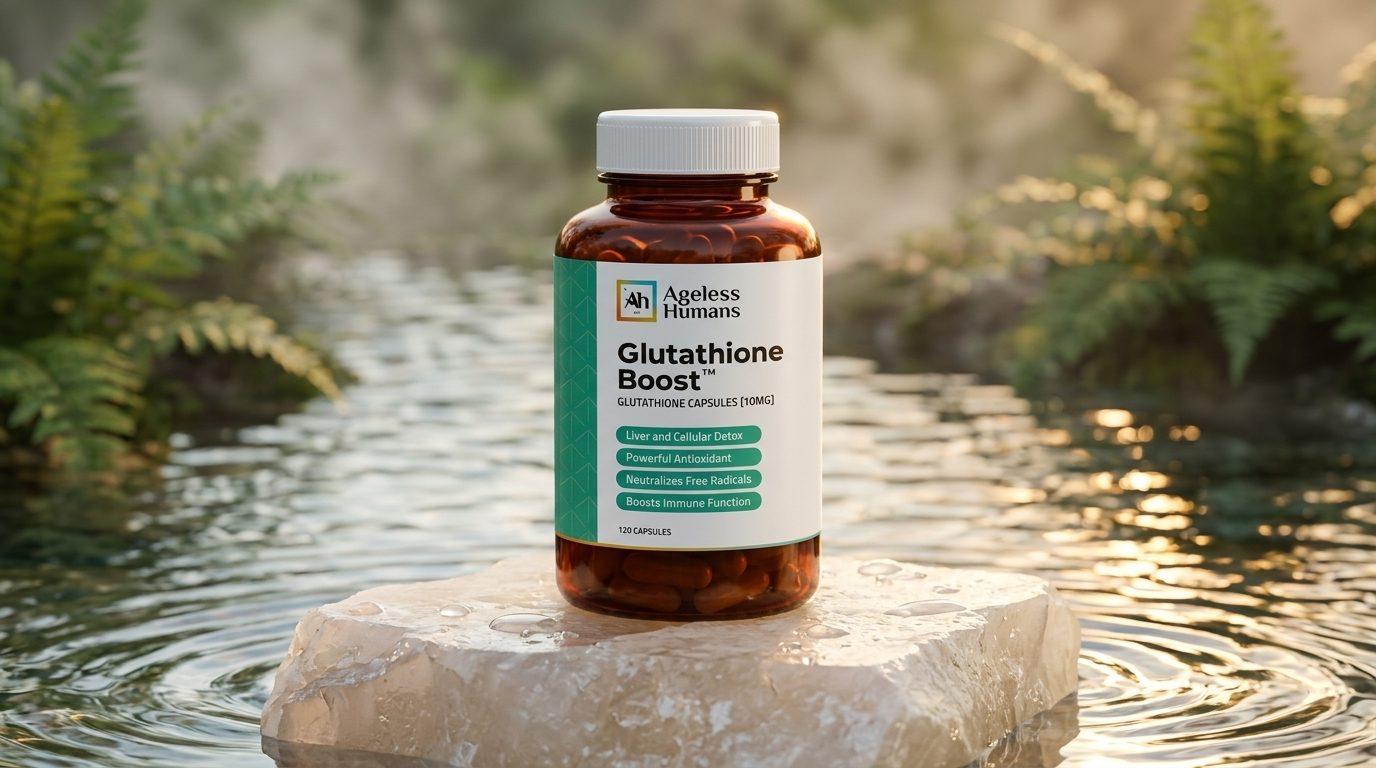
The best antioxidant supplements support your body's own antioxidant network rather than flooding it with single high-dose nutrients. For most adults, that means covering vitamin C and E needs, supporting glutathione with precursors such as NAC and glycine, and treating alpha-lipoic acid and polyphenols as targeted add-ons. Research on supporting the network is more consistent than research on megadosing any one 'super antioxidant.'
The Short Answer: Support the Network, Don't Overload One Node
Your body runs on an antioxidant network, not a single molecule. Vitamins C and E, glutathione, alpha-lipoic acid (ALA), and enzymes such as superoxide dismutase (SOD), catalase, and glutathione peroxidase pass electrons to one another. They neutralize reactive molecules, then regenerate each other so the system keeps running.
That changes how you shop. The question isn't "which antioxidant is strongest?" It's "where is my network likely short, and what helps it run on its own?" For most people, the order of priority looks like this:
1. Cover the basics. Get enough vitamin C and E, ideally mostly from food. 2. Support glutathione. Use precursors such as NAC and glycine, the raw materials your cells use to make it. 3. Supply the cofactors. Trace minerals help your antioxidant enzymes work. 4. Add targeted extras. Consider ALA or polyphenols for specific goals.
Skip anything that sells itself on huge doses or lab-test "antioxidant power" scores. These rarely match what happens inside your body.
How the Antioxidant Network Actually Works
Antioxidants work as a relay team. When vitamin E neutralizes a free radical in a cell membrane, it becomes oxidized itself. Vitamin C helps restore it. Glutathione then helps regenerate vitamin C, and ALA can support the recycling of both. Pull one runner out or overload another, and the handoffs break down.
The enzymes do much of the heavy lifting. SOD, catalase, and glutathione peroxidase handle large volumes of reactive oxygen species every second. These enzymes depend on trace minerals to function: zinc, copper, and manganese for forms of SOD, and selenium for glutathione peroxidase. A dietary vitamin can't replace a missing enzyme cofactor.
There's a second layer most articles skip. Reactive oxygen species aren't purely harmful. Your cells use them as signals, including the signals that drive adaptation to exercise and normal immune activity. A healthy system keeps oxidative stress in balance. It doesn't try to remove it entirely. That's the main reason "more antioxidants" isn't automatically better.
Why Megadosing Disappoints: What Large Studies Taught Us
The megadose era rested on a simple idea: if free radicals cause damage, swallowing large amounts of antioxidants should help. Large, long-term trials of isolated, high-dose antioxidants such as beta-carotene and vitamin E didn't deliver the broad benefits people expected. Some raised safety questions in specific groups, such as smokers taking high-dose beta-carotene. These results reshaped how researchers think about antioxidants.
Several lessons came out of that work:
- Isolated megadoses can upset the network. A flood of one antioxidant can shift the balance in ways the body doesn't expect, and some antioxidants act as pro-oxidants under certain conditions.
- Timing around exercise matters. Research suggests high doses of vitamins C and E taken around training may dampen some of the signals behind training adaptations.
- Absorption has limits. Vitamin C absorption becomes less efficient at higher intakes, so extra amounts are largely excreted.
- Lab scores don't predict biology. Test-tube measures of "antioxidant capacity" (such as the retired ORAC database) don't reflect what happens after digestion and metabolism.
The practical takeaway: follow label directions and favor formulas built around the body's own systems over products that promise to out-muscle them.
Evidence Tiers: An Honest Ranking of Common Antioxidant Supplements
Here's how the main categories compare, based on how consistent and relevant the human research is. It doesn't reflect marketing claims.
Tier 1: Well-established roles
- Vitamin C: An essential nutrient with clear roles in the antioxidant network, collagen formation, and immune function. Supplementing makes the most sense when your diet falls short.
- Vitamin E: Essential for protecting cell membranes. Food sources supply a mix of forms, while many supplements supply only one. Adequate intake matters more than high doses.
- Trace mineral cofactors: Selenium, zinc, copper, and manganese are required for antioxidant enzymes to function. This is foundational biochemistry, not speculation.
Tier 2: Promising and actively studied
- Glutathione precursors (NAC, glycine): Cells build glutathione from three amino acids: cysteine, glycine, and glutamate. NAC supplies cysteine, which is often the limiting ingredient. Combinations of glycine and NAC have been studied in older adults for supporting glutathione levels, with encouraging early findings.
- Alpha-lipoic acid: Works in both water and fat environments, supports the recycling of other antioxidants, and plays a role in energy metabolism. It has been studied for several aspects of metabolic health, with mixed but interesting results.
Tier 3: Plausible, but the evidence is weaker or less direct
- Concentrated polyphenol extracts: Diets rich in colorful plants are consistently linked with healthy aging. Isolated extracts face absorption hurdles, and their benefits may come more from cell signaling than from direct antioxidant activity.
- Plain oral glutathione: How well it's absorbed is still debated. Some research on specific forms, such as liposomal glutathione, looks more favorable, but precursors remain the better-studied route.
Skip: Products sold on "ORAC scores," vague "free radical blaster" blends, and anything relying on megadoses as its main selling point.
Glutathione Precursors: Why They Lead the Chooser
Glutathione is often called the body's master antioxidant, and for good reason. It's present in nearly every cell, helps regenerate vitamins C and E, supports the liver's normal detoxification processes, and serves as the fuel for glutathione peroxidase. Research suggests glutathione levels tend to decline with age, which makes supporting it a natural longevity priority.
The strategic choice is build vs. buy. Swallowing glutathione directly runs into absorption questions. Supplying its building blocks, especially cysteine (through NAC) and glycine, lets your cells make glutathione where it's needed, under their own regulation. That works with the network instead of overriding it.
If you want the full picture of what glutathione does and why levels matter, read our deep dive on glutathione benefits. For a precursor-based approach, GlutaBoost is designed to support your body's own glutathione production rather than relying on direct oral glutathione.
Vitamin C, Vitamin E, ALA, and Polyphenols: Where Each Fits
Vitamin C and E belong in your foundation, mostly from food. Citrus, peppers, berries, and leafy greens cover vitamin C well. Nuts, seeds, and plant oils cover vitamin E. Supplements make sense when your diet is limited. Choose moderate amounts at label directions, not megadoses, and be thoughtful about high-dose timing around workouts if training adaptation is your goal.
ALA is a targeted add-on. Its value lies in how widely it works: it operates in both watery and fatty parts of the cell and helps recycle other antioxidants. People focused on metabolic health and cellular energy often look at ALA. It's an upgrade to a solid foundation, not a substitute for one.
Polyphenols work more as signals than sponges. Compounds in berries, green tea, cocoa, olives, and grapes appear to work largely by gently activating the body's own defense pathways, including Nrf2, a master switch for antioxidant enzyme production. They also support cellular cleanup processes such as autophagy. This mild-stress-then-adapt pattern, called hormesis, is why polyphenols may matter even at modest, food-like intakes. Formulas such as Autophagy XL are built around this cellular renewal angle rather than raw radical-scavenging.
Don't Skip the Cofactors: Minerals and Your Gut
Antioxidant enzymes can't work without trace minerals. SOD needs zinc, copper, or manganese depending on its form. Glutathione peroxidase needs selenium. You can take every antioxidant on the shelf, but if the enzyme side of the network is short on cofactors, the system runs below capacity. Modern diets built on refined foods can come up short on trace minerals.
Your gut is the other overlooked link. It's where nutrients are absorbed, and its lining faces constant oxidative challenges from food, microbes, and the environment. A well-supported gut makes every other part of this plan more effective.
That's the reasoning behind including a trace mineral formula such as HumaTex, which combines trace minerals with fulvic and humic acids to support mineral intake and gut health. It's not a flashy antioxidant on its own. It supports the raw materials and the environment the antioxidant network depends on.
How to Choose: A Simple Decision Path
Use your situation to set your priorities:
- Eating a varied, plant-heavy diet? Your vitamin C, E, and polyphenol bases are likely covered. Focus on glutathione precursors and mineral cofactors.
- Diet limited or heavy in processed foods? Start by improving vitamin C, vitamin E, and trace mineral intake, then add glutathione support.
- Over 40 and focused on longevity? Glutathione precursors move to the top of the list, since research suggests levels tend to decline with age.
- Training hard? Favor food-based antioxidants and precursors over high-dose vitamin C and E taken right around workouts.
- Interested in cellular renewal? Add polyphenol- and autophagy-focused support on top of your foundation.
Whatever you choose, check for quality signals: third-party testing with a certificate of analysis (COA), transparent labels, and clear manufacturing information. Every Ageless Humans product is made in our FDA-registered facility in Carlsbad, California, every lot is third-party lab tested with a COA, and each one comes with a 60-day money-back guarantee. Not sure where to start? Take our two-minute quiz for a personalized recommendation. If you take medications or have a health condition, check with your healthcare provider before adding supplements.
Frequently asked questions
What is the best antioxidant supplement?+
No single antioxidant is best, because the body uses a network in which vitamins C and E, glutathione, alpha-lipoic acid, and mineral-dependent enzymes regenerate one another. For most adults, the strongest approach combines adequate vitamin C and E, glutathione precursors such as NAC and glycine, and trace mineral cofactors. Alpha-lipoic acid and polyphenols work best as targeted add-ons on top of that foundation.
Is it better to take glutathione or a glutathione precursor?+
Glutathione precursors such as NAC and glycine are generally the better-studied route. They supply the building blocks cells use to make their own glutathione. Plain oral glutathione faces absorption questions, although some research on forms such as liposomal glutathione is more favorable. Precursors let your cells produce glutathione where it's needed, under their own regulation.
Can you take too many antioxidants?+
Yes. Large long-term studies of isolated, high-dose antioxidants such as beta-carotene and vitamin E didn't show the broad benefits people expected, and some raised safety concerns in specific groups. Research also suggests high doses of vitamins C and E around exercise may blunt some training adaptations. Follow label directions and treat megadoses as a red flag, not a feature.
Do antioxidant supplements interfere with exercise benefits?+
Research suggests that high doses of vitamins C and E taken around workouts may dampen some of the cell signals that drive training adaptations, because exercise uses reactive oxygen species as messengers. Moderate intake, food-based antioxidants, and glutathione precursors are less likely to raise this concern. Active people may want to avoid timing high-dose vitamins right around training sessions.
Are polyphenol supplements worth it?+
Polyphenols appear to work mainly by gently activating the body's own defense and cellular renewal pathways, such as Nrf2 and autophagy, rather than by directly neutralizing free radicals. Diets rich in polyphenol-containing foods are consistently associated with healthy aging. Isolated extracts face absorption challenges, so they're best viewed as a complement to a colorful diet, not a replacement for one.
Do minerals matter for antioxidant protection?+
Yes. The body's most powerful antioxidant enzymes depend on trace minerals: superoxide dismutase needs zinc, copper, or manganese, and glutathione peroxidase needs selenium. Without enough of these cofactors, the enzyme side of the antioxidant network can't work at full capacity. Getting adequate trace minerals is one of the most overlooked parts of antioxidant support.