
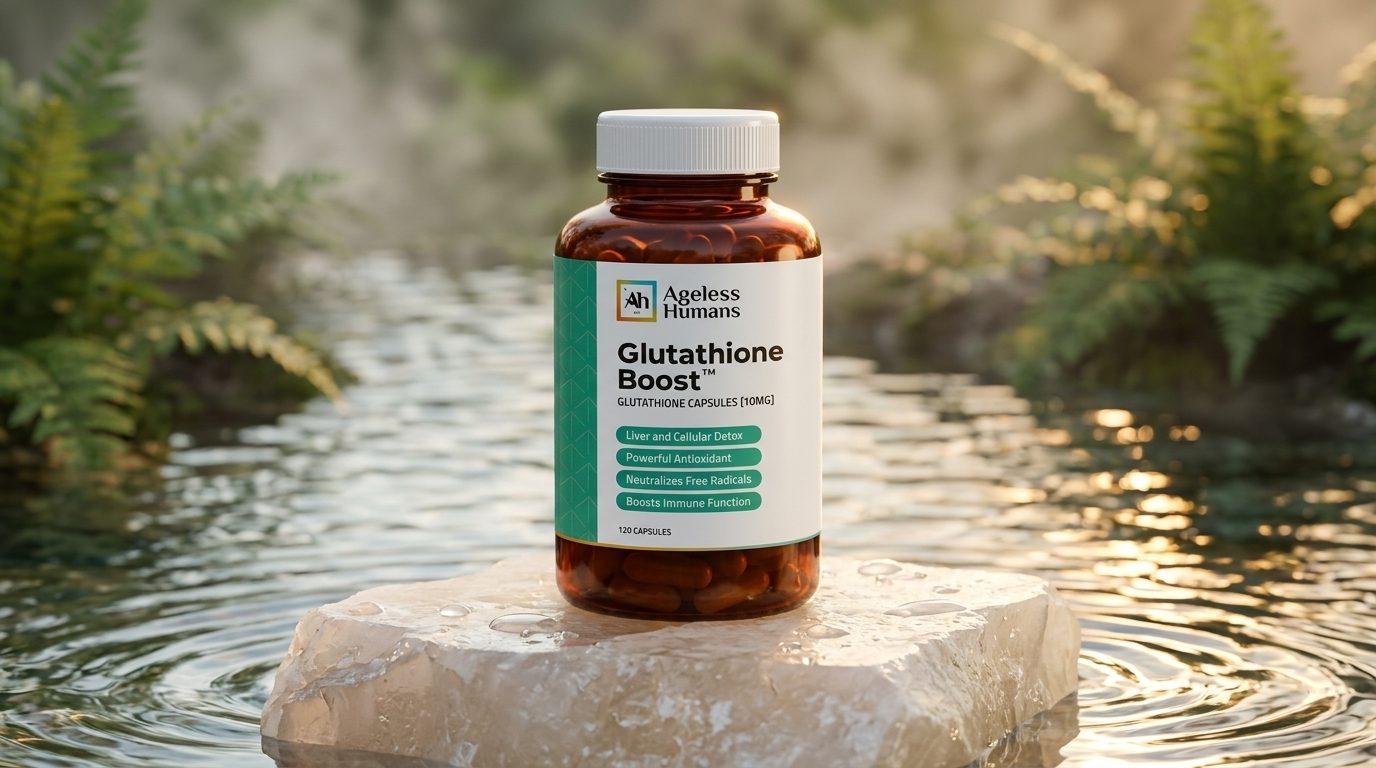
Glutathione is a small molecule your cells make from three amino acids: glutamate, cysteine, and glycine. It is the body's main internal antioxidant, and it supports cellular defense against oxidative stress, normal liver detoxification, immune cell function, and mitochondrial health. Research suggests levels tend to decline with age and stress. Because oral glutathione is partly broken down in the gut, many people choose a precursor strategy that supplies the building blocks so cells can make their own.
What Is Glutathione, and Why Is It Called the Master Antioxidant?
Glutathione is a tripeptide, a chain of three amino acids (glutamate, cysteine, and glycine), that nearly every cell in your body makes on its own. It earns the master antioxidant title for three reasons. It is made inside the cell, where most oxidative stress happens. It is present in high amounts compared with other antioxidants. And it helps recycle other antioxidants, including vitamins C and E, so they can keep working.
The active part of the molecule is the sulfur group on cysteine. That sulfur can donate an electron to neutralize a reactive molecule. When it does, glutathione shifts from its reduced form (GSH) to its oxidized form (GSSG). An enzyme called glutathione reductase then converts it back, so the cycle can repeat.
Scientists often use the ratio of GSH to GSSG as a snapshot of a cell's redox balance. A higher share of reduced glutathione generally reflects a cell that is keeping up with its oxidative load. A shift toward oxidized glutathione suggests the defense system is under strain.
Glutathione Benefits: 5 Core Jobs It Does in Your Body
Glutathione supports five main functions: antioxidant defense, liver detoxification, antioxidant recycling, immune function, and mitochondrial health. Here is what each one means in plain terms.
1. Cellular antioxidant defense. With the enzyme glutathione peroxidase, glutathione helps neutralize hydrogen peroxide and lipid peroxides before they damage cell membranes, proteins, and DNA. 2. Liver detoxification support. In phase II detoxification, enzymes called glutathione S-transferases attach glutathione to many compounds. This makes them water-soluble so the body can excrete them. The liver holds some of the highest glutathione concentrations in the body. 3. Recycling other antioxidants. Glutathione helps restore vitamin C to its active form, which in turn helps regenerate vitamin E. Your antioxidant network works as a team, and glutathione keeps the team in play. 4. Immune function. Immune cells, especially lymphocytes, depend on adequate glutathione to multiply and respond normally. Research has studied glutathione status as one factor in healthy immune aging. 5. Mitochondrial health. Mitochondria produce energy and also produce reactive oxygen species as a byproduct. Mitochondria keep their own glutathione pool to help protect their membranes and enzymes.
Glutathione also helps maintain the proper shape and function of proteins by protecting their sulfur groups. This job is less visible, but it matters for normal cell signaling.
Why Glutathione Levels Fall
Glutathione levels drop when your body uses it faster than it can make it, or when it lacks the raw materials to make it. Several common factors push in that direction.
- Aging. Research suggests that older adults tend to have lower glutathione levels than younger adults. Studies point to reduced synthesis and limited cysteine availability as likely contributors.
- Low cysteine and glycine intake. Cysteine is usually the limiting building block. When it runs short, production slows no matter how much glutamate is available. Glycine may also become limiting with age.
- Alcohol. Alcohol metabolism places heavy demand on liver glutathione.
- Certain medications. Some common over-the-counter drugs are processed through glutathione-dependent pathways in the liver. Talk to your pharmacist if you take medications regularly.
- Poor sleep and chronic stress. Both raise oxidative load and are linked in research to a less favorable redox balance.
- Smoking and environmental exposures. Pollutants and smoke increase the oxidative burden your cells must manage.
- Low intake of key cofactors. Selenium is required for glutathione peroxidase, and riboflavin (vitamin B2) supports glutathione reductase.
The pattern is consistent. Demand rises with stress and exposures, while supply depends on amino acids, cofactors, and the cell's own enzyme activity.
Precursor Strategy vs Direct Glutathione: What the Research Shows
The precursor strategy supplies the building blocks, mainly cysteine sources and glycine, so your cells can make glutathione where they need it. Direct supplementation tries to deliver glutathione itself. Both have a research base, and they work differently.
The case for precursors. The rate of glutathione synthesis is limited mostly by cysteine availability and by the enzyme glutamate-cysteine ligase. Providing a stable cysteine source, most often N-acetylcysteine (NAC), addresses that bottleneck directly. Research groups have also studied combining glycine with NAC in older adults, with findings that suggest support for glutathione levels and markers of oxidative balance. The appeal is simple: cells build glutathione internally, in the compartments that use it, under their own regulation.
The case for direct glutathione. For years, oral glutathione was considered poorly absorbed because digestive enzymes break much of it into its amino acids. Some newer research on oral, liposomal, and sublingual forms suggests they may raise body stores over time, though results vary between studies. Forms like S-acetyl glutathione are designed to survive digestion better, but human data are still limited.
How they compare:
- Mechanism: Precursors feed internal production. Direct forms supply the finished molecule.
- Bottleneck: Precursors target the cysteine limit. Direct forms bypass it but face digestive breakdown.
- Evidence: Both are actively studied. NAC and glycine have a longer research history. Absorption-enhanced direct forms are newer.
- Practical fit: Many people choose precursors for daily, foundational support and consider direct forms as an alternative.
The honest takeaway: neither approach is proven superior across the board. The precursor strategy aligns with how your body naturally regulates glutathione, which is why many longevity-focused formulas are built around it.
Food and Lifestyle Habits That Support Glutathione
You can support healthy glutathione levels with sulfur-rich foods, adequate protein, key nutrients, and daily habits that lower oxidative load. Supplements work best on top of these basics, not instead of them.
Foods worth prioritizing:
- Cysteine-rich proteins such as whey, eggs, poultry, and legumes supply the limiting amino acid.
- Cruciferous vegetables such as broccoli, Brussels sprouts, and kale contain compounds studied for activating Nrf2, a cell pathway that switches on antioxidant genes, including those involved in glutathione production.
- Alliums such as garlic and onions provide sulfur compounds.
- Glycine sources such as collagen, bone broth, and gelatin.
- Selenium foods such as Brazil nuts, seafood, and eggs support glutathione peroxidase.
- Vitamin C sources such as citrus, peppers, and berries help spare and recycle glutathione.
Habits that matter: Get consistent, quality sleep. Exercise regularly at moderate intensity, since research suggests regular training helps the body adapt its antioxidant defenses. Limit alcohol. Avoid smoking. These are the same foundations behind any sensible approach to biohacking for healthy aging: measurable, daily inputs that compound over time.
How to Choose a Glutathione Supplement
Choose a supplement based on its approach (precursor or direct form), transparent labeling, and independent testing. The category varies widely in quality, so verify before you buy.
Use this checklist:
- Clear strategy. The label should make it obvious whether you are getting precursors, a direct glutathione form, or both. Avoid vague proprietary blends that hide amounts.
- Full ingredient disclosure. Every active ingredient should be listed with its amount per serving.
- Third-party testing. Ask for a Certificate of Analysis (COA). It confirms identity, potency, and screening for contaminants.
- Manufacturing standards. Look for products made in an FDA-registered facility that follows good manufacturing practices.
- Honest claims. A trustworthy brand says a product supports or helps maintain normal function. Be wary of anything promising to cure, treat, or reverse a condition.
- A real guarantee. A clear refund policy signals that a company stands behind its product.
Follow the label directions. More is not automatically better, and your body tightly regulates glutathione production.
What the Research Does Not Show Yet
Glutathione science is promising, but it has real limits, and you deserve to know them. Being clear about what is unknown is how you make a good decision.
- Blood levels do not tell the whole story. Most glutathione lives inside cells and tissues. Blood measurements are useful snapshots, but they may not reflect what is happening in the liver, brain, or muscle.
- Higher is not always better. Antioxidant balance matters. Cells use some reactive oxygen species as signals, including signals involved in exercise adaptation. The goal is balance, not maximum suppression.
- Individual response varies. Genetics, diet, age, and baseline status all influence how much a person responds to precursors or direct forms.
- Popular claims outrun the data. Glutathione has been studied for skin tone and appearance, among other uses, but findings are mixed and not settled.
Check with your healthcare provider first if you are pregnant or nursing, take prescription medications, or are managing a health condition. NAC and other ingredients can interact with some medications. Whole-blood glutathione testing is available through some labs if you and your provider want a baseline.
Frequently asked questions
What are the main benefits of glutathione?+
Glutathione supports the body's antioxidant defenses, normal liver detoxification, immune cell function, and mitochondrial health. It also helps recycle other antioxidants like vitamins C and E. Because nearly every cell makes and uses it, glutathione is often called the master antioxidant.
Is it better to take glutathione or a glutathione precursor like NAC?+
Neither has been proven better for everyone. Precursors such as NAC and glycine supply the building blocks so cells can make glutathione themselves, which targets cysteine, the main limit on production. Direct oral glutathione is partly broken down during digestion, though some research on liposomal and other forms suggests it may raise body stores over time.
Why do glutathione levels decrease with age?+
Research suggests older adults tend to have lower glutathione, likely because of reduced synthesis and less available cysteine and glycine. Higher lifetime oxidative load, poor sleep, alcohol, smoking, and low intake of cofactors like selenium can also draw down glutathione faster than the body replaces it.
What foods naturally support glutathione levels?+
Foods rich in sulfur and cysteine support glutathione production, including whey protein, eggs, poultry, garlic, onions, and cruciferous vegetables like broccoli. Collagen and bone broth supply glycine. Brazil nuts and seafood provide selenium, and citrus and peppers provide vitamin C, both of which help the glutathione system work.
Does oral glutathione actually get absorbed?+
Standard oral glutathione is largely broken down into its amino acids during digestion, which is why its absorption has long been questioned. Some newer studies suggest that consistent use of oral, liposomal, or sublingual forms may increase body stores, but results vary. This uncertainty is one reason many people choose a precursor approach.
Can you test your glutathione levels?+
Yes. Some labs offer whole-blood or red blood cell glutathione tests, and research settings often measure the ratio of reduced to oxidized glutathione. These tests are not part of routine bloodwork, and blood levels may not fully reflect levels inside tissues like the liver. Ask your healthcare provider whether testing makes sense for you.