
What Biohacking Actually Means
Biohacking is running small, intentional experiments on your own habits and tracking what changes. You adjust one variable, such as sleep timing, meal timing, training, or a supplement. Then you watch how you feel and what your data shows, and you keep what works.
The term covers a wide range of practices. At one end are simple, low-risk habits like getting morning sunlight or keeping a consistent bedtime. At the other end are more advanced approaches like continuous glucose monitors, heart rate variability (HRV) tracking, and structured supplement protocols. There is also "DIY biology," a separate community of non-experts who run biology experiments outside academic labs. It shares the name but is not what most people mean when they talk about personal biohacking.
According to the Cleveland Clinic, biohacking is a growing field that combines self-experimentation with scientifically supported strategies to improve how you think and perform physically. In practice, that means making deliberate lifestyle changes and sometimes adding technology to help you understand your own body better.
How Biohacking Works: The Measure–Adjust–Repeat Loop
Biohacking works through a feedback loop. You get a baseline, make one change, measure again, and decide what to keep. Without measurement, biohacking is just guessing.
A practical loop looks like this:
1. Establish a baseline. Track sleep, energy, mood, and training for 1–2 weeks. Many people also review routine lab work with their healthcare provider. 2. Change one variable. Shift your eating window, add a morning walk, or start a supplement. One change at a time is the only way to know what caused a result. 3. Track consistently. Use a wearable, a simple journal, or both. Look at trends, not single days. 4. Evaluate and keep or drop. Give each change enough time to show an effect, then decide.
This approach makes biohacking personal. Two people can try the same protocol and get different results. The data tells you what works for your biology, not someone else's.
The 6 Core Pillars of Biohacking
Effective biohacking rests on six pillars: nutrition, sleep, cognition, longevity, movement, and environment. Most results come from the first and last of these: what you eat and the conditions you live in every day.
1. Nutritional biohacking. This pillar covers metabolic health, meal timing, and personalized nutrition. Common approaches include time-restricted eating, lower-carb or ketogenic diets, and tracking micronutrients. Supplements in this pillar typically support energy metabolism and mitochondrial function.
2. Sleep and recovery. This pillar focuses on circadian alignment and deeper, more consistent sleep. Typical tools include blue-light management at night, a cool and dark bedroom, and consistent sleep and wake times.
3. Cognitive performance. This pillar includes nootropics, NAD+ support, breathwork, and focused work blocks. The aim is to support focus, memory, and resilience to everyday stress.
4. Longevity and healthy aging. This pillar centers on cellular health: mitochondria, NAD+ levels, and cellular renewal processes researchers are actively studying, such as senescence and autophagy. The goal is to maintain performance and vitality as you get older.
5. Movement and performance. This pillar combines strength training, mobility, cardio, HRV tracking, and recovery practices like cold exposure. Biohackers treat recovery with the same priority as training.
6. Environment and habits. This pillar looks at light exposure, air quality, and daily routines that add or remove stress. It often includes mindfulness, time outdoors, and productivity cycles.
Popular Types of Biohacking and How They Work
The most widely practiced biohacks are time-restricted eating, cold exposure, nootropic stacking, and light and sleep optimization. Each is simple to start and easy to track.
Time-restricted eating (intermittent fasting). You eat within a set daily window. Common formats are 16:8 (16 hours fasting, 8 hours eating), one meal a day, or 5:2 (five normal days, two lower-calorie days). People use it to simplify eating, support healthy weight management, and support normal metabolic function. Researchers are also interested in how fasting relates to autophagy, the body's natural cellular cleanup process.
Cold exposure. Cold plunges and cold showers are popular for alertness, mood, and post-workout recovery routines. Many people do them in the morning or after training. For a deeper look, read our guide to the benefits of a cold plunge.
Nootropics and cognitive stacking. Nootropics are compounds people use to support focus, memory, and mental clarity. Common options include natural compounds, adaptogens, and NAD+ precursors. Many people take them before deep work, meetings, or training.
Light and sleep optimization. Morning sunlight helps anchor your circadian rhythm. Limiting bright and blue light at night, using blackout curtains, and keeping a regular schedule support deeper, more restful sleep. Every serious biohacker treats sleep as non-negotiable.
Timing may matter for supplements too. A 2023 study in mice, published in Nature Communications, reported that the effects of NAD+ on metabolic markers differed depending on when in the daily cycle it was given. Animal research does not translate directly to people, but it supports a basic biohacking principle: when you do something can matter as much as what you do.
Biohacking for Energy and Focus
Lasting energy comes from efficient cells, not more stimulants. Your mitochondria turn food into usable cellular energy (ATP). Every tissue depends on them, especially energy-hungry ones like the brain and muscles.
That is why so many biohackers focus on mitochondrial health instead of more caffeine. The foundations are well established:
- Consistent, quality sleep, which supports how the body recovers.
- Regular movement, especially a mix of strength and aerobic training.
- Balanced nutrition with enough protein and micronutrients.
- Strategic stress, such as cold exposure or exercise, followed by real recovery.
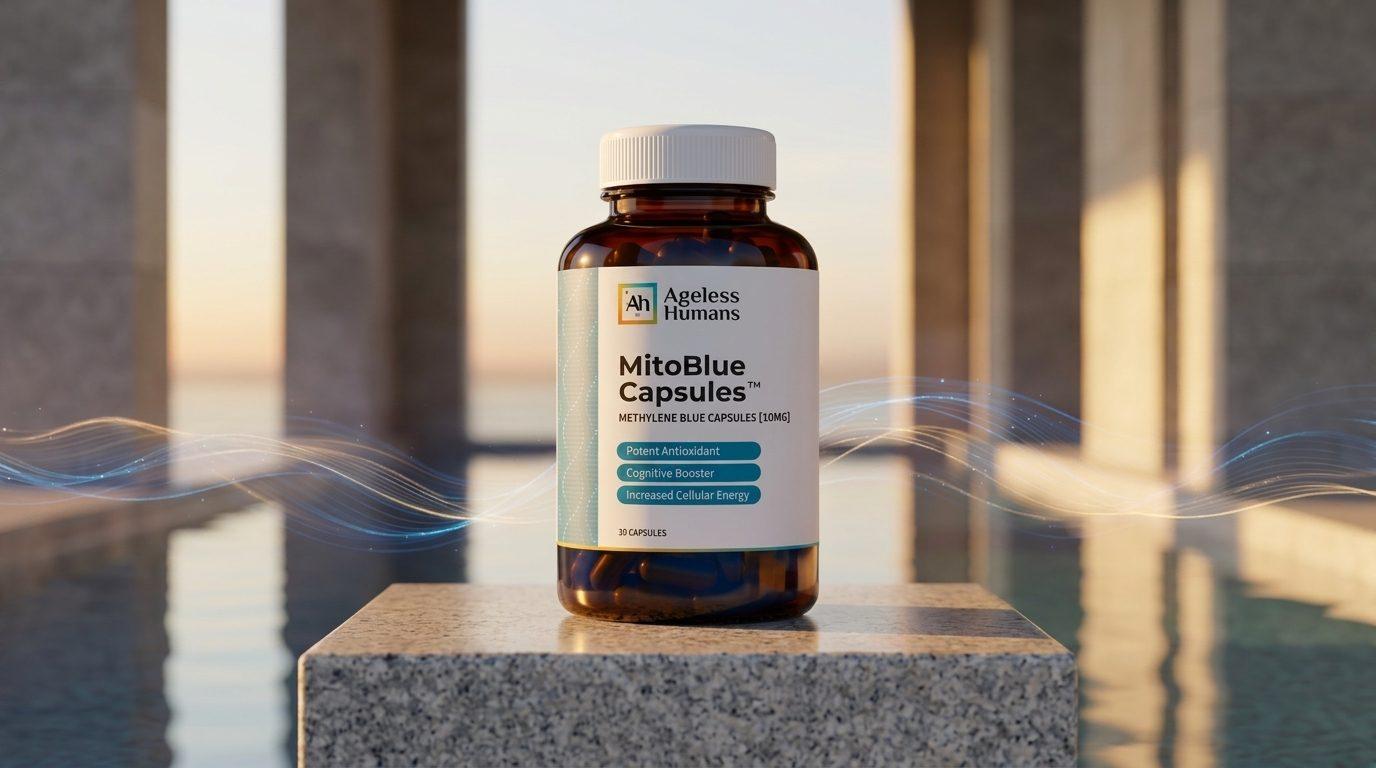
Supplements can add another layer. NAD+ is a coenzyme involved in cellular energy metabolism, and its levels are known to decline with age. That is why NAD+ support is a common part of energy and focus stacks. Learn more in our breakdown of NAD+ supplement benefits. Formulas built specifically for mitochondria, like MitoBlue™, are designed for people who want to support cellular energy as part of a daily routine.
Biohacking Safety: Where to Draw the Line
Most biohacking is safe when it stays within evidence-informed lifestyle changes and properly labeled supplements. The risks come from extreme or unregulated practices. Genetic self-modification, unregulated drugs, and severe fasting or cold protocols can pose real dangers.
Follow a few ground rules:
- Talk to a healthcare professional before starting new protocols, especially if you have a medical condition, take medications, or are pregnant or nursing.
- Follow label directions on any supplement. More is not better.
- Change one thing at a time so you can spot anything that doesn't agree with you.
- Be skeptical of dramatic claims. No supplement or hack reverses aging or replaces medical care.
Good biohacking is boring in the best way: consistent, measured, and built on habits you can sustain for years.
How to Start Biohacking: A Simple 4-Week Plan
Start with the free basics before buying anything. Then add tools and supplements once your foundation is consistent.
Week 1: Sleep and light. Set a fixed wake time. Get 10–15 minutes of outdoor light within an hour of waking. Dim screens and lights an hour before bed.
Week 2: Nutrition. Choose a reasonable eating window, such as 12:12, and build meals around protein and whole foods. Note your energy levels after meals.
Week 3: Movement and recovery. Add 2–3 strength sessions and daily walking. If you're curious, try brief cold showers and track how you feel.
Week 4: Measure and layer. Review your notes or wearable data. If the basics are steady, this is the right time to add a targeted supplement and track its effect over the following weeks.
This sequence gives you a clean baseline, so you can tell whether a supplement is actually adding something.
Where Supplements Fit in a Biohacking Routine
Supplements are the final layer of biohacking, not the foundation. They work best for people who already sleep, eat, and move well and want to support their body at the cellular level.
At Ageless Humans®, we build tools for the longevity and energy pillars:
- Metamorphic™ Anti-Aging Protocol is a full-system protocol designed to support cellular health and healthy aging as part of a long-term longevity routine.
- MitoBlue™ is designed to support mitochondrial function and daily cellular energy, which is the foundation of the energy and focus pillar.
Our recommendation: If you're new to biohacking, set your sleep, nutrition, and movement baseline first. Then add Metamorphic™ Anti-Aging Protocol for comprehensive cellular support, or MitoBlue™ if daily energy and focus are your top priority. Use either one as directed and track how you feel over several weeks. Shoppers who prefer a local guide can also browse our longevity supplements for Atlanta biohackers.
Frequently asked questions
What is biohacking in simple terms?+
Biohacking is making deliberate, measurable changes to your habits, environment, and nutrition to improve how your body and mind work. It usually starts with sleep, diet, movement, and light exposure. Some people then add tools like wearables, lab tests, and targeted supplements. The core idea is to experiment, track results, and keep what works for you.
What are the main types of biohacking?+
The most common types are nutritional biohacking (such as intermittent fasting), sleep and light optimization, cold exposure, nootropics for focus, movement and recovery tracking, and supplements for cellular health. More extreme forms include DIY biology and genetic self-experimentation. These carry significant risks and are not recommended without professional oversight.
Is biohacking safe?+
Most everyday biohacking is generally considered low-risk. This includes better sleep habits, time-restricted eating, regular exercise, and supplements taken as directed. Risks rise with extreme fasting, unregulated drugs, and genetic experimentation. Check with a healthcare professional before starting new protocols, especially if you have a medical condition or take medication.
How do I start biohacking as a beginner?+
Begin with free fundamentals. Keep a consistent sleep schedule, get morning sunlight, eat whole foods within a reasonable window, and move daily. Track your energy, mood, and sleep for a few weeks to set a baseline. Then add one new tool or supplement at a time, so you can tell what is actually making a difference.
Do biohackers take supplements?+
Many do. Supplements are usually treated as a layer on top of good sleep, nutrition, and exercise, not a replacement for them. Common choices support cellular energy, mitochondrial function, NAD+ levels, and focus. Always follow label directions and introduce one supplement at a time.
What is the role of NAD+ in biohacking?+
NAD+ is a coenzyme your cells use in energy metabolism and many other routine cellular processes. Its levels naturally decline with age. That is why NAD+ support is a popular part of biohacking routines focused on energy, focus, and healthy aging. Research on timing and forms of NAD+ support is ongoing.
Can biohacking reverse aging?+
No. Biohacking cannot reverse aging, and no supplement can either. What biohacking can do is help you build habits and use tools that support energy, recovery, focus, and healthy aging at the cellular level. Be wary of any product or protocol that promises to turn back the clock.
Does cold exposure count as biohacking?+
Yes. Cold plunges and cold showers are among the most popular biohacks. People use them to feel more alert, support mood, and support recovery after training. Start with short, moderate exposures and build gradually. Talk to a healthcare professional first if you have heart or circulation concerns.