
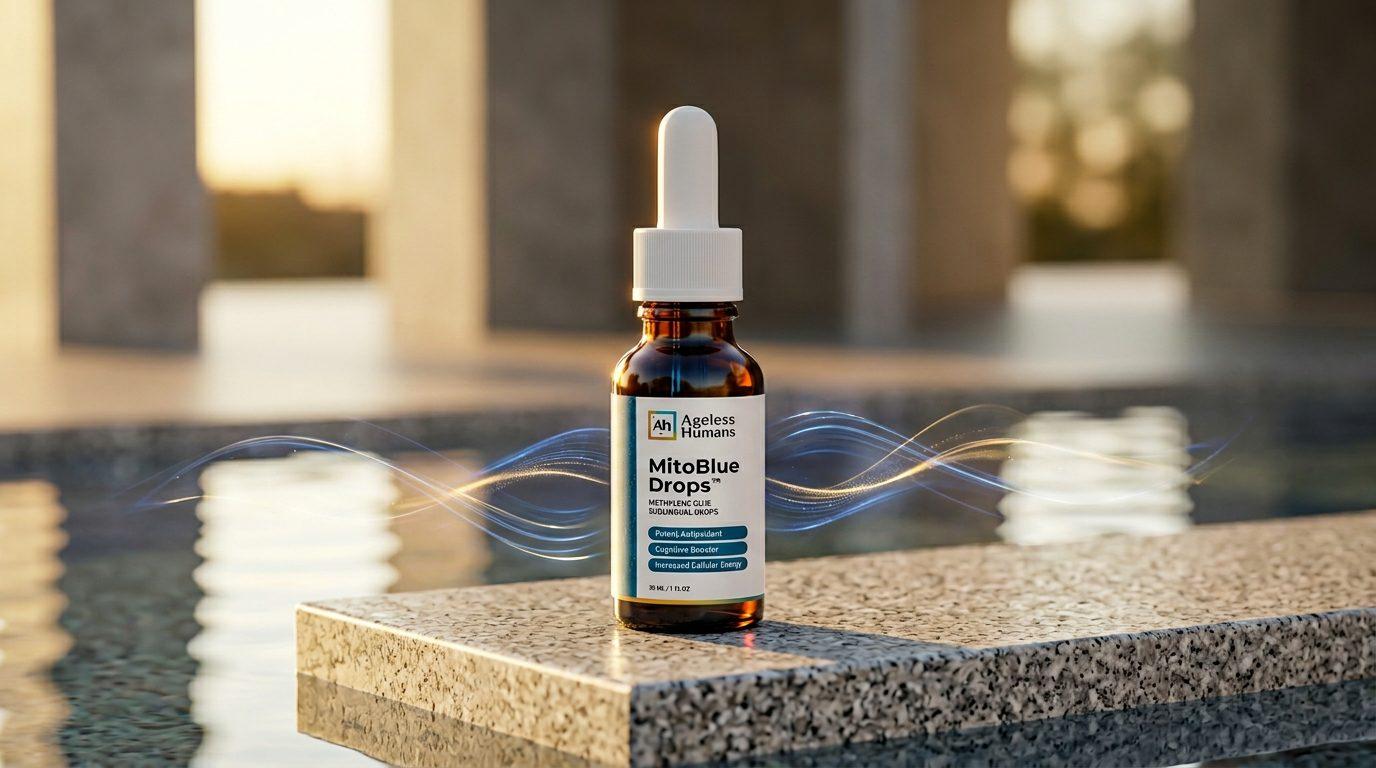
Methylene blue is absorbed within hours of an oral dose, and some people notice a subtle lift in focus or energy the same day. Broader effects on everyday mental clarity and stamina, if you notice them, tend to show up over one to four weeks of consistent use as directed. Research has studied single doses more than long-term daily use, so expect a gradual curve, not a switch flipping.
The Short Answer: Hours to Absorb, Weeks to Judge
Plan on two separate clocks. The first is the acute clock. Methylene blue enters your bloodstream within hours, and any same-day effect usually shows up in that window. The second is the cumulative clock. Consistent daily use over several weeks shows you whether it fits into your routine in a way you can actually feel.
Most disappointment comes from mixing these up. Some people take one dose, feel nothing dramatic, and quit. Others expect a jolt like coffee every morning and misread a quieter effect as no effect. Methylene blue is not a stimulant. It works at the level of cellular energy production, and that kind of support tends to feel like steadiness, not a buzz.
A fair test looks like this: use it as the label directs, at the same time each day, for at least two to four weeks, and track a few simple markers before you decide.
How Methylene Blue Works (and Why Timing Depends on It)
Methylene blue supports the way your mitochondria make energy, and that is why its effects are gradual. Inside each cell, mitochondria pass electrons down a chain of proteins to produce ATP, the molecule your cells run on. Methylene blue can accept and donate electrons, which is why researchers have studied it for its ability to support that electron flow and promote efficient cellular energy production.
Your brain uses a large share of your body's energy, which helps explain why methylene blue has been studied for its role in supporting cognitive function, memory, and mental clarity. Some small human studies have looked at how a single dose relates to measures of attention and memory. The results are interesting but early, and they don't tell us much about what months of daily use look like in healthy adults.
The practical takeaway: cellular energy support doesn't feel like caffeine. You're more likely to notice that an afternoon slump feels lighter, or that focus holds a bit longer, than to feel anything "kick in." For a deeper look at the research landscape, see our guide to methylene blue benefits.
Absorption: What Happens in the First Few Hours
After an oral dose, methylene blue is absorbed through the digestive tract and reaches circulation within hours. Pharmacology research on oral methylene blue suggests it is well absorbed and stays in the body for many hours. That is one reason a single daily use, timed per label directions, is common.
A few factors shape how quickly you notice anything:
- Format. Liquid drops are already dissolved, so they may begin absorbing slightly sooner. Capsules need a few minutes to break down first. Over a full day, the difference is small.
- Food. Taking it with or without a meal can change how fast it moves through your stomach. Follow your label, and keep your habit consistent so your results are comparable from day to day.
- Time of day. Many people prefer mornings or early afternoon, since the goal is daytime energy and focus.
The most reliable sign of absorption isn't a feeling. Methylene blue is a dye, and it commonly turns urine blue or green within hours. That's an expected, harmless effect of how your body clears it. It tells you the compound is moving through your system, even if you don't notice anything else yet.
Acute vs. Cumulative Effects: What's the Difference?
Acute effects are what you notice on the day you take it. Cumulative effects are patterns that build with consistent use. Both are worth paying attention to, but they answer different questions.
Acute effects (same day):
- A subtle sense of alertness or clarity a few hours after use
- Focus that holds steadier through a demanding task
- For some people, nothing noticeable at all, which is normal
Cumulative effects (weeks of consistent use):
- Energy that feels more even across the day
- Mental stamina that lasts deeper into the afternoon
- A routine-level sense that work and workouts feel a little easier to sustain
The honest caveat: most published human research on methylene blue looks at single doses or short windows. That evidence is closer to the acute side. Reports of cumulative effects come largely from people's own experience, not long-term controlled trials. That doesn't make them invalid, but it is why tracking your own response matters more here than with heavily studied nutrients.
What to Expect Week by Week
Week by week, expect absorption first, steadier patterns second, and a clear verdict by week four. Everyone responds differently, but this is a realistic frame.
Day 1: Blue or green urine within hours is the main certainty. Some people notice mild clarity in the afternoon. Many notice nothing yet, and that is not a sign it isn't absorbing.
Week 1: You're building a routine. Take it at a consistent time as the label directs. Pay attention to mid-afternoon energy and how long you can focus on one task. Early impressions are noisy, since sleep, stress, and caffeine all swing your baseline.
Weeks 2–3: This is where people who notice cumulative effects usually start to see them. Look for patterns, not single great days. Do afternoons feel less flat? Does deep work last longer before you reach for your phone?
Week 4: Compare honestly against your starting notes. If you see a consistent difference, you have useful information. If you see none, that's useful too. Not everyone notices a perceptible effect.
Month 2 and beyond: Anyone continuing should keep following label directions and check in with their healthcare provider, especially since long-term daily use in healthy adults is less studied than short-term use.
What Speeds Up or Slows Down How You Notice It
Your foundation matters more than your timing. Methylene blue supports energy production. It can't stand in for the inputs your mitochondria depend on.
Factors that make effects easier to notice:
- Consistent sleep. Poor sleep creates so much daily noise that subtle support gets buried.
- Steady caffeine habits. If your coffee intake swings from day to day, you won't be able to tell what's doing what.
- Movement and protein. Exercise and adequate nutrition support healthy mitochondrial function on their own.
- Same time, same way. Taking it at a consistent time, in a consistent format, keeps your comparisons clean.
Factors that blur the picture:
- Starting several new supplements in the same week
- Judging results on high-stress or short-sleep days
- Expecting a stimulant-like jolt
One more practical point: use a quality-controlled product. Purity matters with methylene blue, and pharmaceutical-grade sourcing with batch testing removes one big variable from your experiment.
Safety Notes Before You Start
Talk to your healthcare provider before using methylene blue, especially if you take prescription medications. It can interact with certain medications, including serotonergic antidepressants. This is a well-documented, serious interaction, not a minor caution. It is also not appropriate for people with G6PD deficiency, or for anyone who is pregnant or nursing, unless a clinician approves it.
Expected, harmless effects:
- Blue or green urine
- A temporary blue tint on the tongue, especially with drops (rinsing with water helps)
Stick to label directions. More is not better with methylene blue. Research suggests its activity changes with amount, and higher intake is not a shortcut to faster results. If anything feels off, stop and consult your provider.
How to Track Whether It's Working
Spend a few days logging your baseline, then use the same notes throughout your trial. A tracking habit that takes 60 seconds a day turns a vague impression into a real answer.
Each evening, rate on a 1–5 scale: 1. Morning energy: how easily you got going 2. Afternoon energy: how the 2–4 p.m. window felt 3. Focus: how long you held attention on demanding work 4. Sleep quality: to separate a bad night from a bad supplement day
Also note the time you took it and any big variables, like travel, a late night, or extra coffee. After four weeks, compare your weekly averages to your baseline. Look for a consistent trend, not a single standout day. This approach respects what research does show, which is that responses vary, and it gives you evidence from the only study that matters for your decision: your own.
Frequently asked questions
How long does methylene blue take to kick in?+
Methylene blue is absorbed within hours of an oral dose, and some people notice subtle alertness or clarity that same day. It is not a stimulant, so it usually feels like steadier focus rather than a sudden jolt. Many people notice nothing on day one, which is normal.
How do I know methylene blue is being absorbed?+
The most reliable sign is blue or green urine, which commonly appears within hours of taking methylene blue. This is a harmless, expected result of how the body clears the dye. It confirms the compound is moving through your system even if you don't feel a difference yet.
How long should I take methylene blue before deciding if it works?+
Give it at least two to four weeks of consistent use, following the label directions, before you judge it. Daily variables like sleep, stress, and caffeine make single-day impressions unreliable. Tracking energy and focus against a baseline gives you a clearer answer.
Do methylene blue drops work faster than capsules?+
Liquid drops are already dissolved, so they may begin absorbing slightly sooner than capsules, which need a few minutes to break down. Over the course of a day the practical difference is small. The better choice is usually the format you'll take most consistently.
Why don't I feel anything from methylene blue?+
Methylene blue supports cellular energy production, which tends to feel subtle rather than dramatic, and some people don't notice a perceptible effect at all. Inconsistent sleep, shifting caffeine intake, or starting several supplements at once can also hide its effects. Taking more than the label directs is not the answer. Consistent use and simple tracking are.
Is methylene blue safe to take with other medications?+
Not always. Methylene blue can interact with certain medications, including serotonergic antidepressants, and it is not appropriate for people with G6PD deficiency. Talk to your healthcare provider before using it if you take any prescription medication or are pregnant or nursing.