
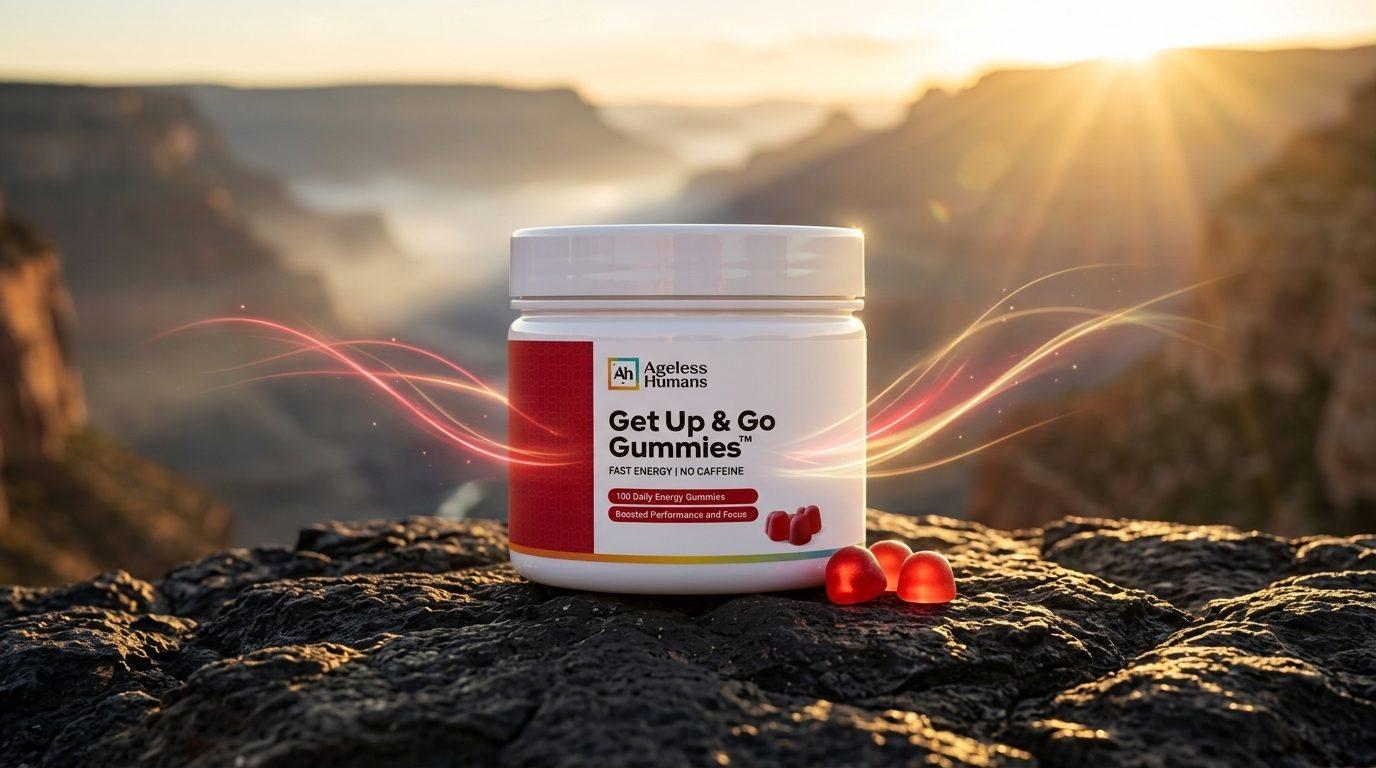
The best caffeine-free energy supplements support how your cells make energy instead of masking tiredness. The main options are NAD+ and its precursor NMN, low-dose methylene blue, and the B-vitamin family, all of which take part in turning food into ATP, the fuel your cells run on. Expect steadier energy that builds over days and weeks, not a jolt in 20 minutes, and no crash afterward.
Why Caffeine Feels Like Energy (But Isn't)
Caffeine doesn't create energy. It hides tiredness. Through the day your brain builds up a compound called adenosine, which signals that it's time to rest. Caffeine blocks adenosine from docking at its receptors, so you stop feeling tired. The adenosine is still there.
When the caffeine wears off, all that built-up adenosine hits at once. That's the afternoon crash. Caffeine also triggers a stress-hormone response, which is where the jitters, racing heart, and anxious edge come from. And because caffeine can stay in your system for hours, a 2 p.m. coffee can still be cutting into your deep sleep at midnight. Poor sleep makes tomorrow's fatigue worse, and the cycle starts over.
None of this makes caffeine bad. It's a well-studied tool. But if you want energy that holds steady from morning to evening, you have to work one level deeper: inside the cell, where energy is actually made.
Where Real Energy Comes From: Your Mitochondria
Real, lasting energy is ATP, and your mitochondria make it. Mitochondria are tiny structures inside nearly every cell. They take the fuel from your food and, through a process called the electron transport chain, convert it into ATP. Every heartbeat, thought, and step runs on ATP.
That process depends on a supply chain of helper molecules:
- NAD+ carries electrons from your food into the energy-making chain. Without enough of it, the assembly line slows.
- B vitamins serve as cofactors at almost every step of turning carbs, fats, and protein into usable fuel. One of them, B3 (niacin), is a raw material your body uses to build NAD+.
- Electron carriers move energy along the chain itself. Methylene blue has been studied for its ability to act as an alternative electron carrier inside mitochondria.
This is the core idea behind caffeine-free energy: instead of blocking the 'tired' signal, you support the machinery that produces energy in the first place. The result is usually subtler than caffeine, and it doesn't come with a rebound.
NAD+ and NMN: Supporting the Energy Molecule Itself
NAD+ is the coenzyme your cells need to turn food into ATP, and NMN is a direct building block your body converts into NAD+. Research suggests NAD+ levels tend to decline as we age, which is why it has become one of the most studied molecules in longevity science. Supplementing with NAD+ or NMN is a way to help maintain healthy NAD+ levels.
Beyond energy, NAD+ also fuels enzymes involved in cellular repair and healthy aging, which is why it shows up in both energy and longevity conversations. Human research on NMN and NAD+ is still young and growing. Early studies have looked at markers of metabolism, muscle function, and NAD+ levels in the blood, with mixed results. What researchers can say confidently is that NMN supplementation raises NAD+ levels. What isn't settled is exactly how that translates into how energetic a given person feels.
What to expect: NAD+ support is not a stimulant. Most people describe it as a gradual shift: fewer afternoon dips, more consistent stamina, rather than a buzz. Give it a few weeks of consistent use before judging it.
Wondering which form to take? We break down absorption, conversion, and use cases in NAD vs NMN.
Methylene Blue: The Mitochondrial Electron Carrier
Methylene blue is a compound studied for its ability to support mitochondrial efficiency by acting as an electron carrier in the energy-making chain. In simple terms, it can help shuttle electrons along the same pathway your mitochondria use to make ATP. At low doses, it has been researched for its role in supporting cellular energy and cognitive function, including memory and focus.
People interested in methylene blue often describe the effect as clear-headed and steady rather than wired. Unlike caffeine, it doesn't work by blocking adenosine, so it isn't expected to produce the same jitters or crash. The research base is promising but still developing, and most of the cognitive studies are small.
Important safety notes:
- Methylene blue can interact with certain medications, especially some antidepressants and other drugs that affect serotonin. If you take any prescription medication, talk to your healthcare provider before using it.
- It's not recommended during pregnancy or breastfeeding, or for people with G6PD deficiency.
- It's a dye, so harmless blue or green urine is normal.
- Quality matters. Use only pharmaceutical-grade methylene blue made for human use, never aquarium or lab-grade products.
For a side-by-side breakdown of how it compares to your morning coffee, read methylene blue vs caffeine.
The B-Vitamin Pathway: The Foundation Most People Skip
B vitamins don't give you energy directly. They are the cofactors your body needs to extract energy from food. If you're running low on one, the whole system can feel sluggish, and no amount of NAD+ or coffee fully makes up for it.
Here's what each one does in the energy pathway:
- B1 (thiamine): helps convert carbohydrates into fuel.
- B2 (riboflavin): forms part of FAD, a key electron carrier in the mitochondria.
- B3 (niacin/niacinamide): a precursor your body uses to make NAD+.
- B5 (pantothenic acid): needed to make coenzyme A, central to burning fats and carbs.
- B6: supports protein metabolism and neurotransmitter production.
- B12 and folate: support red blood cell formation and the methylation cycle. B12 helps maintain healthy energy levels, and absorption can become less efficient with age.
Look for active forms when you can, such as methylcobalamin for B12 and methylfolate instead of folic acid, which some people convert less efficiently. B vitamins are the least exciting entry on this list and often the most important. They're the base layer the other supplements build on.
How the Options Compare
Each caffeine-free option works on a different part of the energy chain, so they complement each other rather than compete. Here's the quick version:
| Supplement | How it supports energy | What it feels like | Timeline |
|---|---|---|---|
| NAD+ / NMN | Supports the coenzyme that powers ATP production | Steadier stamina, fewer dips | Gradual, over weeks |
| Methylene blue | Studied as a mitochondrial electron carrier | Clear focus, calm alertness | Often noticed sooner |
| B vitamins | Cofactors for turning food into fuel | Fewer energy lows if you were running low | Days to weeks |
| Caffeine (for reference) | Blocks adenosine, the 'tired' signal | Fast lift, possible jitters and crash | Minutes |
Which should you start with? If your main complaint is mental fog and afternoon focus, methylene blue is worth a look (after checking for medication interactions). If you're thinking long-term about energy as you age, NAD+ or NMN is the core longevity play. If your diet is limited, you're over 50, or you eat plant-based, make sure your B vitamins are covered first.
Building a Caffeine-Free Energy Routine That Lasts
Supplements work best on top of the basics, not instead of them. No molecule can out-perform short sleep. Before stacking anything, cover these:
- Morning light: 10 minutes of outdoor light soon after waking helps set your body clock and daytime alertness.
- Protein at breakfast: steadier blood sugar means fewer mid-morning slumps.
- Hydration: even mild dehydration can feel like fatigue.
- Movement: regular exercise is one of the most reliable ways to support mitochondrial health.
- A consistent sleep window: same bedtime and wake time, even on weekends.
Then layer in supplements one at a time, so you can tell what's helping. Take energy-supporting products in the morning, follow the label directions, and give each one a fair trial of a few weeks.
If you're cutting back on coffee, taper instead of quitting cold. Dropping caffeine abruptly often brings a few days of headaches and fatigue. Swap one cup at a time over a week or two while your cellular-energy routine takes hold. Many people find they keep one morning coffee for the ritual and drop the afternoon refills that were wrecking their sleep.
How to Choose a Quality Energy Supplement
Choose supplements with third-party testing, transparent labels, and a known manufacturer. The supplement market is loosely regulated, and what's on the label isn't always what's in the bottle. That's especially important for NMN and methylene blue, where purity and grade vary widely.
Check for:
- A Certificate of Analysis (COA) from an independent lab, confirming identity, potency, and the absence of contaminants.
- Clear ingredient forms and amounts: no vague 'proprietary blends' hiding doses.
- Pharmaceutical-grade methylene blue specifically made for human use.
- A real manufacturer you can identify, ideally one that makes its own products.
At Ageless Humans, every product is made in our own FDA-registered facility in Carlsbad, California, and every lot is third-party lab tested with a COA. We back it with a 60-day money-back guarantee, because the honest way to judge an energy supplement is to try it consistently and see how you feel.
Frequently asked questions
Do caffeine-free energy supplements actually work?+
Caffeine-free energy supplements like NAD+, NMN, methylene blue, and B vitamins work differently from stimulants. They support the cellular processes that produce energy instead of blocking fatigue signals. Effects tend to be subtler and more gradual than caffeine, and research on NAD+ precursors and methylene blue is promising but still developing. Results vary by person, especially depending on sleep, diet, and baseline nutrient levels.
Will NMN give me energy right away?+
NMN usually doesn't produce an immediate energy boost the way caffeine does. It works by helping maintain healthy NAD+ levels, a coenzyme your cells use to make ATP, so any change in energy tends to build gradually. Most people evaluate it over several weeks of consistent use rather than day to day.
Is methylene blue safe to take every day?+
Pharmaceutical-grade methylene blue taken at label directions has been studied at low doses, but it isn't right for everyone. It can interact with certain medications, especially some antidepressants and other drugs that affect serotonin, and it isn't recommended during pregnancy, while breastfeeding, or for people with G6PD deficiency. Talk to your healthcare provider before starting, particularly if you take any prescription medication.
Can I take NAD+ or NMN and methylene blue together?+
NAD+ or NMN and methylene blue support different steps of mitochondrial energy production, so some people use them together as a cellular-energy stack. Introduce them one at a time so you can tell how each affects you, follow the label directions, and check with your healthcare provider first if you take medications, since methylene blue has known drug interactions.
Which B vitamins help with energy?+
All eight B vitamins help convert food into usable energy, but B1, B2, B3, B5, B6, and B12 are most directly involved in the energy pathway. B3 is also a building block for NAD+, and B12 helps maintain healthy energy levels and red blood cell formation. Active forms like methylcobalamin (B12) and methylfolate may be easier for some people to use.
Can I still drink coffee while taking cellular-energy supplements?+
Yes, most people can keep drinking coffee while taking NAD+, NMN, or B vitamins. Many find they naturally need less caffeine over time and cut the afternoon cups that disrupt sleep. If you take methylene blue, ask your healthcare provider about combining it with caffeine and any other supplements or medications you use.