
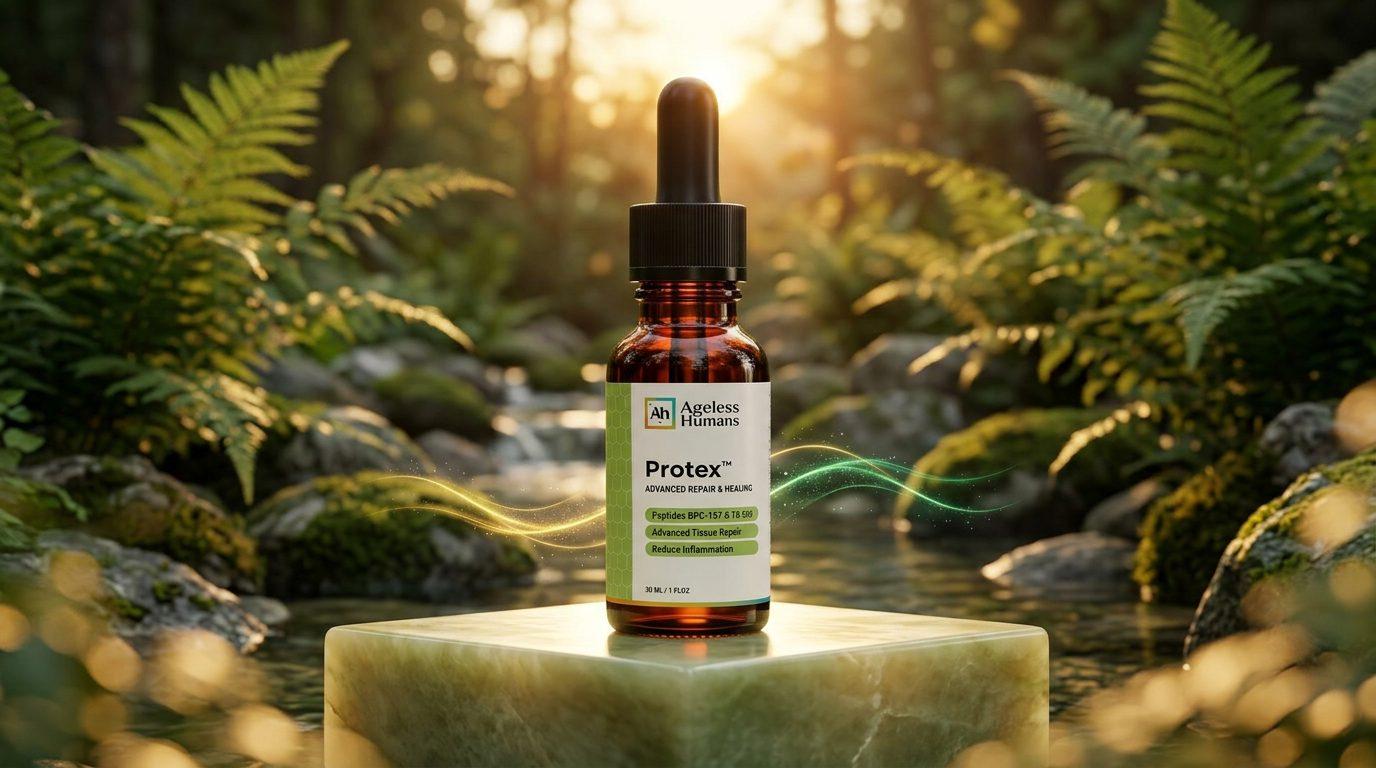
Oral BPC-157 is a legitimate option, not a watered-down copy of the injection. For a peptide, BPC-157 is unusually stable in stomach acid, and many of the animal studies gave it by mouth. No published human study directly compares oral and injected BPC-157, though, so any claim that one is "10x stronger" is a guess. Oral's clearest advantage is practical: no needles, no mixing, and no sharps, which makes a daily routine much easier to keep.
The Short Answer: Oral and Injection Are Different Tools, Not Better and Worse Versions
Oral and injected BPC-157 reach the body by different routes, so they likely behave differently. One is not simply a weaker copy of the other. An injection under the skin delivers the peptide into tissue, where it can be absorbed into circulation. An oral dose passes through the stomach and gut first. That gives it direct contact with the digestive lining, and some of it may also reach the rest of the body.
Most online debate skips this point. People compare the routes as if "how much reaches the blood" were the only thing that matters. For a compound that was first isolated from a protein in gastric juice, gut exposure may be part of how it does its job rather than a flaw.
If BPC-157 is new to you, start with our primer on what BPC-157 is and how it's been studied. This article covers one question: does the delivery route matter, and how much?
Why Most Peptides Fail When Swallowed, and Why BPC-157 Is an Exception
Most peptides break down in the digestive tract, but BPC-157 has been reported to stay stable in gastric juice in lab testing. That stability is the main reason oral BPC-157 is worth discussing at all.
Peptides are short chains of amino acids. Your digestive system is built to cut those chains apart, using stomach acid plus enzymes called proteases. This is why insulin, for example, has traditionally been injected. Swallow most peptides and you mostly get amino acids, which is fine nutrition but not the intact compound.
BPC-157 is a 15-amino-acid fragment derived from a protein found naturally in human gastric juice. Because it originates in the stomach, researchers have described it as resistant to the conditions that destroy most peptides. Its full name, Body Protection Compound, reflects the role it was studied for in that environment. This stability doesn't prove high oral absorption. It does mean the peptide survives long enough to have a chance.
The Bioavailability Debate, Handled Honestly
The honest position is that oral BPC-157 has meaningful animal research behind it, while its human bioavailability has not been well measured for either route. Both camps tend to overstate their case. Here is the evidence sorted by how solid it is.
What research suggests:
- BPC-157 is unusually stable in gastric conditions compared with typical peptides.
- Many animal studies gave it orally, often in drinking water, and researchers in several of those studies reported effects on tissue repair processes in rodent models. Some reported results comparable to injected routes in the same models.
- The peptide has been studied for its role in supporting the gut lining, tendon and ligament tissue, muscle, and blood vessel formation, mostly in animals.
What research does not yet show:
- How much oral BPC-157 reaches human circulation intact.
- A head-to-head human trial comparing oral and injected forms.
- Whether rodent results translate to people at all. Rodent digestion, metabolism, and dosing differ from ours.
Be skeptical of anyone quoting precise absorption percentages for BPC-157 in humans, from either side. Injection advocates often assume oral absorption is near zero. Oral advocates sometimes imply it's equivalent. Published human data supports neither claim. Much of the existing literature also comes from a small number of research groups, which is another reason for caution.
Where Sublingual BPC-157 Fits
Sublingual (under-the-tongue) BPC-157 is plausible but unproven, and it's best seen as a variation on oral use rather than a separate category. In theory, the tissue under the tongue can absorb some compounds straight into the bloodstream, skipping the gut and the liver's first pass.
The catch is molecule size. The mucosa under the tongue absorbs small molecules best, and even a short peptide like BPC-157 is larger than the compounds that typically absorb well there. Most people also end up swallowing part of a sublingual dose anyway, so in practice it becomes partly oral.
If you prefer sublingual, there's no strong reason to avoid it. There also isn't published human evidence that it beats a standard oral format. Pick the format you'll actually use consistently, and follow the product's label directions.
What Injection Offers, and What It Costs You
Injection is often assumed to deliver more peptide into circulation, but in practice it brings real trade-offs in sourcing, sterility, and routine. These deserve as much weight as the bioavailability argument.
- Sourcing: Much injectable BPC-157 sold online is labeled "for research use only" or "not for human consumption." That label means no one is vouching for the product's purity, sterility, or contents for human use.
- Sterility: Anything injected skips your body's first line of defense. Contamination, poor handling, or a non-sterile vial carries risks that a swallowed product does not.
- Preparation: Lyophilized (freeze-dried) peptides typically have to be reconstituted with bacteriostatic water, kept refrigerated, measured in small syringes, and used within a window of time.
- Technique and disposal: Daily injections mean rotating sites, managing sharps, and accepting the occasional bruise or sting.
- Regulatory status: BPC-157's regulatory picture is still evolving, and the FDA has raised questions about it in the context of pharmacy compounding. Anyone considering injectable peptides should do so under a qualified clinician's guidance.
None of this makes injection "wrong." It does mean that "injection is more bioavailable" is only one part of the comparison.
Why Needle-Free Matters: Consistency Beats Theoretical Potency
A routine you keep up for weeks almost always beats a theoretically stronger one you abandon after a few days. Research on adherence across many areas of health consistently suggests that simpler, lower-friction routines are easier to stick with. Few things add more friction than a daily needle.
Compare two mornings. On one, you open a bottle and take your serving with water. On the other, you check that the vial is still in date, draw a dose, clean a site, inject, and dispose of the syringe. Then you repeat it while traveling, at a hotel, or on a busy morning. Many people who start injectable protocols drift off them because the process is a hassle, not because of results.
Support for recovery and tissue maintenance is a slow, cumulative process. Whatever role a peptide plays, it only gets that chance if you take it regularly. For many people, especially those who are needle-averse, travel often, or just want something that fits next to their other supplements, oral is the format they'll actually stay with. That is a real advantage, not a compromise.
How to Choose a Quality Oral BPC-157
With any peptide, who made it and whether it was independently tested matter as much as the route. Use this checklist before you buy:
1. Known manufacturer: Look for a company that names where its products are made. Avoid anonymous "research chemical" storefronts. 2. Third-party testing: Ask for a Certificate of Analysis (COA) from an independent lab confirming identity and purity for the specific lot you receive. 3. Labeled for human use: Choose a supplement with clear label directions, not a vial marked "not for human consumption." 4. Honest marketing: Be wary of brands that promise to heal injuries or quote absorption numbers they can't source. 5. A real guarantee: A brand confident in its product will let you try it without locking you in.
At Ageless Humans, our oral BPC-157 and TB-500 formula, ProteX, is made in our own FDA-registered facility in Carlsbad, California. Every lot is third-party lab tested with a COA, and it's backed by a 60-day money-back guarantee. TB-500 is a synthetic fragment of thymosin beta-4, a peptide studied for its role in cell migration and tissue repair processes. That's why the two are often paired.
Before You Start: A Few Honest Cautions
Talk with your healthcare provider before using BPC-157 in any form, especially if you're pregnant, nursing, managing a medical condition, or taking medications. Human safety data is limited, and that applies to both oral and injected routes.
Competitive athletes should know that BPC-157 is on the World Anti-Doping Agency's prohibited list. If you're subject to drug testing, don't use it.
Take any product only as directed on its label. More is not better with a compound whose human dose-response hasn't been established. Track how you feel over several weeks instead of judging it day to day.
Frequently asked questions
Does oral BPC-157 actually work?+
Oral BPC-157 is a reasonable option. It is unusually stable in stomach acid for a peptide, and many animal studies gave it orally and reported effects on tissue repair processes. Human research is limited, so its effects in people have not been firmly established. It's best viewed as a promising, needle-free way to support recovery, not a proven equivalent to injection.
Is injected BPC-157 more bioavailable than oral BPC-157?+
Injection is generally assumed to deliver more peptide into circulation, but no published human study has measured and compared BPC-157 absorption by route. Oral BPC-157 also has direct contact with the digestive lining, which may matter for a peptide that originated in gastric juice. Claims of exact absorption percentages for either route aren't supported by human data.
Is sublingual BPC-157 better than swallowing it?+
There's no published human evidence that sublingual BPC-157 outperforms standard oral use. In theory, absorption under the tongue can bypass the gut, but peptides absorb less efficiently there than small molecules, and some of the dose is usually swallowed anyway. Choose the format you'll take consistently and follow the label directions.
Why do some people take BPC-157 and TB-500 together?+
BPC-157 and TB-500 have been studied for different but complementary roles in the body's tissue repair processes. TB-500 is a synthetic fragment of thymosin beta-4, which has been studied for its role in cell migration. People pair them to support recovery from more than one angle. Research on the combination specifically is limited.
Is BPC-157 allowed for drug-tested athletes?+
No. BPC-157 is on the World Anti-Doping Agency's prohibited list, so athletes subject to drug testing should not use it in any form. That applies to oral, sublingual, and injectable products alike.
How long does it take to notice anything from oral BPC-157?+
There's no established human timeline, and experiences vary from person to person. Because recovery support is gradual, most people assess a peptide over several weeks of consistent, label-directed use rather than day to day. A product with a money-back guarantee lets you evaluate it without long-term commitment.