
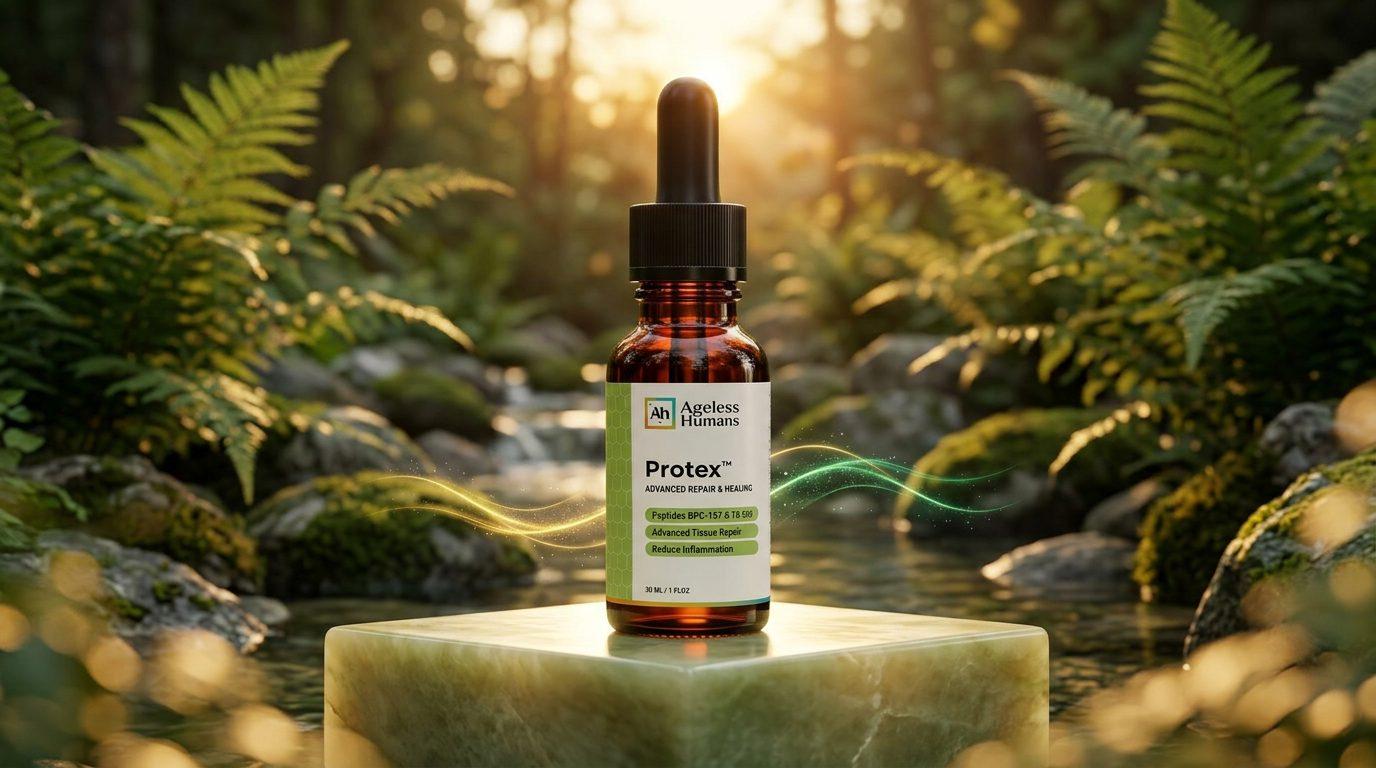
BPC-157 is a peptide studied for its role in supporting tendon and ligament tissue, and early research, mostly in animals and cell cultures, suggests it may support the processes connective tissue relies on to rebuild: cell migration, blood vessel signaling, and organized collagen formation. Human research is still limited, so BPC-157 is best viewed as a promising support tool alongside proven fundamentals like progressive loading, sleep, and nutrition, not as a shortcut.
Why Tendons and Ligaments Recover So Slowly
Tendons and ligaments recover slowly because they have a limited blood supply and a slow rate of collagen turnover. Muscle is packed with blood vessels that deliver oxygen and nutrients quickly. Tendons and ligaments are dense, rope-like tissues built mostly from tightly packed collagen, with far fewer blood vessels and fewer active cells to do the rebuilding work.
That structure is what makes them strong, and it is also why they feel stubborn. When a tendon is stressed beyond what it is used to, the cells responsible for repair, called fibroblasts (tendon-specific ones are called tenocytes), have to migrate to the area, multiply, and lay down new collagen. Then that collagen has to be remodeled and aligned before the tissue regains its full strength. Each step takes time.
If you have noticed that a sore elbow, knee, or Achilles lingers for weeks while your muscles bounce back in days, this is the reason. It also explains why researchers have been interested in compounds like BPC-157: the question is whether anything can support the cell migration, blood vessel signaling, and collagen organization that tendon tissue depends on.
What BPC-157 Is, in One Minute
BPC-157 is a short peptide, a chain of 15 amino acids, derived from a protein found in human gastric juice. The name stands for Body Protection Compound. It was first studied for its role in supporting the gut lining, and researchers later expanded their work to other tissues, including tendons, ligaments, and muscle.
One feature that sets BPC-157 apart from many peptides is that researchers have described it as relatively stable in gastric juice. That is part of why it has been explored in oral form, not only in the injectable form used in much of the animal research.
If you want the full background on its origin, how it is studied, and what it is not, start with our primer: What Is BPC-157?. The rest of this article focuses specifically on joints, tendons, and ligaments.
What the Research Suggests About BPC-157 and Tendon Support
Research suggests BPC-157 may support several processes that tendon and ligament tissue relies on to rebuild, though most of this evidence comes from animal and cell-culture studies. Here is what researchers have looked at:
- Fibroblast activity: In lab studies on tendon fibroblasts, BPC-157 has been studied for its effect on how these cells spread, migrate, and survive under stress. Migration matters because repair cells have to physically reach the stressed area.
- Blood vessel signaling: BPC-157 has been studied for its influence on pathways involved in forming new blood vessels (angiogenesis). For a tissue with limited blood supply, this is one of the most discussed mechanisms.
- Growth hormone receptor expression: Cell research has explored whether BPC-157 increases the number of growth hormone receptors on tendon fibroblasts, which could make those cells more responsive to the body's own growth signals.
- Collagen organization: In rodent models of tendon and ligament stress, researchers have reported more organized tissue and better functional measures in groups given BPC-157 compared with controls.
Taken together, these findings point in a consistent direction: BPC-157 appears to interact with the cell-level machinery of connective tissue rebuilding. That is why it has become one of the most talked-about compounds among people dealing with slow recovery in their joints and tendons.
What the Research Does Not Show Yet
The research does not yet show, through large controlled human trials, how well BPC-157 works for tendon and ligament support in people. This is the honest gap, and any source that skips it is overselling.
Here is what to keep in mind:
- Most studies are in animals or cells. Rodent tendons and cultured cells are useful models, but results do not always carry over to humans in the same way.
- Human data is limited. Only a small amount of human research exists, and it is not enough to draw firm conclusions about outcomes or timelines.
- Delivery methods differ. Many animal studies used injection. Oral research exists, but oral and injected forms should not be assumed to behave identically.
- Quality varies widely. Because BPC-157 is sold by many vendors, purity and identity are real concerns. A product is only as good as its testing.
- Sport rules apply. BPC-157 is on the World Anti-Doping Agency's prohibited list. Tested athletes should not use it.
None of this cancels out the early findings. It simply means the right expectation is cautious optimism: promising mechanisms, limited human confirmation.
The Fundamentals That Matter More Than Any Peptide
The best-supported driver of tendon and ligament adaptation is progressive loading, meaning gradually increasing the demand you place on the tissue so it adapts and gets stronger. Tendons respond to mechanical load by building and remodeling collagen. Complete rest often leaves tissue weaker, while smart, gradual loading signals it to rebuild.
If you are dealing with slow recovery, get these right first:
1. Load gradually. Slow, controlled movements and isometric holds are commonly used to keep tendons working without overloading them. A physical therapist can tailor this to your situation. 2. Sleep enough. Much of the body's repair signaling happens during deep sleep. 3. Eat enough protein. Collagen is built from amino acids, and your diet supplies them. Vitamin C also plays a known role in normal collagen formation. 4. Be patient. Tendon remodeling is measured in weeks and months, not days. 5. Get persistent issues checked. If a joint or tendon problem is not improving, see a qualified healthcare provider for an evaluation.
BPC-157 belongs on top of this foundation, not in place of it. Think of it as a possible supporting player for a process your training, sleep, and nutrition are already driving.
BPC-157 and TB-500: Why They Are Often Paired
BPC-157 is often paired with TB-500 because the two peptides are studied for different, complementary mechanisms. BPC-157 research centers on local tissue signaling, fibroblast activity, and blood vessel support. TB-500 is a synthetic fragment related to thymosin beta-4, a protein studied for its role in cell migration and how cells organize their internal structure as they move.
In theory, that gives you two angles on the same goal: getting repair cells to the right place and supporting the environment they work in. Combination research is even more limited than single-peptide research, so this pairing rests on mechanistic logic rather than head-to-head human trials.
For a full breakdown of how the two compare, how people think about combining them, and what is known about each, read our BPC-157 and TB-500 stack guide. If you prefer a convenient oral option that combines both, Protex BPC-157 and TB-500 Peptides (Oral) is made in our FDA-registered facility in Carlsbad, California. Use it only as directed on the label.
Topical Support: Where GHK and NAD Fit In
Topical formulas offer a different, complementary angle: supporting the skin and soft tissue over the area you are working on. Two ingredients stand out in this space.
GHK (often studied as the copper complex GHK-Cu) is a naturally occurring peptide that has been studied for its role in collagen production and tissue remodeling, mostly in skin research. NAD+ is a coenzyme every cell uses for energy production, and cellular NAD+ levels are known to decline with age.
A roll-on fits naturally into a recovery routine: apply after training or as part of your evening wind-down, alongside your loading work. Our Advanced Muscle Roll-On with NAD and GHK was formulated for exactly that use, supporting skin and soft tissue in the areas you train hardest. Topicals and oral peptides are different tools, and many people use both.
How to Choose a BPC-157 Product You Can Trust
Choose a BPC-157 product based on verifiable testing and manufacturing standards, not marketing. Because the peptide market is crowded and loosely policed, the label is only as reliable as the company behind it.
Look for:
- A Certificate of Analysis (COA) for every lot, from an independent third-party lab, confirming identity and purity.
- Known manufacturing. You should be able to find out where and how the product is made. Ageless Humans products are made in our own FDA-registered facility in Carlsbad, California.
- Clear label directions. Follow them exactly. Do not improvise based on forum advice.
- Honest claims. Be wary of any product promising to fix or heal anything. Credible brands describe what a supplement supports, not what it cures.
- A real guarantee. Every Ageless Humans product carries a 60-day money-back guarantee.
Finally, talk with your healthcare provider before starting any new supplement, especially if you are pregnant, nursing, taking medications, or managing a health condition.
Frequently asked questions
Does BPC-157 help tendons and ligaments?+
Research suggests BPC-157 may support tendon and ligament tissue by influencing fibroblast activity, blood vessel signaling, and collagen organization. Most of this evidence comes from animal and cell studies, and human research is still limited. It is best used as a support alongside progressive loading, sleep, and good nutrition.
How long does BPC-157 take to work for joints?+
There is no well-established human timeline for BPC-157 and joint or tendon support, because large human trials have not been done. Tendon tissue itself remodels slowly, typically over weeks to months. Consistency with label directions and your recovery fundamentals matters more than expecting fast changes.
Is oral BPC-157 effective, or does it have to be injected?+
Much of the animal research used injected BPC-157, but researchers have also studied oral forms, and BPC-157 has been described as relatively stable in gastric juice. Oral and injected forms should not be assumed to work identically. Oral BPC-157 offers a convenient, non-injectable option.
Is BPC-157 safe?+
BPC-157 has generally been well tolerated in animal research, but long-term human safety data is limited. Product purity is a major factor, so choose a brand that provides third-party COAs for every lot. Talk with your healthcare provider before use, especially if you take medications or are pregnant or nursing.
Can athletes use BPC-157?+
BPC-157 is on the World Anti-Doping Agency's prohibited list, so athletes subject to drug testing should not use it. Recreational lifters and active adults outside tested sport are not bound by these rules. Check your own sport's governing body if you are unsure.
Should I take BPC-157 with TB-500?+
Many people pair BPC-157 with TB-500 because the two are studied for complementary mechanisms: BPC-157 for local tissue signaling and TB-500 for cell migration. Research on the combination is limited, so the pairing rests on mechanism rather than human trials. Follow label directions and consult a healthcare provider before starting.