
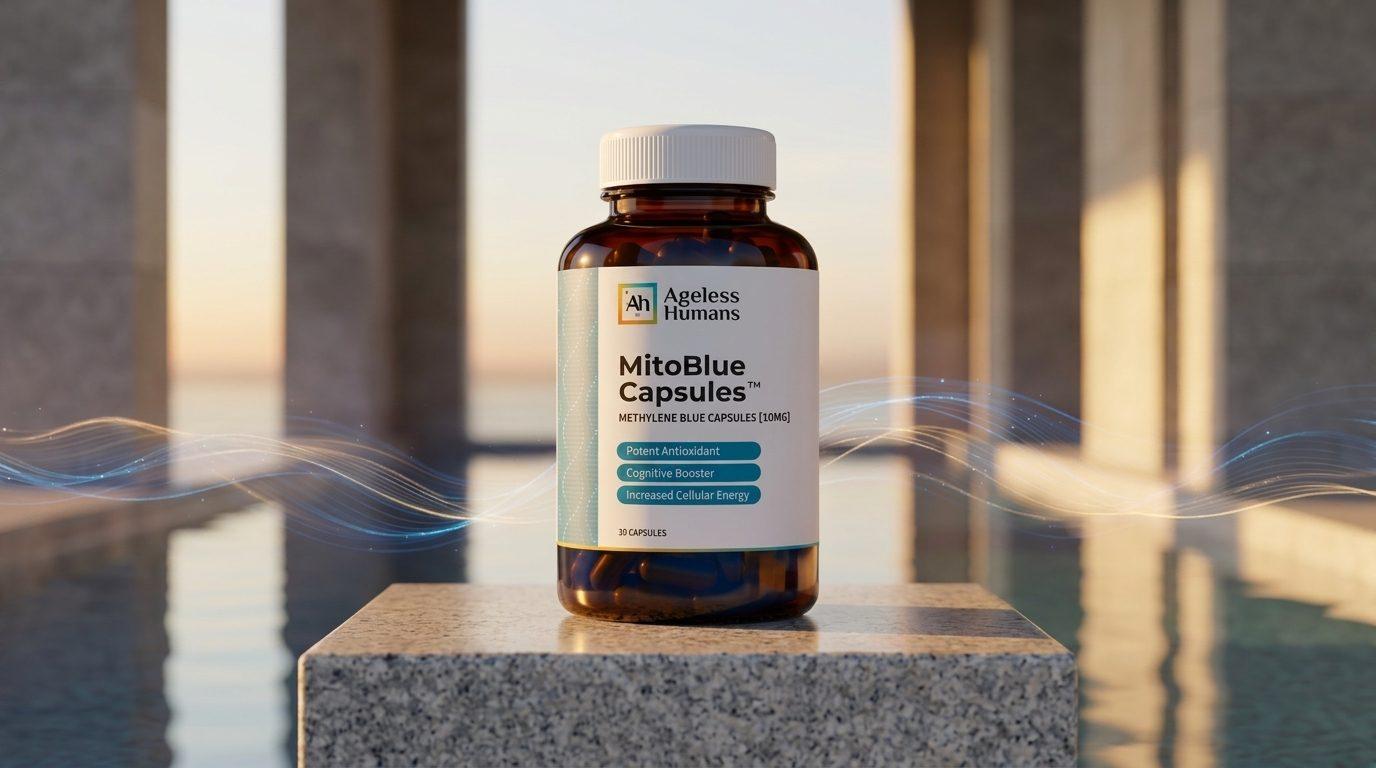
Caffeine and methylene blue support energy and focus in different ways. Caffeine blocks adenosine, the brain's tiredness signal, so you feel more alert fast but can crash when it wears off. Methylene blue is studied for supporting mitochondrial energy production inside cells, so its effect is usually subtler and doesn't involve the same rebound. Many people can use both, but check for medication interactions first.
The Short Answer: Caffeine Masks Fatigue, Methylene Blue Supports Energy Production
Caffeine changes how tired you feel. Methylene blue is studied for how your cells make energy. That one difference explains most of what follows: how fast each works, how each feels, and why one is known for a crash.
Caffeine works on a signal. It blocks the receptors that tell your brain you're getting tired. The fatigue is still building in the background; you just can't feel it for a while.
Methylene blue works on supply. At low amounts, it has been researched for its ability to support the electron transport chain, the process your mitochondria use to make ATP, the energy currency of every cell. It doesn't hide tiredness. The goal is to support the system that produces energy to begin with.
Neither one is "better" across the board. They do different jobs, which is why the more useful question is which job you need done.
How Caffeine Works: Adenosine Blocking and Adrenaline
Caffeine makes you feel awake by blocking adenosine receptors in the brain. Adenosine builds up the longer you're awake and acts like a pressure gauge for sleepiness. Caffeine is shaped enough like adenosine to sit in its receptors without triggering them, so the "time to rest" message gets muted.
That blockade has knock-on effects:
- Faster alertness. Most people feel caffeine within the first hour.
- More adrenaline and dopamine activity. This drives the sharp, motivated feeling and, for some people, jitters, a racing heart, or anxiety.
- A long tail. Caffeine stays active for several hours, which is why an afternoon coffee can still affect sleep that night.
Caffeine is one of the most researched compounds in the world, and for many adults moderate intake fits comfortably into a healthy routine. Its limits are well known, too: tolerance builds with daily use, and sensitivity varies a lot from person to person based on genetics, sleep, and body size.
How Methylene Blue Works: Supporting Mitochondrial Energy
Methylene blue is studied for its ability to help mitochondria move electrons and produce ATP more efficiently. It can accept and donate electrons, which lets it act as an alternative carrier inside the electron transport chain. In simple terms, it can help keep the energy assembly line running smoothly.
Brain cells are some of the most energy-demanding cells in the body, which is why low-dose methylene blue has drawn research interest for cognitive function, memory, and mental clarity. Research suggests its effects depend heavily on dose. Low amounts behave very differently from high amounts, which is one reason label directions matter.
A few honest caveats:
- The research is earlier-stage than caffeine's. There's a growing body of lab and small human studies, not decades of large population data.
- The effect is usually subtle. People tend to describe steady clarity rather than a buzz. Some notice very little.
- Quality matters. Use only pharmaceutical-grade (USP) methylene blue made for human consumption, never industrial or aquarium products.
For a deeper look at what's been studied, see our guide to methylene blue benefits.
Crash vs No Crash: Why Caffeine Drops You and Methylene Blue Typically Doesn't
Caffeine crashes happen because adenosine keeps building while caffeine blocks it, then hits all at once when caffeine clears. You didn't skip the fatigue; you postponed it. When receptors open back up, that stored-up tiredness lands together, often in mid-afternoon, along with a dip in mood and focus.
Three things make the crash worse:
1. Poor sleep. Less sleep means more adenosine waiting behind the block. 2. Daily high intake. Your brain adapts by adding adenosine receptors, so you need more caffeine to feel the same and feel worse without it. 3. Sugar alongside caffeine. Sweetened energy drinks and coffee drinks add a blood-sugar drop to the adenosine rebound.
Methylene blue doesn't work through adenosine, so it doesn't create that same rebound. That's the real reason it's described as "no crash." But no crash isn't the same as a big lift. If your energy problem is mostly short sleep, methylene blue won't replace the rest you're missing, and neither will caffeine.
Side-by-Side Comparison
Choose caffeine for fast, short-term alertness. Choose methylene blue if you want steady support without stimulant effects. Here's how they compare on what matters day to day:
| Caffeine | Methylene Blue | |
|---|---|---|
| Main mechanism | Blocks adenosine (tiredness signal) | Studied for supporting mitochondrial ATP production |
| How it feels | Sharp, fast, stimulating | Subtle, steady, clear-headed |
| Onset | Usually within an hour | Gradual; varies by person |
| Crash | Common as it wears off | No adenosine rebound |
| Jitters / heart racing | Possible, especially at higher intake | Not a stimulant |
| Tolerance | Builds with daily use | Less understood |
| Research depth | Extensive | Promising but earlier-stage |
| Key cautions | Sleep, anxiety, sensitivity | Serotonergic medications, G6PD deficiency, pregnancy |
| Odd side effect | None notable | Can turn urine blue or green (harmless) |
The table shows why people often frame these as rivals when they're closer to teammates. One handles the feeling of alertness; the other is aimed at the energy supply underneath.
Can You Combine Methylene Blue and Caffeine?
Many people combine them, and there's no well-known direct interaction between the two, but start with one at a time and follow label directions. Because they work through different pathways, the idea is that caffeine covers quick alertness while methylene blue supports cellular energy in the background. Some people find they need less caffeine to feel focused this way.
That said, combining them hasn't been studied much as a pair, so be practical:
- Add one variable at a time. Get used to methylene blue on its own before adding your usual coffee, so you know which one is doing what.
- Keep caffeine moderate. If you feel wired, anxious, or your heart is racing, cut back on caffeine first.
- Protect your sleep. Keep caffeine earlier in the day. No supplement makes up for bad sleep.
- Check every label. Energy gummies, pre-workouts, and teas often contain caffeine. Know your total before you stack.
The bigger interaction issue with methylene blue isn't caffeine at all. It's prescription medication, covered next.
Who Should Be Careful: The Safety Points That Actually Matter
Methylene blue is not for everyone. Talk to your doctor before using it if you take any prescription medication, especially antidepressants or other drugs that affect serotonin. Methylene blue inhibits an enzyme called MAO-A, and combining it with serotonergic drugs (such as SSRIs, SNRIs, and some migraine and pain medications) has been linked to serious reactions in medical literature.
Also check with a healthcare provider first if you:
- Have G6PD deficiency
- Are pregnant, trying to conceive, or breastfeeding
- Have kidney or liver concerns
- Are scheduled for surgery or a medical procedure
Caffeine has its own cautions. If you're sensitive to stimulants, deal with anxiety or sleep trouble, or have a heart rhythm concern, your healthcare provider can help you decide how much, if any, fits your routine. If you want to step away from stimulants entirely, our guide to caffeine-free energy supplements covers the options.
How to Choose: Match the Tool to Your Goal
Pick based on the problem you're trying to solve, not the hype. A quick guide:
- You need to be alert in the next 30 minutes: caffeine is the faster tool.
- You hate the afternoon crash: consider cutting caffeine back and exploring non-stimulant support like methylene blue.
- You're stimulant-sensitive (jitters, anxiety, poor sleep): a non-stimulant approach may suit you better.
- You want long-term cognitive and cellular energy support: methylene blue is the one studied for that role.
- You want both: combine thoughtfully, one at a time, after checking your medications.
Whatever you choose, the basics still do most of the heavy lifting: consistent sleep, daylight in the morning, movement, hydration, and enough protein. Supplements support a good foundation. They can't replace one.
If you try methylene blue, choose a pharmaceutical-grade product from a manufacturer that publishes its testing. Ageless Humans makes its Methylene Blue Capsules in our FDA-registered facility in Carlsbad, California, and every lot is third-party lab tested with a COA you can review.
Frequently asked questions
Is methylene blue better than caffeine for focus?+
Neither is better for everyone, because they work differently. Caffeine gives fast, noticeable alertness by blocking the brain's tiredness signal, while methylene blue is studied for supporting mitochondrial energy production with a subtler, steadier effect. Caffeine fits short bursts of focus; methylene blue appeals to people who want support without stimulant effects or a crash.
Does methylene blue cause a crash like caffeine?+
Methylene blue doesn't cause the classic caffeine crash because it doesn't block adenosine, the tiredness signal that builds up behind caffeine and rebounds when it wears off. Its effects are generally described as steady rather than spiking. Individual responses vary, and it won't make up for missed sleep.
Can I take methylene blue with coffee?+
Many people take methylene blue with coffee, and there is no well-known direct interaction between methylene blue and caffeine. Start with one at a time so you can tell how each affects you, keep caffeine moderate, and follow the label directions. The more important check is prescription medication, especially antidepressants, so talk to your doctor first if you take any.
Who should not take methylene blue?+
People taking antidepressants or other serotonin-affecting medications should not take methylene blue without medical guidance, because it inhibits the enzyme MAO-A and serious reactions have been reported with that combination. People with G6PD deficiency, those who are pregnant or breastfeeding, and anyone with kidney or liver concerns should also check with a healthcare provider first. When in doubt, ask your doctor before starting.
Why does methylene blue turn urine blue?+
Methylene blue is a dye, and some of it leaves the body through the kidneys, which can tint urine blue or green. This is an expected, harmless effect and usually fades after you stop taking it. It's a sign the compound is being processed, not a sign of a problem.
How long does it take to feel methylene blue compared to caffeine?+
Caffeine usually takes effect within an hour and feels obvious. Methylene blue tends to be more gradual and subtle, and many people describe clearer, steadier focus rather than a distinct kick. Some people notice little at first, so judge it over consistent use as directed on the label.