
Cartalax is a short synthetic peptide, usually described as the tripeptide Ala-Glu-Asp (AED). It belongs to a class called peptide bioregulators and is studied mainly for its potential to support cartilage and connective-tissue cells as they age. Most of the research comes from one Russian group led by Vladimir Khavinson, and much of it is preclinical, so it is promising but not settled.
What Is Cartalax?
Cartalax is a three-amino-acid peptide (alanine, glutamic acid, aspartic acid) developed as a bioregulator for cartilage and connective tissue. It is one of a family of short peptides created at the Saint Petersburg Institute of Bioregulation and Gerontology. Each peptide in the family is paired with a tissue type. Cartalax is the one matched to the musculoskeletal system, especially cartilage.
A tripeptide is about as small as a functional peptide gets. For comparison, the collagen peptides in a typical powder are much longer chains, and a whole protein contains hundreds of amino acids. Researchers argue that this small size matters. In their view, a molecule this short may reach the inside of a cell rather than acting only on the surface.
Cartalax is typically sold as an oral capsule. It is a research-driven longevity ingredient, not a mainstream joint supplement like glucosamine. If you are new to the category, start with our primer on what peptides are. Then see the specifics on our Cartalax peptide page.
How Peptide Bioregulators Are Thought to Work
The leading hypothesis is that short bioregulator peptides interact with DNA and help adjust gene activity in specific tissues. That idea is still being tested. The proposed sequence works like this:
- Entry: Very short peptides may cross cell and nuclear membranes.
- Binding: Inside the nucleus, they may bind to specific DNA sequences or to proteins that pack DNA.
- Signaling: That binding may influence which genes turn on, including genes tied to cell renewal and the production of structural proteins.
The theory behind it is simple. As tissues age, the signaling that keeps their cells productive appears to weaken. Bioregulator researchers propose that tissue-matched peptides may help those cells keep behaving more like younger cells.
This mechanism is a working model, not established fact. Some of it is supported by cell-culture and modeling studies. Independent labs have not broadly confirmed it, and how much of an oral tripeptide reaches its target tissue intact is still an open question. Treat the mechanism as a reasonable hypothesis that explains why scientists are interested, not as proof of results in your body.
What Cartalax Is Studied For
Cartalax is studied mainly for its effects on the cells that build and maintain cartilage and connective tissue. The research falls into a few clear themes.
1. Cartilage cell (chondrocyte) activity. Cartilage has few cells and limited blood supply, so it renews slowly. Lab studies have looked at whether AED influences chondrocyte behavior and the markers tied to cartilage matrix production.
2. Connective-tissue cells (fibroblasts). Fibroblasts produce collagen and other structural proteins in skin, tendons, and ligaments. Cartalax has been studied in fibroblast cultures, including aging cell models. Researchers looked at markers related to cell renewal and cellular aging.
3. The extracellular matrix. This is the scaffolding of collagen, elastin, and other molecules that gives tissue its strength and flexibility. Some research examines whether the peptide affects proteins involved in building or breaking down that matrix.
4. Musculoskeletal aging generally. Because joints, tendons, and skin all lose resilience with age, Cartalax is studied within the broader goal of supporting healthy tissue aging.
Taken together, the potential benefits researchers are exploring are support for cartilage and connective-tissue cell function, healthy collagen-related activity, and maintaining joint and tissue resilience with age. Those are research directions, not guaranteed outcomes.
Who Researches Cartalax?
Most Cartalax research comes from Professor Vladimir Khavinson and colleagues at the Saint Petersburg Institute of Bioregulation and Gerontology in Russia. Khavinson is a gerontologist who has studied short peptide bioregulators since the 1970s. He and his collaborators developed the tissue-specific peptide family that Cartalax belongs to.
This group has published a large volume of work on bioregulators. That work includes cell studies, animal studies, and some human observational research across the peptide family. Cartalax specifically appears mostly in cell-culture and mechanism research.
Here is the honest caveat. The research base is concentrated in one network and has had limited independent replication in Western labs. That doesn't make it wrong. It does mean the findings haven't been stress-tested the way well-established ingredients have. Interest is growing in the longevity community, but large, independent, randomized human trials on Cartalax are not part of the current evidence.
What the Research Does and Doesn't Show
The research suggests Cartalax may influence cartilage and connective-tissue cells in the lab. It does not yet show clear, well-replicated benefits in people. Knowing this difference helps you set realistic expectations.
What the evidence supports:
- AED is biologically active in cell-culture models of connective-tissue cells.
- It has been studied for effects on markers tied to cell renewal, cellular aging, and matrix proteins.
- It fits into a coherent, decades-long research program on tissue-specific peptides.
What the evidence does not establish:
- Consistent, measurable joint or tissue outcomes in large human trials.
- How much oral Cartalax reaches cartilage intact.
- Long-term outcomes from independent research groups.
The gap matters because results in a dish don't always carry over to a whole body. Cartilage is especially hard to reach and slow to change. Be skeptical of anyone who promises fast, dramatic results from Cartalax. The honest framing is that it is an early-stage, research-backed ingredient for people who want to support connective-tissue health as part of a broader routine.
Cartalax vs. Other Popular Peptides
Cartalax differs from other joint-related peptides in size, intended target, and proposed mechanism. Here is how it compares:
- Cartalax (AED): A tripeptide bioregulator. It is matched to cartilage and connective tissue and thought to work through gene-level signaling. The research is mostly from a single group.
- BPC-157: A 15-amino-acid peptide based on a sequence found in gastric juice. It is widely studied in animal models for tissue recovery, including tendons and ligaments.
- TB-500: A synthetic fragment related to thymosin beta-4. It is studied for its role in cell migration and tissue repair processes.
- Collagen peptides: Longer hydrolyzed protein fragments. They supply amino acids and may signal collagen production. They have a larger body of human research than Cartalax.
- Other bioregulators (such as Epitalon): These are from the same research family but target different tissues. Epitalon is associated with pineal-gland research.
The practical takeaway is that these are not interchangeable. Cartalax is about tissue-specific signaling for aging connective tissue. BPC-157 and TB-500 are studied more for recovery. Collagen mainly provides building blocks. Some people combine approaches because they target different parts of the same goal.
How to Choose a Cartalax Product (and Use It Responsibly)
Choose a Cartalax product based on verified purity and manufacturing transparency, and take it exactly as the label directs. Peptides are a loosely policed market, so quality varies widely.
Use this checklist:
- Third-party testing: Look for a Certificate of Analysis (COA) for each lot from an independent lab. Every Ageless Humans lot is third-party tested, and the COA is available.
- Known manufacturing: Ask where the product is made. Ageless Humans makes all products in its own FDA-registered facility in Carlsbad, California.
- Clear labeling: The peptide, amount, and directions should be stated plainly. Avoid vague blends.
- Honest claims: Brands that promise to fix joints or cure conditions are breaking the rules and signaling low credibility.
- Risk reversal: A real guarantee shows confidence. Ageless Humans offers a 60-day money-back guarantee.
Follow label directions and don't stack more than recommended. Talk with your healthcare provider before starting, especially if you are pregnant, nursing, taking medication, or managing a health condition.
Building a Joint and Connective-Tissue Routine
Cartalax works best as one piece of a broader routine, not as a stand-alone fix. Connective tissue responds to how you live every day. The basics carry the most weight:
- Movement: Regular, joint-friendly activity helps circulate the fluid that nourishes cartilage.
- Strength training: Stronger muscles share the load with your joints and tendons.
- Protein and vitamin C: These supply the raw materials and cofactors your body uses to make collagen.
- Sleep and recovery: Tissue maintenance happens largely during rest.
- Healthy body weight: Less load means less daily stress on weight-bearing joints.
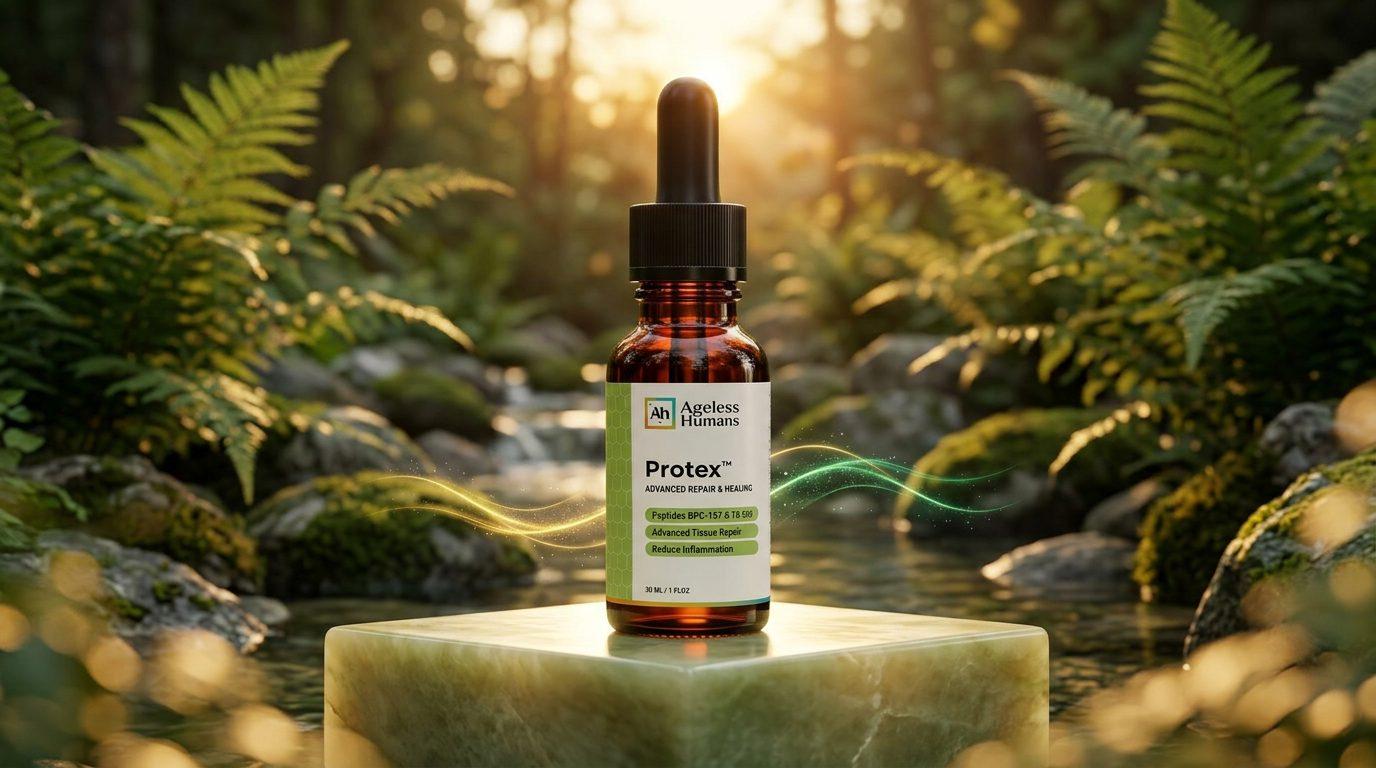
Some people add targeted support on top of those habits. For recovery from training, Protex BPC-157 & TB-500 oral peptides pair two widely researched recovery peptides in one oral formula. For something you can apply directly where you feel it, Pain Cream Max is a topical option many people use to soothe tired joints and muscles after activity. Layering a cell-level bioregulator, recovery peptides, and a topical comfort step covers different parts of the same goal.
Frequently asked questions
What is Cartalax peptide?+
Cartalax is a short synthetic peptide bioregulator, typically described as the tripeptide Ala-Glu-Asp (AED). It was developed at the Saint Petersburg Institute of Bioregulation and Gerontology. Researchers study it for its potential to support cartilage and connective-tissue cells as they age.
What are the benefits of Cartalax?+
Research suggests Cartalax may support the function of cartilage and connective-tissue cells and help maintain healthy collagen-related activity. Most of this evidence comes from cell-culture and preclinical studies. Large independent human trials have not yet confirmed specific benefits, so it is best viewed as an early-stage, research-backed ingredient.
Who developed Cartalax?+
Cartalax was developed by Professor Vladimir Khavinson and colleagues at the Saint Petersburg Institute of Bioregulation and Gerontology in Russia. Khavinson's group has studied short peptide bioregulators since the 1970s. Cartalax is one of their tissue-specific peptides, matched to the musculoskeletal system.
Is Cartalax the same as BPC-157?+
No. Cartalax is a three-amino-acid bioregulator thought to work through tissue-specific gene signaling in cartilage and connective tissue. BPC-157 is a 15-amino-acid peptide studied mainly in animal models for tissue recovery. They are different molecules with different research bases, and some people use both as part of one routine.
How do you take Cartalax?+
Cartalax is usually sold as an oral capsule, and you should take it exactly as the product label directs. Choose a product with a third-party Certificate of Analysis for each lot. Talk with your healthcare provider before starting, especially if you take medication, are pregnant or nursing, or manage a health condition.
Is there strong human research on Cartalax?+
Not yet. Most Cartalax research is cell-culture and mechanism work from one research network, with limited independent replication. The findings are interesting but should be treated as promising rather than proven until larger independent human studies are published.