
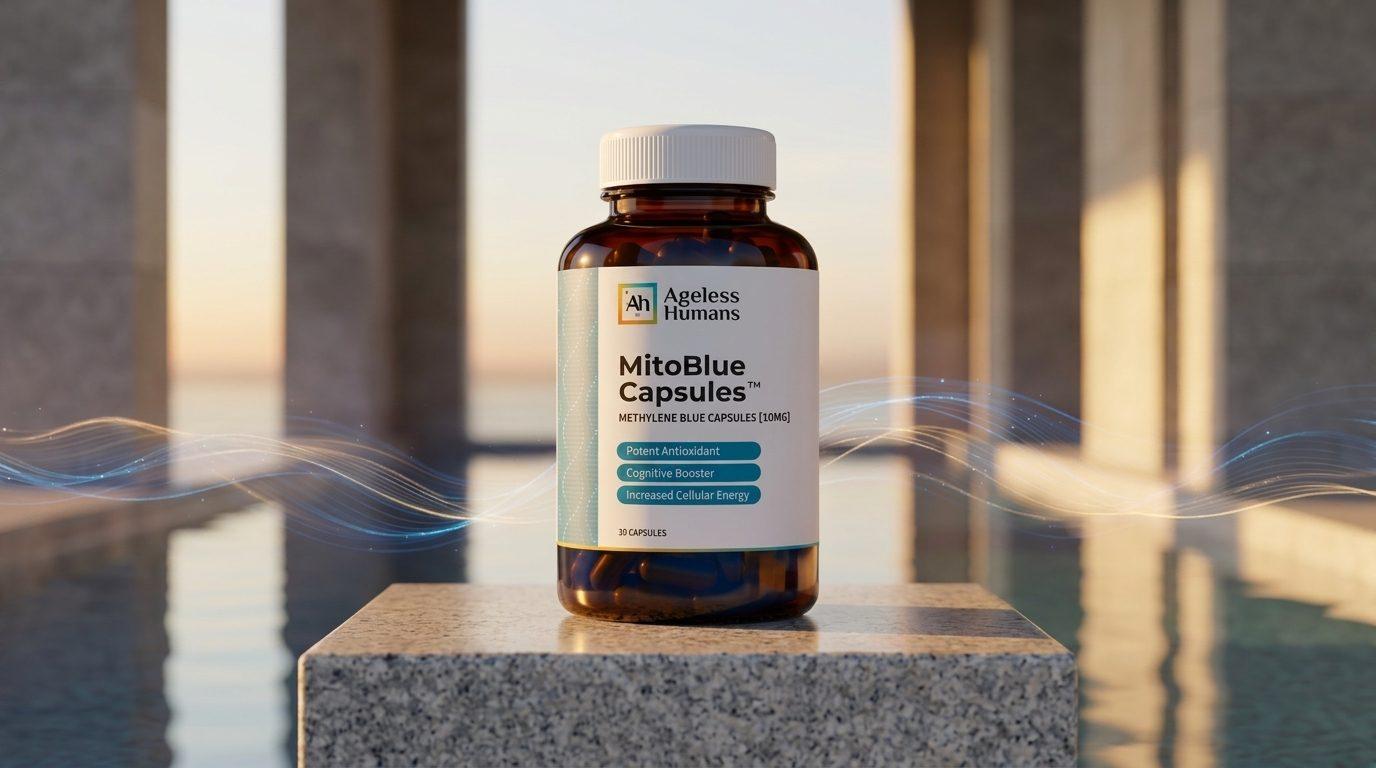
Methylene blue's main studied benefit is mitochondrial support. At low amounts it can act as a backup electron carrier, which may help cells make energy more efficiently, and it has been studied for its role in memory, focus, and cellular resilience. The evidence is promising but early, and safety comes first: methylene blue interacts seriously with SSRIs and other serotonergic drugs, so anyone taking them should not use it without a doctor's approval.
What Is Methylene Blue?
Methylene blue is a synthetic compound first made in the late 1800s, and it is one of the oldest lab-made substances used in medicine. It started as a textile dye. Researchers then found it interacts with living cells in unusual ways, and it has been studied in biology and pharmacology ever since.
Today it shows up in three very different forms. Pharmaceutical methylene blue is a prescription drug used in clinical settings. Industrial and aquarium-grade methylene blue is a dye or fish-tank treatment and is not made for human consumption. Supplement-grade methylene blue is sold in capsules and drops for people interested in cellular energy and cognitive support.
That distinction matters more than almost anything else in this guide. Industrial grades can contain heavy metals and other impurities. If you take methylene blue at all, it should be high-purity, made for human use, and backed by independent lab testing.
The recent surge of interest comes from the longevity and biohacking communities. Their focus is one property in particular: how methylene blue behaves inside mitochondria, the structures that produce most of your cells' energy.
How Methylene Blue Works: The Mitochondrial Mechanism
Methylene blue can accept and donate electrons inside mitochondria, so it may act as a backup route in the cell's energy production line. That is the core of nearly every benefit people discuss.
Here is the simple version. Your mitochondria make energy (ATP) by passing electrons down a chain of protein complexes called the electron transport chain. When the chain runs smoothly, you get efficient energy with fewer wasted electrons. When parts of it slow down, which researchers associate with aging and cellular stress, electrons can leak and form reactive oxygen species, a source of oxidative stress.
Methylene blue is a redox cycler. It can pick up electrons early in the chain and hand them off further down, partly bypassing slower steps. In lab and animal research, this has been linked to:
- Improved oxygen use by mitochondria
- Increased ATP production under certain conditions
- Reduced electron leakage, which may help keep oxidative stress in check
One detail separates honest coverage from hype. Methylene blue has a hormetic, or biphasic, dose response. Low amounts appear to support mitochondrial function, while high amounts can have the opposite effect and act as an oxidizer. More is not better. This is one reason to follow label directions exactly and never improvise.
Methylene blue also has other known actions. It inhibits an enzyme called monoamine oxidase A (MAO-A) and affects nitric oxide signaling. The MAO-A effect is the root of its most important safety issue, covered below.
Methylene Blue and Cognition: What Research Suggests
Methylene blue has been studied for its role in supporting memory, attention, and healthy brain energy metabolism, with encouraging but early results. The brain is one of the most energy-hungry organs in the body, so a compound that supports mitochondrial efficiency naturally draws interest for cognitive function.
Most of the evidence comes from cell and animal studies, where low amounts have been associated with better memory retention and brain energy use. A small number of human studies have looked at short-term memory and brain activity using imaging, and some reported positive signals. These studies are generally small, short, and not yet replicated at scale.
Methylene blue has also been explored in research on aging-related cognitive changes. That work is ongoing, results have been mixed, and none of it means methylene blue treats or prevents any brain condition. A fair summary: research suggests it may support cognitive performance and brain energy in healthy people, but large, long-term human trials are still missing.
User reports often describe sharper focus or steadier mental energy. Those reports are worth noting but they are not evidence. Effects vary by person, and expectations play a real role in how people feel.
Energy, Endurance, and Cellular Resilience
The energy benefit people describe with methylene blue is about cellular efficiency, not stimulation. It is not caffeine. It does not work by revving up your nervous system. The idea is to help your mitochondria make energy more efficiently from the fuel and oxygen you already have.
That is why some people describe the feeling as "clean" or steady instead of jittery. Research interest in this area centers on a few themes:
- Cellular energy output: supporting ATP production when mitochondria are under strain
- Oxidative balance: helping limit the electron leakage that generates oxidative stress
- Cellular aging research: some lab studies have looked at methylene blue's effects on skin cells and other cell types as they age, with interesting early findings
Be realistic about what this means for you. Mitochondrial support is a slow, foundational effect. It works best alongside the basics that drive mitochondrial health most: sleep, regular exercise, sunlight, and good nutrition. Methylene blue does not replace any of them.
Methylene Blue: What Research Shows vs. the Hype
The mechanism is well established, but the human outcome data is still thin. Here is how the common claims line up.
Reasonably supported:
- Methylene blue acts as an electron carrier in mitochondria. This is well documented in lab research.
- It has a biphasic dose response. Low and high amounts behave differently.
- It inhibits MAO-A, which creates real drug interaction risks.
Promising but early:
- Support for memory and focus in healthy adults, based on small human studies and a larger body of animal research
- Support for cellular energy and oxidative balance, mostly from cell and animal work
- Interest in healthy aging at the cellular level, mostly from lab studies
Hype to ignore:
- Claims that it cures, reverses, or prevents any disease
- "Limitless pill" framing or promises of dramatic overnight cognitive gains
- The idea that more is better. Its dose response makes this especially wrong.
- Advice to use aquarium or industrial dye. It is not safe for human consumption.
The honest takeaway: methylene blue is one of the more scientifically interesting compounds in the longevity space, with a clear mechanism. It is not a proven shortcut. Anyone who promises certainty is selling past the evidence.
Methylene Blue Safety Basics: The SSRI Interaction and Who Should Avoid It
Do not take methylene blue if you use SSRIs, SNRIs, MAOIs, or other serotonergic medications unless your doctor has specifically approved it. Methylene blue inhibits MAO-A, an enzyme that breaks down serotonin. Combined with drugs that raise serotonin, it can contribute to serotonin syndrome, a potentially serious reaction. The FDA has issued safety communications about this interaction in clinical settings. This is the most important fact in this article.
Serotonergic drugs include more than antidepressants. Some pain medications, migraine medications, cough suppressants, and supplements such as St. John's wort or 5-HTP can also affect serotonin. If you take anything that touches serotonin, talk to your healthcare provider first.
Others who should avoid methylene blue or consult a doctor first:
- People with G6PD deficiency, an inherited enzyme condition that can make methylene blue unsafe
- People who are pregnant or breastfeeding
- Anyone with kidney or liver concerns, or anyone taking prescription medications
- Anyone scheduled for surgery, since methylene blue is sometimes used in medical procedures and interacts with anesthesia-related drugs
What to expect: methylene blue commonly turns urine blue or green. This is harmless and expected. Drops can also temporarily tint the tongue and teeth. Some people notice mild stomach upset. Stop use and contact a healthcare professional if you have any unusual reaction. Always follow label directions and never exceed them.
How to Choose a Quality Methylene Blue Supplement
Choose methylene blue that is made for human consumption, produced in a registered facility, and verified by third-party testing with a Certificate of Analysis (COA). Purity is the whole game with this compound, because lower-grade versions can carry contaminants you do not want in your body.
What to look for:
- Human-grade sourcing. Never use dye, lab-reagent, or aquarium products.
- Third-party testing. Every lot should be checked for purity and heavy metals, with a COA available.
- Clear label directions. Given the biphasic dose response, a precise and consistent serving matters.
- Transparent manufacturing. You should know where and how it is made.
Capsules vs. drops comes down to preference. Capsules are tasteless, mess-free, and give an identical serving every time, which suits people who want simplicity. Drops are flexible but stain easily and have a distinct taste. Both should meet the same purity standards.
At Ageless Humans, every product is made in our FDA-registered facility in Carlsbad, California, and every lot is third-party lab tested with a COA. Our methylene blue capsules are built for convenience and consistency. If you prefer a liquid format, our methylene blue drops offer the same quality standards. Both come with a 60-day money-back guarantee.
Where Methylene Blue Fits in a Longevity Routine
Methylene blue works best as one targeted tool on top of strong fundamentals, not as a replacement for them. Mitochondrial health is built mostly by daily habits: consistent sleep, movement that challenges your cardiovascular system, morning light, and a nutrient-dense diet.
If those are in place and you are curious about cellular energy and cognitive support, methylene blue is a reasonable compound to explore. Clear your medications with a doctor first, especially anything serotonergic. Start by following the label exactly. Track how you feel over a few weeks instead of judging on day one, and keep notes on sleep, focus, and energy so you are working from data instead of impressions.
This measured, test-and-learn approach is the heart of smart self-optimization. If you are new to it, our guide on what biohacking is and how to start safely covers the principles that keep experiments useful and low-risk.
The bottom line: methylene blue has a real, well-understood mechanism and growing research interest. Treat it with respect, buy it clean, and keep your expectations grounded in what the science actually shows.
Frequently asked questions
What are the main benefits of methylene blue?+
Methylene blue is mainly studied for supporting mitochondrial energy production, because it can act as a backup electron carrier inside cells. Research also suggests it may support memory, focus, and healthy oxidative balance. Most evidence comes from lab and animal studies plus small human trials, so the benefits are promising but not yet firmly established.
Can you take methylene blue with SSRIs or antidepressants?+
No, not without explicit approval from your doctor. Methylene blue inhibits the enzyme MAO-A, and combining it with SSRIs, SNRIs, MAOIs, or other serotonergic drugs can contribute to serotonin syndrome, a potentially serious reaction. The FDA has issued safety communications about this interaction, so always consult a healthcare provider before use.
Why does methylene blue turn your urine blue?+
Methylene blue is a strong dye, and your body clears part of it through the kidneys, which tints urine blue or green. This is harmless and expected. Drops can also temporarily stain the tongue and teeth.
Is methylene blue a stimulant like caffeine?+
No. Methylene blue does not stimulate the nervous system the way caffeine does. Its studied role is supporting how efficiently mitochondria produce cellular energy, which is why people often describe the effect as steady and not jittery.
Is aquarium or industrial methylene blue safe to take?+
No. Aquarium, dye, and industrial-grade methylene blue are not made for human consumption and may contain heavy metals or other impurities. Only use methylene blue made for human use, produced in a registered facility, and verified by third-party testing with a Certificate of Analysis.
Who should not take methylene blue?+
People taking serotonergic medications such as SSRIs, SNRIs, or MAOIs should not take methylene blue without a doctor's approval. It should also be avoided by people with G6PD deficiency and people who are pregnant or breastfeeding. Anyone with kidney or liver concerns, anyone on prescription drugs, and anyone with upcoming surgery should consult a healthcare provider first.