
What BPC-157 Is: The Short Answer
BPC-157 is a 15-amino-acid peptide, also called a pentadecapeptide, based on a fragment of a protective protein in human stomach fluid. The name stands for Body Protection Compound. The "157" identifies the specific sequence.
A peptide is a short chain of amino acids, the same building blocks that make up proteins. Your body uses thousands of peptides as signaling molecules. If you're new to the category, our guide on what peptides are and how they work covers the basics.
BPC-157 stands out because it comes from the digestive tract, yet researchers have looked at its activity across many tissues: muscle, tendon, ligament, nerve, skin, and the gut lining. That broad research profile is the main reason recovery-focused people, athletes, and longevity enthusiasts have taken an interest in it.
Where BPC-157 Comes From and Why Stability Matters
BPC-157 is described in research as a "stable gastric pentadecapeptide," meaning it holds up unusually well in stomach acid compared to most peptides. That matters because most peptides break down quickly in the digestive system, which limits how they can be taken.
The sequence was first identified from a larger protein in human gastric juice. The version used in research and supplements is made in a lab rather than extracted from the body. This allows a consistent, defined sequence.
Stability in acid is why oral formats of BPC-157 are an option at all. Many other peptides are only studied in non-oral forms. For people who prefer a simple daily routine, an oral format is a practical advantage.
How BPC-157 Is Thought to Work
Research suggests BPC-157 interacts with several of the body's own signaling systems involved in circulation, tissue maintenance, and normal inflammatory balance. Most of what we know comes from preclinical (animal and cell) studies, so these are proposed mechanisms rather than settled human biology.
Pathways researchers have explored include:
- Angiogenesis: the formation of new small blood vessels, which supports oxygen and nutrient delivery to tissues
- Nitric oxide (NO) signaling: a system involved in normal blood vessel tone and circulation
- Growth factor activity: signals in muscle, tendon, and nerve tissue tied to normal cell renewal
- Oxidative balance: some studies describe free-radical scavenging activity
- Growth hormone receptor expression: studied in tendon cells in connection with normal tissue-maintenance processes
The common thread is circulation and cell signaling. That is why one peptide shows up in research on so many different tissue types.
What the Research Shows, and Where It Stops
Most BPC-157 research has been done in animals and cell cultures. Well-controlled human studies are still limited. That is the honest summary, and it's the most important thing to understand before you read any claim about this peptide.
Preclinical work, including reviews such as one published in the International Journal of Molecular Sciences, has explored BPC-157 in models involving muscle, tendon, ligament, nerve, blood vessel, and gastrointestinal tissue. Researchers have also noted that toxic effects were not reported in those animal models. Rodent studies have looked at ligament and tendon recovery, nerve tissue after injury, and the integrity of the stomach and intestinal lining.
Animal results don't automatically translate to people. A finding in rats tells researchers what's worth studying further. It does not prove what will happen in your body. Be skeptical of any source, including supplement marketing, that presents BPC-157 as a proven fix for a specific condition. No supplement treats, cures, or prevents disease.
What the research does support is continued interest in BPC-157 as a compound connected to the body's natural recovery and tissue-maintenance systems. For a deeper look at the compound itself, see our BPC-157 peptide overview.
BPC-157 vs. TB-500: How They Differ and Why They're Paired
BPC-157 and TB-500 are both researched for tissue recovery, but they work through different pathways, which is why they're often combined.
BPC-157
- Studied mainly for circulation (angiogenesis), nitric oxide signaling, and gut-lining support
- Most associated with tendon, ligament, nerve, and digestive tissue research
- Notably stable in stomach acid
TB-500
- A synthetic peptide based on a region of thymosin beta-4, a protein found in most human cells
- Studied for its role in cell migration and actin regulation, the scaffolding cells use to move and organize
- Most associated with muscle, fascia, and connective tissue research
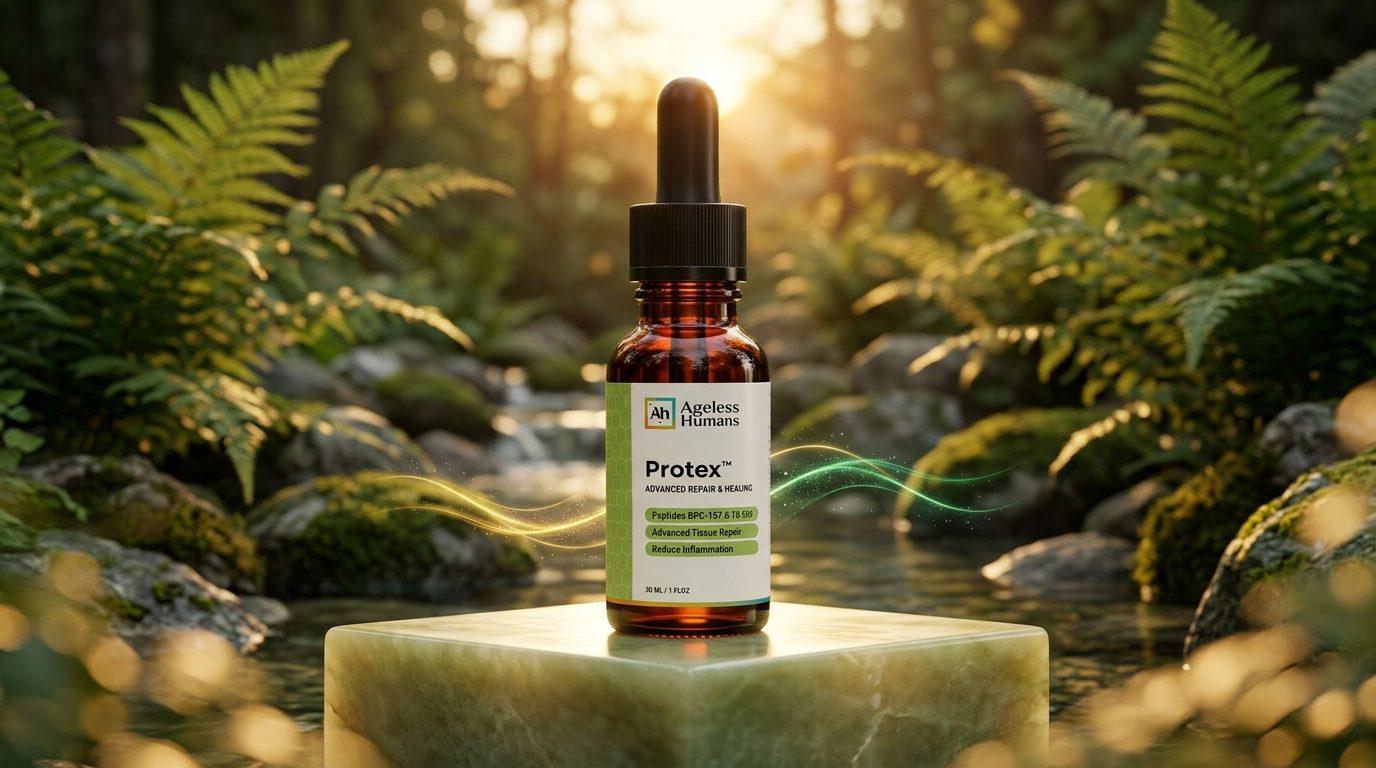
The reason to pair them is straightforward. BPC-157 is linked to circulation and local signaling, and TB-500 is linked to how cells move and organize. Together they cover more of the body's natural recovery process than either one alone. This is the logic behind Protex™ BPC-157 & TB-500 oral drops.
Who Looks Into BPC-157 and Why
People who research BPC-157 usually want support for recovery from training, joint and connective-tissue comfort, or digestive wellness. Common profiles include:
- Active adults and athletes who want to support normal recovery after hard training
- Longevity-focused people building a routine around tissue resilience as they age
- Biohackers who track how different compounds fit into their routine
- People focused on gut wellness who are drawn to BPC-157's gastric origins
If joint and connective tissue are your main focus, you may also want to read about Cartalax, a peptide studied for cartilage tissue. If your interest is broader cellular aging, our page on Epithalon and cellular longevity research is a useful next step.
Athletes in tested sports: check your governing body's prohibited substances list before using any peptide product.
How to Choose a BPC-157 Supplement
Choose a BPC-157 product that is transparent about its ingredients, uses a practical delivery format, and avoids unnecessary fillers. The peptide market varies widely in quality, so these points matter:
1. Clear labeling: You should be able to see exactly what's in the product and how much. 2. A sensible format: Because BPC-157 is acid-stable, oral formats are practical for daily use. 3. Thoughtful pairing: Combining BPC-157 with a complementary peptide such as TB-500 covers more recovery pathways. 4. Minimal filler: Fewer unnecessary ingredients means a cleaner product. 5. Honest marketing: Be wary of brands that promise to cure conditions or quote dramatic results. Those claims aren't supported, and they are a red flag.
Always follow the label directions. Don't exceed the stated serving.
Safety and Smart Use
Talk with a qualified healthcare provider before starting BPC-157, especially if you are pregnant, nursing, taking medication, or managing a health condition. Human safety data are limited, so a professional's input matters.
A few practical guidelines:
- Use only as directed on the label.
- Start one new supplement at a time so you can notice how your body responds.
- Stop use and consult a professional if anything feels off.
- Supplements support wellness. They do not replace medical care for an injury or illness.
Treating BPC-157 as one part of a recovery-focused lifestyle, alongside sleep, protein intake, movement, and stress management, is the most realistic way to think about it.
Frequently asked questions
What is BPC-157?+
BPC-157, short for Body Protection Compound 157, is a synthetic peptide made of 15 amino acids. Its sequence is based on a protein found in human gastric juice. Researchers have studied it for decades, mostly in animal and cell models, for its role in the body's natural tissue-maintenance and recovery processes.
Is BPC-157 backed by human research?+
Most BPC-157 research is preclinical, meaning it was done in animals and cell cultures. Well-controlled human studies are limited. Animal findings point to areas worth studying, but they don't prove the same effects in people.
Can BPC-157 be taken orally?+
Yes. BPC-157 is described in research as a stable gastric peptide, so it holds up better in stomach acid than most peptides. That stability is why oral formats, such as drops, are a practical option. Always follow the product's label directions.
What is the difference between BPC-157 and TB-500?+
BPC-157 is studied mainly for circulation, nitric oxide signaling, and gut-lining support. TB-500 is based on thymosin beta-4 and is studied for cell migration and connective-tissue support. Because they work through different pathways, they are often paired to support the body's natural recovery more broadly.
Does BPC-157 heal injuries or treat disease?+
No supplement, including BPC-157, is approved to treat, cure, or prevent any injury or disease. BPC-157 is researched for its connection to the body's own tissue-maintenance and recovery processes. If you have an injury or health condition, see a qualified healthcare provider.
Is BPC-157 safe?+
Animal studies have not reported toxic effects, but human safety data are limited. Talk to a healthcare provider before use, especially if you are pregnant, nursing, taking medication, or managing a health condition. Use only as directed on the label.
Who typically uses BPC-157?+
BPC-157 is popular with active adults, athletes, biohackers, and longevity-focused people who want to support normal recovery, connective-tissue resilience, or digestive wellness. Athletes in tested sports should check their governing body's prohibited list before using any peptide.
Is there a BPC-157 product for pets?+
Ageless Humans offers Protex Pets™, a formula designed for animal companions. Check with your veterinarian before giving your pet any new supplement, and follow the label directions.