
Thymosin alpha 1 (Tα1) is a 28-amino-acid peptide first isolated from the thymus. It has been studied mainly as an immune modulator that helps T-cells mature and helps regulate how the immune system responds. Research is substantial but uneven. Most clinical work comes from smaller trials in specific medical settings, so its benefits for healthy, aging adults have not been established.
What Is Thymosin Alpha 1?
Thymosin alpha 1 is a short signaling peptide that occurs naturally in the body and is linked to the thymus, the small gland behind your breastbone where T-cells are trained. It is 28 amino acids long and is cut from a larger precursor protein called prothymosin alpha.
Researchers first identified it in the 1970s while studying "thymosin fraction 5," an extract of calf thymus tissue that contained several active peptides. Tα1 turned out to be one of the most biologically active pieces. A synthetic version, called thymalfasin, was later developed and has been approved as a prescription drug in a number of countries outside the United States. In the U.S., it is not an FDA-approved drug.
If you're new to this category, our primer on what peptides are explains how short amino-acid chains act as messengers in the body. For a compound-specific reference, see our thymosin alpha 1 peptide profile.
How Does Thymosin Alpha 1 Work?
*Tα1 is best described as an immune modulator, not a simple immune "booster."* Research suggests it helps coordinate immune signaling. It can support activity when the response is weak and is also studied for its role in keeping the response balanced.
The main mechanisms studied in lab and clinical research include:
- T-cell maturation: Tα1 has been studied for promoting the development and differentiation of T-cells, the immune cells the thymus is responsible for training.
- Toll-like receptor signaling: Research indicates Tα1 interacts with toll-like receptors on dendritic cells. These are the "sentinel" cells that detect threats and alert the rest of the immune system.
- Cytokine regulation: Studies have looked at its influence on signaling molecules such as interleukin-2 and interferons, which help direct immune activity.
- Natural killer (NK) cell activity: Some research has examined its effect on NK cells, a fast-acting part of innate immunity.
This dual role of supporting activity while helping regulate it explains why researchers have tested Tα1 in such different contexts. It also explains why simple "it boosts immunity" claims oversimplify what the research is actually exploring.
What Has Thymosin Alpha 1 Been Studied For?
Most human research on Tα1 has taken place in clinical settings where immune function is challenged. It has not been studied much in healthy people looking for general wellness benefits. That distinction matters when you read claims online.
Areas where Tα1 (usually as thymalfasin) has been investigated include:
- Chronic viral infections: It has been studied alongside standard care in chronic viral hepatitis, and this is part of how it gained approval in some countries.
- Vaccine response: Researchers have explored it as an adjuvant, meaning an add-on intended to support the immune response to vaccination, especially in older adults or people with weaker responses.
- Oncology settings: It has been studied as a supportive add-on alongside conventional treatment, mostly for its effects on immune markers.
- Critical illness: Trials have examined it in severe infection and sepsis, and it was studied in hospitalized patients during the COVID-19 pandemic. Findings were mixed.
These are research contexts, not benefits you can expect. The participants were patients under medical supervision, receiving pharmaceutical-grade drug alongside other treatment. Results from those settings don't automatically apply to a healthy 45-year-old.
Why Longevity Researchers Are Interested: The Aging Thymus
Tα1 draws longevity interest because the thymus shrinks with age, and that shrinkage is a central feature of immune aging. This process, called thymic involution, begins early in adulthood. Over time, the thymus produces fewer new T-cells.
Scientists use the term immunosenescence for the gradual changes in immune function that come with age. These include fewer "naive" T-cells ready to respond to new threats and a tendency toward low-grade inflammatory signaling, sometimes called inflammaging. Because Tα1 is tied to the thymus and to T-cell development, researchers have asked whether it could support immune function in older adults.
The vaccine-adjuvant research in older populations is the closest the evidence comes to this question. Even so, the idea of Tα1 as a general anti-aging peptide is still a hypothesis. No long-term trials have shown that it extends healthspan or lifespan in people. A related but separate idea is the bioregulator approach, which uses ultra-short peptides tied to specific organs, including the thymus. You can read more in our guide to what bioregulators are.
What the Evidence Does and Doesn't Show
Tα1 has more human research behind it than most peptides discussed online, but that research has real limits. An honest read looks like this:
What research supports:
- Tα1 has well-characterized immune-signaling activity in lab studies.
- It has been used clinically for decades in some countries, which gives researchers a longer track record than many newer peptides.
- Clinical studies have generally reported it as well tolerated in the settings tested.
What research does not establish:
- Benefits for healthy people. Almost no rigorous trials have tested it as a wellness or longevity tool.
- Consistent results. Many trials were small, single-center, or used different protocols, so results vary and are hard to compare.
- Long-term outcomes of self-use. There is no meaningful data on people self-sourcing it from research-chemical vendors.
The practical takeaway: Tα1 is a serious compound with a legitimate research history. That history is concentrated in medical settings, though, and it doesn't validate the broad claims you'll see in forums and marketing.
Safety, Quality, and Regulatory Status
In the U.S., Tα1 is not an FDA-approved drug, and regulators have placed restrictions on compounding it. The FDA has listed thymosin alpha 1 among bulk drug substances it has flagged with safety or evidence concerns. That limits how compounding pharmacies can prepare it.
This leaves a gray market of "research use only" products. The main concern there is quality, not the molecule itself. Unregulated peptides can be underdosed, contaminated, mislabeled, or improperly stored. Tα1 is also typically studied as an injection, and handling sterile injectables outside medical supervision carries its own risks.
Tα1 is a peptide, so it is generally broken down by digestion. That's why research has relied on injection rather than oral forms. If you're considering any immune-active compound, talk with a qualified healthcare provider first. This is especially important if you have an immune-related condition, are pregnant, or take medications that affect immunity.
Thymosin Alpha 1 vs. Thymosin Beta-4, TB-500, and Bioregulators
Despite the shared name, thymosin alpha 1 and thymosin beta-4 are unrelated peptides with different structures and different research focuses. "Thymosin" refers to where they were first found, in thymus extracts. It doesn't mean they do the same thing.
- Thymosin alpha 1: Studied mainly for immune signaling and T-cell development.
- Thymosin beta-4: A larger peptide involved in actin regulation inside cells. It has been studied for tissue repair and cell migration.
- TB-500: A synthetic fragment based on the active region of thymosin beta-4. It is popular in recovery-focused conversations.
- Thymus bioregulators: Very short peptides associated with thymus tissue. They come from a separate research tradition and are not Tα1.
Mixing these up is one of the most common errors in peptide content. If a source treats Tα1 and TB-500 as interchangeable, read the rest of its claims with caution.
Practical Ways to Support Immune Health as You Age
The best-supported foundations for healthy immune function as you age are still the basics, and they work alongside anything else you explore. Research consistently links these habits to healthy immune function:
- Sleep: Regular, adequate sleep supports normal immune signaling.
- Movement: Moderate, consistent exercise is associated with healthy immune aging.
- Protein and micronutrients: Immune cells depend on amino acids, and nutrients like zinc, vitamin D, and vitamin C support normal immune function.
- Stress management: Chronic stress is associated with shifts in immune activity.
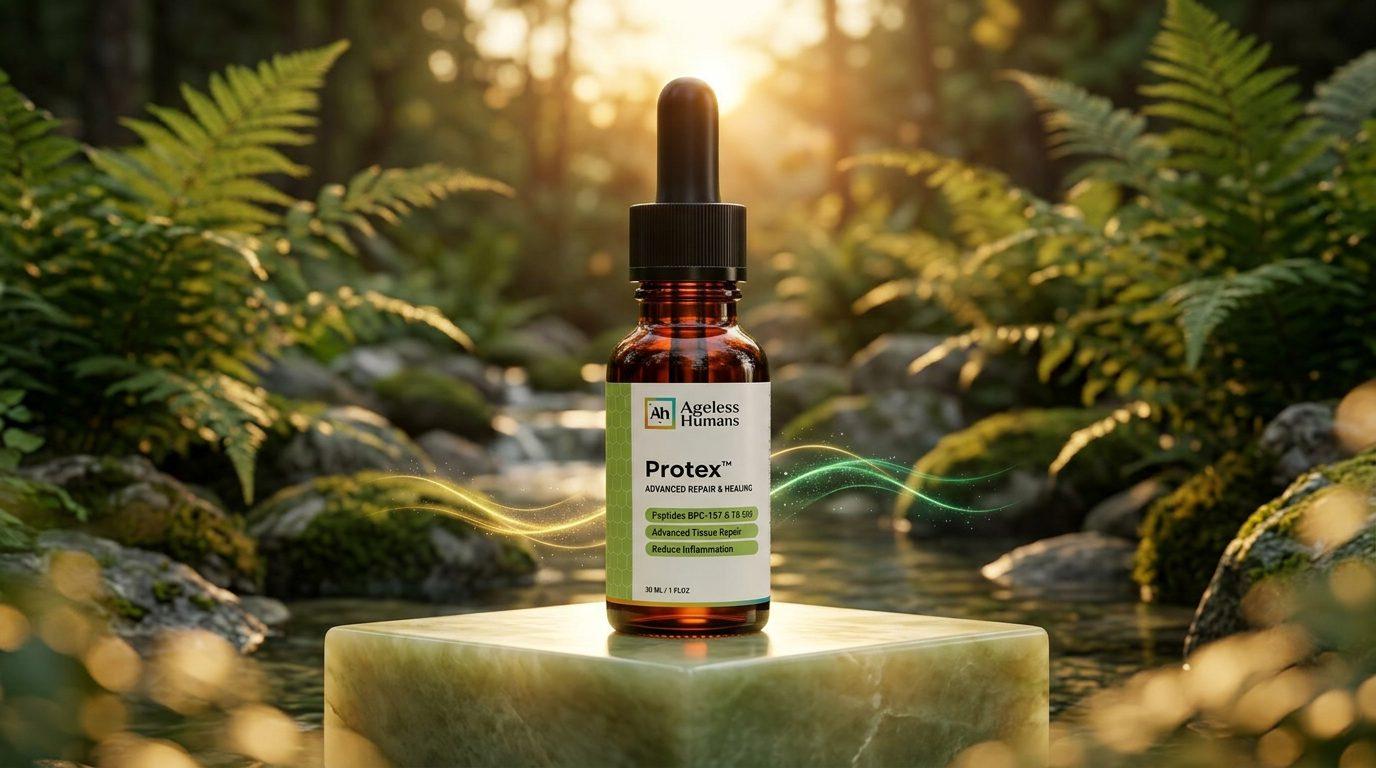
If you're building a broader routine, it helps to think in systems rather than single molecules. For people interested in peptides specifically, oral options such as Protex BPC-157 and TB-500 Peptides are formulated to support recovery and tissue resilience. That is a different goal from Tα1's immune-signaling research. For a structured daily routine centered on healthy aging, the Metamorphic Anti-Aging Protocol brings several pieces into one system. Every Ageless Humans product is made in our FDA-registered facility in Carlsbad, California, every lot is third-party lab tested with a COA, and each one is backed by a 60-day money-back guarantee.
Frequently asked questions
What is thymosin alpha 1 used for?+
Thymosin alpha 1 is a 28-amino-acid peptide studied as an immune modulator. As the synthetic drug thymalfasin, it has been researched in clinical settings such as chronic viral infections, as a vaccine adjuvant, and as a supportive add-on in oncology and critical care. It is not FDA-approved in the United States, and its benefits for healthy people have not been established.
Does thymosin alpha 1 boost the immune system?+
Thymosin alpha 1 is more accurately described as an immune modulator than a booster. Research suggests it supports T-cell maturation and interacts with toll-like receptors on dendritic cells, which helps coordinate immune signaling. Researchers study it for supporting immune activity when the response is weak while also helping keep that response balanced.
Is thymosin alpha 1 FDA approved?+
No. Thymosin alpha 1 is not an FDA-approved drug in the United States, though its synthetic form, thymalfasin, has been approved in a number of other countries. The FDA has also flagged it among substances with compounding restrictions. Products sold online as "research peptides" are unregulated, and their quality can vary widely.
What is the difference between thymosin alpha 1 and TB-500?+
They are unrelated peptides that share the "thymosin" name only because both were first found in thymus extracts. Thymosin alpha 1 is studied mainly for immune signaling and T-cell development. TB-500 is a synthetic fragment of thymosin beta-4, a different peptide studied for tissue repair and cell migration.
Can you take thymosin alpha 1 orally?+
Thymosin alpha 1 has been studied almost entirely as an injection, because peptides like it are generally broken down by digestion. There is little research supporting oral thymosin alpha 1. Anyone considering an immune-active compound should consult a qualified healthcare provider first.
Is thymosin alpha 1 an anti-aging peptide?+
Thymosin alpha 1 interests longevity researchers because the thymus shrinks with age, and that decline is central to immune aging. Some research has explored its role in supporting immune responses in older adults, such as during vaccination. No long-term human trials show that it extends healthspan or lifespan, so the anti-aging label is still a hypothesis.