
Vesugen is a synthetic three-amino-acid peptide (lysine-glutamic acid-aspartic acid, or KED) in the bioregulator family. Researchers have studied it mainly for its potential to support the cells that line blood vessels as they age. Most of that research comes from cell-culture and animal work plus small human studies, largely from one research school, so its benefits are best described as studied, not established.
What Is Vesugen?
Vesugen is a short synthetic peptide made of three amino acids: lysine, glutamic acid, and aspartic acid (Lys-Glu-Asp, often written KED). It belongs to a class of compounds called peptide bioregulators. These are very short amino acid chains that researchers propose can help regulate how specific tissues behave.
Vesugen comes out of research associated with the St. Petersburg Institute of Bioregulation and Gerontology in Russia. Researchers there developed a family of short peptides, each paired with a target tissue. Vesugen's assigned target is the vascular system, specifically the walls of blood vessels. In some markets, mainly Russia and Eastern Europe, KED has been sold in supplement form. Synthetic short peptides like this are sometimes called cytogens.
If you're new to this category, two primers help. Our guide to what peptides are explains how amino acid chains work in the body. Our explainer on what bioregulators are covers why researchers think ultra-short peptides could act differently from larger signaling peptides. For a quick reference, see our Vesugen peptide overview.
What Has Vesugen Been Studied For?
Research on Vesugen has centered on vascular aging, especially the health of endothelial cells, the single layer of cells lining every blood vessel. These cells help regulate blood flow, vessel tone, and how blood interacts with vessel walls. Their function tends to decline with age.
The main research directions include:
- Endothelial cell aging: Cell-culture studies have looked at whether KED influences markers of cellular aging and renewal in vascular cells.
- Gene expression in vascular tissue: Researchers have examined whether the peptide shifts the activity of genes tied to cell growth, cell turnover, and vessel wall maintenance.
- Neuronal aging models: A separate line of lab research has studied KED in cultured neurons and animal models of age-related neurological decline, looking at markers such as dendritic spine structure. This work is early and preclinical.
- Older adults: Small human studies, mostly published in Russian-language journals, have looked at vascular-related markers in older participants. They often combined Vesugen with other peptides or used it alongside standard care.
The honest summary: Vesugen has been studied for supporting healthy vascular function as people age. That is very different from being proven to deliver that benefit, a gap covered below.
How Is Vesugen Thought to Work?
The leading hypothesis is that Vesugen, because it is so small, can enter cells and possibly the nucleus, where it may interact with DNA and associated proteins to influence which genes are switched on or off. That would make it a gene-expression modulator rather than a classic signaling molecule that binds a surface receptor.
The proposed mechanism has a few parts:
1. Cell entry. A three-amino-acid peptide is tiny. Researchers argue it may cross cell membranes more easily than larger peptides. 2. DNA and chromatin interaction. Molecular modeling and lab studies from the originating research group suggest short peptides may bind specific DNA sequences or histone proteins. That could change how tightly certain genes are packaged. 3. Tissue-specific effects. The theory holds that each bioregulator's amino acid sequence matches regulatory regions active in its target tissue. For KED, that means vascular and possibly neural cells.
Treat this model with caution. Much of the mechanistic evidence comes from computer modeling and cell culture. Independent labs have not broadly confirmed it. It is also unclear how much of an orally taken tripeptide survives digestion and reaches tissues intact. Gut enzymes break down many short peptides into single amino acids. Whether that happens to KED, and how fast, has not been well characterized in humans.
What the Evidence Does and Doesn't Show
Vesugen has an intriguing but thin evidence base: promising lab findings, limited human data, and little independent replication. Anyone weighing its claimed benefits should keep both sides in view.
What research suggests:
- In cell culture, KED has been associated with changes in gene expression and in markers of cellular aging in vascular and neural cells.
- Animal studies from the originating research group report effects on age-related tissue markers.
- Small human studies have reported favorable changes in some vascular-related measures in older adults.
What research does not yet show:
- Large, randomized, placebo-controlled human trials. These are the standard for confirming a benefit, and they are largely missing for Vesugen.
- Independent replication. Most published work traces back to one research network. Strong evidence usually comes from several unrelated teams reaching the same result.
- Clear oral bioavailability data. It hasn't been well shown that oral KED reaches blood vessel walls in meaningful amounts.
- Long-term safety data. No large datasets cover long-term use.
This doesn't mean Vesugen does nothing. It means the honest label is "studied for vascular support" rather than "proven." Be skeptical of any seller promising specific results, timelines, or effects on medical conditions.
Vesugen vs. Other Peptides and Bioregulators
Vesugen differs from popular recovery peptides like BPC-157 and TB-500 in size, proposed mechanism, and target. It also sits inside a larger family of tissue-paired bioregulators.
- Vesugen (KED): A three-amino-acid bioregulator aimed at vascular tissue. It is proposed to work by influencing gene expression.
- Pinealon (EDR): Another tripeptide from the same research family, studied mainly in relation to brain and nervous system tissue.
- Epitalon (AEDG): A four-amino-acid bioregulator studied for its relationship to the pineal gland and markers of cellular aging.
- BPC-157: A much longer peptide (15 amino acids) based on a sequence found in gastric juice. It has been studied in preclinical models for tissue repair and gut lining support.
- TB-500: A synthetic fragment related to thymosin beta-4, studied for its role in cell migration and tissue recovery.
The key point: these compounds are not interchangeable. Each has its own sequence, proposed mechanism, and research history. A finding about one says nothing reliable about another. The bioregulators guide goes deeper on how the tissue-paired family is organized.
Safety, Quality, and Regulatory Questions
Vesugen is not FDA-approved for any use, and its long-term safety in humans has not been well established. If you come across it, ask hard questions before taking it.
In the U.S., many research peptides are sold in a gray zone, often labeled "for research use only." That label signals the product is not intended for human consumption and may not be made to supplement or pharmaceutical quality standards. Purity, accurate dosing, and contamination are real concerns with unregulated sources.
Before considering any peptide, look for:
- Manufacturing transparency: Where and how it is made, and whether the facility is registered and inspected.
- Third-party testing: A current Certificate of Analysis (COA) for the specific lot, confirming identity and purity.
- Honest labeling: Structure/function language only, with no promises to treat or reverse health conditions.
- Clinician input: Especially if you take medications that affect blood pressure, clotting, or circulation, or if you have a cardiovascular history.
Never exceed label directions, and treat any product making dramatic vascular claims as a red flag.
Supporting Vascular and Cellular Health With What's Established
The most reliable ways to support healthy blood vessels as you age are well documented: regular movement, quality sleep, a nutrient-dense diet, and not smoking. No peptide replaces these, and they should come first in any longevity plan.
Aerobic exercise is among the best-studied habits for supporting endothelial function. Diets rich in vegetables, fruits, legumes, and nitrate-rich greens like beets and leafy greens are associated with healthy circulation. Managing stress and protecting sleep supports the systems that keep vessel tone in balance.
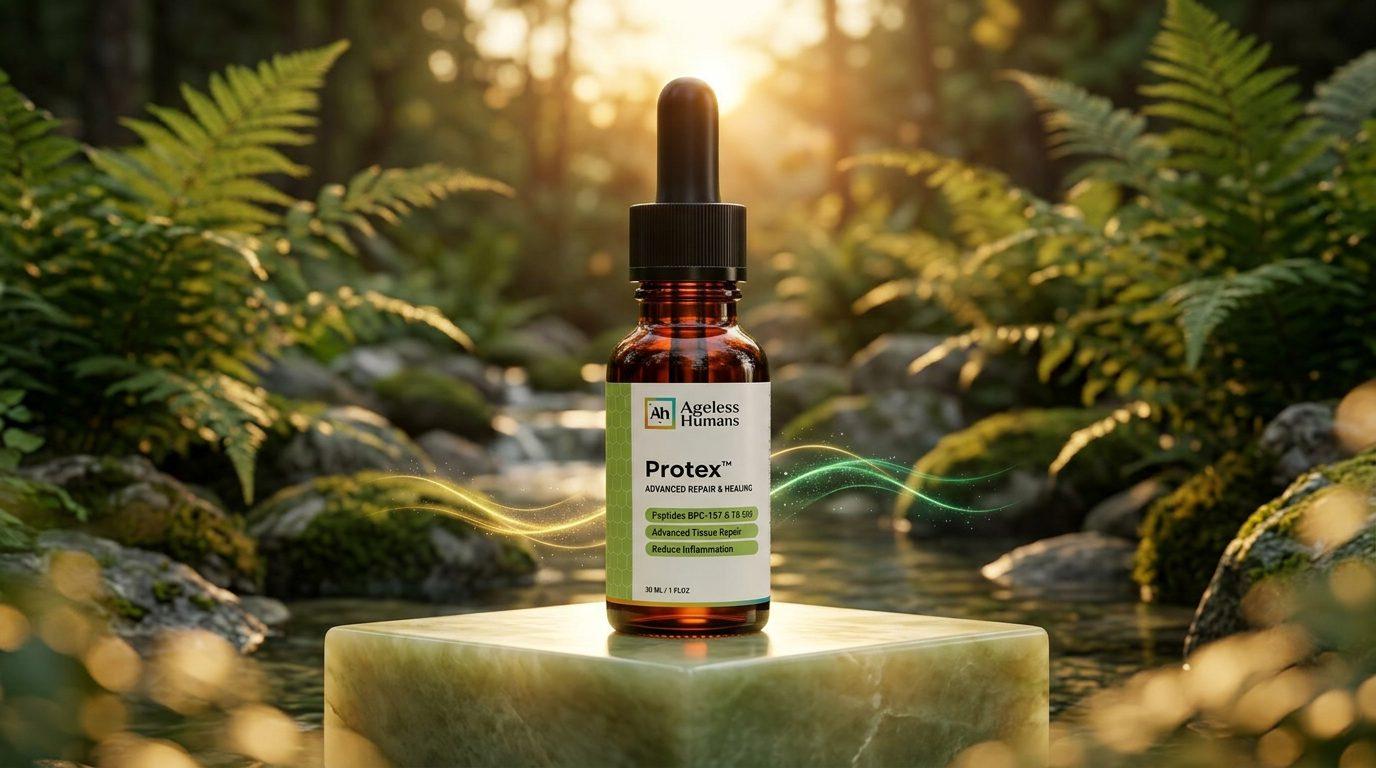
For people who want to add supplements on top of that foundation, choose products made with full quality transparency. At Ageless Humans, every product is made in our FDA-registered facility in Carlsbad, California, every lot is third-party lab tested with a COA, and each comes with a 60-day money-back guarantee. Readers curious about oral peptides often look at ProTex BPC-157 & TB-500, which is formulated to support recovery and tissue resilience. Those who want a broader routine may prefer the Metamorphic Anti-Aging Protocol, a multi-product system built to support energy and healthy aging. Neither is Vesugen, and neither should be viewed as a substitute for it.
Frequently asked questions
What is Vesugen?+
Vesugen is a synthetic tripeptide made of lysine, glutamic acid, and aspartic acid (KED). It belongs to the peptide bioregulator family developed by researchers associated with the St. Petersburg Institute of Bioregulation and Gerontology. It has been studied mainly for its potential to support the cells lining blood vessels during aging.
What are the benefits of Vesugen?+
Vesugen has been studied for supporting healthy vascular function and endothelial cell health as people age, and in lab models of neuronal aging. Most supporting evidence comes from cell-culture, animal, and small human studies, largely from one research group. Its benefits are best described as researched rather than proven.
How does Vesugen work?+
The leading hypothesis is that Vesugen's very small size lets it enter cells and interact with DNA or histone proteins, which could influence gene expression in vascular tissue. This mechanism rests mostly on lab and computer-modeling studies and has not been broadly confirmed by independent researchers. How well oral Vesugen survives digestion is also unclear.
Is Vesugen FDA-approved?+
No. Vesugen is not FDA-approved for any use, and in the U.S. it is often sold as a "research use only" compound. Products sold this way may not meet supplement or pharmaceutical quality standards. Anyone considering it should look for third-party lab testing and talk with a clinician first.
Is Vesugen the same as BPC-157?+
No. Vesugen is a three-amino-acid bioregulator studied for vascular tissue, while BPC-157 is a 15-amino-acid peptide studied in preclinical models for tissue repair and gut lining support. They differ in structure, proposed mechanism, and research history, and findings about one do not apply to the other.
Does Ageless Humans sell Vesugen?+
No. Ageless Humans does not sell Vesugen, and its content on the peptide is purely educational. The brand offers other peptide and longevity products, such as ProTex BPC-157 & TB-500 and the Metamorphic Anti-Aging Protocol. These are made in its FDA-registered Carlsbad, California facility, third-party tested with a COA, and backed by a 60-day money-back guarantee.