
Thymalin is a complex of short peptides extracted from calf thymus tissue. Soviet and later Russian researchers developed it to support immune function and to study aging. Most published research comes from one Russian research school, so the evidence is interesting but limited, and thymalin is not an FDA-approved drug or supplement in the United States.
What Is Thymalin?
Thymalin is a mixture of small peptides taken from the thymus glands of young calves. Thymalin is not one defined molecule. It is a purified extract that contains a group of short amino acid chains. In Russia it has been registered and used as a pharmaceutical preparation, usually given by injection under medical supervision.
The thymus is a small organ behind the breastbone. It trains T-cells, the white blood cells that coordinate much of the adaptive immune response. The thymus is largest and most active in childhood. After puberty it gradually shrinks and is replaced by fatty tissue, a process called thymic involution. That age-related decline is the main reason researchers became interested in thymus-derived peptides.
Thymalin belongs to a broader category Russian scientists call peptide bioregulators: short peptides isolated from specific organs and studied for their effects on the tissue they came from. If you are new to the category, start with our overview of what bioregulators are and our primer on what peptides are.
Where Thymalin Came From
Thymalin came out of Soviet military medical research in the 1970s and 1980s. It is most closely associated with Vladimir Khavinson and colleagues in Leningrad, now St. Petersburg. The goal was practical. Researchers wanted organ-derived peptides that could support resilience and recovery in people under heavy physical and environmental stress.
That work grew into a long research program on peptide bioregulation and aging, later based at the St. Petersburg Institute of Bioregulation and Gerontology. Thymalin was one of the first preparations in this program. A pineal-derived extract, epithalamin, was developed alongside it, and researchers often studied the two together.
Over time the same group identified shorter synthetic peptides they believed carried some of thymalin's activity. One is the dipeptide thymogen (glutamyl-tryptophan). Another is vilon (lysyl-glutamic acid). This shift from crude tissue extracts to defined short peptides is the backbone of the bioregulator field you see discussed online today.
What Research Has Studied Thymalin For
Thymalin has mainly been studied for immune regulation and for markers of healthy aging, mostly in Russian clinical and animal research. The main areas include:
- T-cell balance and immune markers. Studies looked at whether thymalin influenced T-cell counts, T-cell subsets, and related immune measurements, especially when those markers were low.
- Recovery after physical stress. Early military-medical work explored thymalin in people recovering from heavy stressors, where immune function can dip.
- Aging populations. Long-term observational studies in older adults, often combining thymalin with the pineal extract epithalamin, tracked general health markers over years.
- Animal lifespan and healthspan models. Rodent studies examined whether thymus and pineal peptides affected aging-related measures and survival curves.
Researchers have also explored thymalin in a range of clinical settings involving immune challenge. These were research contexts, not established uses, and the results have not been validated by large independent trials. Any summary that turns this body of work into a list of things thymalin "treats" goes beyond what the evidence supports.
How Thymalin Is Thought to Work
The leading hypothesis is that thymalin's short peptides send signals that help regulate T-cell development and immune-cell gene activity. The proposed mechanisms fall into three layers.
1. Thymic signaling. The thymus normally releases its own peptide signals that guide immature T-cells through development. The idea is that an external supply of thymus-derived peptides might partly mimic that signaling as the gland's own output declines with age.
2. Immune-cell differentiation. Laboratory studies reported changes in T-cell differentiation markers and in immune signaling molecules after exposure to thymalin or its derived peptides. This is where the term "immunomodulator" comes from. The aim is regulation toward balance, not simply turning immunity up.
3. Gene-expression regulation. Khavinson's group proposed that very short peptides can enter cells, interact with DNA and chromatin, and influence which genes are switched on. It is a provocative idea, and it is central to bioregulator theory. However, it has not been widely confirmed by independent labs, so treat it as a working hypothesis rather than settled biology.
In short, the mechanism story makes biological sense on paper. The open question is how well it holds up outside the lab that proposed it.
The Honest Evidence State: What Research Does and Doesn't Show
Thymalin has decades of research behind it, but that research is narrow, mostly older, and mostly from a single school. Here is a fair reading.
What the research does show:
- A sustained program of laboratory, animal, and human studies spanning several decades.
- Reported effects on immune markers and aging-related measures within that program.
- A long history of clinical use in Russia, which offers some real-world experience with the preparation.
What it doesn't show:
- Broad independent replication. Most studies come from researchers connected to the original group. Few independent Western labs have tested thymalin directly.
- Large, modern randomized controlled trials. Many studies are small or observational. Some lack the design details, such as blinding and placebo controls, that would make conclusions firm.
- Accessible full data. Much of the literature is in Russian, which limits outside scrutiny.
- Regulatory validation in the U.S. Thymalin is not FDA-approved, and its effects have not been evaluated by the FDA.
The responsible conclusion is that thymalin is a promising research compound with an unconfirmed evidence base. It is not a proven longevity intervention. Anyone who presents it as one is overselling.
Thymalin vs. Thymosin Alpha-1, Thymogen, and Other Thymus Peptides
These are different compounds, even though they all trace back to the thymus. Mixing them up is one of the most common mistakes in online peptide content.
- Thymalin. A mixture of short peptides extracted from calf thymus. It developed in the Russian bioregulator tradition.
- Thymogen. A synthetic dipeptide (Glu-Trp) that researchers derived from thymalin research. It is a single defined molecule, not an extract.
- Thymosin alpha-1. A specific 28-amino-acid peptide first isolated in the U.S. from a thymus fraction, now made synthetically. It has its own separate body of international research.
- Thymic extract supplements. Glandular thymus products sold as dietary supplements in some markets. They are not the same as pharmaceutical thymalin, and their peptide content is usually not standardized.
Research on one of these does not transfer to the others. When you read a claim about "thymus peptides," check which compound was actually studied. For a compound-level summary, see our thymalin peptide reference page.
Safety, Legality, and Sourcing Realities
Thymalin is not an approved drug or dietary supplement in the United States. Most of what is sold online is labeled "for research use only," which means no one has verified its quality for human use. That creates real practical concerns.
- Source material. Thymalin is derived from animal tissue. Purity, sourcing, and processing standards matter a lot, and gray-market vials rarely document them.
- Identity and contamination. Unregulated peptide products can be mislabeled, underdosed, or contaminated. Without independent testing you cannot know what is in the vial.
- Injection risks. Pharmaceutical thymalin is given by injection. Self-injecting unverified products carries risks no matter what the compound is.
- Limited safety data. Russian clinical use suggests it was generally well tolerated in that setting. That is not the same as a modern, transparent safety profile.
If you are considering any immune-active compound, talk with a qualified healthcare professional first. This is especially important if you take medications, have a medical condition, are pregnant, or are nursing.
Practical Takeaways for Longevity-Minded Readers
Thymalin is worth understanding, but it is not something to chase through gray-market channels. It is historically important, and its research raises good questions about thymic aging. It also illustrates why the bioregulator concept attracts attention. But its evidence base has not caught up with its online reputation.
The foundations that support healthy immune aging are less exotic and better studied: consistent sleep, resistance training, adequate protein, managing chronic stress, and not smoking. These support the same systems thymalin research focuses on, with far more certainty.
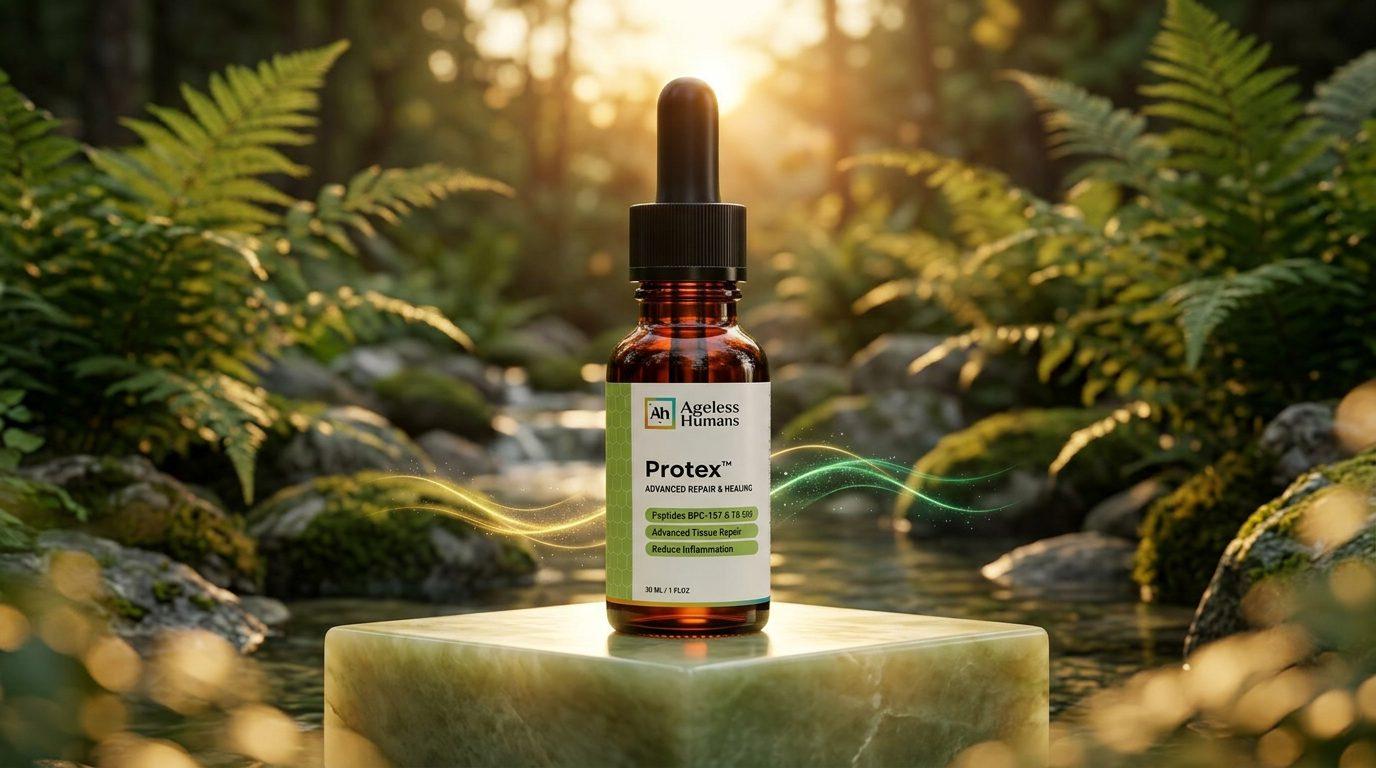
If you are interested in peptides, choose products made under real quality controls with transparent testing. Ageless Humans does not sell thymalin. Our products are made in our FDA-registered facility in Carlsbad, California. Every lot is third-party lab tested with a Certificate of Analysis, and every product carries a 60-day money-back guarantee. For readers drawn to oral peptides for recovery, Protex BPC-157 & TB-500 Oral Peptides is formulated to support the body's natural recovery processes. It is a different compound with a different purpose, not a thymalin substitute.
Frequently asked questions
What is thymalin?+
Thymalin is a complex of short peptides extracted from calf thymus tissue. It was developed by Soviet and later Russian researchers and registered as a pharmaceutical in Russia. It was studied mainly for its role in supporting immune regulation and for markers of aging. It is a mixture of peptides rather than a single defined molecule.
What are the claimed benefits of thymalin?+
Research on thymalin has focused on T-cell balance, immune markers, recovery after physical stress, and health markers in older adults. Most of these studies come from a single Russian research school and have not been widely replicated by independent labs. Any described benefits should be treated as research findings, not proven outcomes.
Is thymalin the same as thymosin alpha-1?+
No. Thymalin is a mixture of short peptides extracted from calf thymus, developed in Russia. Thymosin alpha-1 is a specific 28-amino-acid peptide with its own separate research history. Findings about one do not apply to the other.
Is thymalin legal or FDA-approved in the United States?+
Thymalin is not an FDA-approved drug, and it is not sold as a recognized dietary supplement in the United States. Products sold online are usually labeled for research use only, which means their quality for human use has not been verified. Anyone considering it should talk with a qualified healthcare professional first.
How is thymalin thought to work?+
Researchers propose that thymalin's short peptides act as signals that help regulate T-cell development and immune-cell activity, partly mimicking the thymus's own signaling as the gland shrinks with age. Its developers also suggested that short peptides may influence gene expression by interacting with DNA. That idea remains a hypothesis that has not been widely confirmed independently.
Does Ageless Humans sell thymalin?+
No. Ageless Humans does not sell thymalin, and this article is for education only. The brand makes other products, including oral peptides and longevity protocols, in its FDA-registered facility in Carlsbad, California. Every lot is third-party lab tested with a Certificate of Analysis and backed by a 60-day money-back guarantee. These products are not equivalent to or substitutes for thymalin.