
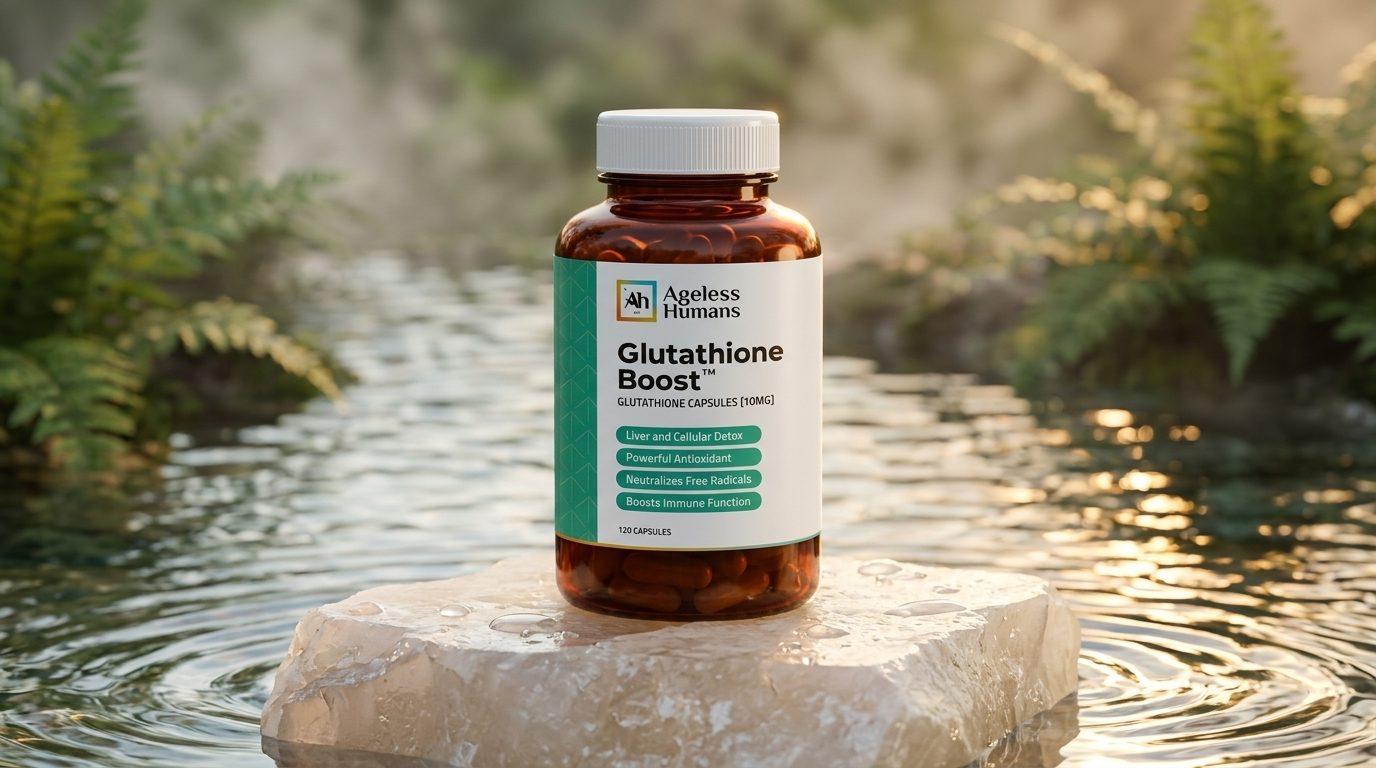
Both routes can support glutathione levels, but they work differently. Liposomal glutathione tries to deliver the finished molecule past your digestive system, and the human evidence for it is promising but early. Precursors like NAC and glycine give your cells the raw materials to build their own glutathione. That approach has a longer research track record and usually costs less per serving, which makes precursors the stronger default for most people.
The Short Answer: Precursors for Most People, Liposomal for Specific Cases
For most adults, supplying precursors is the better-supported and more cost-efficient way to support glutathione. Your cells already know how to make glutathione. When they fall short, the usual reason is a shortage of building blocks, especially cysteine and, with age, glycine. Supplying those inputs works with your body's own regulation instead of around it.
Liposomal glutathione is a reasonable choice in narrower situations. It may suit you if you don't tolerate NAC well, if you want to supply finished glutathione directly, or if you prefer it after weighing the higher cost.
Here is how we label the evidence throughout this article:
- Established: core biochemistry with broad scientific agreement
- Moderate: several human studies point the same way, with some limits
- Early: small or few human studies; promising but not settled
- Theoretical: plausible mechanism, little direct human data
How Your Body Makes Glutathione, and Why It Decides This Debate
Glutathione is built inside your cells from three amino acids: glutamate, cysteine, and glycine. (Evidence: Established.) It is made in two enzyme steps. First, glutamate and cysteine are joined. Then glycine is added. Cysteine is usually the scarcest of the three, which makes it the main bottleneck.
Two details shape everything that follows:
1. Production has a built-in thermostat. The first enzyme in the chain slows down when glutathione levels are high. This feedback loop helps keep levels in a healthy range. Supplying precursors lets your cells top themselves up as needed instead of being flooded. 2. Glutathione is mostly made and used inside cells. Blood levels are only a small slice of the picture. Getting glutathione into the bloodstream is not the same as getting it into the cells that need it.
That second point is why the debate exists. Swallowing finished glutathione raises a hard question: does it survive digestion, and does it reach your cells intact? Precursors sidestep that problem because the cell does the final assembly. For a deeper look at the two main players, see our breakdown of glutathione vs. NAC.
The Case for Liposomal Glutathione
Liposomal glutathione wraps the molecule in tiny fat-based bubbles (liposomes) meant to protect it during digestion and help absorption. The idea makes sense. Plain oral glutathione is a small peptide, and enzymes in the gut can break it down into its amino acids before much of it is absorbed whole.
What research suggests (Evidence: Early): Small human studies have reported increases in glutathione markers in blood and immune cells after liposomal supplementation. That is encouraging. The limits are real, though:
- Studies are few, short, and small.
- Many measure blood levels, not levels inside the tissues you care about.
- "Liposomal" is not a regulated standard. Particle size, stability, and how much glutathione is actually encapsulated vary widely between products, and results from one formula don't carry over to another.
A note on plain (non-liposomal) glutathione (Evidence: Early to Moderate, mixed): Older research questioned whether standard oral glutathione did much. Some later trials reported gradual increases in body stores with consistent use over months. The honest summary is that results are mixed and seem to depend on the form, the duration, and what was measured.
Bottom line: liposomal delivery is a clever engineering fix with a plausible mechanism and some supportive early data. It is not yet a proven upgrade over simply feeding your cells what they need.
The Case for Precursors: NAC and Glycine
NAC (N-acetylcysteine) is a stable, well-absorbed source of cysteine, the amino acid that most often limits glutathione production. (Evidence: Moderate to Established for raising cysteine availability.) NAC has been used and studied for decades. Its role as a cysteine donor that supports glutathione synthesis is one of the best-understood mechanisms in this whole category.
Glycine fills the second gap. (Evidence: Early to Moderate.) Research suggests glycine availability may decline with age and become a second bottleneck, even when cysteine is adequate. This is why the combination often called GlyNAC has drawn attention. It has been studied in older adults for its effects on glutathione status, oxidative stress markers, and mitochondrial function. The findings are promising, though the trials have been small, and larger studies are still needed.
Why precursors are appealing:
- They work with your regulation. Cells make what they need and the feedback loop stays in charge.
- They act inside the cell. Synthesis happens where glutathione is actually used.
- The ingredients are well characterized. NAC and glycine are simple, stable molecules, so quality is easier to verify than with a complex liposomal system.
The trade-offs: NAC has a sulfur smell and taste some people dislike. It can cause stomach upset in some users. It may also interact with certain medications, so check with your clinician if you take any prescriptions, are pregnant or nursing, or have a medical condition.
Cost per Outcome: What You're Actually Paying For
Judge glutathione supplements by cost per meaningful result, not cost per bottle. Precursors usually win this comparison. NAC and glycine are inexpensive, widely produced ingredients. Liposomal glutathione costs more to make because the encapsulation process is more complex, and that cost reaches the shelf price.
Think about cost per outcome in three layers:
1. Cost per serving. Liposomal products generally cost more per serving than precursor formulas. Compare labels and serving sizes yourself rather than trusting front-of-bottle claims. 2. Cost per verified dose. A cheap liposomal product with poor encapsulation may deliver little intact glutathione. A precursor formula's value depends mainly on accurate amounts, which third-party testing can confirm. 3. Cost per sustained habit. The best supplement is the one you'll actually take for months. If you can't stand the taste of NAC, a pricier option you take consistently may beat a cheap one sitting in a drawer.
The practical verdict: for most people, precursors offer more evidence per dollar. Liposomal glutathione can be worth the premium when tolerance, preference, or a specific goal makes it the better fit for you.
Side-by-Side: Liposomal Glutathione vs. Precursors
Here is the comparison in one place:
- How it works: Liposomal delivers finished glutathione in a protective coating. Precursors supply cysteine (via NAC) and glycine so cells build their own.
- Where it acts: Liposomal must be absorbed and then reach cells intact. Precursors are assembled inside the cell.
- Respects the body's feedback loop: Liposomal bypasses it in part. Precursors work with it.
- Human evidence: Liposomal is Early. NAC is Moderate to Established as a cysteine donor. GlyNAC is Early to Moderate.
- Quality consistency: Liposomal varies widely by manufacturing. Precursors are simpler to standardize and verify.
- Typical cost per serving: Liposomal is higher. Precursors are lower.
- Common drawbacks: Liposomal brings cost and uneven quality. NAC brings taste, possible GI upset, and possible medication interactions.
Who might lean liposomal: people who don't tolerate NAC, or who specifically want to supply finished glutathione.
Who might lean precursors: most adults, especially those focused on healthy aging, budget, and the strongest mechanistic support.
How to Choose, and What to Check on the Label
Start with precursors unless you have a clear reason not to, then judge any product by its testing, not its marketing. Whichever route you choose, these checks separate serious products from expensive guesses:
- Third-party testing with a Certificate of Analysis (COA). This confirms the label matches what's in the bottle and screens for contaminants.
- Clear amounts per serving. Avoid proprietary blends that hide how much of each ingredient you're getting.
- For liposomal products: look for transparency about the liposomal process. Vague "enhanced absorption" language without details is a yellow flag.
- Manufacturing standards. An FDA-registered facility and consistent lot testing matter more than a clever delivery claim.
- Follow label directions. More is not automatically better, especially with a system your body tightly regulates.
At Ageless Humans, every product is made in our own FDA-registered facility in Carlsbad, California, and every lot is third-party lab tested with a COA. Supplements also work best alongside the basics. Sulfur-rich foods, enough protein, good sleep, and regular exercise all support your body's own production. Our guide on how to raise glutathione naturally covers those levers in detail.
Can You Combine Both Routes?
You can, but most people don't need to. (Evidence: Theoretical.) No strong research shows that stacking liposomal glutathione on top of precursors beats precursors alone. Because your cells regulate their own production, adding more raw material plus finished glutathione may offer diminishing returns.
A more useful way to think about it: glutathione is one part of a larger antioxidant and cellular-maintenance network. It works with other nutrients and systems that support mitochondrial function and healthy aging. Consistency, overall diet, and lifestyle usually matter more than squeezing out a marginal gain by doubling up.
If you're curious whether your approach is working, ask your healthcare provider about relevant lab markers. Track how you feel over weeks and months rather than days. Glutathione support is a slow, steady process, not an overnight change.
Frequently asked questions
Is liposomal glutathione better than NAC?+
Not for most people. NAC has a longer research track record as a cysteine donor, the main building block that limits glutathione production, and it usually costs less per serving. Liposomal glutathione has promising early human data but fewer and smaller studies. It can be a good fit for people who don't tolerate NAC.
Does oral glutathione actually get absorbed?+
Partly, and the research is mixed. Digestive enzymes can break plain glutathione down into its amino acids, which is why liposomal forms were developed to protect it. Some studies report gradual increases in glutathione markers with consistent use, but results vary by form, duration, and what was measured.
Why take glycine with NAC for glutathione?+
Glutathione is built from glutamate, cysteine, and glycine. NAC supplies cysteine, and research suggests glycine may also run low with age, creating a second bottleneck. Supplying both, a combination often called GlyNAC, has been studied in older adults for its effects on glutathione status, with promising early findings.
Which is cheaper per outcome, liposomal glutathione or precursors?+
Precursors usually win. NAC and glycine are inexpensive, well-characterized ingredients, while liposomal glutathione costs more to manufacture and quality varies between brands. The best value is the third-party-tested product you'll take consistently for months.
Can I take liposomal glutathione and NAC together?+
You can, but there is little evidence that combining them beats precursors alone. Your body regulates its own glutathione production, so extra input may offer diminishing returns. If you take medications or have a health condition, talk with your healthcare provider before combining supplements.
How long does it take to support glutathione levels with supplements?+
Expect a gradual process over weeks to months rather than days. Studies on glutathione and its precursors typically look at consistent daily use over extended periods. Follow label directions and pair supplementation with sleep, protein intake, and exercise for the best foundation.