
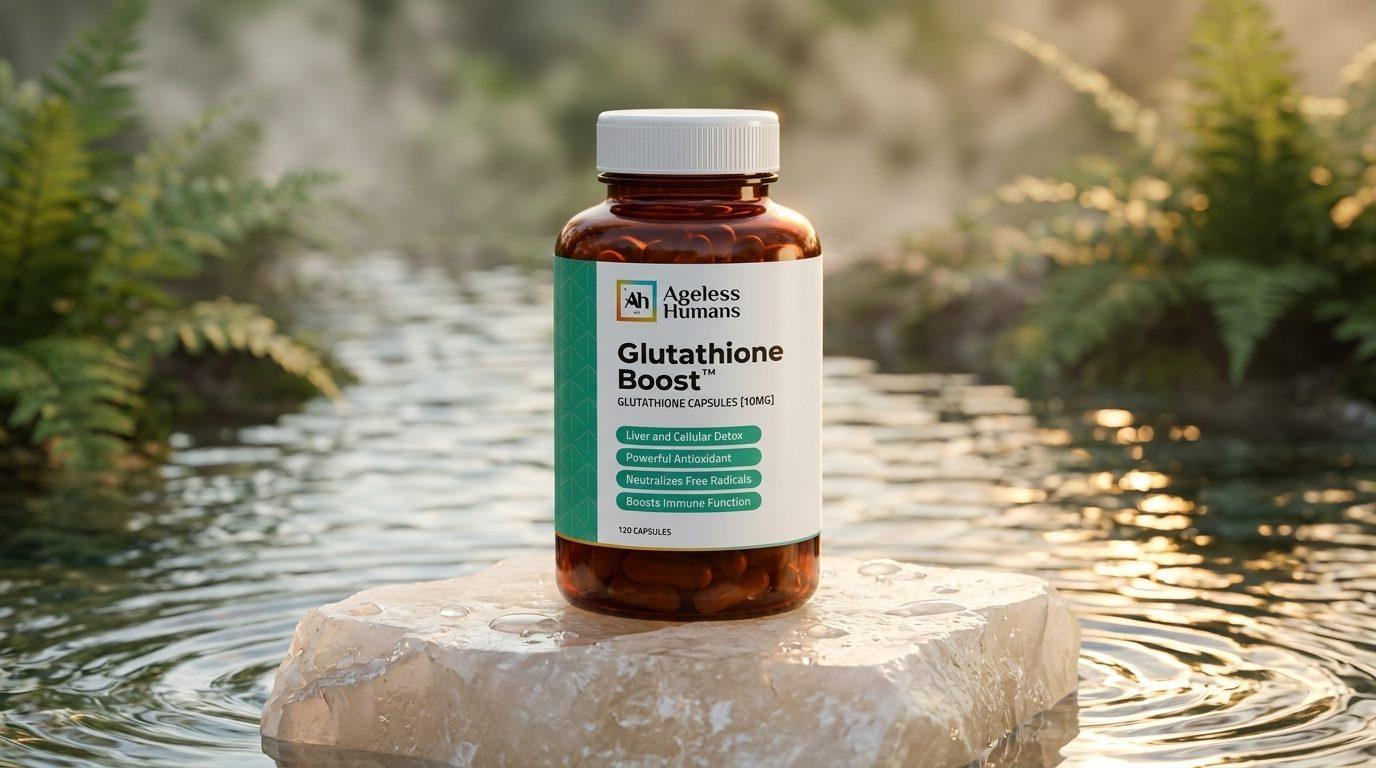
NAC (N-acetylcysteine) supplies cysteine, the building block that usually limits how much glutathione your cells can make. Direct glutathione supplies the finished molecule, but how well it survives digestion is still debated. For most people focused on long-term support of their body's own production, a precursor approach like NAC is the better-studied choice. Direct glutathione, especially in liposomal or sublingual forms, suits people who want the molecule itself and accept that the evidence is still developing.
The Short Answer: Two Routes to the Same Destination
Both strategies aim to support glutathione levels inside your cells. They take different routes to get there. Direct glutathione tries to deliver the finished molecule. NAC delivers a raw material and lets your cells do the assembly.
Here's the core difference:
- Direct glutathione: You swallow (or absorb under the tongue) the complete glutathione molecule. The open question is how much reaches your bloodstream and cells intact.
- NAC (precursor strategy): You supply cysteine, the scarcest ingredient. Your cells then build glutathione using their own enzymes, at the pace they need.
Neither route is a shortcut around biology. Your cells manage glutathione tightly, and both approaches work with that system rather than replacing it. If you want the full picture of what glutathione does in the body, start with our guide to glutathione benefits.
What Glutathione Is and Why Your Body Makes Its Own
Glutathione is a small molecule built from three amino acids: glutamate, cysteine, and glycine. Nearly every cell in your body makes it, and it's often called the body's master antioxidant because of its central role in cellular defense and detox pathways.
The key detail for this debate: your body doesn't rely on dietary glutathione to keep its supply up. Cells build glutathione inside themselves, in two enzyme steps, from those three amino acids. That's why the precursor strategy exists at all. If you can supply the right raw materials, you support the factory instead of shipping in the finished product.
Of the three building blocks, cysteine is usually the limiting one. Glutamate and glycine tend to be more available, while cysteine is in shorter supply and is unstable on its own. When cysteine runs short, glutathione production slows, no matter how much of the other two you have.
Research also suggests glutathione levels tend to be lower in older adults than in younger ones. That observation is a big reason glutathione support has become a longevity topic.
The Absorption Debate: Does Oral Glutathione Survive Digestion?
The honest answer: some, possibly, but it's not settled. This is the heart of the glutathione vs NAC question, and it's where most articles oversimplify.
The traditional view held that oral glutathione is mostly broken down in the gut. Your digestive tract has enzymes that split glutathione back into its amino acids, and early research found little change in blood glutathione after single oral doses. On that view, swallowing glutathione is just an expensive way to eat its building blocks.
More recent research has complicated that story. Some studies of daily oral glutathione taken over several weeks have reported increases in body glutathione stores. Others have found little or no effect. Results seem to depend on the form, the duration, and what was measured. Newer delivery formats were developed specifically to get around digestion:
- Liposomal glutathione wraps the molecule in fat-based spheres meant to protect it through the gut.
- Sublingual glutathione dissolves under the tongue, aiming for absorption that bypasses the stomach.
- S-acetyl glutathione is a modified form designed to be more stable.
These formats are promising, but the research behind them is smaller and earlier-stage than the research on NAC. Anyone who tells you direct glutathione definitely doesn't absorb, or definitely absorbs as well as a precursor, is getting ahead of the evidence.
How NAC Works and Why It's the Better-Studied Route
NAC is a stable form of cysteine that your body readily uses to make glutathione. The "N-acetyl" part protects the cysteine, making it easier to absorb and less likely to break down before it's useful.
Once absorbed, NAC is converted to cysteine, which cells pull in and use for glutathione synthesis. Because it targets the bottleneck ingredient directly, NAC has a clear, well-understood way of working. It's been studied for decades, and research consistently supports its role in maintaining glutathione levels.
A few more points worth knowing:
- NAC respects your body's regulation. Cells make glutathione based on demand, so you support capacity rather than forcing levels.
- NAC has activity of its own. It contains a sulfur group that research suggests has antioxidant properties independent of glutathione.
- Pairing with glycine is an active research area. Studies in older adults have looked at NAC combined with glycine, the third building block, on the idea that both can become limiting with age. This research is promising but still early.
The main trade-offs are practical. NAC has a noticeable sulfur smell, and some people experience mild digestive discomfort. Always follow the label directions.
Side-by-Side: Glutathione vs NAC
NAC wins on research depth and mechanism; direct glutathione wins on simplicity of concept. Here's how they compare on what matters:
- What it supplies: Direct glutathione supplies the finished molecule. NAC supplies cysteine, the limiting building block.
- Absorption picture: Oral glutathione absorption is debated; liposomal and sublingual forms aim to improve it. NAC is well absorbed and reliably converted to cysteine.
- Depth of research: NAC has a long, broad research history. Direct glutathione research is growing but smaller, especially for newer formats.
- How it works with your body: NAC supports your cells' own production on their own schedule. Direct glutathione adds to supply from outside.
- Stability: Plain glutathione is sensitive to heat, moisture, and oxidation. NAC is more stable, though it still has a strong odor.
- Practical experience: Glutathione has a mild taste in most forms. NAC smells of sulfur and may cause mild stomach upset in some people.
The pattern is clear. If you value a well-understood mechanism and the most research behind it, the precursor route is the stronger default.
Which Approach Fits Which Goal
Match the strategy to what you actually want out of it. There isn't one right answer for everyone, but there is a sensible default.
Choose a precursor approach (NAC, ideally with supporting nutrients) if you want to:
- Support your body's natural, long-term glutathione production as part of a daily longevity routine
- Rely on the route with the most research behind it
- Address the cysteine bottleneck directly
- Work with your cells' own regulation rather than around it
Consider direct glutathione (liposomal or sublingual) if you:
- Prefer taking the finished molecule itself
- Don't tolerate NAC's taste, smell, or digestive effects
- Are comfortable with a smaller, still-developing evidence base
Consider using both if you: - Want to cover your bases with building blocks and the finished molecule. There's no known reason the two strategies conflict, but check with your healthcare provider before stacking supplements.
For most adults focused on healthy aging, the precursor strategy is the logical place to start: it targets the step research identifies as limiting and leans on decades of study.
How to Choose a Quality Glutathione or NAC Supplement
Whichever route you pick, quality control matters more than the label claims. Both glutathione and NAC are sensitive to how they're made and stored, so the manufacturer matters.
Look for these markers:
- Third-party testing with a Certificate of Analysis (COA). A COA verifies what's in the bottle and screens for contaminants. Ask for it by lot.
- Transparent labeling. You should see the exact form (NAC, reduced glutathione, liposomal, S-acetyl) and the amount per serving.
- Known manufacturing. Products made in an FDA-registered facility give you more confidence in consistent processes.
- Smart packaging. Moisture and oxygen degrade these compounds, so sealed, opaque packaging helps.
- Honest claims. Be wary of products promising dramatic results. Good brands say "supports" and "helps maintain", because that's what the evidence allows.
Finally, talk with your healthcare provider before starting if you're pregnant, nursing, taking medications, or managing a health condition. Never exceed label directions.
Frequently asked questions
Is NAC better than glutathione?+
For most people, NAC is the better-studied option. It supplies cysteine, the building block that usually limits how much glutathione your cells can make, and it has decades of research behind it. Direct glutathione may work too, especially in liposomal or sublingual forms, but its research base is smaller. The best choice depends on your goals and tolerance.
Does oral glutathione actually get absorbed?+
It's still debated. Older research suggested most oral glutathione is broken down in the digestive tract. Some newer studies of daily use over several weeks have reported increases in body glutathione stores, while others found little effect. Liposomal and sublingual forms were developed to improve absorption, but the evidence for them is still early.
Can you take glutathione and NAC together?+
There's no known reason the two strategies conflict, and some people combine them to supply both the building blocks and the finished molecule. Follow the label directions for each product. Check with your healthcare provider before combining supplements, especially if you take medications.
Why is cysteine important for glutathione?+
Glutathione is made from three amino acids: glutamate, cysteine, and glycine. Cysteine is usually the scarcest of the three, so it acts as the bottleneck for glutathione production. That's why NAC, a stable form of cysteine, is a common way to support the body's own glutathione synthesis.
What are the downsides of NAC?+
NAC has a strong sulfur smell, and some people experience mild digestive discomfort such as nausea or stomach upset. Take it as directed on the label. People who are pregnant, nursing, taking medications, or managing a health condition should consult a healthcare provider before use.
Do glutathione levels decline with age?+
Research suggests glutathione levels tend to be lower in older adults than in younger adults. That observation is why glutathione support has become a focus in healthy aging. Studies in older adults have explored precursors like NAC and glycine as ways to support the body's own production.