
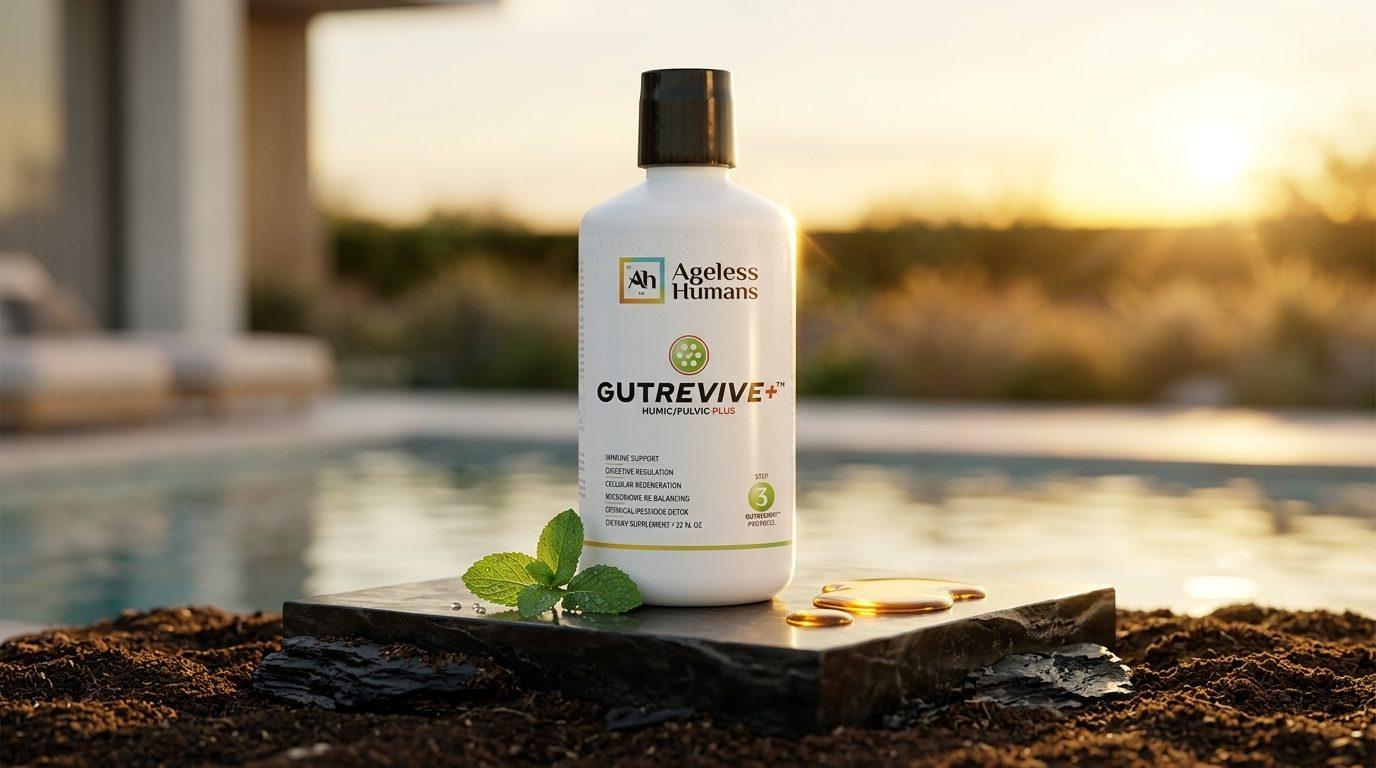
Fulvic acid is a natural compound formed as plant matter breaks down in soil. It is studied for how it may help carry trace minerals and support nutrient absorption, gut health, and normal antioxidant activity. The research is promising but early: most of it comes from lab and animal studies, and human data is still limited.
What Is Fulvic Acid (and How Is It Different From Humic Acid)?
Fulvic acid is a small, water-soluble organic molecule found in humus, the dark, nutrient-rich layer of soil formed as plants decompose over long periods. It belongs to a family called humic substances, which also includes humic acid. Both come from the same natural sources, such as ancient plant deposits, peat, and shilajit, the resin long used in Ayurvedic tradition.
The main difference is size and solubility:
- Fulvic acid has a lower molecular weight and dissolves in water at any pH. That small size is why researchers are interested in how it interacts with minerals and cells.
- Humic acid has a larger molecule and dissolves mainly in alkaline conditions. In the gut, it is studied more for its interactions with the intestinal lining and the environment around it.
Many supplements combine the two because they occur together in nature and are studied for complementary roles. When you see "fulvic/humic" on a label, it usually refers to a blend taken from a humate source.
The Short Answer: What the Research Suggests
Fulvic and humic acids are mainly studied in four areas: mineral transport, nutrient absorption, gut environment, and antioxidant activity. Here is how the evidence breaks down by strength:
- Best understood: Chemistry. Fulvic acid binds minerals, a process called complexation. This is well documented in soil science and is the basis for most supplement interest.
- Promising but early: Gut and absorption research. Animal and lab studies suggest humic substances may support the intestinal lining and nutrient uptake. Much of this comes from livestock nutrition research, where humates are used as feed additives.
- Preliminary: Antioxidant and cellular research. Lab studies show antioxidant activity, but test-tube results don't always carry over to people.
- Limited: Direct human studies. There are some small human trials, many on shilajit, which contains fulvic acid alongside other compounds. Large, long-term human trials on fulvic acid alone are lacking.
That's the honest picture. Fulvic acid is a reasonable, research-informed addition for people interested in trace minerals and gut support. It is not a proven cure-all, and any brand that claims otherwise is overselling.
Trace Minerals and Absorption: The Core Idea
The main reason people take fulvic acid is its ability to bind trace minerals, which may help keep those minerals in a form the body can use. In soil, fulvic acid moves minerals from the earth into plant roots. Researchers have looked at whether something similar happens in the human digestive tract.
Here's the mechanism in plain terms. Fulvic acid carries many carboxyl and phenolic groups, small chemical "hooks" that hold onto mineral ions like iron, zinc, magnesium, and copper. This complexation can keep minerals soluble and help prevent them from forming insoluble compounds your body can't absorb. Soluble minerals are generally easier for the intestine to take up.
What this means in practice:
- Fulvic acid is best understood as a mineral carrier, not a major mineral source. A fulvic supplement supplies trace amounts, not the levels found in a multivitamin.
- It is studied as a companion to a mineral-rich diet. It does not replace one.
- Modern diets built on processed food can run low in trace minerals. That's part of why interest in fulvic acid has grown in nutrition circles.
The mechanism is plausible and well described chemically. Whether it meaningfully changes mineral status in healthy people hasn't been settled by large human studies.
Fulvic and Humic Acid for Gut Health
Research suggests humic substances may help support the gut lining and a balanced intestinal environment, though most of the evidence comes from animal studies. This is where humic acid in particular gets attention.
The gut research focuses on a few ideas:
- Intestinal barrier support. The gut lining is a selective barrier. It lets nutrients through and keeps other things out. Animal studies have looked at humic substances for their potential to support the structure and function of this lining.
- A protective coating. Humic acid's larger molecules are thought to form a film on the intestinal surface. Researchers have studied this as one way it may support normal gut comfort.
- Microbial balance. Early research has explored how humic substances interact with gut bacteria. Some findings suggest they may help support a balanced microbial environment.
- Binding unwanted compounds. Because humic substances bind many molecules, researchers have studied whether they may bind certain compounds in the gut. That could help support the body's normal processes for eliminating them.
A lot of this evidence comes from livestock research, where humates have long been studied as feed additives for digestive support. That's useful, but animal digestion isn't human digestion. Treat these findings as a reason for interest, not a guarantee of results.
Antioxidant and Cellular Research
Laboratory studies show fulvic acid has antioxidant activity, meaning it can neutralize free radicals in a test tube. Free radicals are unstable molecules your body makes during normal metabolism. Managing them is a basic part of healthy aging, which is why antioxidant research matters to longevity-minded people.
Researchers have also studied fulvic acid for its potential to support normal cellular energy and a balanced inflammatory response. Much of this work involves shilajit, where fulvic acid is a major active component. Small human studies on shilajit have looked at energy and vitality-related outcomes. Because shilajit contains many compounds, it's hard to credit any single result to fulvic acid alone.
The honest takeaway: antioxidant activity in a lab dish is a starting point, not proof of a benefit in your body. Many compounds that look powerful in vitro behave very differently after digestion and absorption. Fulvic acid's cellular research is interesting and worth watching, but it is the least settled part of the evidence.
What the Research Does Not Show
There is no strong evidence that fulvic acid treats, cures, or prevents any disease, and claims that it does should be a red flag. Fulvic acid has picked up plenty of hype online. Some of it outruns the science by a wide margin.
Be skeptical of claims that fulvic acid:
- "Detoxes" your whole body or removes everything harmful
- Replaces a balanced diet or a standard multivitamin
- Works the same for everyone, right away
- Has been proven in large human clinical trials (it hasn't, at least not yet)
Research gaps include the ideal source, how much of a given product's fulvic acid is absorbed, and long-term effects in healthy adults. Humic substances also vary a lot depending on where they come from. That makes it hard to compare one study, or one product, to another.
None of this means fulvic acid isn't worth considering. It means the right mindset is curiosity plus realistic expectations. People who do well with it usually treat it as one supporting piece of a routine built on whole foods, hydration, sleep, and movement.
How to Choose a Quality Fulvic Acid Supplement
Source and purity matter more for fulvic and humic supplements than for almost any other category, because these compounds come straight from the earth. Humic substances bind minerals, and that includes ones you don't want. A poorly sourced product can carry unwanted heavy metals. Testing isn't optional.
Use this checklist:
1. Third-party lab testing for every lot. Ask for a Certificate of Analysis (COA) that covers heavy metals and microbial contaminants. If a brand won't share one, move on. 2. A clear source. Reputable products say where their humic material comes from. Vague labels are a warning sign. 3. Transparent labeling. You should be able to see what's in each serving, including whether it contains fulvic acid, humic acid, or both. 4. Manufacturing standards. Look for products made in an FDA-registered facility that follows current good manufacturing practices. 5. No disease claims. Brands that promise to cure conditions are either ignoring regulations or overselling. Either way, it's a reason to look elsewhere.
Follow the label directions. Talk with your healthcare provider before starting if you're pregnant, nursing, taking medications, or managing a health condition. Because fulvic acid binds minerals and other compounds, it's sensible to ask whether timing matters for anything else you take.
Where Fulvic Acid Fits in a Longevity Routine
Fulvic acid fits best as a foundational support for mineral intake and gut health, layered onto good daily habits. It isn't a headline intervention. It's more like the groundwork that helps other parts of your routine run smoothly.
Longevity rests on unglamorous basics: nutrient status, digestion, sleep, and steady movement. The gut is where nutrients enter your body, and trace minerals act as cofactors for many enzymes your cells rely on. Supporting both is a sensible, low-drama way to invest in long-term wellness. If you're building a broader plan, our guide on what biohacking really means explains how to stack small, evidence-informed habits without chasing every trend.
Practical ways to make it count:
- Be consistent. Gut and mineral support plays out over weeks, not hours.
- Pair it with whole foods. Leafy greens, nuts, seeds, legumes, and seafood supply the minerals a carrier can work with.
- Stay hydrated. Fulvic acid is water-soluble, and hydration supports normal digestion.
- Track how you feel. Notes on energy, digestion, and overall well-being help you judge whether it's earning a spot in your routine.
Treated this way, fulvic acid is an honest, research-informed tool. It isn't a miracle. It is a reasonable addition for people who care about the basics.
Frequently asked questions
What are the main benefits of fulvic acid?+
Fulvic acid is mainly studied for its ability to bind trace minerals, which may support mineral absorption. It's also studied for gut health and antioxidant activity. Most of the research is from lab and animal studies, so human evidence is still limited.
What is the difference between fulvic acid and humic acid?+
Both are humic substances formed from decomposed plant matter. Fulvic acid is a smaller molecule that dissolves in water at any pH and is studied mostly for mineral transport. Humic acid is larger and is studied more for its interactions with the gut lining and intestinal environment. Many supplements combine both.
Is fulvic acid good for gut health?+
Research suggests fulvic and humic acids may help support the intestinal lining and a balanced gut environment. Much of this evidence comes from animal studies, including livestock research. Human data is limited, so it's best seen as a supportive addition to a fiber-rich diet, not a replacement for one.
Is fulvic acid safe to take daily?+
Fulvic acid is generally used as a daily supplement when taken according to label directions. Quality matters most, because humic substances can carry heavy metals from their source, so choose a product with third-party lab testing and a COA. Check with your healthcare provider if you're pregnant, nursing, or taking medications.
Does fulvic acid help you absorb nutrients?+
Fulvic acid binds minerals in a way that may keep them soluble and easier for the body to take up. The chemistry is well documented, but large human studies haven't confirmed how much it changes nutrient status in healthy people. It works best alongside a mineral-rich diet.
Is shilajit the same as fulvic acid?+
No. Shilajit is a natural resin that contains fulvic acid as a major component, along with other compounds. Many human studies cited for fulvic acid were done on shilajit, so their results can't be credited to fulvic acid alone.