
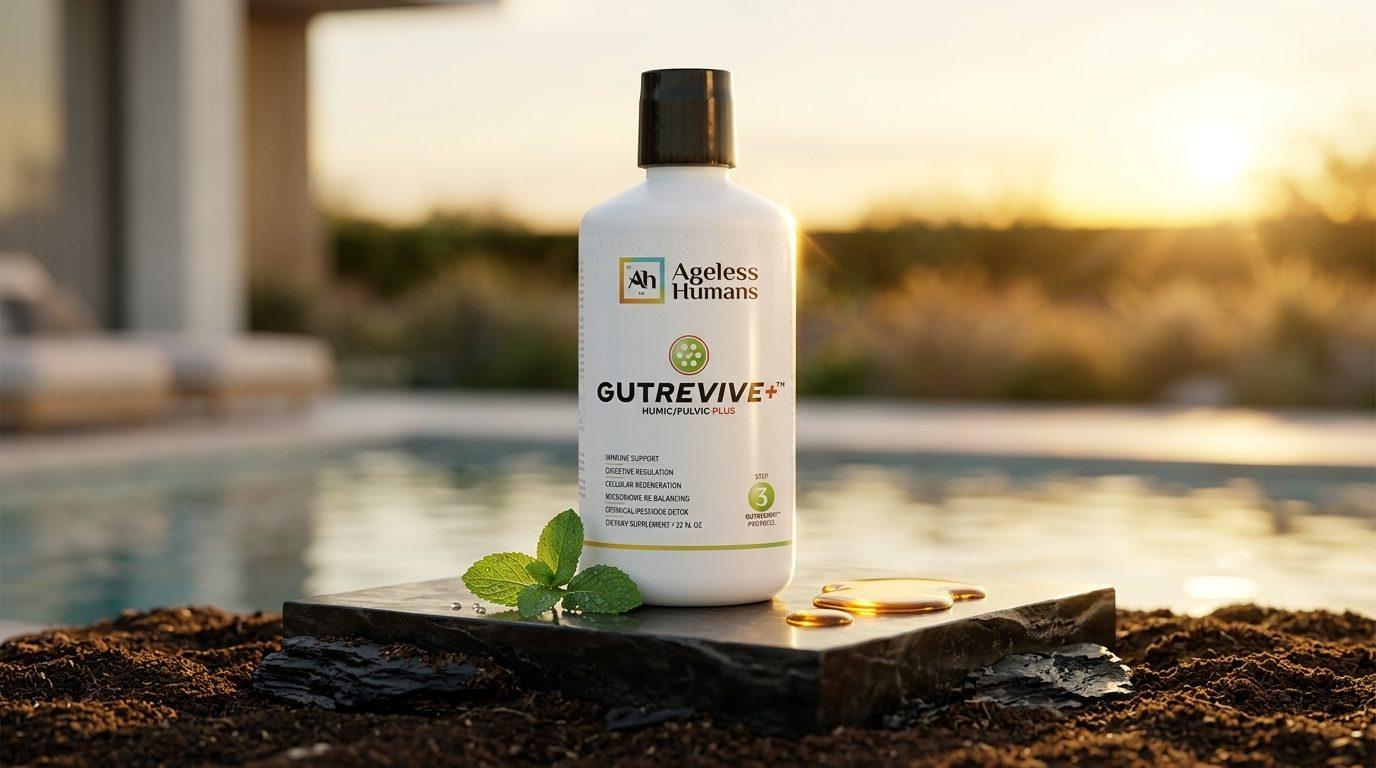
Humic acid is the larger, heavier fraction of humic substances, the same plant-derived material that gives us fulvic acid. Its main studied benefits involve the gut and mineral binding: it tends to stay in the digestive tract, where research suggests it may support gut lining function and bind minerals and other compounds. Most of that evidence comes from lab and animal studies, so its promise is real but early.
What Is Humic Acid?
Humic acid is a large, complex organic molecule formed when plant matter breaks down over very long periods. It is one of three main fractions of humic substances, which make up much of the organic matter in soil, peat, and ancient plant deposits such as leonardite and shilajit.
Scientists sort humic substances by how they behave in water at different acidity levels:
- Fulvic acid dissolves in water at any pH. It is the smallest and lightest fraction.
- Humic acid dissolves in alkaline water but falls out of solution in acidic conditions. It is larger and darker.
- Humin does not dissolve at any pH.
Humic acid is not one single compound. It is a family of molecules with carboxyl and phenolic groups along their structure. Those chemical groups explain most of what makes humic acid interesting: they let it grab onto minerals, metals, and other molecules. That binding ability is the thread running through nearly every humic acid benefit studied so far.
Humic Acid vs. Fulvic Acid: Why the Difference Matters
Humic and fulvic acid come from the same source, but they act differently in your body because of size and solubility. Fulvic acid is small and stays dissolved, so it is more readily absorbed. Humic acid is larger and becomes less soluble in stomach acid, so much of it stays in the digestive tract.
That difference shapes what each one is studied for:
- Fulvic acid is mainly studied as a carrier that may help move minerals and nutrients across cell membranes, plus its antioxidant activity. Our complete guide to fulvic acid benefits covers that side in depth.
- Humic acid is mainly studied for what it does inside the gut: interacting with the gut lining and binding compounds as they pass through.
Think of them as two halves of one system. Fulvic acid works on absorption and delivery. Humic acid works more locally in the digestive tract. That is why many supplements, and many researchers, look at them together instead of separately.
Humic Acid and Gut Health: What Research Suggests
Research suggests humic acid may support healthy gut lining function and a balanced gut environment, largely because it stays in the intestines rather than being absorbed. When it meets stomach acid, humic acid partly settles out of solution and can form a thin film along the intestinal surface.
Here is what researchers have studied:
- Gut barrier support. Lab and animal studies suggest humic substances may help maintain the integrity of the intestinal lining, the layer that decides what passes into your body and what stays out.
- Gut microbial balance. Some animal research suggests humic substances may influence the mix of gut bacteria in a favorable direction, though findings vary.
- Digestive comfort and nutrient use. Humic substances are used in livestock feed in several countries, and much of the gut research comes from that setting, where they have been studied for digestion and feed efficiency.
One caveat matters: most of this evidence comes from animals and lab models, not large human trials. Animal digestive systems differ from ours, so these results point to a possible mechanism, not a proven human outcome. If you are building a gut routine, start with the basics in our gut health foundations guide. Fiber, diverse plant foods, sleep, and stress management do the heavy lifting. Humic acid is, at most, a supporting player.
Mineral Binding: A Double-Edged Sword
Humic acid binds minerals and metals strongly, which can be useful but also means it may hold onto nutrients you want. This process, called complexation or chelation, is the best-documented property of humic acid. In soil, it is the reason humic matter helps hold nutrients where plant roots can reach them.
In the body, that binding ability has been studied in a few directions:
- Binding unwanted compounds. Lab and animal research has looked at humic substances binding certain heavy metals and environmental compounds in the gut so they are less likely to be absorbed. This is an active research area, not a settled conclusion.
- Interacting with essential minerals. Humic acid can also bind iron, zinc, calcium, and other minerals you need. Depending on conditions, that may help hold minerals in the gut or may reduce how much you absorb.
- Interacting with medications. Because it binds compounds, humic acid could, in theory, affect how some medications are absorbed.
This is why pairing matters. Fulvic acid is studied as a mineral carrier, humic acid as a binder, and trace minerals provide the raw material. A well-designed formula balances those roles instead of relying on one alone.
What the Research Does and Doesn't Show
The honest answer: humic acid has promising lab and animal research, a long history in traditional preparations like shilajit, and very little high-quality human clinical data. Anyone claiming humic acid is proven to do something specific in people is getting ahead of the evidence.
What research supports reasonably well:
- Humic acid binds minerals and metals. This is basic chemistry, well established.
- Humic substances have been studied in animal feed for gut function, with generally favorable findings.
- Humic substances show antioxidant and immune-related activity in lab studies.
What research does not yet show:
- Clear, repeatable results in large, controlled human trials.
- Ideal intake amounts for people. Follow label directions only.
- How results differ between sources such as leonardite, peat, and shilajit, which vary widely in makeup.
One more complication: humic acid differs a lot from source to source. Two products labeled humic acid can have different molecular profiles. That makes studies harder to compare and makes sourcing and testing more important for anyone choosing a supplement.
How to Choose a Humic Acid Supplement
Choose a humic acid supplement based on sourcing transparency and third-party testing first, and on marketing claims last. Because humic material comes from soil and ancient plant deposits, it can carry whatever was in that ground, including heavy metals.
What to look for:
- A Certificate of Analysis (COA) for every lot. It should show testing for heavy metals and microbes from an independent lab, not just the brand.
- Clear source disclosure. The label or website should say where the humic material comes from.
- Known manufacturing. Look for products made in an FDA-registered facility with consistent quality controls.
- Honest labeling. Be cautious of products promising to cure, detox, or fix specific health conditions. Supplements can only support normal function.
- Sensible pairings. Formulas that combine humic acid with fulvic acid and trace minerals reflect how these compounds naturally occur and work together.
At Ageless Humans, every product is made in our own FDA-registered facility in Carlsbad, California, and every lot is third-party lab tested with a COA. We do that because, with earth-derived ingredients, purity is not a bonus feature. It is the baseline.
Who Should Be Careful With Humic Acid
Most healthy adults tolerate humic substances well in the research, but some people should talk to a healthcare provider first. Because humic acid binds minerals and other compounds, its effects can interact with your nutrient status and medications.
Check with a doctor before using humic acid if you:
- Take prescription medications, especially those where absorption timing matters
- Are pregnant or breastfeeding
- Have a known medical condition or an immune or autoimmune concern
- Are managing mineral levels such as iron under medical guidance
A practical habit is to take humic supplements apart from medications, as your provider advises, and to stick to label directions. More is not better with a compound whose main trait is binding things.
Frequently asked questions
What is humic acid good for?+
Humic acid is mainly studied for supporting gut function and for its ability to bind minerals and other compounds in the digestive tract. Research suggests it may help maintain a healthy gut lining and gut environment. Most of this evidence comes from lab and animal studies, so human benefits are still being explored.
What is the difference between humic acid and fulvic acid?+
Humic and fulvic acid both come from decomposed plant matter, but humic acid is a larger molecule that becomes less soluble in acidic conditions, while fulvic acid is smaller and stays dissolved at any pH. Because of this, fulvic acid is more readily absorbed and is studied as a nutrient carrier. Humic acid tends to stay in the gut, where it is studied for gut support and mineral binding.
Is humic acid safe to take?+
Humic substances have generally been well tolerated in available studies, but high-quality human safety data is limited. Because humic acid binds minerals and other compounds, it may affect nutrient or medication absorption. Choose a third-party tested product, follow label directions, and talk to your doctor if you take medications, are pregnant, or have a health condition.
Does humic acid remove heavy metals from the body?+
Humic acid can bind heavy metals, and lab and animal research has explored whether this may reduce their absorption in the gut. However, this has not been established in human clinical trials, and humic acid is not a treatment for metal exposure. Anyone concerned about heavy metal exposure should see a healthcare provider.
Can humic acid affect mineral absorption?+
Yes, humic acid binds minerals such as iron, zinc, and calcium, which could either help hold them in the gut or reduce how much is absorbed, depending on conditions. This is why it is often paired with fulvic acid, which is studied as a mineral carrier, and with trace minerals. If you manage mineral levels under medical care, ask your provider before using it.
Where does humic acid in supplements come from?+
Humic acid in supplements usually comes from leonardite, peat, or shilajit, which are ancient deposits of decomposed plant material. Because these sources come from the earth, they can contain heavy metals, so quality varies widely. Look for a product with a lot-specific Certificate of Analysis from an independent lab.