
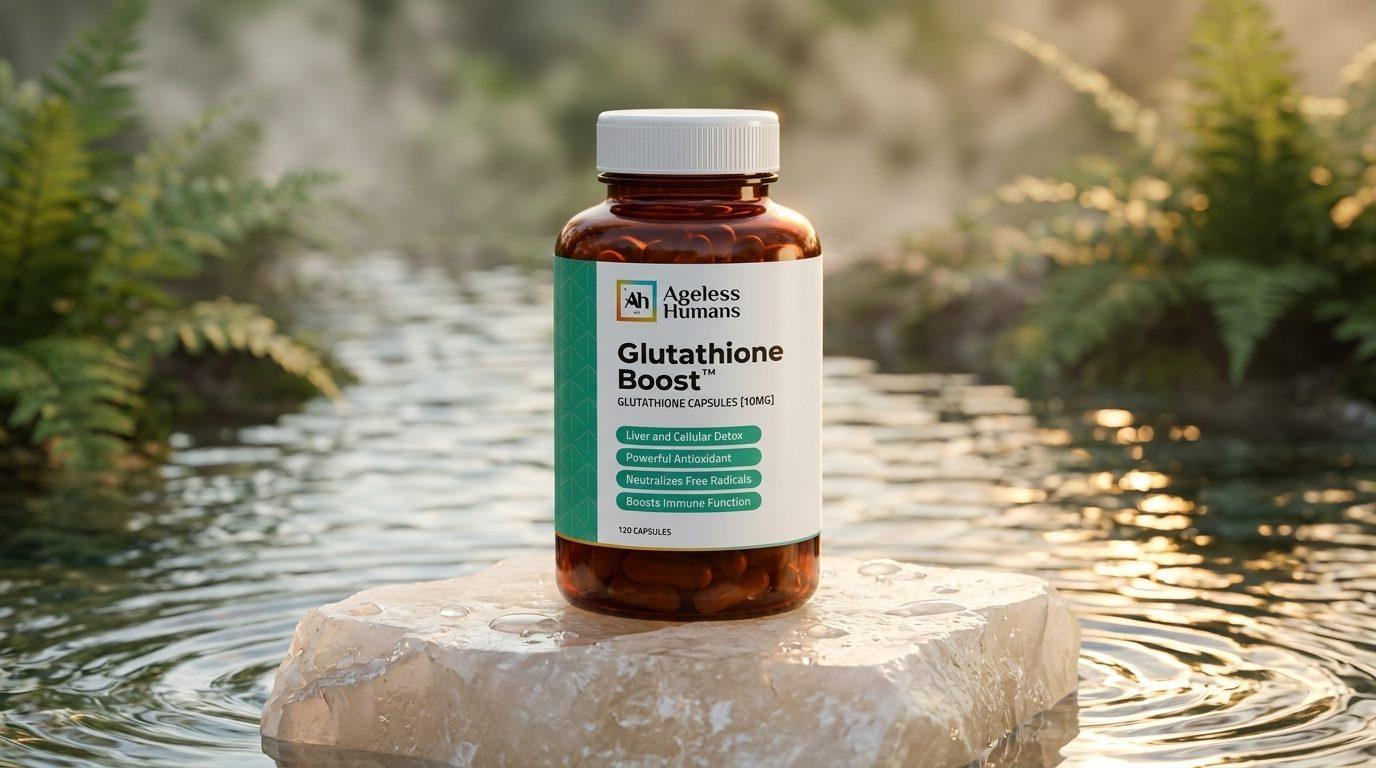
The most reliable way to raise glutathione naturally is to give your body the raw materials to make its own. That means eating enough cysteine-rich protein and sulfur-rich vegetables, getting key cofactors like selenium and riboflavin, sleeping well, exercising regularly, and limiting alcohol and smoking. When diet and habits are not enough, precursors like NAC and glycine are the best-studied supplemental options, and research suggests they often outperform oral glutathione itself.
Start Here: Your Body Makes Glutathione, So Feed the Factory
Raising glutathione is mostly about supporting production, not swallowing more of it. Glutathione is a small molecule (a tripeptide) your cells build from three amino acids: glutamate, cysteine, and glycine. Nearly every cell makes its own, and the liver produces a large share.
Of those three building blocks, cysteine is usually the limiting one. Glutamate is plentiful in most diets, and glycine is generally available, though research suggests supply may fall short in some people, especially with age. Cysteine is scarcer, so your cells can only make as much glutathione as their cysteine supply allows.
This is why every effective strategy below comes back to the same idea: supply the raw materials, support the enzymes that build and recycle glutathione, and reduce the things that burn through it. If you want the background on what glutathione does once it is made, see our guide to glutathione benefits.
Foods That Support Glutathione Production
Focus on cysteine-rich protein and sulfur-rich vegetables. These supply the building blocks and sulfur compounds your body uses to make and maintain glutathione.
Cysteine-rich proteins:
- Whey protein: one of the richest food sources of cysteine, and the most studied food for supporting glutathione levels
- Eggs: a dependable source of sulfur amino acids
- Poultry, fish, and other meats: provide cysteine plus methionine, which the body can convert into cysteine
- Legumes, seeds, and oats: useful plant sources, especially when eaten as part of a varied diet
Sulfur-rich vegetables:
- Cruciferous vegetables such as broccoli, Brussels sprouts, cabbage, kale, and broccoli sprouts. These contain compounds like sulforaphane, which research suggests may help activate the body's own antioxidant defense genes, including those involved in glutathione production.
- Alliums such as garlic, onions, leeks, and shallots, which supply sulfur compounds
Some foods, like asparagus, avocado, and spinach, contain glutathione itself. They are healthy choices, but how much dietary glutathione survives digestion intact is debated. Count them as a bonus, not your main strategy. The protein and sulfur on your plate do more of the heavy lifting.
The Nutrient Cofactors People Overlook
Glutathione depends on helper nutrients, not just building blocks. Your body constantly uses glutathione, oxidizes it, and recycles it back into its active form. That cycle relies on several vitamins and minerals.
- Selenium: needed for glutathione peroxidase, the enzyme family that uses glutathione to neutralize oxidative byproducts. Brazil nuts, seafood, and eggs are good sources. More is not better here, so a handful of Brazil nuts occasionally is plenty.
- Riboflavin (vitamin B2): the enzyme that recycles used glutathione back to its active form depends on a riboflavin-derived cofactor. Found in dairy, eggs, almonds, and mushrooms.
- Vitamin C: works alongside glutathione in the antioxidant network and research suggests it helps spare glutathione. Found in citrus, peppers, kiwi, and berries.
- Alpha-lipoic acid: studied for its role in recycling other antioxidants, including glutathione. Small amounts come from organ meats and spinach.
- Vitamin B6, folate, and B12: support the pathway that turns methionine into cysteine.
A varied whole-food diet covers most of these. If your diet is narrow, this is where gaps tend to show up first.
Lifestyle Habits That Protect Your Glutathione
Habits matter because they control how fast you use glutathione up. Even a perfect diet can be outpaced by habits that create a steady oxidative load.
- Exercise regularly and moderately. Research suggests consistent training helps the body strengthen its own antioxidant systems, including glutathione. Very intense exercise without enough recovery can temporarily draw levels down, so build up gradually.
- Prioritize sleep. Sleep is when much of the body's repair work happens, and research has linked poor sleep to higher oxidative stress. Aim for a consistent schedule.
- Limit alcohol. The liver uses glutathione to process alcohol byproducts, so frequent drinking draws on your supply.
- Avoid smoking and reduce exposure to smoke and pollution. These are well-known sources of oxidative stress that consume antioxidants.
- Manage chronic stress. Ongoing psychological stress is associated with greater oxidative load.
Age is part of the picture too. Research suggests glutathione levels tend to decline as we get older, which is one reason precursor support has drawn interest in longevity research.
Precursors: How NAC and Glycine Fit In
NAC and glycine are the best-studied supplemental ways to support glutathione, because they supply the building blocks your cells need most.
NAC (N-acetylcysteine) is a stable form of cysteine. Because cysteine is usually the bottleneck, NAC addresses the most common limit on production. It has a long research history and is the most widely studied glutathione precursor.
Glycine is the third building block. It is often treated as plentiful, but research suggests glycine availability may fall short in some people, particularly older adults. Glycine is found in collagen, bone broth, gelatin, and skin-on poultry.
NAC and glycine together have drawn attention in research, sometimes under the name GlyNAC. Studies, including work in older adults, have explored whether supplying both building blocks supports glutathione levels more fully than either alone. The research is promising but still developing, so treat it as an encouraging direction rather than settled science. For a direct comparison of approaches, read glutathione vs. NAC.
Oral Glutathione vs. Precursors: What Research Shows
Precursors have the stronger track record, though oral glutathione is not useless. The traditional view was that glutathione taken by mouth gets broken down in digestion before it can be absorbed. That made precursors the logical choice: give the body the parts and let cells assemble glutathione where it is needed.
The picture has become more nuanced. Some research suggests that consistent oral glutathione, and forms like liposomal or sublingual glutathione, may raise blood levels over time. Other studies have found little effect. The honest summary is that results are mixed and depend on form, duration, and the person.
Here is a practical way to think about it:
- Precursors (NAC, glycine) support your body's own production and have the deeper research base.
- Direct glutathione may help some people, but the evidence is less consistent.
- Neither replaces the basics. Without enough protein, cofactors, and sleep, any supplement is working uphill.
When Supplementation Actually Helps
Supplements make the most sense when diet and lifestyle alone may not cover your needs. Situations where people commonly consider precursor support include:
- Getting older, given research suggesting glutathione tends to decline with age
- Low protein intake, including some vegetarian or calorie-restricted diets that run short on sulfur amino acids
- Heavy training loads with demanding recovery needs
- High oxidative load from lifestyle or environment
If you take medications, are pregnant or nursing, or manage a health condition, talk with your healthcare provider first. NAC in particular can interact with some medications. Always follow label directions; more is not automatically better.
Quality matters as much as the ingredient. Look for a brand that tests every lot with an independent lab and publishes a Certificate of Analysis (COA). At Ageless Humans, every product is made in our own FDA-registered facility in Carlsbad, California, every lot is third-party tested with a COA, and it is backed by a 60-day money-back guarantee.
A Simple Daily Plan to Support Glutathione
Most people can cover the fundamentals with a few repeatable habits:
1. Eat protein at every meal, including cysteine-rich sources like eggs, whey, fish, or poultry. 2. Add a cruciferous vegetable and an allium daily: broccoli with garlic, cabbage slaw with onion, or a handful of broccoli sprouts. 3. Cover your cofactors with Brazil nuts occasionally, colorful produce for vitamin C, and dairy, eggs, or mushrooms for riboflavin. 4. Include glycine-rich foods like bone broth, collagen, or skin-on poultry a few times a week. 5. Move most days and keep intense sessions balanced with recovery. 6. Protect your sleep and keep alcohol modest. 7. Consider a precursor supplement if the factors above suggest you need more support, following label directions.
None of these steps is dramatic on its own. Together, they give your body steady access to everything it needs to make and recycle glutathione.
Frequently asked questions
What is the fastest natural way to raise glutathione?+
There is no instant fix, but the most direct natural approach is supplying cysteine, the building block that usually limits glutathione production. Cysteine-rich foods like whey protein, eggs, and poultry help, as does the precursor NAC. Pair that with sulfur-rich vegetables, good sleep, and limited alcohol for the best foundation.
Can you raise glutathione through food alone?+
Many people can support healthy glutathione levels through diet by eating enough cysteine-rich protein, cruciferous and allium vegetables, and foods that supply selenium, riboflavin, and vitamin C. Food alone may fall short for people who eat little protein, are older, or face a high oxidative load. In those cases, precursor supplements like NAC and glycine are commonly considered.
Is it better to take NAC or glutathione?+
NAC has the deeper research base because it supplies cysteine, the usual bottleneck in the body's own glutathione production. Oral glutathione, including liposomal forms, has shown mixed results in research: some studies suggest it may raise levels over time, while others find little effect. Many people prefer the precursor approach because it supports the body's natural production.
What role does glycine play in glutathione?+
Glycine is one of the three amino acids that make up glutathione, along with glutamate and cysteine. Research suggests glycine supply may fall short in some people, particularly older adults. Studies on combining glycine with NAC, sometimes called GlyNAC, have explored whether supplying both building blocks better supports glutathione levels.
Does exercise increase glutathione?+
Research suggests regular, moderate exercise helps the body strengthen its own antioxidant defenses, including glutathione. Very intense exercise without adequate recovery can temporarily draw glutathione down. Consistent training with good sleep and nutrition is the most supportive pattern.
Do glutathione levels decline with age?+
Research suggests glutathione levels tend to decline as people get older, possibly due to reduced supply of building blocks like cysteine and glycine. This is one reason precursor support has drawn interest in longevity research. Eating enough protein, staying active, and sleeping well remain the foundation at any age.