
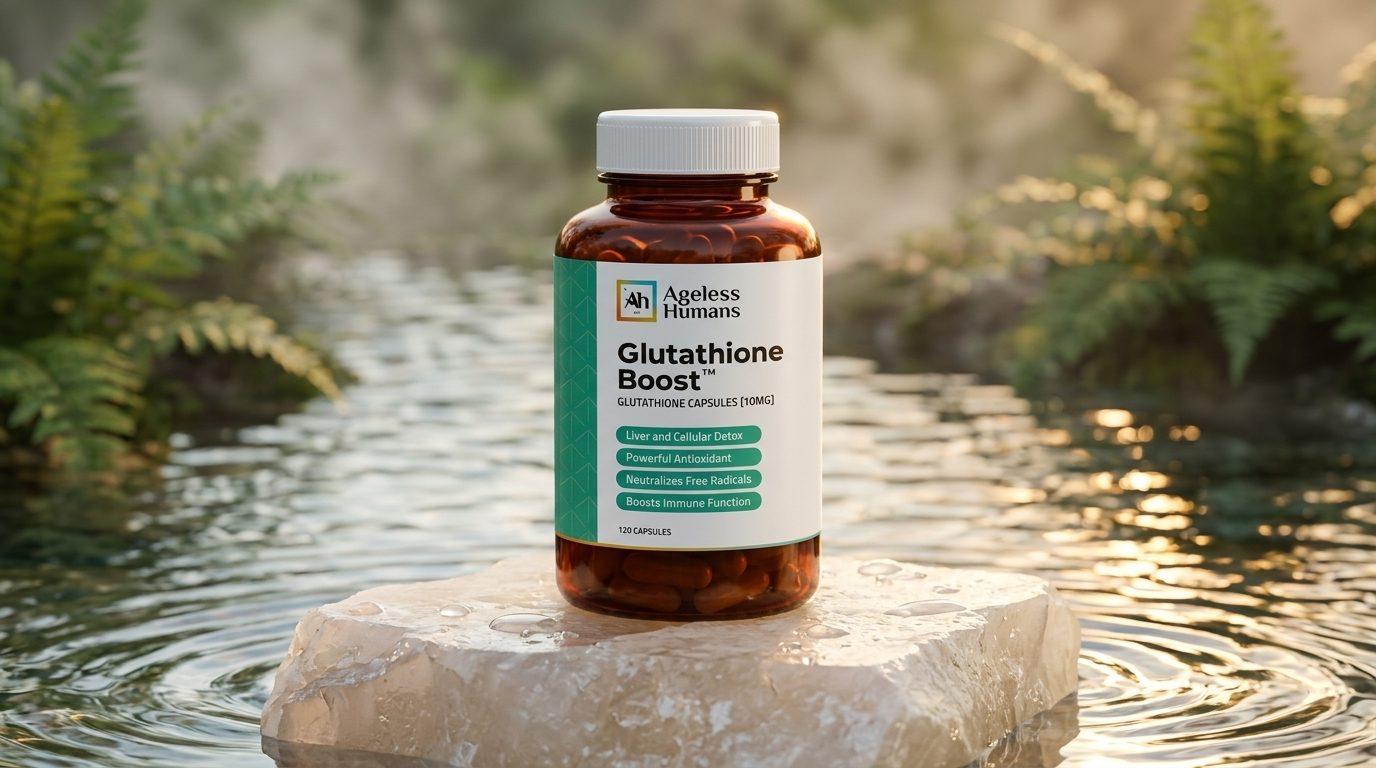
Milk thistle and glutathione support the liver in different ways. Milk thistle supplies silymarin, a plant compound studied for its antioxidant and cell-protective activity in liver tissue. Glutathione support, especially through precursors like cysteine and glycine, gives your body the raw materials to make its own master antioxidant. Choose milk thistle if you want a well-studied botanical, choose glutathione precursors if you want to support your built-in defense system, and know that many people use both.
The Short Answer: They Work at Different Levels
Milk thistle brings in an outside helper. Glutathione precursors strengthen a system you already have. That is the core difference, and it should drive your choice more than any label claim.
Silymarin is a plant-derived complex. Your body does not make it. Research suggests it acts on liver cells directly: it supports antioxidant activity, helps maintain cell membranes, and in lab models, it appears to influence the cell's own antioxidant pathways.
Glutathione is different. Your body makes it in nearly every cell, with the highest concentrations in the liver. It is central to how your liver processes compounds and neutralizes oxidative stress. Precursor supplements aim to keep that production line stocked.
Neither is "better" in the abstract. The question is whether you want to add a botanical, support your own antioxidant production, or do both. The sections below cover what each research base actually shows, so you can decide with clear eyes.
What Milk Thistle Is and What Silymarin Research Shows
*Milk thistle (Silybum marianum) is a flowering plant whose seeds contain silymarin, a mix of flavonolignans. The best known of these is silybin, also called silibinin.* It has been used in traditional herbal practice for centuries, and it is one of the most researched botanicals in the liver-support category.
Here is what the research base looks like, stated honestly:
- Antioxidant activity is well documented in lab and animal studies. Silymarin has been studied for helping cells manage oxidative stress and for supporting healthy cell membranes.
- It may interact with glutathione. Preclinical research suggests silymarin may help maintain glutathione levels in liver tissue. This means the two approaches overlap more than marketing usually admits.
- Human results are mixed. Milk thistle has been studied in many human trials. Outcomes vary with the form, the dose, the population, and the study quality. Some findings look encouraging. Others are inconclusive.
- Absorption is a known weak point. Silymarin is poorly absorbed in its standard form. That is why formulations such as silybin bound to phosphatidylcholine (often sold as "phytosome") have been developed and studied for better uptake.
The honest summary: milk thistle has a long history and a large body of research. That research is promising for supporting normal liver function, but it is not settled. Any brand calling it a sure thing is overselling.
What Glutathione Is and Why Precursors Matter
Glutathione is a small protein made of three amino acids: glutamate, cysteine, and glycine. Your cells build it continuously, and cysteine is usually the limiting ingredient. When cysteine runs short, production slows, no matter how much of the other two you have.
Glutathione helps neutralize free radicals, recycles other antioxidants such as vitamins C and E, and plays a key role in the liver's phase II processing, where compounds are bound and prepared for elimination. For a deeper look at its roles, see our guide to glutathione benefits.
So why take precursors instead of glutathione itself? Oral glutathione is partly broken down during digestion. Research on whether swallowed glutathione meaningfully raises levels in tissues is mixed. Some studies, particularly on liposomal forms, suggest it can help. Others show limited effect. Precursor logic sidesteps that debate: supply the building blocks, especially a cysteine source like N-acetylcysteine (NAC), plus glycine, and let your cells assemble glutathione where it is needed.
The precursor approach has a solid physiological rationale, and NAC in particular has been widely studied for supporting glutathione production. As with milk thistle, results in healthy people vary, and more research is needed on long-term outcomes.
Side-by-Side: How the Two Approaches Compare
The fastest way to choose is to compare mechanism, evidence, and practical tradeoffs directly.
Milk thistle (silymarin)
- What it is: a botanical flavonolignan complex your body doesn't produce
- How it works: acts on cells directly, with antioxidant and membrane-supporting activity studied mainly in lab models
- Evidence base: large and long-running, with mixed human results
- Main limitation: low absorption unless you use an enhanced form
- Watch for: possible interactions with medications processed by liver enzymes, and sensitivity if you are allergic to plants in the daisy/ragweed family
Glutathione precursors (e.g., NAC + glycine)
- What it is: amino acid building blocks your body uses to make its own glutathione
- How it works: supplies the rate-limiting ingredient so cells can keep up production
- Evidence base: strong biochemical rationale, with growing but still developing human data on healthy adults
- Main limitation: effects depend on your starting status, so people with adequate levels may notice less
- Watch for: mild digestive effects in some people. Check with a clinician if you take medications.
Direct oral glutathione sits in between. It is convenient, but the absorption research is the most debated of the three.
Who Tends to Reach for Which
Your goals and habits are better guides than the label. These patterns are common, but they are not prescriptions.
People who often lean toward milk thistle:
- Those who prefer traditional botanicals with long histories of use
- People who want a single-ingredient herbal product
- Anyone who specifically wants the silymarin research base
People who often lean toward glutathione precursors:
- Adults focused on healthy aging. Research suggests glutathione levels may decline with age.
- People under heavy oxidative load from intense training, poor sleep, or high stress
- Those who want to support antioxidant defenses throughout the body, not just in the liver
- People who want to support their own production rather than add an outside compound
There is also a foundation layer that matters more than either supplement. Protein intake, sulfur-rich foods, sleep, exercise, and limiting alcohol all affect glutathione status. Our guide on how to raise glutathione naturally covers these habits step by step. Supplements work best on top of them, not in place of them.
Can You Take Glutathione Support and Milk Thistle Together?
Yes, many people combine them, and the logic holds up: they work through different but complementary routes. Silymarin acts as an outside botanical helper. Precursors keep your internal glutathione production stocked. Preclinical research even suggests silymarin may help maintain glutathione levels, so the two may support each other.
A few practical points:
- Start one at a time. Adding products separately makes it easier to notice how each one sits with you.
- Follow label directions. More is not better, and stacking does not mean doubling up.
- Talk to your clinician first if you take prescription medications, are pregnant or nursing, or have a health condition. Milk thistle in particular may affect how some drugs are processed.
The gut is a third factor people often overlook. Digestion and absorption decide how much of any supplement actually reaches your cells. Some people add gut-focused support, such as Humatex trace minerals with fulvic and humic acid, to support digestive health and trace mineral intake alongside their liver-support routine.
How to Shop the Liver-Support Aisle Without Getting Fooled
The products that deserve your money have clear labels, standardized ingredients, and verified testing. The liver-support category is crowded with vague "detox" blends, so use this checklist:
1. Look for standardization. For milk thistle, the label should state the silymarin percentage, not just "milk thistle seed." For precursors, it should list each amino acid and its amount. 2. Check the form. Enhanced-absorption silybin and clearly dosed NAC tell you the formulator understood the research. 3. Avoid disease promises. Any supplement that claims to cure, treat, or reverse a liver condition is breaking the rules and should not be trusted. 4. Demand third-party testing. Ask for a certificate of analysis (COA) that confirms identity, potency, and purity. 5. Know where it's made. Manufacturing quality varies widely.
At Ageless Humans, every product is made in our own FDA-registered facility in Carlsbad, California. Every lot is third-party lab tested with a COA, and every purchase is backed by a 60-day money-back guarantee. Hold any brand you buy from to that same standard.
Bottom line: choose milk thistle for a well-studied botanical, choose glutathione precursors to support your body's own master antioxidant, or combine them thoughtfully. Either way, build on good daily habits first.
Frequently asked questions
Is glutathione or milk thistle better for the liver?+
Neither is universally better, because they work differently. Milk thistle supplies silymarin, a plant compound studied for antioxidant and cell-protective activity in liver tissue. Glutathione precursors supply the amino acids your body uses to make its own glutathione, the liver's main antioxidant. The better choice depends on whether you want a botanical, support for your own production, or both.
Can I take milk thistle and glutathione together?+
Many people take milk thistle and glutathione support together, since they act through complementary routes. Preclinical research even suggests silymarin may help maintain glutathione levels. Start one product at a time and follow label directions. Check with your healthcare provider first if you take medications, because milk thistle may affect how some drugs are processed.
Why take a glutathione precursor instead of glutathione itself?+
Oral glutathione is partly broken down during digestion, and research on how well it raises tissue levels is mixed. Precursors such as N-acetylcysteine (NAC) and glycine supply the building blocks, especially cysteine, which usually limits production. That lets your cells make glutathione themselves, where it is needed.
What does the research on milk thistle actually show?+
Silymarin, the active complex in milk thistle, shows consistent antioxidant and membrane-supporting activity in lab and animal studies. Human trial results are mixed and vary with the form, dose, and study quality. Standard silymarin is poorly absorbed, which is why enhanced forms like silybin-phosphatidylcholine have been developed. Overall, the research is promising but not conclusive.
Who should be cautious with milk thistle?+
People allergic to plants in the daisy or ragweed family may react to milk thistle. Because it may affect liver enzymes that process some medications, anyone taking prescription drugs should talk to a clinician first. The same applies to people who are pregnant or nursing, or who have a health condition.
How can I support glutathione levels without supplements?+
Eat enough protein, include sulfur-rich foods like garlic, onions, and cruciferous vegetables, sleep well, exercise regularly, and limit alcohol. These habits support your body's raw materials and its ability to make glutathione. Supplements work best as an addition to these habits, not a replacement.