
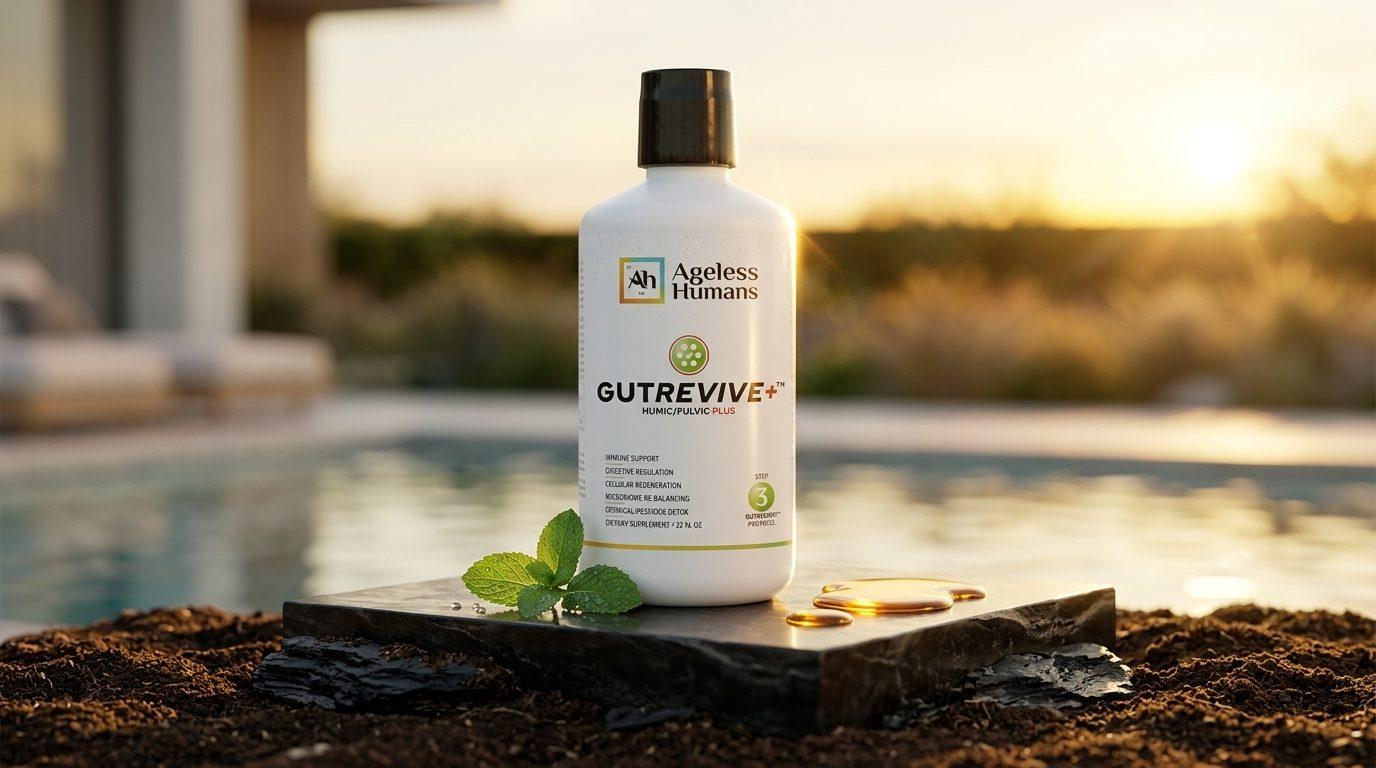
Electrolytes and fulvic acid do different jobs. Electrolytes like sodium, potassium, and magnesium replace minerals your body uses to hold fluid and fire nerves and muscles, which is why they matter most when you sweat. Fulvic acid is a natural organic compound studied for how it binds trace minerals and may support their transport and absorption. One refills the tank; the other is studied for helping minerals get where they're going.
The Short Answer: Replacement vs. Transport
Electrolytes are about replacement. Fulvic acid is about transport and trace-mineral support. They sit on the same shelf, but they don't compete for the same job.
Electrolytes are a small set of charged minerals, mainly sodium, potassium, chloride, magnesium, and calcium, that your body needs in meaningful amounts every day. You lose some of them in sweat, so replacing them supports hydration during exercise, heat, and long active days.
Fulvic acid isn't an electrolyte. It's an organic compound formed as plant matter breaks down in soil and ancient deposits. Its claim to fame is chemistry: it can bind, or complex, minerals. That's why it's studied as a carrier that may help trace minerals stay soluble and available. If you've been stuck in the hydration aisle wondering which one to buy, the honest answer is that it depends on what you're trying to solve. Many people use both.
What Electrolytes Actually Do
Electrolytes help your body control where water goes and keep nerves and muscles signaling normally. Drinking water gets fluid in. Electrolytes help keep it in the right places.
Here's the core team:
- Sodium: the main electrolyte in the fluid outside your cells. It's central to fluid balance and is the mineral you lose most in sweat.
- Potassium: the main electrolyte inside your cells. It works with sodium to support normal nerve signals and muscle contraction.
- Chloride: pairs with sodium and supports fluid balance.
- Magnesium: involved in hundreds of enzyme reactions, including energy production and muscle relaxation.
- Calcium: supports muscle contraction and nerve signaling, alongside its well-known role in bones.
When you sweat heavily, train for a long time, work outside in the heat, or follow a very low-carb diet, your electrolyte needs can go up. Drinking large amounts of plain water during long, sweaty efforts without replacing sodium is a known concern, which is exactly why sports drinks and electrolyte powders exist. For most people on a normal day with a balanced diet, food covers a lot of the need. Electrolyte products earn their place when losses run high.
What Fulvic Acid Actually Is (and Isn't)
Fulvic acid is a humic substance, a small, water-soluble organic molecule formed as plant material decomposes over long periods. It's commonly sourced from humic-rich deposits and often sold with humic acid, its larger chemical cousin.
What makes it interesting is its structure. Fulvic acid has many reactive sites that can grab onto mineral ions. In soil science, this is why it's valued: it helps keep minerals soluble and available to plants. In human nutrition, researchers have studied whether that same binding ability may support the absorption and transport of trace minerals, the ones you need in small amounts, like zinc, iron, copper, manganese, and selenium.
What fulvic acid is not: it's not a meaningful source of sodium or potassium, and it won't replace what you lose in a hard, sweaty workout. Think of it as a support player for mineral availability, not a refill for sweat losses. For a deeper look at what it's been studied for, including antioxidant and gut-health research, see our guide to fulvic acid benefits.
Side-by-Side: Fulvic Acid vs. Electrolytes
The fastest way to choose is to compare what each one supplies and when it matters.
Electrolytes
- What they are: Essential minerals with an electrical charge (sodium, potassium, chloride, magnesium, calcium)
- Main job: Replace minerals lost in sweat; support fluid balance and normal muscle and nerve function
- When they matter most: Exercise, heat, heavy sweating, long active days, low-carb eating
- Amounts involved: Relatively large daily needs compared with trace minerals
- Evidence base: Well-established physiology
Fulvic Acid
- What it is: A naturally occurring organic compound from humified plant matter
- Main job: Studied for binding trace minerals and supporting their solubility, transport, and absorption
- When it matters most: Everyday use as part of a trace-mineral and gut-support routine
- Amounts involved: Supplements typically pair it with trace minerals rather than delivering large mineral doses
- Evidence base: Growing but early; much of the research is lab and animal work
The takeaway: if your problem is losing minerals, reach for electrolytes. If your goal is broader trace-mineral support, fulvic acid fits that lane.
What the Research Does and Doesn't Show
The science behind electrolytes is settled physiology. The science behind fulvic acid is promising but still early. You deserve to know the difference.
That sodium, potassium, and other electrolytes regulate fluid balance and nerve and muscle function isn't a debate. It's textbook biology. The practical questions, like how much any one person needs during exercise, vary with sweat rate, climate, and diet, which is why label directions and personal experience matter.
Fulvic acid is a different story. Research suggests it can complex minerals and has antioxidant properties in lab settings, and it has been studied for gut-health and nutrient-transport roles. But much of that work comes from test tubes, animal studies, and agricultural research. Well-designed human trials are limited. Anyone telling you fulvic acid is a proven, dramatic hydration fix is overselling it.
So here's the honest framing: electrolytes are a reliable tool for a known job. Fulvic acid is a reasonable, low-key addition for people interested in trace-mineral and gut support, with research that's interesting rather than definitive.
When to Reach for Which
Use electrolytes when you're sweating; consider fulvic acid as an everyday mineral-support habit. Most real-life situations fall clearly on one side.
Reach for electrolytes when:
- You're training for longer stretches or in the heat
- You're a heavy or salty sweater (white residue on hats and shirts is a clue)
- You're doing yard work, hiking, or travel that leaves you depleted
- You're eating very low-carb and feel flat
Consider fulvic acid with trace minerals when:
- You want broad trace-mineral support beyond a basic multivitamin
- Your diet leans on processed foods or limited produce
- You're interested in gut-health support as part of a longevity routine
- You want a daily habit that isn't tied to workouts
If you train regularly and care about long-term mineral status, you probably fall into both camps. That's normal.
Can You Combine Fulvic Acid and Electrolytes?
Yes. Because they do different jobs, many people use both, often at different times of day. There's no rule that you must pick one.
A simple, practical pattern looks like this:
1. Daily baseline: Take your fulvic and trace-mineral supplement as directed on the label, as part of your morning or evening routine. 2. Activity-based: Add electrolytes around workouts, hot days, or long sweaty efforts. 3. Food first: Keep eating mineral-rich foods like leafy greens, beans, nuts, seeds, potatoes, and fruit. Supplements fill gaps; they don't replace a good plate.
A few common-sense notes. Follow each product's label directions rather than stacking extra servings. Check whether your electrolyte product already contains magnesium or trace minerals so you know what you're getting in total. And if you take medications or have a health condition, especially anything affecting your kidneys, heart, or blood pressure, talk with your healthcare provider before adding mineral supplements.
Some active people also look at the circulation side of performance. Supporting healthy blood flow, for example with a nitric oxide product like NitroBoost, is a separate job again. It doesn't replace electrolytes or minerals; it's simply another piece some people include in a training routine.
How to Shop the Hydration Aisle Without Getting Fooled
Buy by job, then by quality. Decide whether you need replacement, trace-mineral support, or both, then judge products on transparency.
For electrolytes, look for a clear label listing sodium, potassium, and magnesium amounts. Be wary of products that are mostly sugar with a token sprinkle of minerals, unless you specifically want carbohydrates for long endurance efforts.
For fulvic acid, source and purity matter. Because it comes from natural deposits, quality varies. Look for a brand that names its source, tests every batch, and publishes results. A Certificate of Analysis (COA) from an independent lab is the standard to ask for.
At Ageless Humans, every product is made in our FDA-registered facility in Carlsbad, California, and every lot is third-party lab tested with a COA. We also back our formulas with a 60-day money-back guarantee, because you should be able to judge a supplement by how it fits your routine, not by marketing on a label.
Frequently asked questions
Is fulvic acid an electrolyte?+
No. Fulvic acid is a naturally occurring organic compound, not an electrolyte. Electrolytes are charged minerals like sodium, potassium, and magnesium that support fluid balance and nerve and muscle function. Fulvic acid is studied for its ability to bind trace minerals and may support their transport and absorption.
Can fulvic acid replace electrolytes after a workout?+
No. Fulvic acid doesn't supply meaningful amounts of sodium or potassium, the main minerals lost in sweat. After heavy sweating, an electrolyte product or salty food is the right tool for replacement. Fulvic acid is better viewed as an everyday trace-mineral support supplement.
Can I take fulvic acid and electrolytes together?+
Many people do, because the two serve different purposes. A common approach is taking fulvic acid with trace minerals daily and adding electrolytes around workouts or hot days. Follow each product's label directions, and check with your healthcare provider if you take medications or have a health condition.
Does fulvic acid help with hydration?+
Fulvic acid isn't a direct hydration product the way electrolytes are. Research suggests it binds minerals and may support their availability, which is why it's often linked to hydration in marketing. The evidence in humans is still early, so electrolytes remain the dependable choice for replacing what you sweat out.
Who actually needs electrolyte supplements?+
Electrolyte supplements are most useful for people who sweat heavily, exercise for long periods, work or train in the heat, or follow very low-carb diets. Many people with a balanced diet and moderate activity get much of what they need from food. Your sweat rate, climate, and diet all affect your needs.
What should I look for in a fulvic acid supplement?+
Look for a brand that discloses its source, tests every batch through an independent lab, and provides a Certificate of Analysis (COA). Because fulvic acid comes from natural deposits, purity and consistency can vary between products. Clear labeling and published testing are the best signs of quality.