
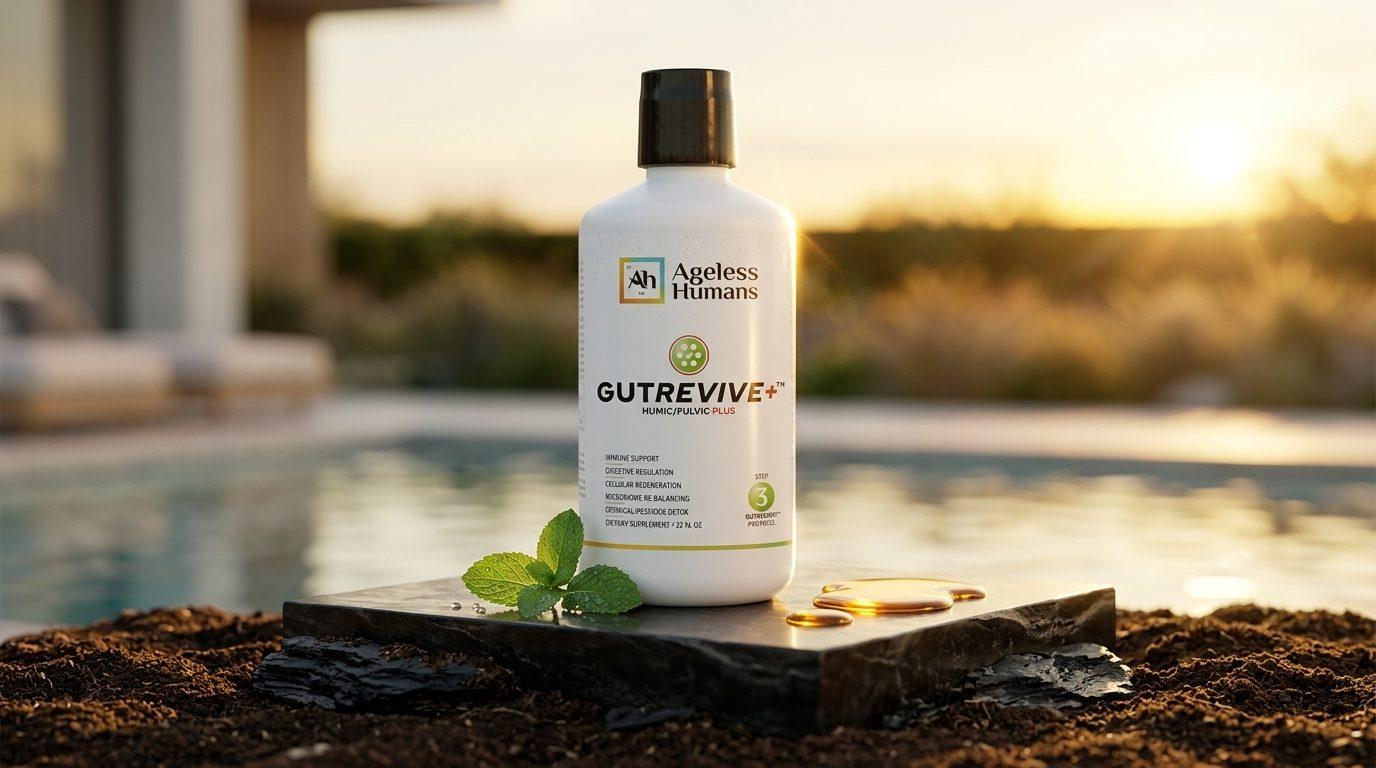
Trace mineral drops deliver minerals; fulvic acid is studied mainly for how it binds and moves minerals, not for how much it contains. If you want to top up minerals in your water, plain ionic drops usually do the job. A fulvic-humic formula makes more sense if you also want the carrier compound itself and the gut-focused properties humic substances are being researched for.
The Short Answer: One Is Cargo, One Is the Carrier
Trace mineral drops are cargo. Fulvic acid is a carrier. That one distinction settles most of the confusion between these two products.
Trace mineral drops are concentrated mineral solutions. You buy them for what is in them: magnesium, potassium, sodium, chloride, and smaller amounts of other elements. Fulvic acid is an organic compound that forms when plant matter breaks down over very long periods. It contains some minerals, but its main appeal is chemical. It binds to minerals and other molecules and is being studied for how that binding may affect the way they move and get taken up.
So the question isn't really "which is better." It's "do I need more minerals, a carrier for them, or both?" Most people asking this question fall cleanly into one of those three camps, and the rest of this guide helps you figure out which one is yours.
What Trace Mineral Drops Actually Are
Most trace mineral drops are concentrated, already-dissolved salts, often sourced from inland salt lakes or seawater. "Ionic" means the minerals are dissolved into charged particles, the same state minerals are in when they're dissolved in water.
A few things worth knowing before you buy:
- The label is mostly about major minerals. Magnesium, chloride, sodium, and potassium usually make up the bulk. The true "trace" elements, like zinc or selenium, often appear in very small amounts or aren't quantified at all. Read the Supplement Facts panel instead of the front label.
- They taste intense. Concentrated mineral drops are salty and bitter, which is why most people dilute them in water or juice.
- They're simple. No carrier, no added compounds. You get the minerals and nothing else.
That simplicity is a real advantage. Dissolved ionic minerals are already in a form your body routinely handles from food and water. They don't need anything extra to be useful.
What Fulvic Acid Actually Is, and What "Carrier" Means
Fulvic acid is a small, water-soluble humic substance with a strong ability to bind minerals. That binding is the whole reason people call it a carrier. It comes from humate deposits, ancient layers of decomposed plant material, and is usually extracted alongside its larger relative, humic acid.
Chemically, fulvic acid is covered in reactive groups that latch onto mineral ions and form complexes, a process called chelation. The theory behind supplementing with it goes like this: a mineral bound to a small, water-soluble organic molecule may stay dissolved and available in the digestive tract rather than reacting with other compounds. Fulvic acid has also been studied for antioxidant activity in lab settings.
Humic acid is the larger, less soluble partner. It's mostly studied for what it does in the gut itself, including its interaction with the gut lining and digestive environment, rather than for carrying minerals. For a deeper look at the compound on its own, see our full guide to fulvic acid benefits.
What the Research Does and Doesn't Show
The carrier idea is chemically sound, but strong human evidence that fulvic acid improves mineral absorption is still limited. Be skeptical of any brand that tells you otherwise.
Here's an honest breakdown:
- Well established: Fulvic and humic substances bind minerals. This is basic soil and water chemistry, documented for decades, and it's why they matter so much in agriculture.
- Promising but early: Lab and animal research suggests humic substances may influence nutrient uptake, antioxidant activity, and the gut environment. Some livestock research has looked at humates as feed additives for digestive and growth outcomes.
- Not yet shown: Large, well-controlled human trials establishing that fulvic acid meaningfully increases how much of a given mineral a person absorbs. Most of what you read online goes past what the human data supports.
The fair conclusion: fulvic acid is a reasonable, studied ingredient with a plausible mechanism. It is not a proven mineral "booster." If you choose it, choose it for its whole profile, the carrier chemistry plus the gut-focused research on humic substances, not because of a promise that it will multiply your mineral intake.
When Plain Ionic Minerals Are Enough
If your goal is simply getting more minerals into your water, plain ionic trace minerals are enough. You don't need a carrier to make dissolved minerals useful.
Plain drops are the right pick if:
- You drink filtered, distilled, or reverse-osmosis water. These processes strip out naturally occurring minerals, and adding some back is a simple, sensible fix that also improves taste.
- You sweat a lot. Training, sauna use, or hot climates raise your interest in replacing electrolytes like magnesium, sodium, and potassium.
- You want the cheapest, simplest option. One ingredient category, easy to understand, easy to compare across brands.
- You already eat a varied, whole-food diet and just want a light top-up rather than a new compound in your routine.
In these cases fulvic acid isn't wrong. It just isn't solving the problem you actually have. Spend your money on the cargo.
When a Fulvic-Humic Formula Makes More Sense
Choose a fulvic-humic formula when you want minerals plus the carrier compound plus gut-focused support, all in one. This is the "both" camp, and it's where combination products earn their place.
A fulvic-based formula fits if:
- Digestive comfort is a priority. Humic substances are being researched for their interaction with the gut environment and gut lining, which plain mineral drops don't address at all. If that's your focus, start with the bigger picture in our gut health foundations guide.
- You want the binding chemistry working alongside your minerals. Even with limited human data, some people prefer pairing minerals with a carrier compound rather than taking them alone.
- You'd rather run one product than two. A good formula combines trace minerals with fulvic and humic acids, so you aren't stacking separate bottles.
One honest caution: fulvic products vary enormously in source and purity. The category's upside means nothing if the extract is low quality, which brings us to the most important section.
Quality Matters More Here Than Almost Anywhere Else
Because fulvic acid is extracted from earth deposits, purity testing is non-negotiable. Humate deposits naturally hold a wide range of elements, and not all of them are ones you want. Concentrated salt-lake minerals carry the same concern.
Before buying either product, check for:
- A Certificate of Analysis (COA) for each lot. It should come from an independent third-party lab, not just the manufacturer's own testing.
- Heavy metal results. A COA should show tested levels for contaminants, not just a line that says "passes."
- Source transparency. Where do the humates or minerals come from? Vague answers are a red flag.
- Where it's made. Manufacturing in a registered, inspected facility matters for consistency from bottle to bottle.
At Ageless Humans, every product is made in our own FDA-registered facility in Carlsbad, California, and every lot is third-party lab tested with a COA. We hold ourselves to that standard because in this category, the label means nothing without the lab report behind it.
The Honest Chooser
Match the product to the problem. Here's the quickest way to decide:
- "My water is filtered and tastes flat." Plain ionic trace minerals.
- "I sweat heavily and want electrolyte support." Plain ionic trace minerals, alongside a balanced diet.
- "I want gut-focused support and minerals together." A fulvic-humic formula with trace minerals.
- "I'm curious about fulvic acid specifically." A fulvic-humic formula, with realistic expectations about the current human evidence.
- "I'm building a full daily longevity routine." A combination formula that fits into a broader, structured plan.
Whatever you pick, follow the label directions, and talk to your healthcare provider first if you're pregnant, nursing, take prescription medications, or have a medical condition. Mineral and chelating supplements can interact with how other things are absorbed, so it's worth a quick conversation.
The bottom line: minerals are the cargo, fulvic acid is the carrier, and plenty of people only need the cargo. Buy the carrier when you actually want what it brings.
Frequently asked questions
What is the difference between fulvic acid and trace minerals?+
Trace mineral drops are concentrated dissolved minerals, so you take them for the minerals they contain. Fulvic acid is an organic compound from humate deposits that binds minerals, and it's studied mainly for how it may carry and interact with them. In short, trace minerals are the cargo and fulvic acid is the carrier.
Does fulvic acid increase mineral absorption?+
Fulvic acid binds minerals, and lab and animal research suggests it may influence nutrient uptake. However, strong human trials showing it meaningfully increases mineral absorption are still limited. It's a plausible mechanism, not a proven effect, so be wary of products that promise dramatic results.
Do I need fulvic acid if I already take trace mineral drops?+
Not necessarily. If your goal is just to add minerals to filtered water or replace what you lose through sweat, plain ionic trace minerals are enough on their own. Fulvic acid makes more sense if you also want the carrier compound and the gut-focused properties humic substances are being studied for.
Can you take fulvic acid and trace minerals together?+
Yes, and many formulas combine them on purpose, pairing trace minerals with fulvic and humic acids in one product. That approach avoids stacking separate bottles. Follow the label directions and check with your healthcare provider if you take medications, since mineral and chelating supplements can affect how other things are absorbed.
Is fulvic acid safe?+
Fulvic acid is widely used as a supplement, but safety depends heavily on purity because it's extracted from earth deposits that can contain unwanted elements. Choose products with a third-party Certificate of Analysis showing heavy metal results for each lot. Consult your healthcare provider before use if you're pregnant, nursing, or on medication.
What is humic acid and how is it different from fulvic acid?+
Humic acid and fulvic acid are both humic substances formed from decomposed plant matter. Fulvic acid is smaller and dissolves in water at any pH, which is why it's studied as a mineral carrier. Humic acid is larger and is mainly researched for its interaction with the gut environment and gut lining.