
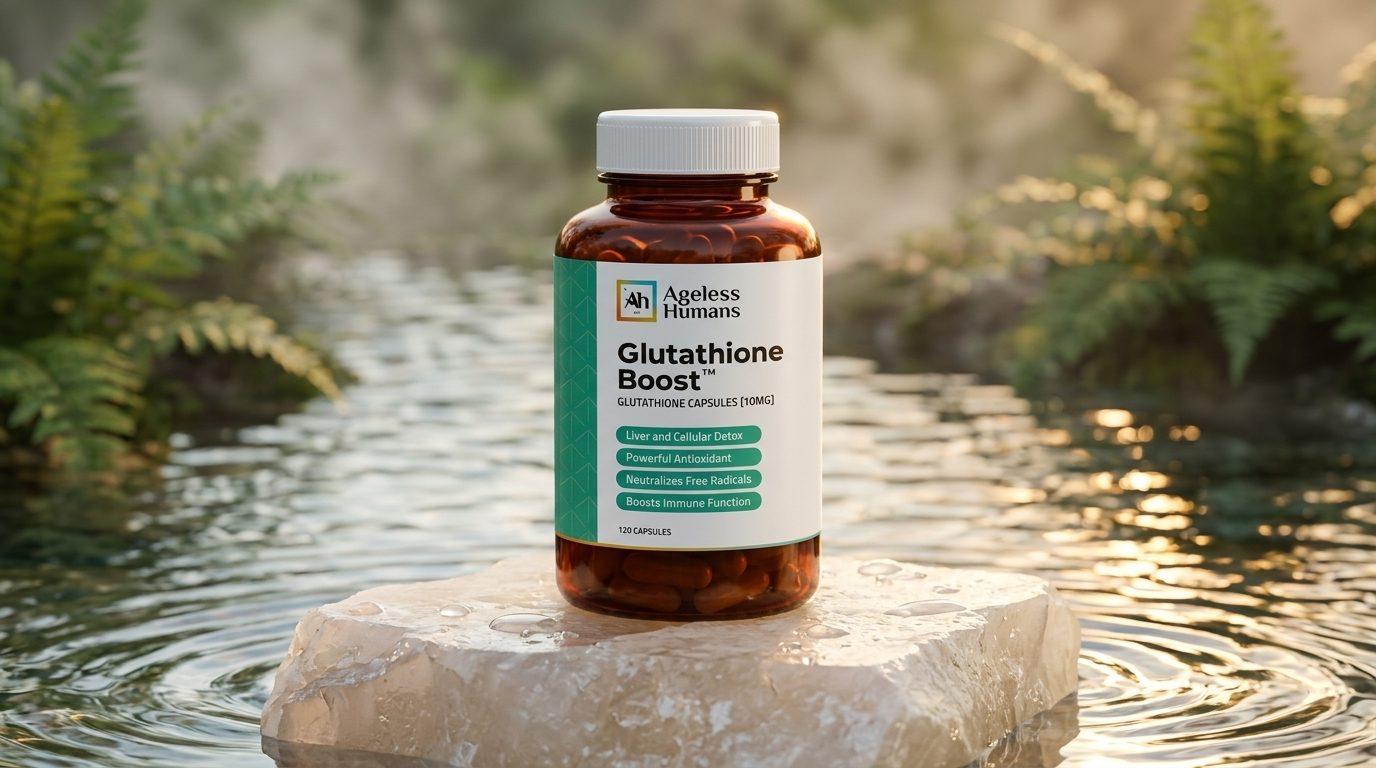
An IV glutathione drip raises blood levels quickly, but research suggests those levels clear within hours, and you pay clinic prices for every session. Oral glutathione has long been questioned because the gut breaks much of it down. Precursors (the amino acid building blocks your cells use to make their own glutathione) are an affordable daily option that research supports, with the important caveat that the evidence is still developing.
The Short Answer: Fast Spike vs Steady Supply
IV glutathione delivers a fast, short-lived spike. Daily precursors support your body's own steady production. These are two different strategies, not two versions of the same one.
Glutathione is made inside your cells from three amino acids: cysteine, glutamate, and glycine. Your liver produces a lot of it, and almost every cell makes some for its own use. That detail matters. Most of the glutathione doing work in your body was made on site. It didn't arrive through the bloodstream.
An IV puts glutathione straight into circulation. Precursors give your cells the raw materials to make more glutathione where it's needed. If you want the background on what glutathione does in the first place, start with our guide to glutathione benefits.
What an IV Drip Actually Does
An IV bypasses digestion, so blood levels rise right away. Research suggests plasma glutathione returns toward baseline relatively quickly afterward. Circulating glutathione is broken down and cleared efficiently, and intact glutathione doesn't move easily into most cells. Cells generally take in its pieces and rebuild it inside.
So a drip creates a high peak in your blood, followed by a decline over the following hours. Whether that peak turns into lasting increases inside your tissues is the open question. Clinical research on IV glutathione exists, mostly in specific hospital and specialist settings. It hasn't established that periodic wellness drips keep tissue levels elevated in healthy adults.
Practical considerations clinics don't always lead with:
- It's an IV. That means a needle, a clinical setting, and the small but real risks that come with any infusion.
- Product quality varies. Many drips are compounded. It's reasonable to ask which pharmacy supplied the product and how it's tested.
- Time. Count the appointment, travel, and the drip itself, every time you go.
The Truth About Straight Oral Glutathione
Plain oral glutathione has a real absorption problem, but it may not be the total loss it was once described as. Glutathione is a tripeptide, a small protein fragment. Enzymes in the digestive tract, especially one called gamma-glutamyl transferase, break much of it down before it reaches circulation. Early studies of single oral doses found little change in blood glutathione. That's where the belief that oral glutathione doesn't work came from.
Later research added nuance. Some studies of longer-term daily oral glutathione, and of liposomal or sublingual forms, have suggested that levels in blood or certain cells may rise over time. Those findings are encouraging, but they come from a limited number of studies, and the forms and amounts tested varied.
The honest summary: straight oral glutathione is inefficient. Much of what you swallow is broken down into its amino acids. Those amino acids aren't wasted, though, because they're the same building blocks your cells use to make glutathione. That observation leads to the precursor approach.
Why Precursors Changed the Argument
Precursors skip the absorption fight by supplying what your cells need to make glutathione themselves. In most people, the limiting factor in glutathione production is cysteine. When cysteine is scarce, production slows no matter how much of the other two amino acids is available.
That's why N-acetylcysteine (NAC), a stable form of cysteine, became the most-studied glutathione precursor. More recently, researchers have looked at combining NAC with glycine (often called GlyNAC). Studies in older adults suggest this combination may support glutathione levels and markers of cellular health that tend to decline with age. The research is still early and the studies have been small, but the direction is notable.
Why this reframes IV vs oral:
- You aren't trying to push intact glutathione through the gut or into cells from the outside.
- You're supporting the body's own production line, inside the cells that use it.
- A daily habit lines up with how glutathione works: it's made and used continuously, not in occasional bursts.
The Cost Math: Run Your Own Numbers
For ongoing support, daily precursors almost always cost far less per year than regular drips. Prices vary a lot by city and clinic, so plug in your own figures instead of trusting anyone's averages.
IV annual cost = (price per session × sessions per month × 12) + the value of your time and travel
Oral annual cost = price per bottle × bottles needed per year at label directions
In most markets, one drip costs about as much as, or more than, a month or more of a quality daily supplement. Clinics usually suggest repeat sessions because the effect is short-lived, so the IV figure multiplies fast. For a fair comparison, also count what you'd pay to keep IV benefits going. A single drip and a year of daily support aren't the same thing.
We ran the same exercise for another popular infusion in our breakdown of NAD IV vs oral, and the pattern was similar. Infusions buy speed and convenience in the moment. Daily oral support buys consistency at a fraction of the cost.
Side-by-Side: IV, Oral Glutathione, and Precursors
Each option trades off speed, cost, convenience, and the strength of its evidence differently.
IV glutathione
- Speed: immediate rise in blood levels
- Duration: research suggests levels clear within hours
- Convenience: requires clinic visits and a needle
- Evidence: mostly from clinical settings, with limited data for wellness use
Standard oral glutathione
- Speed: slow and uncertain
- Absorption: much of it is broken down in the gut
- Convenience: easy daily capsule
- Evidence: mixed, with some studies of longer-term use suggesting modest increases
Liposomal or sublingual glutathione
- Designed to protect glutathione from breakdown in the gut
- Evidence: promising but limited
Precursors (NAC, glycine, and related building blocks)
- How it works: supports your cells' own glutathione production
- Convenience: easy daily routine
- Cost: typically the lowest per year
- Evidence: the most mechanistically sound approach, with encouraging but still-developing human research
Who Might Choose Which
For most healthy adults focused on long-term wellness, daily precursors are the most sensible default. IV makes more sense in specific situations a clinician supervises.
Precursors fit if you:
- Want daily support for antioxidant defenses and cellular health
- Care about cost and consistency over a fast spike
- Prefer a routine you can keep at home
An IV might be worth discussing with a clinician if you:
- Are working with a provider who has a specific clinical reason for it
- Understand that the effect is temporary and have budgeted for repeat sessions
Whatever you choose, quality matters. Ask any supplement company or clinic whether each batch is third-party tested and whether you can see the certificate of analysis. Talk with your healthcare provider before starting a new supplement, especially if you take medications.
Frequently asked questions
Is IV glutathione better than oral?+
IV glutathione raises blood levels faster, but research suggests those levels drop back within hours, and intact glutathione doesn't easily enter most cells. Oral precursors like NAC and glycine support the body's own glutathione production inside cells. For ongoing daily support, precursors are generally the more practical and affordable approach.
Does oral glutathione actually get absorbed?+
Much of standard oral glutathione is broken down by enzymes in the digestive tract before it reaches the bloodstream, which is why early studies showed little effect. Some later research on longer-term use and on liposomal or sublingual forms suggests levels may rise modestly over time. The evidence is still limited and mixed.
How long does IV glutathione last in the body?+
Research suggests glutathione given by IV is cleared from the blood relatively quickly, often returning toward baseline within hours. That's why clinics typically recommend repeat sessions. It's not well established whether occasional drips lead to lasting increases inside tissues.
What are glutathione precursors?+
Glutathione precursors are the building blocks your cells use to make glutathione: cysteine, glycine, and glutamate. Cysteine is usually the limiting ingredient, so precursor supplements often use N-acetylcysteine (NAC) as a stable source. Research, including studies of NAC combined with glycine in older adults, suggests precursors may help support the body's own glutathione levels.
Is a glutathione IV drip worth the money?+
It depends on your goal and budget. One drip typically costs as much as or more than a month or more of a daily supplement, and the effect is short-lived, so ongoing use adds up quickly. For general long-term wellness, daily precursors usually deliver more consistent support for far less money.
Can I take glutathione precursors every day?+
Glutathione precursor supplements are designed for daily use, and you should follow the directions on the product label. Daily intake fits how glutathione works, since your body makes and uses it continuously. Check with your healthcare provider before starting, especially if you take medications or have a health condition.