
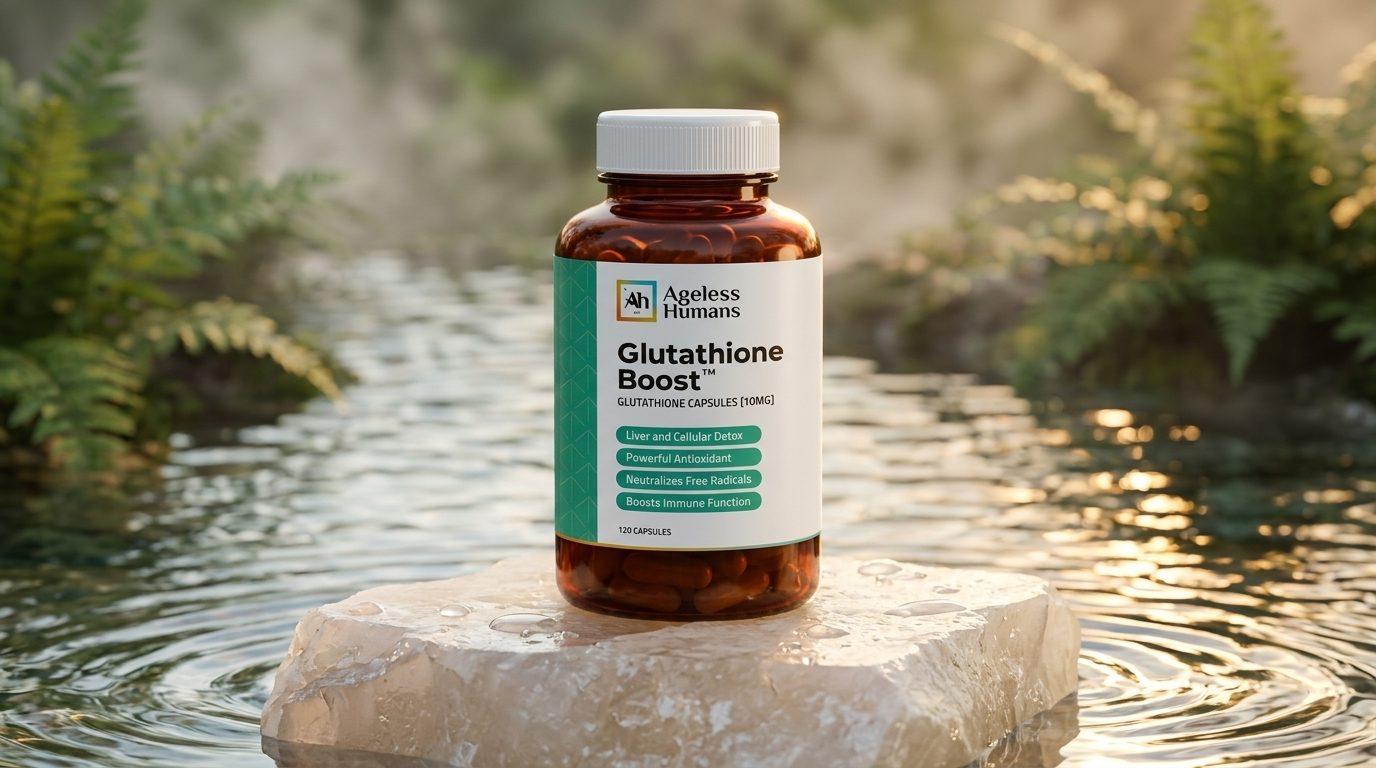
Glutathione is the main antioxidant inside your cells. Alpha-lipoic acid (ALA) is a smaller compound that helps recycle glutathione and other antioxidants back into their active forms. Rather than competing, they cover different jobs in the same antioxidant network, so the better question is what role each plays and whether your routine supports both.
The Short Answer: Different Jobs, Same Network
Glutathione is the workhorse. Alpha-lipoic acid is the support crew. Glutathione does most of the direct antioxidant and detoxification work inside your cells. ALA helps keep glutathione and other antioxidants in their active, usable state. It also supports energy production in your mitochondria.
Here is the side-by-side:
- What it is: Glutathione is a tripeptide built from three amino acids: glutamate, cysteine, and glycine. ALA is a sulfur-containing fatty acid.
- Where your body makes it: Glutathione is made in nearly every cell, with especially high levels in the liver. ALA is made in small amounts inside mitochondria.
- Main role: Glutathione neutralizes reactive molecules and helps the liver process compounds. ALA acts as an enzyme cofactor in energy metabolism and helps regenerate other antioxidants.
- Solubility: Glutathione works mostly in water-based parts of the cell. ALA works in both water and fat environments.
- Supplement challenge: For glutathione, oral absorption is debated. For ALA, it clears the bloodstream quickly.
If you take away one idea, make it this one: these two compounds are not substitutes. One is a primary defender. The other helps keep the defenders working.
What Glutathione Actually Does
Glutathione is your cells' primary internal antioxidant and a key player in liver detoxification pathways. It exists in two forms. Reduced glutathione (GSH) is active and ready to work. Oxidized glutathione (GSSG) has already done its job and needs to be recharged. A healthy cell keeps most of its glutathione in the active form.
Glutathione supports the body in three main ways:
1. Direct antioxidant defense. Working with the enzyme glutathione peroxidase, it helps neutralize hydrogen peroxide and lipid peroxides before they damage cell structures. 2. Detoxification support. Through glutathione S-transferase enzymes, it binds to certain compounds so the body can process and excrete them. This is a big reason the liver holds so much of it. 3. Immune and cellular function. Immune cells rely on adequate glutathione to work normally, and it helps maintain the redox balance that cell signaling depends on.
Research suggests glutathione levels tend to decline with age and under ongoing oxidative stress. That finding drives much of the interest in supporting it. For a deeper look at its roles, see our full guide to glutathione benefits.
What Alpha-Lipoic Acid Actually Does
ALA has two jobs: it helps your mitochondria turn fuel into energy, and it helps recycle other antioxidants. The first job is often overlooked. Inside mitochondria, lipoic acid is bound to key enzymes, including pyruvate dehydrogenase and alpha-ketoglutarate dehydrogenase. These enzymes move carbohydrates and other fuels into the energy-producing cycle. Without lipoic acid, those enzymes do not work.
The second job is the reason ALA has its reputation. When you take ALA as a supplement, some of it is converted into dihydrolipoic acid (DHLA), its reduced form. DHLA can hand electrons to other antioxidants and help restore them to their active state. That includes vitamin C, which in turn helps regenerate vitamin E. It also includes glutathione.
ALA comes in two mirror-image forms, R and S. R-lipoic acid is the form your body makes and the one bound to mitochondrial enzymes. Many standard supplements contain a 50/50 mix of both. Research has also studied ALA for its role in supporting healthy glucose metabolism, which is why it often shows up in blood-sugar support formulas.
How ALA Supports Glutathione: The Recycling Role
ALA appears to support glutathione in two ways: by helping recharge used glutathione, and by helping cells take in the raw materials to make more. This is the core of the relationship, and it is why the two are often discussed together.
Recycling. DHLA has strong reducing power. In lab research, it can help convert oxidized glutathione (GSSG) back to its active form (GSH). That stretches the useful life of the glutathione you already have.
Raw-material supply. The rate-limiting building block for glutathione is usually cysteine. Cell and animal studies suggest ALA may help cells take up cysteine more efficiently, which supports new glutathione production. Research has also explored ALA's role in activating Nrf2, a cellular signaling pathway that switches on genes involved in the body's own antioxidant defenses, including enzymes in glutathione synthesis.
Here is the honest caveat: much of this mechanism comes from cell and animal research. Human studies on ALA and glutathione status exist, but they are smaller and less consistent. The biology is plausible and well described. The size of the effect in a healthy adult taking a supplement is less certain.
Is ALA Really the "Universal Antioxidant"? An Honest Look
The "universal antioxidant" label is partly earned and partly marketing. The phrase came out of antioxidant-network research in the 1990s, and it rests on two real properties. ALA and DHLA work in both water-based and fat-based parts of the body. They can also interact with several other antioxidants, including vitamins C and E and glutathione.
Here is what the label leaves out:
- It does not stay around long. Supplemental ALA has a short half-life in the bloodstream and is cleared quickly. That limits how much direct antioxidant work it can do in tissues over time.
- Direct scavenging may not be the main event. Many researchers now think ALA's value comes less from directly neutralizing free radicals. They point instead to its signaling effects, such as Nrf2 activation, and to its ability to bind certain metal ions.
- "Universal" does not mean "replaces everything." ALA cannot do glutathione's enzyme-driven detoxification work. It also does not replace a diet rich in plant compounds.
The fair summary: ALA is a versatile network supporter, not a master key. It is useful because it connects and refreshes other antioxidants. It does not override them.
The Glutathione Absorption Question
Oral glutathione is absorbed less reliably than many people assume, which is why precursor strategies are popular. Glutathione is a peptide, and the digestive tract breaks down a good portion of it before it reaches the bloodstream. Some human studies suggest oral and liposomal forms can raise glutathione levels over time. Other studies show little change. The research is genuinely mixed.
That uncertainty has led many people to a different approach: give the body the building blocks and let cells make glutathione where it is needed. Your cells already know how to build glutathione. The process often stalls when cysteine and glycine run low, or when the cell is under heavy oxidative demand.
This is also where ALA fits naturally. If you support the building blocks, you support production. If you add ALA, you support recycling. Together, those two levers address both supply and reuse instead of relying on one form getting through digestion intact.
Stack Logic: When to Use One, the Other, or Both
For most people focused on whole-body antioxidant support, combining glutathione support with ALA makes more sense than choosing one. They work at different points in the same system. Here is a simple way to decide:
- Your priority is liver support, detox pathways, or overall cellular defense: Start with glutathione support, either as glutathione itself or as precursors.
- Your priority is energy metabolism or healthy glucose metabolism: ALA is the more targeted choice because of its role in mitochondrial enzymes and the research interest in glucose support.
- You want the full network covered: Pair them. Glutathione support covers supply, and ALA helps with recycling.
- You already eat well and want a foundation: Sulfur-rich foods like cruciferous vegetables, alliums, and quality protein supply cysteine. Small amounts of ALA occur naturally in organ meats and leafy greens like spinach.
Smart-use notes: Follow label directions for any product. ALA may influence glucose metabolism, so talk with your healthcare provider before adding it if you take medications that affect blood sugar, or if you are pregnant, nursing, or managing a health condition. More is not better with antioxidants. The goal is balance, not maximum dosing.
Quality Matters More Than the Molecule
Whichever compound you choose, the product only helps if it contains what the label says. Antioxidant supplements are an area where ingredient quality varies widely. That includes the form of ALA, the stability of glutathione, and the purity of amino acid precursors.
Look for three things:
1. Transparent formulas that list each ingredient and amount, not hidden proprietary blends. 2. Third-party testing with a Certificate of Analysis (COA) you can actually see. 3. Known manufacturing, so you know where and how the product was made.
At Ageless Humans, every product is made in our FDA-registered facility in Carlsbad, California. Every lot is third-party lab tested with a COA, and every order is backed by a 60-day money-back guarantee.
Frequently asked questions
Is alpha-lipoic acid better than glutathione?+
Neither is better overall because they do different jobs. Glutathione is the main antioxidant and detoxification molecule inside cells. Alpha-lipoic acid supports mitochondrial energy production and helps recycle glutathione and other antioxidants. Many people find it more useful to support both than to pick one.
Does alpha-lipoic acid increase glutathione?+
Research suggests alpha-lipoic acid may support glutathione levels in two ways. It helps recycle oxidized glutathione back to its active form, and it may help cells take up cysteine, the key building block for new glutathione. Most of this evidence comes from cell and animal studies, so the effect in healthy humans is less certain.
Can you take glutathione and alpha-lipoic acid together?+
Yes, the two are commonly combined because they work at different points in the same antioxidant network. Glutathione or its precursors support supply, and alpha-lipoic acid supports recycling. Follow label directions, and check with your healthcare provider if you take medications, especially ones that affect blood sugar.
Why is alpha-lipoic acid called the universal antioxidant?+
Alpha-lipoic acid earned the nickname because it works in both water-based and fat-based parts of the body. It can also help regenerate other antioxidants like vitamins C and E and glutathione. The label overstates things, though. ALA clears the bloodstream quickly, and much of its value likely comes from cell signaling rather than direct free-radical scavenging.
What is the difference between R-lipoic acid and alpha-lipoic acid?+
Alpha-lipoic acid exists in two mirror-image forms, R and S. R-lipoic acid is the form the body naturally makes and uses in mitochondrial enzymes. Many standard alpha-lipoic acid supplements contain an equal mix of R and S forms, while R-lipoic acid products contain only the natural form.
Is it better to take glutathione or a glutathione precursor?+
Because oral glutathione is partly broken down during digestion, many people choose precursors that supply the building blocks cells use to make glutathione themselves. Research on direct oral glutathione is mixed, with some studies showing increases and others showing little change. A precursor approach supports the body's own production where it is needed.