
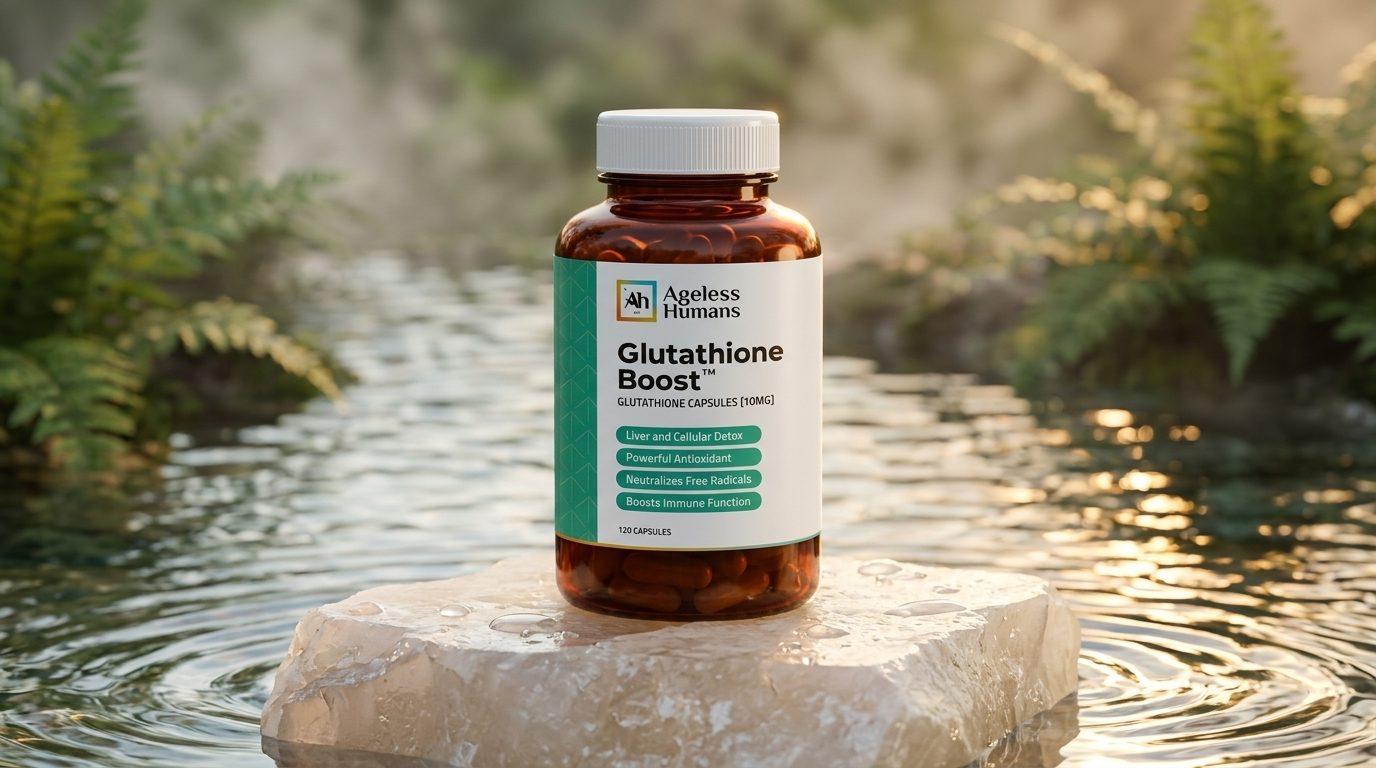
Glutathione is a small antioxidant molecule (a tripeptide) that your cells build to manage oxidative stress and support detoxification. Glutamine is a single amino acid that serves as a major fuel for gut-lining and immune cells and helps move nitrogen around the body. They are not interchangeable: if you care about antioxidant defense, you mean glutathione; if you care about gut lining and recovery, you probably mean glutamine.
The Short Answer: One Is an Antioxidant, One Is a Building Block
Glutathione and glutamine are different molecules with different jobs. The names overlap because both come from the same chemical family built around glutamic acid, but that is where the resemblance ends.
- Glutathione (GSH) is a tripeptide, meaning three amino acids linked together: glutamate, cysteine, and glycine. It is best known as the body's primary internal antioxidant and a key player in detoxification pathways.
- Glutamine (Gln) is a single amino acid. It is the most abundant free amino acid in the blood and is a preferred fuel for the cells lining your intestines and for immune cells.
Think of it this way: glutamine is a raw material and fuel source. Glutathione is a finished tool your cells assemble for protection. Buying one when you wanted the other is like buying lumber when you needed a hammer.
Why Everyone Mixes Them Up
The confusion is mostly linguistic. Both names start with 'gluta-', both show up in the supplement aisle, and both get talked about in wellness circles with similar enthusiasm. Spelled out on a label in small type, 'L-Glutamine' and 'L-Glutathione' look almost identical.
Pronunciation helps:
- Glutathione: gloo-tuh-THIGH-own
- Glutamine: GLOO-tuh-meen
A quick label check settles it. Glutathione supplements usually say reduced glutathione, L-glutathione, liposomal glutathione, or S-acetyl glutathione. Glutamine products almost always say L-glutamine, often as an unflavored powder. Precursor products, which supply the ingredients your body uses to make glutathione, will name those building blocks instead.
There is also a real biochemical connection that adds to the muddle: glutamine can be converted into glutamate, and glutamate is one of glutathione's three building blocks. That link is real but indirect, and we cover what it does and does not mean below.
What Glutathione Actually Does
Glutathione's core job is redox balance: neutralizing reactive molecules and keeping the cell's internal chemistry in a healthy range. It is produced inside nearly every cell, with especially high concentrations in the liver.
Its main roles include:
- Antioxidant defense. Glutathione donates electrons to neutralize reactive oxygen species, the byproducts of normal metabolism, exercise, and environmental exposures.
- Recycling other antioxidants. It helps regenerate vitamins C and E after they have done their work.
- Detoxification support. In the liver, glutathione attaches to certain compounds so they can be processed and eliminated.
- Cellular signaling. The ratio of reduced glutathione (GSH) to its oxidized form (GSSG) is widely used in research as a marker of cellular oxidative status.
Research suggests glutathione levels tend to decline with age and under chronic oxidative stress, which is why it has become a focus in longevity science. For a deeper look at what the research shows, see our guide to glutathione benefits.
An honest caveat: whether swallowing glutathione meaningfully raises levels inside cells is still debated. The digestive tract breaks down a portion of oral glutathione, and study results on oral forms have been mixed. That uncertainty is a big reason many people focus on supplying the building blocks so the body can make its own.
What Glutamine Actually Does
Glutamine's core job is fuel and logistics: it feeds rapidly dividing cells and shuttles nitrogen between tissues. It is called conditionally essential because healthy bodies make enough under normal conditions, but demand can outpace supply during intense physical stress.
Its main roles include:
- Fueling the gut lining. The cells lining the small intestine (enterocytes) use glutamine as a primary energy source. They turn over every few days, so their fuel demand is constant.
- Supporting immune cells. Lymphocytes and macrophages rely heavily on glutamine for energy and growth.
- Nitrogen transport. Glutamine carries nitrogen safely through the bloodstream, which matters for building proteins and other nitrogen-containing molecules.
- Acid-base balance. The kidneys use glutamine to help maintain the body's pH.
Glutamine is studied for its role in supporting gut barrier integrity and exercise recovery. Research in healthy, well-fed adults is less consistent than research in people under heavy physical stress, which makes sense for a nutrient that is only 'conditionally' essential. Most people eating adequate protein already get a meaningful amount from meat, fish, eggs, dairy, beans, and tofu.
Side-by-Side: Glutathione vs Glutamine
Here is the full comparison in one place.
| Glutathione | Glutamine | |
|---|---|---|
| What it is | Tripeptide (3 amino acids) | Single amino acid |
| Made from | Glutamate + cysteine + glycine | Glutamate + ammonia |
| Main job | Antioxidant defense, detox support, redox balance | Fuel for gut and immune cells, nitrogen transport |
| Where it matters most | Inside every cell, especially the liver | Intestinal lining, immune system, muscle, kidneys |
| Essential status | Made by the body; not an amino acid | Conditionally essential amino acid |
| Common supplement forms | Reduced, liposomal, S-acetyl, or precursors | L-glutamine powder or capsules |
| Typical reason people look for it | Healthy aging, antioxidant support, skin, liver | Gut lining, workout recovery |
The simplest rule: glutathione protects, glutamine fuels.
Does Glutamine Raise Glutathione?
Possibly a little, but glutamine is not the most direct route. Glutamine converts to glutamate, and glutamate is one of glutathione's three ingredients. In theory, more glutamine means more raw material.
In practice, glutamate is rarely the bottleneck. Research points to cysteine as the usual rate-limiting building block, meaning cysteine availability largely sets the pace of glutathione production. Glycine availability may also matter, particularly as people age. Some research on combining cysteine sources with glycine has shown interesting results in older adults, though studies remain limited in size.
So if your goal is glutathione, supplying cysteine and glycine is generally considered the more targeted approach. Glutamine has its own valuable roles, but treating it as a glutathione supplement misses where the real constraint usually sits.
The relationship does run both ways in one sense: a gut lining that is well fed and well supported is better positioned to absorb the nutrients your body needs for everything else, including the amino acids that become glutathione.
Which One Do People Actually Mean?
Most of the time, the goal tells you the molecule. Use this quick guide:
You probably mean glutathione if you are thinking about:
- Antioxidant support and healthy aging
- Liver and detoxification pathways
- Skin radiance (a common reason people search for it)
- Cellular energy and oxidative stress from exercise or environment
You probably mean glutamine if you are thinking about:
- The gut lining and digestive comfort
- Post-workout recovery powders
- Immune cell fuel during heavy training
- A tasteless powder you stir into a shake
If your interest is the gut, glutamine is only one piece. Fiber, diverse plant foods, fermented foods, sleep, stress, and minerals all shape digestive health. Our gut health foundations guide covers the full picture.
How to Choose a Supplement Wisely
Start with the goal, then check the label, then check the quality.
1. Name the goal. Antioxidant and healthy aging support points toward glutathione or its precursors. Gut-lining fuel points toward glutamine and broader gut support. 2. Read the active ingredient. Confirm the label says what you intended. 'L-glutamine' and 'L-glutathione' are one letter group apart and easy to grab by mistake. 3. Consider the delivery approach. For glutathione, decide between direct forms and a precursor strategy. Given the open questions about oral glutathione absorption, many people prefer supporting the body's own production. A precursor formula like GlutaBoost is built around that idea. 4. Demand proof of quality. Look for third-party testing and a certificate of analysis (COA) for each lot. Ageless Humans products are made in our FDA-registered facility in Carlsbad, California, and every lot is third-party lab tested with a COA. 5. Follow the label. Use only as directed, and talk with your healthcare provider if you are pregnant, nursing, taking medication, or managing a health condition.
For gut support beyond a single amino acid, some people add trace minerals and plant-derived compounds. Humatex combines trace minerals with fulvic and humic acids, which are being studied for their role in mineral transport and gut environment support.
Frequently asked questions
Is glutathione the same as glutamine?+
No. Glutathione is a tripeptide made of three amino acids (glutamate, cysteine, and glycine) that acts as the body's main internal antioxidant. Glutamine is a single amino acid that fuels gut-lining and immune cells and transports nitrogen. The names are similar, but their structures and jobs are different.
Can I take glutathione and glutamine together?+
Generally, yes, since they serve different roles and are commonly found in food and in the body at the same time. Glutathione-focused products support antioxidant defense, while glutamine supports gut and immune cell fuel. Follow each product's label directions and check with your healthcare provider if you take medication or have a health condition.
Does taking glutamine increase glutathione?+
Glutamine can convert to glutamate, one of glutathione's building blocks, so it may contribute indirectly. However, research suggests cysteine is usually the limiting ingredient for glutathione production, with glycine also playing a role. For glutathione support specifically, cysteine and glycine sources are considered the more direct route.
Which is better for gut health, glutathione or glutamine?+
Glutamine is the one most closely tied to gut health because the cells lining the intestine use it as a primary fuel source. Glutathione also exists in the gut and supports antioxidant defense there, but it is not primarily a gut fuel. A well-rounded gut routine also includes fiber, diverse plant foods, fermented foods, minerals, sleep, and stress management.
Is oral glutathione absorbed?+
This is still debated. Part of oral glutathione is broken down during digestion, and studies on whether oral forms raise cellular levels have shown mixed results. Because of that uncertainty, many people choose precursors that supply the building blocks, such as cysteine and glycine, so the body can make its own glutathione.
How do I tell glutathione and glutamine apart on a label?+
Look at the active ingredient name. Glutathione products usually list reduced glutathione, L-glutathione, liposomal glutathione, or S-acetyl glutathione, or they list precursors like cysteine sources and glycine. Glutamine products list L-glutamine, often as an unflavored powder.