
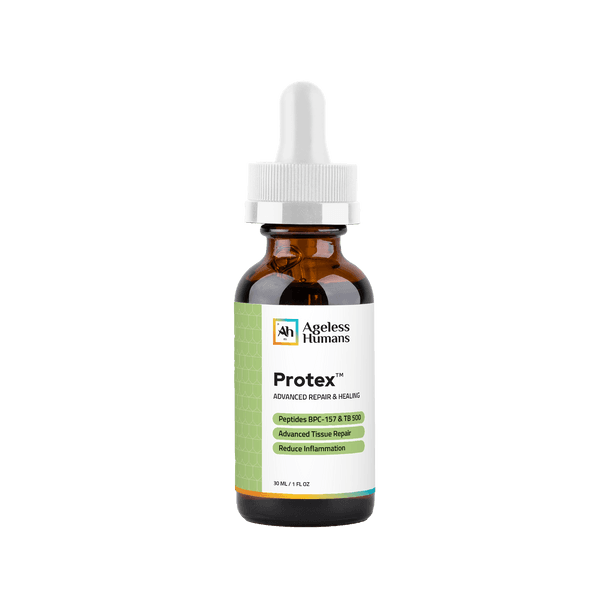
Protex™ Advanced Tissue Recovery & Repair
★★★★ 4 (16)BPC-157 + TB-500 oral sublingual — recovery support without needles
$89.99$71.99 subscribed
FDA-registered facility · Carlsbad, CA · Third-party lab testedUpdated 2026-11-14 · Reviewed by the Ageless Humans editorial team · Third-party tested products
Thymosin Beta 4 (TB4) is a naturally occurring 43-amino-acid peptide found in nearly every cell in the body. Its best-understood job is binding actin, the protein cells use to hold their shape and move. That role in cell movement is why researchers study TB4 in the context of tissue maintenance and recovery.
BPC-157 + TB-500 oral sublingual — recovery support without needles
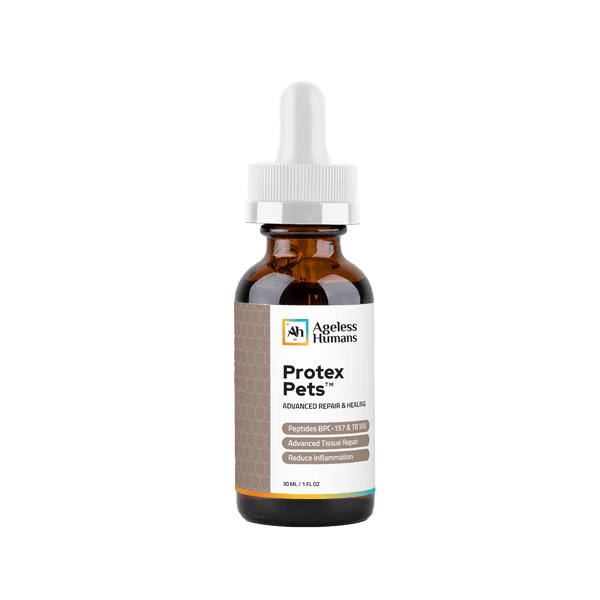

The same repair science, formulated for dogs
Thymosin Beta 4 is a small peptide your body already makes. It is a chain of 43 amino acids present in most human cells and especially concentrated in blood platelets and white blood cells. It is not a vitamin, a hormone, or a drug. It is a structural helper protein.
TB4 belongs to the beta-thymosin family. Despite the name, it is not limited to the thymus gland. It was first isolated from thymus tissue, but it turned out to be one of the most widespread peptides in the body.
Please note: Ageless Humans does not sell Thymosin Beta 4 as a standalone product. This page is for education only. Some of our formulas include related peptides, which are covered below. If you are new to the category, start with our guide on [what peptides are and how they work](/blogs/news/what-are-peptides).
TB4's main job is managing actin, the protein that forms a cell's internal scaffolding. TB4 binds to single actin units (called G-actin) and holds them in reserve. When a cell needs to change shape or move, that stored actin is released and assembled into filaments.
This matters because cell movement drives a lot of normal maintenance in the body:
Think of TB4 as the warehouse manager for building materials. It does not do the construction itself, but it keeps the supplies organized and ready. That is why scientists view it as a supporting player in the body's routine tissue upkeep.
Most TB4 research is preclinical, meaning it was done in cell cultures and animal models, not in large human trials. That research has explored how TB4 relates to cell migration, new blood vessel formation (angiogenesis), and the organization of connective tissue.
Research areas that have drawn interest include:
These findings are interesting, but they are early. Lab and animal results do not automatically carry over to people, and they say nothing about any specific product. Any page that describes TB4 as a proven therapy is overstating the evidence.
No supplement heals injuries, treats medical conditions, or replaces medical care, and that includes anything containing TB4 or related peptides. People who search for TB4 and faster healing usually want something simpler: to feel ready for their next workout sooner, move comfortably as they age, and support their body through hard training.
Those are reasonable goals. Here is what a well-designed recovery supplement can do: support the body's normal tissue maintenance and recovery processes, the same processes TB4 participates in naturally. It is not a shortcut around rest, nutrition, or professional care.
If you have an actual injury, are recovering from surgery, or have a wound that is not improving, see a qualified healthcare provider. A supplement belongs in your daily routine, not in your treatment plan.
TB4 is the full natural peptide. TB-500 is a synthetic peptide based on TB4's actin-binding region. BPC-157 is an entirely different peptide. These three get mixed up all the time.
BPC-157 and TB-500 are often paired because they are studied through different mechanisms. TB-500 relates to actin and cell movement, while BPC-157 is explored for other tissue-related pathways. That pairing is the idea behind Protex™ BPC-157 & TB-500 oral drops.
TB4 and its derivatives have limited human safety data, and their regulatory status is complex. Treat any claim of proven safety or guaranteed results with skepticism.
Keep these points in mind:
A trustworthy brand tells you what is unknown, not just what sounds exciting.
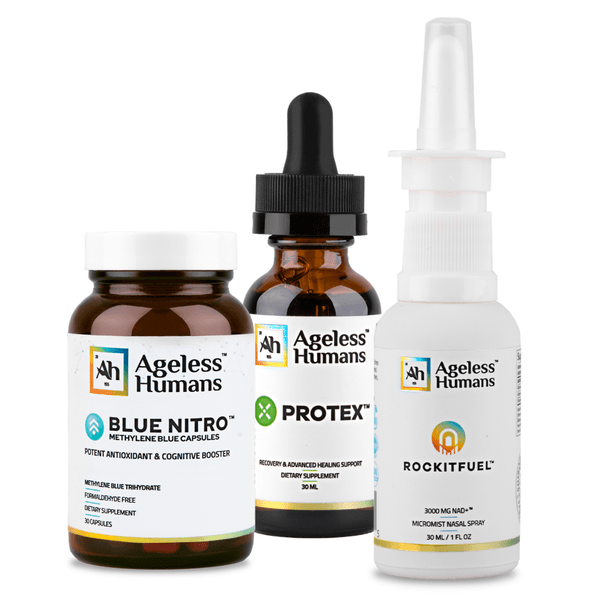
If you are interested in TB4 because you want to support recovery from an active lifestyle, Protex™ BPC-157 & TB-500 oral drops are our closest match. Protex pairs TB-500, the TB4-derived peptide, with BPC-157 in an oral drop format designed for daily use. It is formulated to support the body's natural tissue maintenance and recovery processes.
Protex™ Pets brings the same thinking to animal companions. It is designed to support normal mobility and recovery in active or aging pets. Check with your veterinarian before adding any supplement to your pet's routine.
Both products are dietary supplements, not treatments. Use them as directed on the label, alongside the recovery basics below.
Sleep, protein, movement, and rest days do the heavy lifting for recovery. Supplements support those habits, they don't stand in for them.
If you are building a broader longevity routine, you may also want to read about the cellular-aging research behind [Epithalon](/pages/epithalon-peptide-cellular-rejuvenation) and the mitochondrial peptide [Humanin](/pages/humanin-peptide).
Thymosin Beta 4 (TB4) is a naturally occurring 43-amino-acid peptide found in most cells in the human body, with especially high levels in blood platelets. Its main known role is binding actin, the protein cells use for structure and movement. Researchers study it for its part in normal cell migration and tissue maintenance.
No. Ageless Humans does not sell Thymosin Beta 4 as a standalone product, and this page is for educational purposes only. Our Protex™ BPC-157 & TB-500 oral drops contain TB-500, a synthetic peptide modeled on part of TB4, paired with BPC-157.
TB4 is the full, natural 43-amino-acid peptide the body produces. TB-500 is a synthetic peptide based on the short region of TB4 associated with actin binding. The two are related but not identical, and research on one does not automatically apply to the other.
No supplement heals injuries, treats medical conditions, or replaces medical care. Most TB4 research comes from cell and animal studies on tissue repair processes, which do not prove effects in people. Anyone with an injury, a wound, or a surgical recovery should follow a qualified healthcare provider's guidance.
Human safety data on TB4 and its derivatives is limited, so caution is warranted. Talk with your healthcare provider before using any peptide product, especially if you are pregnant, nursing, take medications, or have a health condition. Always follow label directions.
Competitive athletes should be careful. Thymosin Beta 4 and related peptides such as TB-500 appear on the World Anti-Doping Agency's prohibited list. Check the current list and your sport's governing body rules before using any product that contains them.
BPC-157 and TB-500 are studied through different mechanisms. TB-500 is linked to actin and cell movement, while BPC-157 is explored for separate tissue-related pathways. Combining them is meant to support the body's natural recovery processes from more than one angle, which is the approach behind Protex™.
Yes. Protex™ Pets is a supplement designed to support normal mobility and recovery in active or aging pets. It is not a veterinary treatment. Check with your veterinarian before adding it, or any supplement, to your pet's routine.
Third-party tested longevity supplements, shipped from the USA within 24 hours. 60-day money-back guarantee.