
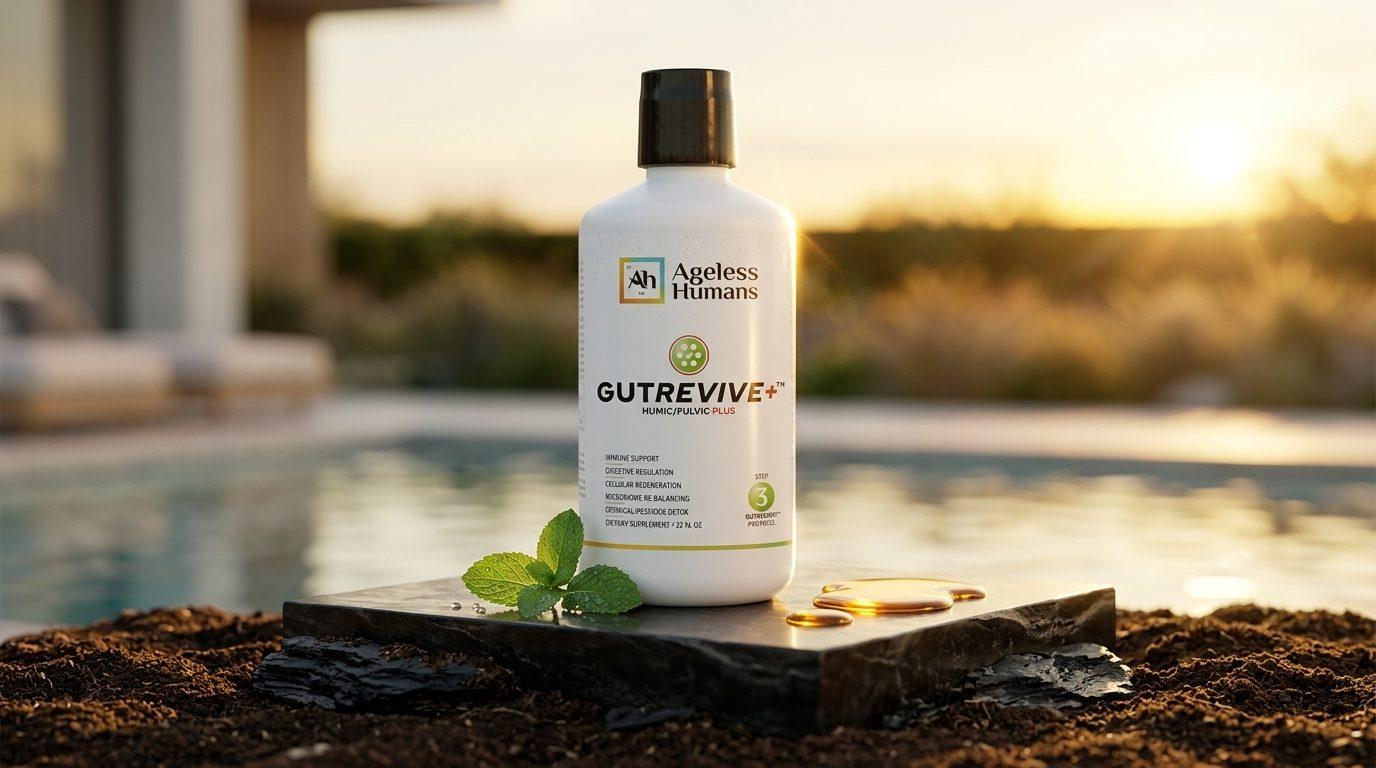
Shilajit is a whole mineral-rich resin from mountain rock. Fulvic acid is one of its main components and can also be isolated from other sources, such as ancient plant deposits. Choose purified fulvic if you want one consistent, measurable compound. Choose shilajit if you want the full mix of fulvic acid, humic acid, minerals, and unique compounds. With either one, what matters most is sourcing, purification, and testing.
The Short Answer: Same Family, Different Scope
Fulvic acid is an ingredient. Shilajit is a whole substance that contains it. Comparing the two is like comparing vitamin C with a whole orange. The orange has vitamin C, but it also has fiber, other plant compounds, and natural variation from fruit to fruit.
Shilajit is a tar-like resin that seeps from rock crevices in mountain ranges such as the Himalayas and the Altai. It forms over very long periods as plant matter breaks down under pressure. Fulvic acid is one of its main active fractions, alongside humic acid, trace minerals, and a group of smaller organic compounds.
Purified fulvic acid is that one fraction, separated and concentrated. It usually comes from humate deposits like leonardite or from peat, not from shilajit. So the real choice is between precision and consistency with isolated fulvic and breadth and tradition with whole shilajit.
What Fulvic Acid Is and Where Purified Fulvic Comes From
Fulvic acid is a small, water-soluble humic substance formed when organic matter decomposes over geologic time. It belongs to the same family as humic acid. Humic acid molecules are larger and dissolve only under certain pH conditions. Fulvic acid molecules are smaller and dissolve in water at any pH.
Researchers study fulvic acid mainly because it binds minerals. This is called chelation. It may help carry trace minerals and support how cells take in nutrients. Fulvic acid has also been studied for antioxidant activity and for its role in gut and immune function. For a full breakdown, see our guide to fulvic acid benefits.
Most commercial fulvic acid comes from leonardite, a soft, oxidized form of lignite rich in humic substances, or from peat and other ancient plant deposits. Manufacturers extract it with water or mild alkaline and acid processes, then filter and concentrate it. The result is a liquid, powder, or capsule with a stated fulvic content. Its quality depends almost entirely on the source deposit and the purification steps.
What Shilajit Adds Beyond Its Fulvic Content
Shilajit adds several compound groups that purified fulvic acid lacks. That is its whole appeal. Researchers have identified these main components:
- Humic acid. This is the larger sibling of fulvic acid, studied for gut-lining and detox-pathway support. Learn more in our article on humic acid benefits.
- Dibenzo-alpha-pyrones (DBPs). These are small organic compounds found in shilajit. Researchers have studied them for their role in cellular energy and mitochondrial function. They are one of the clearest chemical differences between shilajit and a generic fulvic extract.
- A broad mineral profile. Shilajit naturally contains many trace minerals, including iron, zinc, magnesium, and others. The exact amounts depend on the deposit.
- Other organic constituents. These include benzoic and hippuric acids, small peptides, and plant-derived triterpenes.
The usual theory is that these parts work together. Fulvic acid may help carry DBPs and minerals into cells, while the other compounds add their own effects. This idea is reasonable, but it is mostly a hypothesis. No good research yet shows that whole shilajit outperforms its isolated parts in humans. Shilajit also has a long history in Ayurveda, where it is classed as a rasayana, or rejuvenating substance. That is a cultural record, not clinical proof.
Side-by-Side: Purified Fulvic vs Whole Shilajit
Here is how the two compare on the factors that matter when you are choosing:
| Factor | Purified Fulvic Acid | Whole Shilajit |
|---|---|---|
| What it is | One isolated humic fraction | Whole resin with many compounds |
| Typical source | Leonardite, peat, humate deposits | Mountain rock exudate |
| Consistency | High when standardized | Varies by region and batch |
| Unique compounds | Fulvic acid only | DBPs, humic acid, broad minerals |
| Taste and format | Mild in liquid or capsule | Strong, smoky, bitter resin or powder |
| Main quality risk | Mislabeled content, heavy metals | Adulteration, heavy metals, poor purification |
| Best for | Targeted mineral and gut-terrain support | Broad, traditional whole-food approach |
Neither one is simply better. If you want a known amount of one compound, isolated fulvic is easier to standardize and verify. If you want the full spectrum and accept more natural variation, shilajit offers more.
What the Research Shows and What It Doesn't
The honest summary: both have promising early research, but the human evidence is still thin. Treat any product claiming proven, dramatic results with suspicion.
For shilajit, a small number of human trials have looked at energy, physical performance and recovery, and markers of healthy aging. Most used standardized, purified extracts, not raw resin. The results point to possible support for cellular energy and vitality. However, these studies were small, often short, and sometimes funded by ingredient suppliers. A larger body of lab and animal research explores DBPs, antioxidant activity, and mitochondrial function.
For purified fulvic acid, most research is lab-based or done in animals. It covers mineral transport, antioxidant behavior, and gut and immune signaling. Well-designed human trials on fulvic acid as a supplement are limited.
The research does not yet support these claims:
- That shilajit beats isolated fulvic acid, or the reverse. Direct comparisons are lacking.
- That results from one standardized extract apply to every product with the same name.
- That any humic substance treats or cures a medical condition.
Research suggests real biological activity worth studying. Firm conclusions require more and larger human trials. Be wary of any brand that tells you otherwise.
Quality Pitfalls in Shilajit
Shilajit has one of the most serious quality problems in the supplement market, because the raw material is both valuable and easy to fake. Watch for these issues:
- Heavy metals. Raw shilajit comes from rock and can contain lead, arsenic, mercury, or cadmium. Proper purification reduces these, but only a lab test can confirm it.
- Adulteration. Some products are cut with fillers, other resins, or plant tars. Some are made to look and feel like real resin.
- Unpurified raw material. Raw resin can carry soil, microbes, and debris. Real purification uses filtration and controlled processing, not just melting and packing.
- Unreliable home tests. Burn tests, dissolving tests, and the pull-and-stretch test can't confirm authenticity or purity. Clean-looking fakes can pass them, and real resin can fail them.
- Vague standardization. A label that says "80% fulvic" means little unless you know how it was measured and who tested it.
The only reliable safeguard is a third-party certificate of analysis (COA) for your specific lot. It should cover heavy metals and microbes, plus a clear statement of active content.
Quality Pitfalls in Purified Fulvic Acid
Purified fulvic avoids the adulteration risks of resin, but it has its own traps.
- Inflated fulvic content. Older or nonspecific test methods can count other dissolved organic matter as "fulvic." This overstates potency. Ask whether the content was measured with a recognized method such as ISO 19822, sometimes called the Lamar method, which was designed for humic and fulvic substances.
- Source contamination. Some deposits contain more metals than others. Heavy metal testing matters here as much as it does for shilajit.
- Heavily diluted liquids. Some liquid fulvic products are mostly water with a little color. Dark color alone does not show concentration.
- Industrial-grade material. Humic and fulvic substances are widely made for agriculture. That material is not processed or tested for human use. Confirm that the product is made under dietary-supplement manufacturing standards.
- Hidden sourcing. If a brand won't name its source material, such as leonardite or peat, treat that as a warning sign.
How to Choose Between Them
Decide based on your goal, then judge every product by the same quality checks.
Choose purified fulvic and humic acid if you want consistent, measurable support for mineral uptake and gut terrain. It also suits you if you dislike the strong taste of resin or want something easy to take every day. Pairing fulvic with humic acid gives you both main humic fractions without the variation of rock-sourced resin.
Choose shilajit if you want the full traditional spectrum, including DBPs and the broader mineral mix. Accept some batch variation, and insist on a standardized, purified extract.
Whichever you pick, check these items before you buy:
1. Is there a lot-specific, third-party COA covering heavy metals and microbes? 2. Does the label disclose the source material and the purification process? 3. Is active content stated, along with how it was measured? 4. Is the product made in a registered facility under supplement manufacturing standards? 5. Do you plan to follow the label directions and talk with your healthcare provider first, especially if you are pregnant, nursing, or taking medication?
Frequently asked questions
Is fulvic acid the same as shilajit?+
No. Shilajit is a whole resin from mountain rock. Fulvic acid is one of its main components. Shilajit also contains humic acid, trace minerals, and compounds called dibenzo-alpha-pyrones (DBPs). Purified fulvic acid is usually taken from leonardite or peat, not from shilajit.
What does shilajit have that fulvic acid doesn't?+
Shilajit contains humic acid, dibenzo-alpha-pyrones (DBPs), a broad natural mineral profile, and other organic compounds such as benzoic and hippuric acids. Researchers have studied DBPs for their role in cellular energy. Many people believe these components work together, but human research has not shown that whole shilajit outperforms isolated fulvic acid.
Which is better, fulvic acid or shilajit?+
Neither one is better in every case. Purified fulvic acid is more consistent and easier to standardize, so it suits targeted mineral and gut support. Shilajit offers a broader mix of compounds but varies more from batch to batch and carries higher adulteration risk. For both, product quality and third-party testing matter more than the category.
How can I tell if shilajit is real?+
Home tests like burning, dissolving, or stretching the resin can't reliably confirm purity or authenticity. The only dependable check is a lot-specific, third-party certificate of analysis (COA). It should cover heavy metals and microbes and state the active content. Buy from brands that publish this testing and disclose their purification process.
Can fulvic acid or shilajit contain heavy metals?+
Yes. Both come from natural deposits that can contain lead, arsenic, mercury, or cadmium. Proper purification reduces these metals, but only independent lab testing can confirm safe levels. Always look for a heavy-metal-tested COA tied to the lot you are buying.
Can I take fulvic acid and shilajit together?+
Some people use both, since shilajit already contains fulvic acid along with other compounds. Taking both adds to your total intake of humic substances, so follow each product's label directions. Check with your healthcare provider before combining them, especially if you take medication or are pregnant or nursing.