
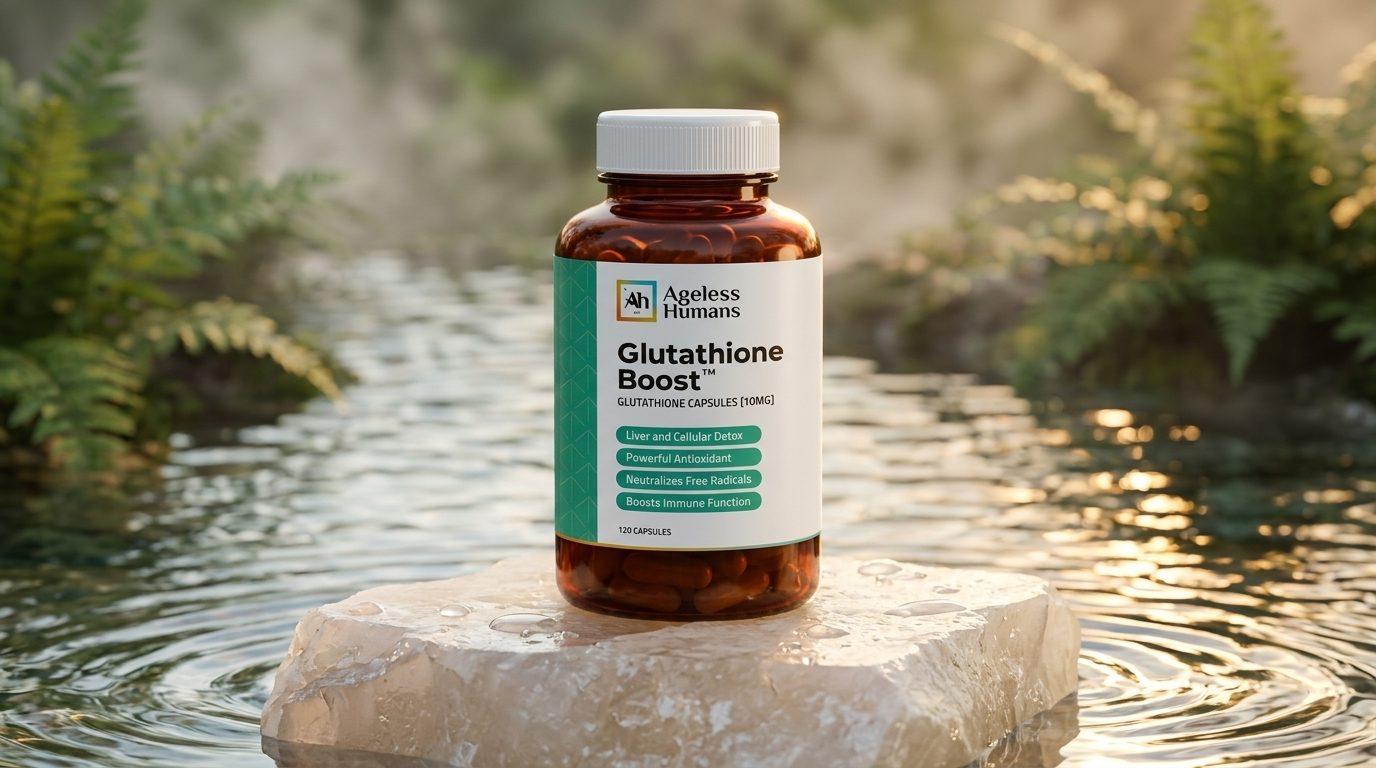
Glutathione and collagen do different jobs, so they rarely compete. Glutathione is studied mainly for skin tone: brightness, radiance, and evenness. Collagen peptides are studied mainly for skin structure: firmness, elasticity, and hydration. Choose glutathione support if dullness or uneven tone bothers you most, choose collagen if you are focused on firmness and bounce, and use daily sunscreen whichever you pick.
The Short Answer: Two Different Lanes
Glutathione targets how your skin looks on the surface. Collagen targets how it holds its shape. That one distinction settles most of the confusion online.
- Glutathione is an antioxidant your cells make from three amino acids: cysteine, glycine, and glutamate. In skin research, it is studied for its role in pigment production and in protecting cells from oxidative stress. People use it for a brighter, more even-looking complexion.
- Collagen is the main structural protein in the dermis, the scaffolding layer under the surface. Collagen peptide supplements are studied for skin elasticity, hydration, and the appearance of fine lines.
If you want radiance, look at glutathione. If you want firmness, look at collagen. If you want both, they work by different pathways and can be used together. For a deeper look at the molecule itself, see our guide to glutathione benefits.
What Glutathione Skin Research Actually Shows
Small human studies suggest glutathione may support a lighter, more even skin tone. The evidence is promising but limited.
The proposed mechanism is reasonable. Research suggests glutathione can influence melanin production in two ways. It may dampen tyrosinase, the enzyme that starts pigment production. It may also shift melanin production toward a lighter form of the pigment. Glutathione's antioxidant role also matters, because oxidative stress from sun and pollution is a known driver of dull, uneven-looking skin.
Human trials of oral and topical glutathione have looked at skin tone, spots, and wrinkle appearance, and some found modest improvements over placebo. The caveats are real, though:
- The studies are small and short. Most involve modest groups followed for weeks to a few months.
- Results vary between studies. Not every trial found a meaningful difference.
- Many trials took place in specific populations, so the results may not apply to everyone.
The honest summary: glutathione has a credible rationale and early human data for radiance and evenness. It is not a proven, dramatic skin-brightener.
Where Glutathione Gets Oversold
The biggest overpromise is that glutathione will dramatically lighten your skin. The research does not support that, and the most aggressive delivery methods carry real concerns.
Watch for these three red flags:
1. IV "skin-whitening" drips. Injectable glutathione is heavily marketed for skin lightening, but it is not approved for that use. The FDA has issued warnings about injectable skin-lightening products. A cosmetic goal is not a reason to put something in a vein. 2. "Whitening" promises. Research suggests subtle shifts in tone and radiance at most. It does not show a change in your natural skin color. Brands that promise dramatic lightening are selling beyond the evidence. 3. Ignoring absorption. Glutathione is a small peptide that the digestive tract can break down. Scientists still debate how much oral glutathione reaches your cells intact. Some forms are designed to improve this, and another approach is to supply the building blocks your body uses to make glutathione itself.
The realistic expectation is a healthier-looking, more radiant complexion that supports the rest of your routine. It will not transform your skin.
Collagen's Lane: Firmness, Elasticity, and Hydration
Hydrolyzed collagen peptides have a larger body of human research than glutathione for skin, and that research points to firmness, elasticity, and hydration. It does not point to brightening.
Your body starts making less collagen as early as your mid-twenties. Sun exposure speeds up its breakdown. The result is the slow loss of bounce and the deepening lines most people notice in their thirties and forties.
Collagen peptides are broken down during digestion like any protein. Research suggests certain peptide fragments are absorbed and may signal skin cells called fibroblasts to support their own collagen production. Multiple randomized, placebo-controlled trials have studied collagen peptides for skin elasticity, hydration, and the appearance of wrinkles, and many reported modest improvements over a couple of months.
Two honest notes:
- A lot of collagen research is industry-funded, and the effects are modest, not facelift-level.
- Collagen does nothing special for tone or dark spots. If brightening is your goal, collagen is the wrong tool.
Vitamin C also matters here, because your body needs it to build collagen. A protein-adequate diet rich in vitamin C is the foundation that collagen supplements build on.
Glutathione vs. Collagen: Side-by-Side
Here is how the two compare on the factors that matter for your decision.
- Primary skin goal: Glutathione supports radiance and an even tone. Collagen supports firmness, elasticity, and hydration.
- How it works: Glutathione is an antioxidant that also influences the pigment pathway. Collagen provides structural protein fragments that may signal skin to support its own collagen.
- Strength of evidence: Glutathione has early, small human trials. Collagen has a broader set of randomized trials, many of them industry-funded.
- Biggest caveat: Glutathione's oral absorption is debated, and IV use for lightening raises concerns. Collagen's benefits are modest and do not include brightening.
- Timeline: Studies of both typically run weeks to months. Neither works overnight.
- Beyond skin: Glutathione supports cellular antioxidant defenses throughout the body. Collagen is also used for joint and connective tissue support.
The takeaway: these are complementary tools, not rivals.
The Honest Chooser: Which One Fits Your Goal
Match the supplement to the specific thing you want to change in the mirror.
Choose glutathione support if:
- Your skin looks dull, tired, or lacks glow
- Uneven-looking tone or sun-related spots are your main complaint
- You also want broader antioxidant support as you age
Choose collagen if:
- Your skin feels less firm or bouncy than it used to
- You notice dryness or crepey texture
- Fine lines are your main concern
Consider both if: you want radiance and firmness, which is most people past 35. They work on different pathways, so they don't overlap.
Skip both and start here if: you aren't wearing sunscreen every day. UV exposure dulls tone and breaks down collagen, so daily broad-spectrum SPF does more for both goals than any supplement. Supplements support a good routine. They don't replace one.
Inside-Out Plus Outside-In: Building the Full Routine
The best results usually come from pairing internal support with a few proven topical habits.
On the inside, the goal is to give your skin raw materials and antioxidant support. One approach to glutathione is supplying its precursors so your body can make its own, which sidesteps the absorption debate around oral glutathione. That is the idea behind GlutaBoost. Collagen peptides, enough protein, and vitamin C-rich foods round out the structural side.
On the outside, topicals act directly on the skin you see:
- Daily SPF to protect tone and collagen
- Copper peptides (GHK-Cu), which have been studied for supporting skin's own collagen and the look of firmness
- Gentle exfoliation and hydration to improve surface radiance
Our Radium NAD+ and GHK-Cu cream combines copper peptides with NAD+ for topical support of firmer, smoother-looking skin. For the full framework of sleep, sun, nutrition, and topicals, read our skin longevity guide.
Whatever you choose, give it at least two to three months, follow label directions, and take photos in the same light so you can judge results honestly.
Frequently asked questions
Is glutathione or collagen better for skin?+
Neither is better overall because they target different goals. Glutathione is studied mainly for skin radiance and an even-looking tone. Collagen peptides are studied mainly for firmness, elasticity, and hydration. Choose based on whether dullness or loss of firmness bothers you more, or use both since they work by different pathways.
Can you take glutathione and collagen together?+
Yes. Glutathione and collagen work through separate pathways, antioxidant and pigment support versus structural protein support, so they complement each other rather than overlap. Many people who want both radiance and firmness use them together. Follow each product's label directions, and check with your healthcare provider if you take medications or have a health condition.
Does glutathione really lighten skin?+
Small human studies suggest glutathione may support a slightly brighter, more even-looking skin tone, but the evidence is limited and results vary. Research does not show that it changes your natural skin color. Claims of dramatic whitening, especially from IV drips, go beyond the evidence, and the FDA has warned about injectable skin-lightening products.
Does oral glutathione actually get absorbed?+
Scientists still debate how much oral glutathione reaches the body's cells intact, because the digestive tract can break it down. Some supplement forms are designed to improve absorption. Another approach is taking glutathione precursors, the amino acid building blocks your body uses to make its own glutathione.
Does collagen help with dark spots or skin brightness?+
Collagen is not studied for brightening or dark spots. Its research centers on skin elasticity, hydration, and the appearance of fine lines. If an uneven tone is your main concern, antioxidant support such as glutathione, plus daily sunscreen, is a better fit.
How long does it take to see skin results from glutathione or collagen?+
Human studies of both glutathione and collagen usually run for weeks to a few months, so expect gradual changes rather than overnight results. Give either one at least two to three months while following label directions. Taking photos in consistent lighting is the most honest way to track progress.