
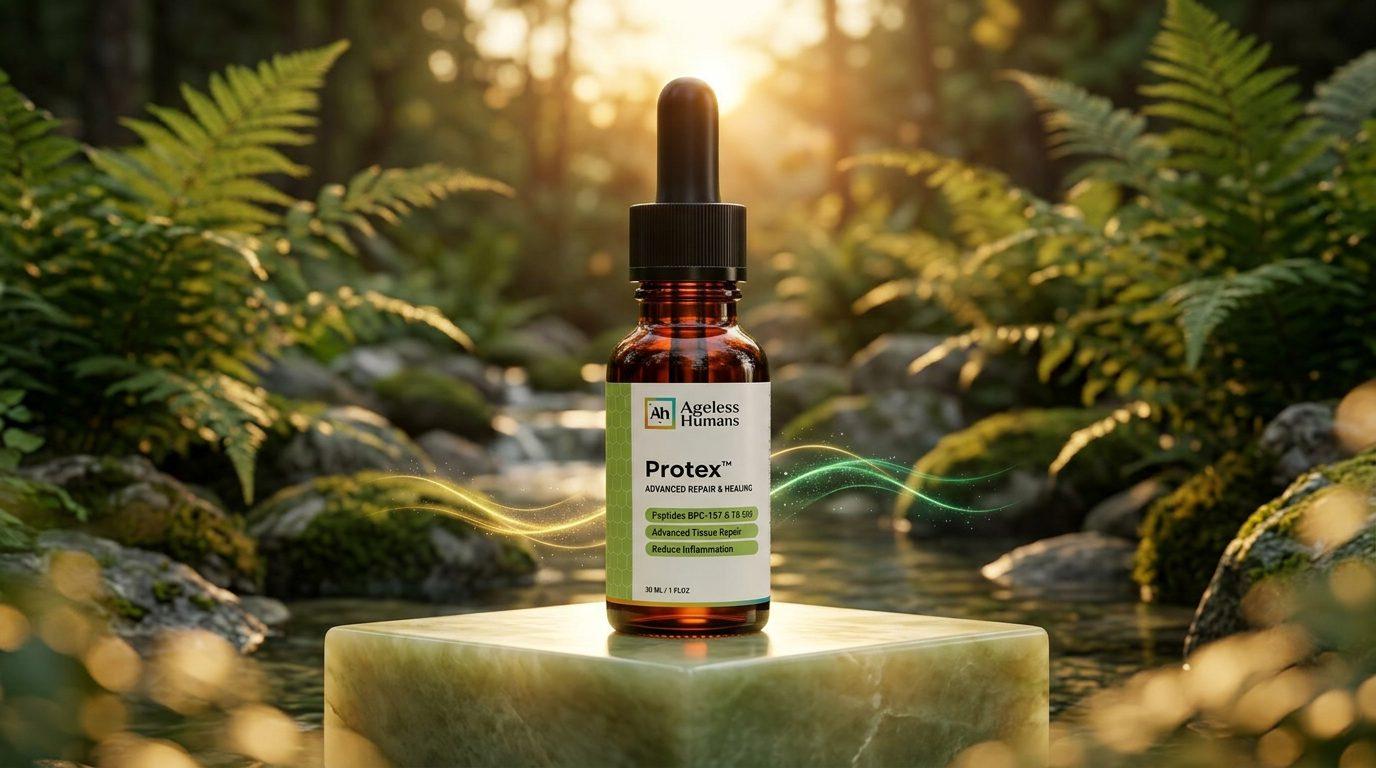
Skin longevity means keeping skin's structure (collagen and elastin), barrier, and cellular energy working well over decades, not chasing a quick fix. The best-supported foundation is daily UV protection plus a few well-studied topicals like retinoids, vitamin C, and niacinamide. Copper peptides (GHK-Cu) and NAD+ topicals are promising additions with earlier-stage research that support skin's own renewal processes.
What Skin Longevity Actually Means
Skin longevity is about protecting the systems that keep skin firm, hydrated, and resilient, not about erasing every line. It means slowing the wear on three things: the collagen and elastin matrix that gives skin structure, the barrier that holds in water, and the cellular energy that drives renewal.
This framing changes your priorities. A product that makes skin look plumper for an afternoon is cosmetic. A habit that slows collagen breakdown for 20 years is longevity. The best routines do both, but they never trade the second for the first.
It is the same thinking behind the broader biohacking approach: measure what matters, focus on inputs with real evidence, and stay consistent long enough for results to compound.
Why Collagen Declines (and What Speeds It Up)
Collagen declines for two reasons: time (intrinsic aging) and environment (extrinsic aging), and the environmental side is the one you control most. Starting in early adulthood, the cells that make collagen, called fibroblasts, gradually produce less of it, while enzymes that break it down stay active.
Intrinsic aging is driven by genetics, hormonal shifts, and slower cellular turnover. You cannot stop it, but you can avoid adding to it.
Extrinsic aging is where most visible change comes from. Research consistently points to these drivers:
- UV exposure: widely considered the single largest external driver of collagen breakdown and uneven tone.
- Smoking: associated with reduced blood flow to skin and faster structural decline.
- High sugar intake: studied for its role in glycation, where sugars stiffen collagen fibers.
- Poor sleep and chronic stress: linked in research to impaired barrier recovery.
- Pollution: studied as a source of oxidative stress on skin.
The takeaway: protecting the collagen you have is at least as important as encouraging new collagen.
Copper Peptides (GHK-Cu): What Research Shows and What It Doesn't
GHK-Cu is a naturally occurring copper-binding peptide that research suggests helps support collagen and elastin production and skin's natural renewal. It is found in human plasma, saliva, and urine, and levels are reported to decrease with age, which is one reason it attracts longevity interest.
What the research supports:
- Lab (cell culture) studies show GHK-Cu signaling fibroblasts to support production of collagen, elastin, and glycosaminoglycans, the molecules that help skin hold water.
- Gene-expression research suggests GHK may influence many genes tied to tissue maintenance and remodeling.
- Small cosmetic studies have examined copper peptide creams for the appearance of firmness, density, and fine lines, with generally favorable findings.
What it does not show: there are no large, long-term, independent trials comparable to the research behind retinoids or sunscreen. Much of the strongest data comes from lab work, and results in a dish do not always carry over to skin on a face. Formulation matters a lot, because peptides must be stable and delivered at useful levels.
Bottom line: GHK-Cu is one of the more credible peptides in skincare, best viewed as a supportive layer on top of proven basics, not a replacement for them.
NAD+ Topicals: Promising Biology, Early Evidence
NAD+ is a coenzyme that every cell uses for energy production and DNA maintenance processes, and research suggests its levels decline with age in many tissues, including skin. That makes it a logical longevity target, and topical NAD+ is a newer way brands are approaching it.
The biology is compelling. Skin cells face constant UV and oxidative stress, and NAD+-dependent processes help them manage that load. Lower NAD+ availability has been studied as one factor in how cells age.
Here is the honest part: research on applying NAD+ directly to skin is still early. NAD+ is a relatively large molecule, so how well it penetrates depends heavily on formulation. Much of the existing skin research looks at NAD+ precursors, especially niacinamide (a form of vitamin B3), which has a larger body of evidence for supporting barrier function, even tone, and a smoother look.
Bottom line: NAD+ topicals are a reasonable addition if you want to support skin's cellular energy, with realistic expectations. Pairing NAD+ with a peptide like GHK-Cu combines two complementary approaches: energy support and structural signaling.
The Evidence Ladder: What Research Supports Most
Rank skin longevity tools by evidence, and build from the bottom rung up. Here is how the main options stack up based on the overall weight of published research.
Tier 1: Strongest support
- Daily broad-spectrum sunscreen: the most consistently supported habit for protecting collagen and limiting visible photoaging.
- Retinoids: among the most studied topicals for supporting skin renewal and the appearance of firmness. Stronger forms require a prescription.
Tier 2: Solid support
- Vitamin C (L-ascorbic acid): studied for antioxidant protection and supporting collagen formation.
- Niacinamide: well studied for barrier support and tone.
- Moisturizers with ceramides or humectants: support barrier health, which underpins everything else.
Tier 3: Promising, earlier research
- Copper peptides (GHK-Cu): strong lab data, smaller human studies.
- Topical NAD+: strong biological rationale, early topical data.
- Oral collagen peptides: some studies suggest support for hydration and elasticity, but results are mixed.
Tier 3 ingredients are worth using, but only after Tier 1 is non-negotiable. A great peptide cream cannot outwork daily sun exposure.
How to Build a Skin Longevity Routine
A simple, consistent routine beats a complicated one you abandon in a month. Aim for four to six products total, split between morning protection and evening renewal.
Morning (protect): 1. Gentle cleanser or water rinse 2. Antioxidant serum such as vitamin C 3. Moisturizer 4. Broad-spectrum sunscreen, every day, including cloudy days
Evening (renew): 1. Cleanser 2. A retinoid on some nights, building up slowly 3. Peptide or NAD+ cream, such as a GHK-Cu formula 4. Moisturizer if needed
Layering tips:
- Many formulators suggest using copper peptides and strong acids or vitamin C at different times of day so each works as intended.
- Introduce one new product at a time and give it several weeks before judging.
- Patch test new products, and follow each label's directions.
Give any routine at least two to three months. Skin renewal cycles are slow, and structural changes take longer than surface ones.
Inside-Out Factors: Sleep, Nutrition, and Oral Collagen
Topicals work on the surface layers; your daily habits shape the environment your skin cells live in. Both matter for long-term results.
- Protein and vitamin C: your body needs amino acids and vitamin C to build collagen. A diet with enough protein and produce supports that process.
- Sleep: skin does much of its repair work overnight, and research links short sleep to slower barrier recovery.
- Hydration and limited added sugar: support skin's water balance and reduce glycation load.
- Movement: exercise supports circulation, which delivers nutrients to skin.
- Oral collagen peptides: research suggests they may support skin hydration and elasticity, though study quality varies and many trials are small. They are an option, not a requirement.
If you are unsure where to focus first, the Ageless Humans quiz can help you match your goals to the right starting point.
How to Judge a Skin Longevity Product
Judge a product by what is in it, how it is made, and whether the company backs it up, not by its marketing. The skincare aisle is full of big promises; a few checks filter most of them out.
- Named, studied ingredients: look for specific actives like GHK-Cu, niacinamide, or NAD+, not vague "proprietary complexes."
- Honest claims: words like "supports" and "helps maintain" are a good sign. Claims to "reverse aging" or work overnight are a red flag.
- Manufacturing transparency: know where the product is made and under what standards.
- Testing: third-party testing with a certificate of analysis (COA) shows a company checks its own work.
- A real guarantee: confidence shows in the return policy.
At Ageless Humans, every product is made in our FDA-registered facility in Carlsbad, California, every lot is third-party lab tested with a COA, and everything comes with a 60-day money-back guarantee. You can browse the full lineup in the shop.
Frequently asked questions
What is the most important thing for skin longevity?+
Daily broad-spectrum sunscreen is the most consistently supported habit for skin longevity. UV exposure is widely considered the biggest external driver of collagen breakdown and visible skin aging. Protecting the collagen you already have is the foundation every other product builds on.
Do copper peptides (GHK-Cu) actually work?+
Research suggests GHK-Cu helps support collagen and elastin production, mainly based on lab studies and smaller human cosmetic studies. It is one of the more credible peptides in skincare, but it lacks the large, long-term trials behind retinoids or sunscreen. It works best as a supportive layer on top of proven basics.
Can NAD+ be absorbed through the skin?+
Topical NAD+ research is still early, and absorption depends heavily on how the product is formulated because NAD+ is a relatively large molecule. The biological reason to use it is strong, since NAD+ supports cellular energy and research suggests levels decline with age. Niacinamide, an NAD+ precursor, has more established research for skin barrier and tone.
At what age does collagen start to decline?+
Collagen production gradually begins to slow in early adulthood as fibroblasts, the cells that make collagen, become less active. The pace varies widely by genetics and lifestyle. Sun exposure, smoking, high sugar intake, and poor sleep are linked in research to faster visible decline.
Can I use copper peptides with retinol or vitamin C?+
Copper peptides are generally used alongside retinoids, often in the same evening routine. Many formulators suggest using GHK-Cu and strong vitamin C or acid products at different times of day so each works as intended. Introduce one product at a time and follow each label's directions.
How long does it take to see results from a skin longevity routine?+
Expect to wait at least two to three months before judging a skin longevity routine. Surface hydration can improve within days, but changes in firmness and texture depend on slow skin renewal cycles. Consistency over months and years matters far more than any single product.