
Your body does much of its repair work at night because sleep and the circadian clock shift its priorities from activity to maintenance. During deep sleep, research links the body to growth hormone release, tissue repair, memory consolidation, and the clearing of metabolic byproducts in the brain. Overnight fasting moves metabolism toward stored fuel. The more regular your sleep and the better aligned it is with your internal clock, the more completely these overnight processes can run.
Why does repair happen at night?
Repair happens at night because your body runs different jobs at different times, and sleep is the window it sets aside for maintenance. During the day, energy goes to movement, digestion, thinking, and reacting. When you sleep, that demand drops. Resources shift toward rebuilding tissue, restoring hormone patterns, consolidating memory, and housekeeping inside cells.
This is not a passive shutdown. Sleep is one of the most metabolically organized states your body enters. Hormones rise and fall on schedule, body temperature drops, and the brain cycles through distinct stages, each tied to different recovery tasks.
The practical takeaway is simple. You can't fully make up for missed recovery during the day. The overnight window is when much of this work is scheduled. Protecting that window is one of the highest-leverage things you can do for how you feel, perform, and age.
How the circadian clock controls your overnight recovery
Your circadian clock is an internal timer of roughly 24 hours that tells every system in your body when to be active and when to recover. A master clock in the brain, in the suprachiasmatic nucleus of the hypothalamus, sets the overall rhythm. Smaller clocks in nearly every organ, including the liver, muscle, and fat tissue, follow its lead.
The molecular machinery behind these clocks was important enough that the researchers who mapped it received the 2017 Nobel Prize in Physiology or Medicine. Their work showed that 'clock genes' switch on and off in a daily loop. That loop affects when cells divide, when they make energy, and when they repair themselves.
The master clock's strongest input is light. Bright morning light anchors the rhythm. Darkness in the evening signals the release of melatonin, the hormone that tells the body night has begun. Meal timing, exercise, and temperature also act as secondary cues, which researchers call 'zeitgebers', and they mainly set the clocks in organs outside the brain.
When these signals line up, recovery runs smoothly. When they conflict, research suggests overnight processes become less efficient. Examples include bright screens at midnight, late heavy meals, and a different wake time every day.
What happens to your body stage by stage while you sleep
A night of sleep is a series of roughly 90-minute cycles, and each stage supports a different kind of recovery. Here is what researchers associate with each phase:
- Light sleep (N1 and N2): The transition into sleep. Heart rate and breathing slow, and core temperature begins to fall. N2 takes up a large share of the night and has been studied for its role in memory processing.
- Deep sleep (N3, or slow-wave sleep): This is the most physically restorative stage. Growth hormone release is closely tied to slow-wave sleep, and that hormone supports tissue repair and muscle maintenance. Most deep sleep happens in the first half of the night.
- REM sleep: Brain activity rises, and dreaming is most vivid. REM is studied for its role in emotional processing, learning, and memory. It becomes longer in the second half of the night.
One of the most discussed findings in sleep research involves the glymphatic system, a fluid-clearance pathway in the brain. Studies, mostly in animal models so far, suggest this system becomes far more active during sleep and helps clear metabolic byproducts that build up while you're awake. Human research is still developing. Even so, it gives a strong biological reason why sleep feels like a reset for the mind.
Because deep sleep comes early and REM comes late, both a late bedtime and a cut-short morning take something away. You need the full night to get the full sequence.
Overnight metabolism: what your body does during the fasting window
Overnight, your body switches from running on recent meals to running on stored fuel, and that shift supports metabolic flexibility. After your last meal is digested, insulin falls. The liver releases stored glucose to keep blood sugar steady, and the body draws more on fat for energy.
Research suggests this daily fasting window matters for several reasons:
- Metabolic flexibility: Moving between fed and fasted states trains the body to use both carbohydrates and fat efficiently.
- Cellular housekeeping: Autophagy is the process cells use to break down and recycle worn-out parts. It responds to nutrient availability and has been studied in connection with fasting and circadian timing.
- Hormone timing: Cortisol is normally low at night and rises toward morning, a pattern called the cortisol awakening response that helps you wake up alert. Melatonin peaks in the dark hours.
Your organ clocks expect food during the day and fasting at night. Studies on meal timing suggest that eating late, especially large meals close to bed, may work against the liver's overnight rhythm and disrupt sleep quality. Time-restricted eating research is still evolving. The consistent theme is that when you eat matters, not just what you eat.
What disrupts overnight recovery
The biggest disruptors of overnight recovery are irregular timing, light at night, late eating, alcohol, and caffeine too late in the day. Each one interferes with a specific part of the process:
- Irregular sleep schedules: Shifting your bedtime and wake time by hours, such as on weekends, creates what researchers call 'social jet lag.' Your internal clocks fall out of sync with each other.
- Evening light exposure: Bright and blue-enriched light from screens and overhead lighting can suppress melatonin and push your clock later.
- Late, heavy meals: Digestion competes with the body's overnight shift into fasting and repair.
- Alcohol: It can make you drowsy, but research consistently links it to fragmented sleep and reduced REM, especially in the second half of the night.
- Caffeine: It blocks adenosine, the chemical that builds sleep pressure. Its effects can last many hours after your last cup.
- A warm bedroom: Core temperature needs to drop for sleep to start and deepen. A hot room works against that.
- Chronic stress: Elevated evening arousal makes it harder to fall asleep and to stay in deeper stages.
Most people don't need a total overhaul. Fixing the one or two biggest disruptors usually produces the most noticeable change.
A practical routine to support overnight recovery
The most effective overnight recovery routine is built around consistency, light, temperature, and timing. Here's a simple framework:
1. Fix your wake time first. Get up at the same time every day, weekends included. A stable wake time anchors your entire circadian rhythm, and bedtime tends to follow. 2. Get bright light early. Spend time outdoors within an hour or so of waking. Morning daylight is the strongest signal for setting your master clock. 3. Dim the evening. In the last couple of hours before bed, lower overhead lights and cut back on screens, or use warm-toned settings. 4. Close the kitchen earlier. Aim to finish your last substantial meal a few hours before bed so digestion isn't competing with recovery. 5. Set a caffeine cutoff. Keep caffeine to the morning and early afternoon. 6. Keep the bedroom cool, dark, and quiet. Blackout curtains, a cooler temperature, and reduced noise all support deeper sleep. 7. Protect enough time in bed. Most adult sleep guidelines recommend at least seven hours. If you consistently get less, the late-night REM-rich cycles are usually the first to go. 8. Build a wind-down cue. Do the same calming routine every night, such as reading, stretching, or breathwork. It tells your nervous system that the active part of the day is over.
These habits are the foundation of what many people call biohacking. That means using data and deliberate routines to work with your biology instead of against it. If you're new to the idea, our guide on what biohacking is is a good starting point.
Where supplements fit in overnight recovery, and where they don't
Supplements can support overnight recovery, but they work best on top of good sleep habits, not as a replacement for them. No capsule can undo a 1 a.m. bedtime, a late heavy meal, and a phone in bed. When the fundamentals are in place, though, targeted nutritional support can help your body make the most of the overnight window.
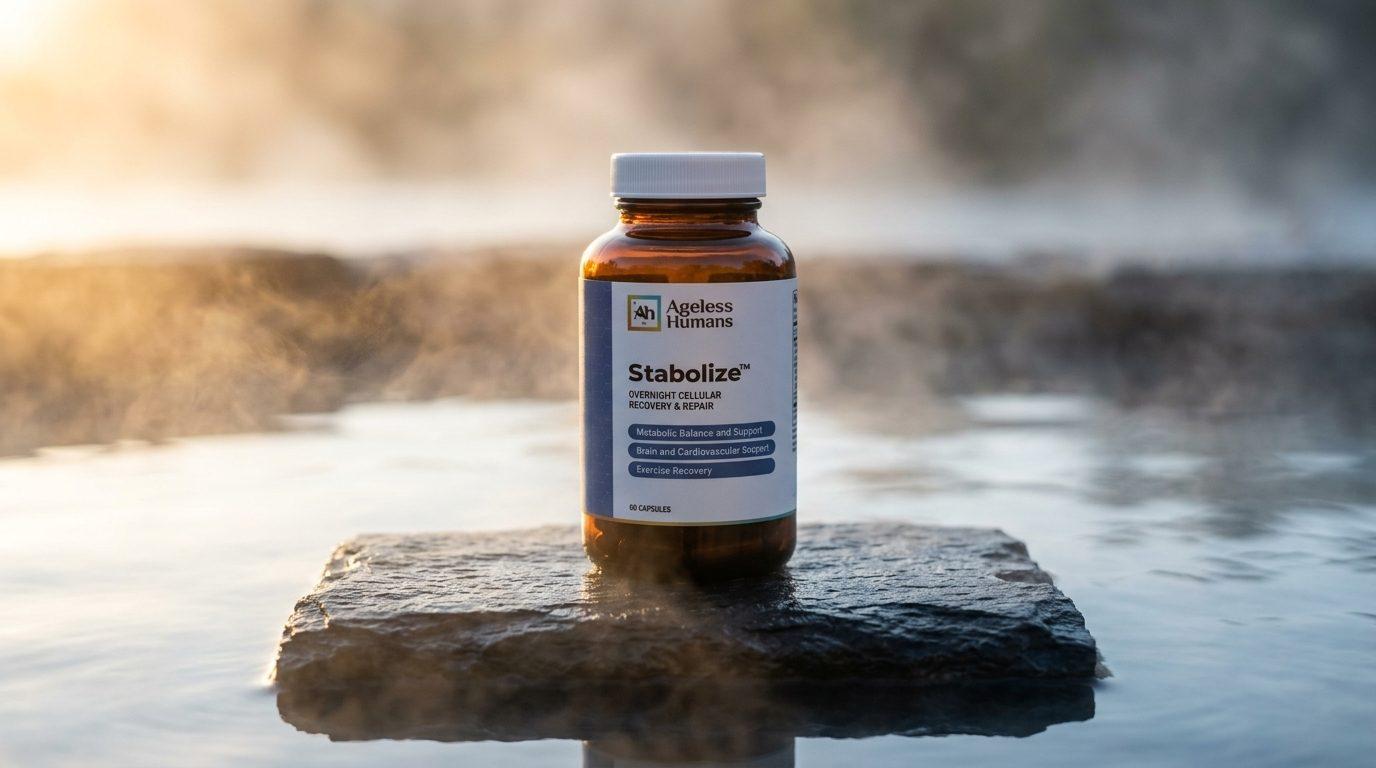
For people who want support built specifically around this window, Overnight Metabolic Recovery and Support is formulated to be taken in the evening and to complement the body's natural overnight metabolic and recovery processes. Use it as directed on the label.
Overnight recovery is also one piece of a bigger picture. Daytime energy, cellular health, and how you age over time are all connected to how well you recover at night. That is the idea behind the Metamorphic Anti-Aging Protocol, a broader approach for people who want to support healthy aging across the full 24-hour cycle.
Whatever you choose, quality matters. Every Ageless Humans product is made in our own FDA-registered facility in Carlsbad, California. Every lot is third-party lab tested, with a Certificate of Analysis (COA) available, and every purchase is backed by a 60-day money-back guarantee. If you take medications or have a health condition, talk with your healthcare provider before adding any supplement.
How to tell if your overnight recovery is improving
The clearest signs of better overnight recovery are waking up without dragging, steady daytime energy, and fewer afternoon crashes. Your own experience is meaningful data. Notice whether you wake near your alarm time naturally, whether your mood and focus hold through the afternoon, and whether workouts feel easier to bounce back from.
If you use a wearable, look for trends over weeks, not single nights. Consumer devices estimate sleep stages and recovery metrics such as resting heart rate and heart rate variability. They're useful for spotting patterns, but they aren't perfect measurements. A consistent sleep and wake time is often the first measurable change people see.
Give any change at least a few weeks. Circadian rhythms adjust gradually, and recovery builds on itself night after night. If you're not sure where to focus first, whether that's sleep, energy, or longevity, take our short longevity quiz for a personalized starting point. You can also browse the full Ageless Humans lineup.
Frequently asked questions
Why does the body repair itself during sleep?+
The body repairs itself during sleep because the circadian clock schedules maintenance work for the night, when physical and mental demands are lowest. Deep sleep is closely linked to growth hormone release, which supports tissue repair. Research also suggests the brain clears metabolic byproducts more actively during sleep. Overnight fasting shifts metabolism toward stored fuel and cellular housekeeping.
Which stage of sleep is most important for physical recovery?+
Deep sleep, also called slow-wave or N3 sleep, is the stage most associated with physical recovery. It is closely tied to growth hormone release, which supports tissue repair and muscle maintenance. Most deep sleep happens in the first half of the night, so a late bedtime can reduce it. REM sleep, which comes later in the night, is more associated with memory and emotional processing.
What is the circadian rhythm and how does it affect recovery?+
The circadian rhythm is the body's roughly 24-hour internal clock. It is controlled by a master clock in the brain and supported by smaller clocks in organs like the liver and muscles. It tells the body when to be active and when to rest, release hormones, and repair. Light is its strongest signal, followed by meal timing, exercise, and temperature. When these cues are consistent, research suggests overnight recovery processes run more efficiently.
Does eating late at night affect overnight recovery?+
Eating late, especially a large meal close to bedtime, may interfere with overnight recovery. Digestion competes with the body's natural shift into fasting and repair, and organ clocks like the liver's expect food during the day. Research on meal timing suggests finishing your last substantial meal a few hours before bed may support better sleep quality and overnight metabolism.
Can supplements improve overnight recovery?+
Supplements can support overnight recovery, but they work best alongside consistent sleep habits, not in place of them. Fundamentals come first: a steady wake time, morning light, a cool dark bedroom, and an earlier last meal. Targeted evening supplements can then complement the body's natural overnight processes. Choose third-party tested products, take them only as directed on the label, and check with a healthcare provider if you take medications.
How long does it take to improve sleep and recovery?+
Most people notice changes within a few weeks of consistent habits, because circadian rhythms adjust gradually rather than overnight. A stable wake time and morning light exposure are usually the fastest levers. Track how you feel on waking and your daytime energy over several weeks instead of judging by a single night.