
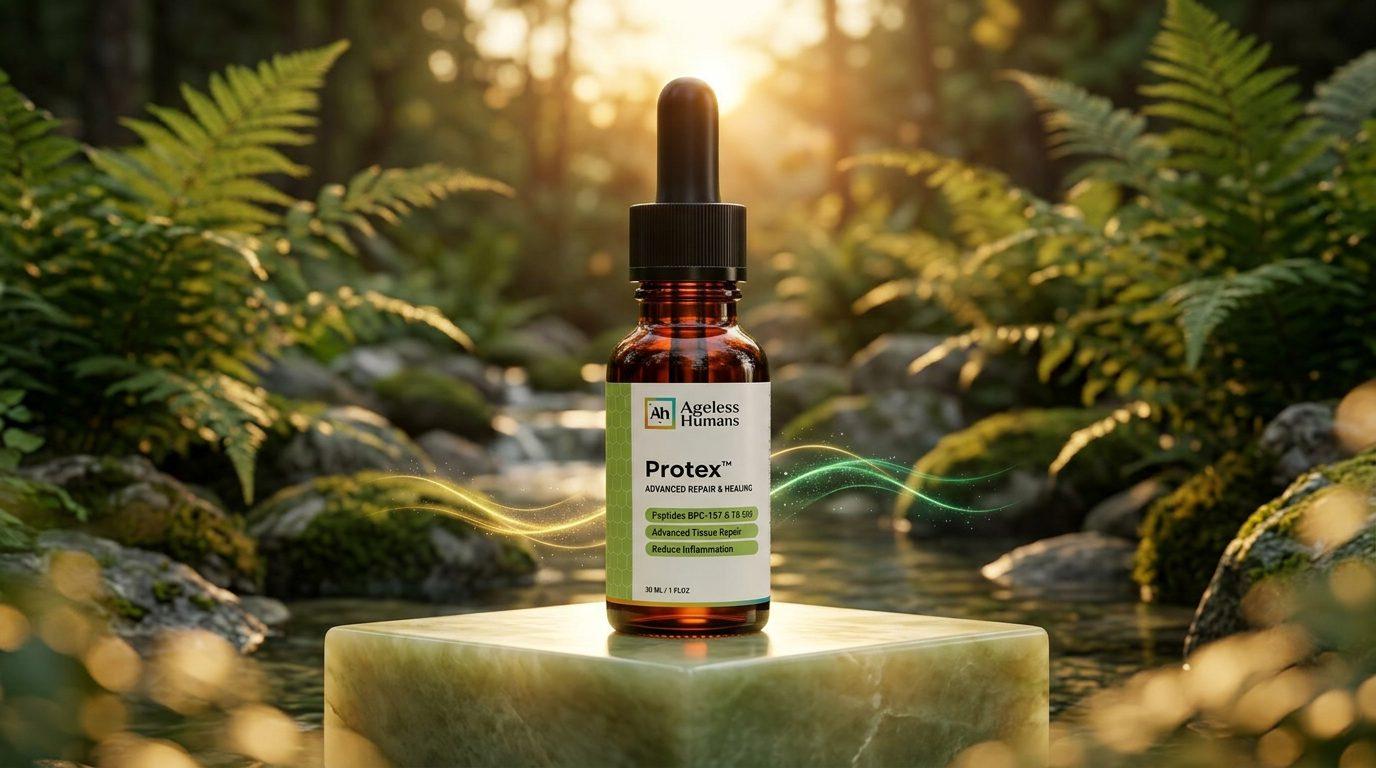
The longevity supplements most worth a woman's attention support three priorities: steady cellular energy (NAD+ precursors, magnesium, and checking iron and B12), skin structure (collagen peptides, vitamin C, and topical peptides like GHK-Cu), and metabolic and muscle health (protein, creatine, omega-3s, and vitamin D). Start with nutrient gaps that are common for your life stage, add a few well-studied longevity ingredients, and be skeptical of anything promising to reverse aging.
The Short Answer: Build Around Three Priorities
Most women get the most value from a small, targeted stack, not a cabinet full of bottles. The ingredients with the strongest rationale fall into three groups:
- Energy: NAD+ precursors (NMN or NR), magnesium, and making sure iron and B12 are where they should be.
- Skin: collagen peptides, vitamin C, and topical peptides such as GHK-Cu.
- Metabolic and muscle health: adequate protein, creatine, omega-3 fatty acids, and vitamin D.
This framework works because it matches the changes women notice first. In the 30s and 40s, those are usually lower energy, changes in skin firmness, and a body that responds differently to the same diet and exercise. Supplements can support these areas. They do not replace sleep, strength training, protein-rich meals, and sun protection, which do most of the work.
If you want the full landscape of longevity ingredients beyond the women-specific angle, start with our complete guide to longevity supplements.
Why Women's Longevity Needs Are Different
Women's physiology changes in distinct phases, and hormones shape how skin, muscle, bone, and metabolism age. Estrogen plays a supporting role in collagen production, muscle maintenance, bone turnover, and how the body handles glucose. As estrogen declines through perimenopause and menopause, research suggests many women notice faster changes in skin elasticity, muscle mass, and body composition.
Life stage also changes nutrient needs. Women who menstruate lose iron every month. Women who eat little or no animal food may run low on B12. After menopause, the focus often shifts toward bone and muscle support.
There is also a research gap, and it's worth being honest about. Much of the longevity science behind popular ingredients comes from animal studies or small human trials, and historically many trials enrolled mostly men. That doesn't mean these ingredients don't work for women. It means the evidence is still developing, and you should treat bold claims with caution. A good women's longevity plan is grounded in well-established nutrition first, with newer longevity compounds layered on thoughtfully.
Energy: Support Your Cells, Then Check the Basics
Persistent low energy has many causes, so start by ruling out common nutrient gaps, then consider cellular energy support. Before adding any longevity compound, ask your clinician whether testing ferritin (iron stores), B12, and vitamin D makes sense for you. Low levels of these are common in women and can leave you feeling drained no matter what else you take.
Once the basics are covered, these ingredients are the most relevant:
- NAD+ precursors (NMN and NR): NAD+ is a coenzyme your mitochondria use to turn food into usable energy, and research shows NAD+ levels tend to decline with age. NMN and NR are studied for their ability to support NAD+ levels and healthy cellular energy metabolism. Human research is promising but still early.
- Magnesium: Involved in hundreds of enzyme reactions, including energy production, muscle function, and relaxation. Many people fall short through diet alone.
- Creatine: Known for muscle, but also studied for supporting energy availability in brain cells. Women have historically been underrepresented in creatine research, and interest in women-specific studies is growing.
If you're curious about NAD+ support, our NAD+ and NMN supplements are made in our FDA-registered facility in Carlsbad, California, with every lot third-party tested.
Skin: Support Structure From the Inside and the Outside
Skin aging is driven largely by collagen loss and sun exposure, so the best approach combines daily sunscreen, nutrients that support collagen, and targeted topicals. No supplement outworks sunscreen. Think of everything else as support for skin's structure and resilience.
What's worth considering:
- Collagen peptides: Hydrolyzed collagen is studied for supporting skin hydration and elasticity. Results vary, and benefits in studies tend to show up over weeks to months, not days.
- Vitamin C: Your body needs it to build collagen. Most people can get enough from food, but it's a key cofactor.
- Topical GHK-Cu: A naturally occurring copper peptide studied for its role in supporting skin's look of firmness and its natural renewal processes. Topicals act where you apply them, which makes them a practical complement to oral supplements.
- Topical NAD+: An emerging area in skincare, used to support the skin's cellular energy and appearance.
For a topical option, the Radium NAD + GHK-Cu Anti-Aging Cream pairs both ingredients to support firmer-looking, healthier-looking skin. Use it as one part of a routine that always includes sun protection.
Metabolic Health and Muscle: Your Biggest Longevity Lever
For women, maintaining muscle is one of the most important things you can do for long-term metabolic health, and supplements work best when paired with strength training. Muscle is a major site of glucose uptake and plays a role in strength, balance, and independence later in life. Muscle mass naturally declines with age, and research suggests the shift around menopause can speed this up.
The most useful supports here:
- Protein: Not a longevity trend, but foundational. Many women under-eat protein, especially at breakfast. A protein powder is simply a convenient food.
- Creatine monohydrate: One of the most researched supplements available. It supports muscle strength and performance when combined with resistance training, and it's studied for its role in women across life stages.
- Omega-3s (EPA and DHA): Studied for supporting heart health, healthy triglyceride levels already in the normal range, and muscle maintenance.
- Fiber: Supports healthy blood sugar response and gut health. Food is the best source.
The pattern matters more than any single product: lift weights two to three times a week, eat enough protein, and use supplements to fill gaps.
Bone, Brain, and the Daily Foundation
A short list of foundational nutrients supports the systems women most want to protect long-term: bones, brain, and mood. These aren't exciting, but they're the base the rest of your stack sits on.
- Vitamin D: Supports calcium absorption, bone health, muscle function, and immune function. Many people have low levels, especially with limited sun. Testing is the best guide.
- Calcium: Important for bone, but food sources like dairy, fortified foods, and leafy greens are often preferred. Talk to your clinician before adding high-calcium supplements.
- Vitamin K2: Studied for its role in directing calcium to bone.
- Omega-3s: DHA is a major structural fat in the brain and is studied for supporting cognitive health.
- Magnesium: Supports bone, muscle, sleep quality, and a normal stress response.
Daily energy also depends on simple consistency. If you prefer an easy format, Get Up & Go Gummies are a convenient way to add daytime energy support to your routine. Follow the label directions and pair them with real fundamentals: sleep, hydration, and regular meals.
How to Choose Longevity Supplements as a Woman (and What to Skip)
Choose fewer, better-made products, match them to your life stage, and ignore anything that promises to reverse aging. Here's a practical filter:
1. Start with testing and fundamentals. Ask about iron, B12, and vitamin D before guessing. 2. Pick one priority at a time. Add one supplement, give it several weeks, and notice how you feel before adding another. 3. Demand quality proof. Look for third-party testing with a Certificate of Analysis (COA) for each lot, plus clear manufacturing information. Every Ageless Humans product is made in our FDA-registered Carlsbad facility, lot-tested by a third-party lab, and backed by a 60-day money-back guarantee. 4. Follow label directions. More is not better, and stacking products with overlapping ingredients can add up quickly. 5. Talk to your clinician if you're pregnant, breastfeeding, trying to conceive, taking medication, or managing a health condition.
Red flags to skip: claims to "balance hormones" with no detail, "proprietary blends" that hide amounts, before-and-after promises, and any product claiming to treat or cure anything.
For a ranked look at specific ingredients and the evidence behind each, see our breakdown of the best longevity supplements.
Frequently asked questions
What are the best longevity supplements for women?+
The most useful longevity supplements for women typically support energy, skin, and metabolic health. Well-studied options include NAD+ precursors like NMN, creatine, omega-3s, vitamin D, magnesium, and collagen peptides. Start by checking for common nutrient gaps such as iron, B12, and vitamin D, then add longevity ingredients one at a time.
Do women need different longevity supplements than men?+
Many longevity ingredients work similarly in both sexes, but women's priorities differ by life stage. Women who menstruate may need to watch iron, and changes in estrogen during perimenopause and menopause shift attention toward skin, muscle, bone, and metabolic support. Historically, many supplement studies enrolled mostly men, so women-specific evidence is still growing.
Is NMN safe for women to take?+
NMN has been studied in small human trials and has generally been well tolerated, though long-term human research is still limited. Follow the label directions and choose a third-party tested product. Women who are pregnant, breastfeeding, or taking medication should talk to a clinician before starting NMN.
Which supplements support skin as women age?+
Collagen peptides and vitamin C are the most common oral supplements studied for supporting skin hydration, elasticity, and collagen production. Topical ingredients such as the copper peptide GHK-Cu and NAD+ can support the look of firmer, healthier skin. Daily sunscreen remains the single most important habit for skin aging.
What supplements help women's energy after 40?+
First, ask your clinician about testing iron, B12, and vitamin D, since low levels are common causes of fatigue. Beyond that, NAD+ precursors like NMN are studied for supporting cellular energy, magnesium supports energy production and sleep quality, and creatine supports energy availability in muscle and brain cells. Sleep, strength training, and adequate protein matter as much as any supplement.
Can supplements reverse aging in women?+
No supplement can reverse aging, and claims that promise it should be treated as a red flag. The right supplements can support healthy cellular energy, skin structure, muscle, and metabolic function as part of a lifestyle that includes exercise, protein, sleep, and sun protection. Honest products describe support, not transformation.