
The best longevity supplements are the ones matched to your goals and backed by the strongest evidence for what you want them to do. Ranked by evidence class, foundational nutrients that close common gaps come first. NAD+ precursors (NMN and NR) and spermidine are the most promising aging-focused compounds with early human data, glutathione support has a mixed but growing record, and most so-called longevity peptides remain largely preclinical. No supplement has been shown to extend human lifespan, so treat any ranking as a ranking of evidence quality, not a promise.
What 'Best' Actually Depends On
There is no single best longevity supplement. The right choice depends on four things: your baseline, your goal, the evidence, and the product's quality. A ranking that ignores these is a sales list, not a guide.
- Your baseline. A nutrient you're low in will usually matter more than an exotic compound you don't need. Diet, sun exposure, activity level, and age all shift what is worth adding.
- Your goal. Cellular energy, autophagy, antioxidant defenses, and skin or joint support are different targets. Each points to different ingredients.
- The evidence. Some compounds have consistent human trials behind them. Others look strong in mice and have barely been tested in people. You should know which is which before you spend money.
- The product itself. A well-studied ingredient in an untested, under-dosed, or poorly made product is not the same thing as the ingredient used in research.
If you'd rather not sort through this alone, our longevity supplement quiz asks about your goals and routine and points you to a starting place. The ranking below explains the reasoning behind those recommendations.
How We Ranked Them: Four Evidence Classes
We sorted ingredients by the type of evidence behind them, not by hype or price. Every compound below fits into one of four classes:
1. Class A: consistent human trials on functional outcomes. Multiple controlled studies in people that measure things you would notice or that clinicians track. This is the strongest tier. 2. Class B: human trials on biomarkers. Studies show the compound does what it is supposed to do inside the body, such as raising a molecule's blood levels. Whether that translates into meaningful outcomes is still being worked out. 3. Class C: strong animal and mechanistic data plus early human studies. The biology is compelling, but human trials are small, short, or mixed. 4. Class D: mostly preclinical. Cell and animal work, anecdotes, and very little published human data.
A lower class doesn't mean an ingredient is useless. It means the honest claim is smaller. Many genuinely promising compounds sit in Class B or C simply because aging research in humans is slow and expensive. For a broader look at every major category, see our complete guide to longevity supplements.
#1: Foundational Nutrients (Class A for Their Specific Roles)
Foundational nutrients rank first because they have the deepest human evidence and fill gaps that are common in adults. They are not marketed as longevity breakthroughs, but healthy aging depends on them.
- Vitamin D supports bone health, muscle function, and immune function. Many people get limited sun exposure, especially in winter or when they work indoors.
- Omega-3 fatty acids (EPA and DHA) support heart, brain, and eye health. Most diets that skip fatty fish run low.
- Magnesium is involved in hundreds of enzymatic reactions, including energy production and muscle relaxation. Intake from modern diets is often modest.
- Creatine is best known for supporting strength and power during training. A growing body of research is exploring its role in muscle maintenance and cognitive energy as we age.
The caveat: these are Class A for their established roles, not for lifespan itself. They earn the top spot because getting the basics right is the highest-return move for most people. A sophisticated stack built on top of a nutrient gap is backwards.
#2: NAD+ Precursors, NMN and NR (Class B, Trending Toward A)
NAD+ precursors are the most-studied aging-specific supplements in humans, and the evidence clearly shows they raise NAD+ levels. What remains less settled is how much that increase changes how people feel and function.
NAD+ is a coenzyme every cell uses for energy metabolism and for activating sirtuins, a family of proteins involved in cellular maintenance and DNA repair pathways. Research suggests NAD+ levels decline in many tissues with age. That decline is the core rationale for supplementing its precursors, mainly nicotinamide mononucleotide (NMN) and nicotinamide riboside (NR).
Here's what research does and doesn't show:
- Established: Human trials have repeatedly found that oral NMN and NR raise NAD+ and related metabolites in the blood. They have generally been well tolerated in the studies published so far.
- Promising but mixed: Trials looking at muscle performance, metabolic markers, and energy have produced some encouraging results and some null ones. Most studies are short and small.
- Not shown: No human evidence that NAD+ precursors extend lifespan.
For people whose main goal is supporting cellular energy and healthy NAD+ levels as they age, this is the strongest aging-specific category available. Our NAD+ and NMN supplements are made in our FDA-registered facility in Carlsbad, California, and every lot is third-party lab tested with a COA.
#3: Spermidine and Autophagy Support (Class C)
Spermidine is a compelling compound for supporting autophagy, your cells' recycling process. Its human evidence is earlier-stage than NAD+ precursors. It belongs on the list because the mechanism is well characterized and the early human signals are interesting.
Autophagy is how cells break down and recycle worn-out components. It is one of the most active areas in aging biology, and research suggests autophagy activity tends to slow with age. Spermidine is a polyamine found naturally in foods like wheat germ, soybeans, mushrooms, and aged cheese. In animal studies it is one of the better-studied dietary compounds for inducing autophagy.
Here's the evidence:
- Animal and cell research is strong and consistent on spermidine's role in autophagy pathways.
- Observational human data has linked higher dietary spermidine intake with favorable aging-related outcomes. Observational studies can't prove cause and effect, though.
- Controlled human trials exist but are small, and results on functional measures have been mixed.
Spermidine makes the most sense for people who already have the foundations covered and want to support cellular renewal specifically. Lifestyle levers matter here too, since exercise and time-restricted eating are both studied for their influence on autophagy. Our Autophagy XL formula was designed around this cellular-renewal goal.
#4: Glutathione and Its Precursors (Class C)
Glutathione is your body's master antioxidant, but whether you should take it directly or support your body's own production is still debated. That uncertainty is why it ranks below NAD+ precursors despite its popularity.
Glutathione helps neutralize oxidative stress and supports the liver's detoxification processes. Research suggests levels may decline with age. The challenge is absorption. Standard oral glutathione has historically been thought to break down in the digestive tract. Newer forms, such as liposomal and sublingual glutathione, are designed to address this, and some studies suggest they can raise body stores. The data is still limited.
The alternative approach is to supply the building blocks. N-acetylcysteine (NAC) and glycine are glutathione precursors. Small studies in older adults have looked at combining them, with encouraging early findings that still need larger confirmation.
If your goal is antioxidant support, both routes are reasonable. Just know that the evidence is promising, not settled.
#5: Peptides (Mostly Class D, With Exceptions)
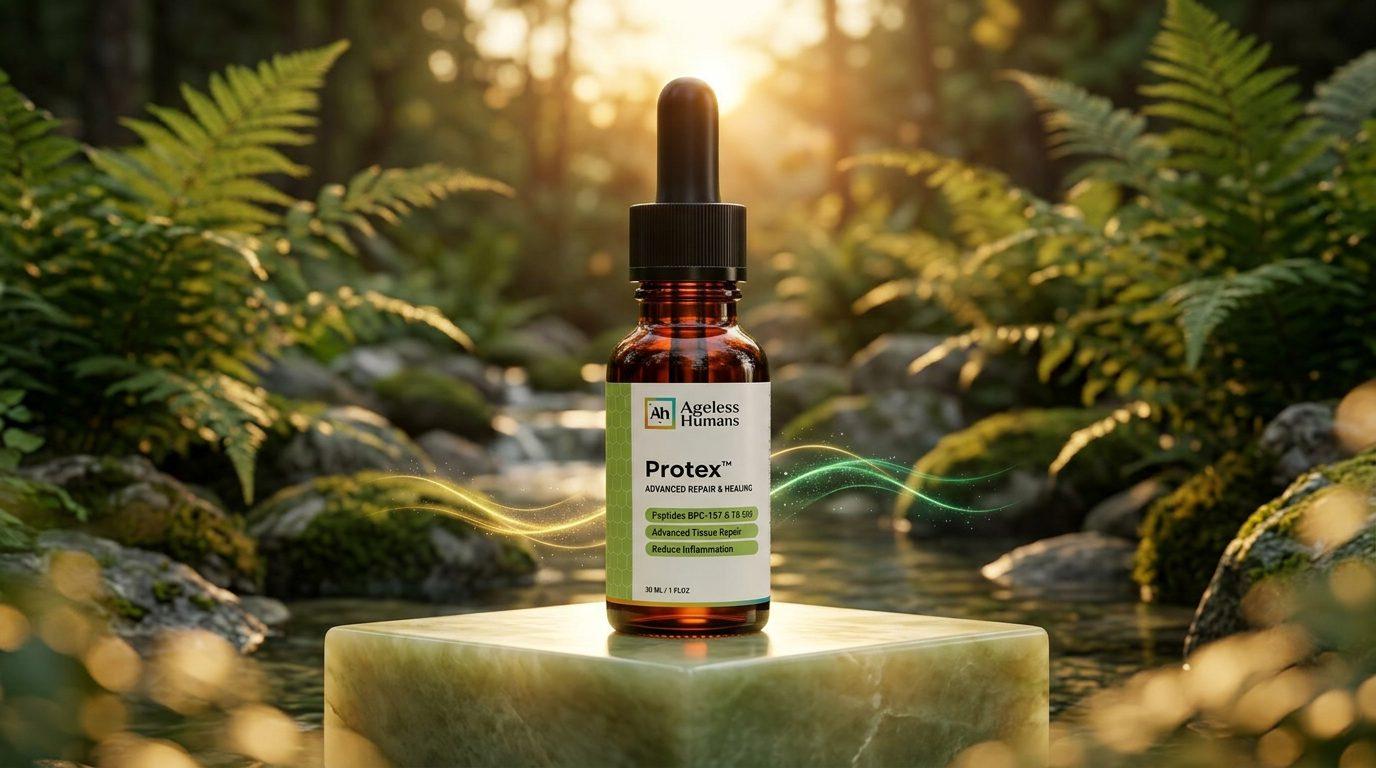
Most 'longevity peptides' have little published human evidence, and many are not dietary supplements at all. This is the category where marketing runs furthest ahead of the science.
Peptides are short chains of amino acids, and the word covers very different things:
- Collagen peptides are the clear exception. They are a food-derived dietary supplement with a meaningful body of human research on skin, joint, and connective tissue support. That puts them closer to Class B.
- Research peptides circulate in biohacking circles and are often injected. Many have interesting animal data but minimal human trials. Several are sold as research chemicals rather than as regulated supplements, which raises real questions about purity, dosing, and legality.
If you see a peptide promoted for longevity, ask three questions. Is there published human data? Is it legally sold as a dietary supplement? Is each lot independently tested? If the answer to any of these is no, it doesn't belong at the top of anyone's list.
How to Build a Longevity Stack That Makes Sense
Build from the bottom of the evidence pyramid up. Cover the foundations first, add one targeted compound for your main goal, and judge every product on quality before ingredients. Here is a practical sequence:
1. Cover the basics. Use diet first and supplements where you have gaps. 2. Pick one primary goal. For cellular energy, start with an NAD+ precursor. For cellular renewal, consider spermidine-focused autophagy support. For antioxidant defenses, consider glutathione or its precursors. 3. Add one thing at a time. That way you can tell what is doing what. Follow label directions, and talk with your healthcare provider if you take medications or have a health condition. 4. Give it time. Cellular-level support isn't an overnight effect. Commit to a consistent stretch before you judge results.
The quality checklist matters as much as the ingredient list. Look for a named manufacturer, an FDA-registered facility, third-party testing on every lot with a COA you can see, and a guarantee that shows the brand stands behind the product. Every Ageless Humans product is made in our own FDA-registered facility in Carlsbad, California, is third-party lab tested lot by lot, and comes with a 60-day money-back guarantee.
If you want several of these pathways addressed together rather than piece by piece, the Metamorphic Anti-Aging Protocol brings them into one coordinated routine. Not sure where you fit? Take the quiz and start with the step that matches your goals.
Frequently asked questions
What is the most evidence-backed longevity supplement?+
For general healthy aging, foundational nutrients like vitamin D, omega-3s, magnesium, and creatine have the deepest human research for their specific roles. Among aging-focused compounds, NAD+ precursors (NMN and NR) have the most human trials, which consistently show they raise NAD+ levels. Research on their effects on functional outcomes is still developing. No supplement has been proven to extend human lifespan.
Is NMN or NR better for supporting NAD+ levels?+
Both NMN and NR are NAD+ precursors, and human studies show each can raise NAD+ levels in the blood. Direct head-to-head comparisons in people are limited, so neither has been clearly shown to be superior. Product quality, third-party testing, and consistency of use matter more than which precursor you choose.
Does spermidine actually work for autophagy?+
Spermidine is one of the best-studied dietary compounds for inducing autophagy in cell and animal research. Observational human data links higher dietary spermidine intake with favorable aging outcomes. Controlled human trials are still small and mixed, so its evidence is promising but early-stage.
Is oral glutathione absorbed by the body?+
Standard oral glutathione has long been thought to break down during digestion, which limits absorption. Newer liposomal and sublingual forms are designed to improve this, and some research suggests they can raise glutathione levels. Another option is supporting your body's own production with precursors like NAC and glycine.
Are peptides safe longevity supplements?+
It depends on the peptide. Collagen peptides are food-derived dietary supplements with meaningful human research on skin and joint support. Many other popular longevity peptides have little published human data and are sold as research chemicals or injectables rather than regulated supplements. That raises concerns about purity and safety.
How do I choose the right longevity supplements for me?+
Start by covering common nutrient gaps, then choose one compound that matches your main goal, such as cellular energy, autophagy, or antioxidant support. Choose products made in an FDA-registered facility with third-party testing on every lot. Talk with your healthcare provider if you take medications or have a health condition.