
Powders usually cost less per gram and let you measure servings precisely. That makes them the better pick for large-serving ingredients and budget-focused routines. Capsules win on convenience, taste-free dosing, and travel. For most ingredients, the best format is the one you will actually take every day, and quality matters more than format.
The Short Answer: Capsules vs Powder at a Glance
Choose powder for value, flexibility, and large servings. Choose capsules for simplicity, taste-free dosing, and portability. Neither format is better for every ingredient or every person.
- Cost per gram: Powder usually wins. Capsules add manufacturing, shell, and packaging costs.
- Serving precision: Powder wins. You measure exactly what the label directs, and you can mix several ingredients in one drink.
- Taste: Capsules win. The shell keeps you from tasting the ingredient.
- Convenience and travel: Capsules win. There is nothing to measure, mix, or spill.
- Large servings (multiple grams): Powder wins. A multi-gram serving could take a handful of capsules.
- Swallowing difficulty: Powder wins for people who struggle with pills.
- Consistency: It depends on you. Capsules lower daily friction. Powders suit people who already have a drink-mixing habit.
The rest of this guide explains each tradeoff so you can match the format to your goal.
Cost Per Gram: Why Powders Usually Win (and How to Check)
Powders are usually cheaper per gram of active ingredient because they skip encapsulation. Capsules add steps. Someone has to make or buy the shells, run the filling machines, check fill weights, and package more bulk per serving. Those costs show up in the price.
Don't compare price tags. Compare cost per gram of the active ingredient:
1. Find the amount of active ingredient per serving on the Supplement Facts panel. Don't use the total capsule or scoop weight. 2. Multiply by the number of servings in the container. That gives total grams of active ingredient. 3. Divide the price by that number.
Run this math on any two products and you'll often find the powder costs less, sometimes by a wide margin. A few factors can narrow the gap:
- Small servings. When a serving is a few hundred milligrams, the encapsulation cost per serving matters less.
- Waste. Powder that clumps from moisture, spills, or goes unused because you dislike the taste isn't a bargain.
- Fillers. Some capsules include flow agents or bulking ingredients. Check the "other ingredients" line. You're paying for the active, not the filler.
Serving Flexibility: Precision vs Simplicity
Powders let you measure exactly what the label directs and combine ingredients in one drink. Capsules lock you into fixed amounts. If a capsule holds 500 mg, your only options are multiples of 500 mg.
That flexibility helps in a few real situations:
- Labels with a serving range. Some products list a range rather than a single amount. A powder lets you land anywhere within that range.
- Stacking. If you take several ingredients, you can measure each powder into one glass instead of swallowing a row of capsules. Our guide on how to build a supplement stack covers how to layer ingredients sensibly.
- Precision. Included scoops are approximate. Fine powders settle and pack differently. If exact amounts matter to you, a small milligram scale is more accurate than a scoop.
One caution: flexibility is not permission to improvise. Stay within the label directions, and talk with your healthcare provider before changing how you take any supplement. The value of powder is precise measuring, not freelancing.
Capsules trade that flexibility for something many people value more. Every serving is pre-measured and identical, with no scoop, no scale, and no guesswork.
Taste, Texture, and the Compliance Reality
The supplement you skip does nothing, so choose the format you'll take without thinking about it. This is the factor most comparisons underrate. A cheaper powder that sits in the cabinet costs more than a capsule you take every morning.
Raw ingredients often taste bitter, sour, chalky, or simply odd. Some dissolve cleanly in water. Others clump or leave grit. Capsules skip the taste problem entirely. If you're sensitive to flavor or texture, that alone may decide it.
Capsules have their own friction:
- Pill fatigue. Stack five or six products and you may face a dozen capsules a day. Many people quietly drop some.
- Swallowing. Some people find capsules hard or unpleasant to swallow. For them, powder is the only realistic option.
- Serving size. Ingredients with multi-gram servings can mean several large capsules at once.
Practical tips that improve consistency:
- Tie your supplements to an existing habit, such as morning coffee or your first glass of water.
- If you use powder, keep the container, scoop, and glass in the same spot.
- Mix stubborn powders into a small amount of liquid first, stir into a paste, then top up.
- If the taste of a powder bothers you, try it in a different drink before giving up on it, as long as the label allows.
Absorption: Does Format Change What Your Body Gets?
For most ingredients, there is little evidence that a well-made capsule and the same powder differ meaningfully in what your body takes in. Direct head-to-head research comparing formats is limited, so treat bold absorption claims in either direction with skepticism.
Here is what we can say with reasonable confidence. Standard capsule shells are designed to dissolve in the stomach fairly quickly. Powder mixed into liquid is already dispersed, so it may begin dissolving a little sooner. Whether that small timing difference matters for a given ingredient is largely unstudied.
What clearly matters more:
- Ingredient quality and purity. A pure ingredient in either format beats a contaminated one in the "better" format.
- Following label directions, including whether to take it with food.
- Taking it consistently. Steady daily use matters more than small differences in timing.
If a brand claims one format is dramatically more "bioavailable" without pointing to evidence, ask for it. Honest brands will tell you where the research is thin.
Freshness, Storage, and Travel
Capsules are easier to keep fresh and take on the road. Powders need a bit more care once opened. Every time you open a powder container, the contents meet air and humidity. Some ingredients draw in moisture, which can cause clumping and may affect quality over time.
To keep powder in good shape:
- Reseal tightly right after each use.
- Use a completely dry scoop. A wet scoop introduces moisture.
- Store in a cool, dry place away from the bathroom and stove. Follow any refrigeration guidance on the label.
- Keep the desiccant packet in the container if one is included.
Capsules aren't immune to heat and humidity, but the shell and smaller exposed surface offer some protection. They also travel far better. You can count out a week's supply into a pill organizer, with nothing to measure in a hotel room and no powder in your bag. If you travel often, many people keep capsules for the road and powder at home, using the same ingredient in both formats.
Which Goals Favor Which Format
Match the format to your priorities. Here's how common goals usually shake out:
Choose powder if you:
- Want the lowest cost per gram for a long-term daily routine
- Take an ingredient with a large serving size
- Like stacking several ingredients into one drink
- Want to measure precisely within a labeled serving range
- Have trouble swallowing pills
- Already have a daily smoothie, shake, or coffee habit to mix into
Choose capsules if you:
- Value speed and zero prep above everything else
- Dislike the taste or texture of raw ingredients
- Travel frequently or take supplements at work
- Want identical, pre-measured servings every time
- Are just starting a new supplement and want the simplest possible routine
Consider using both if you:
- Want powder's value at home and capsules' portability on the road
- Are building a larger stack and want to balance cost and convenience
For a deeper look at one ingredient, our NMN powder vs capsules guide applies this framework to NMN specifically.
Quality Matters More Than Format
A trustworthy ingredient in any format beats a questionable one in your preferred format. Before you weigh capsule versus powder, check these:
- Third-party testing. Look for an independent Certificate of Analysis (COA) for the specific lot you buy, confirming identity, purity, and contaminant screening.
- Manufacturing. Know where and how the product is made. A registered facility with documented quality controls is a meaningful signal.
- Transparent labels. The Supplement Facts panel should clearly state the active amount per serving and list every other ingredient.
- Honest claims. Be wary of brands promising dramatic results or citing vague "clinical" data they won't share.
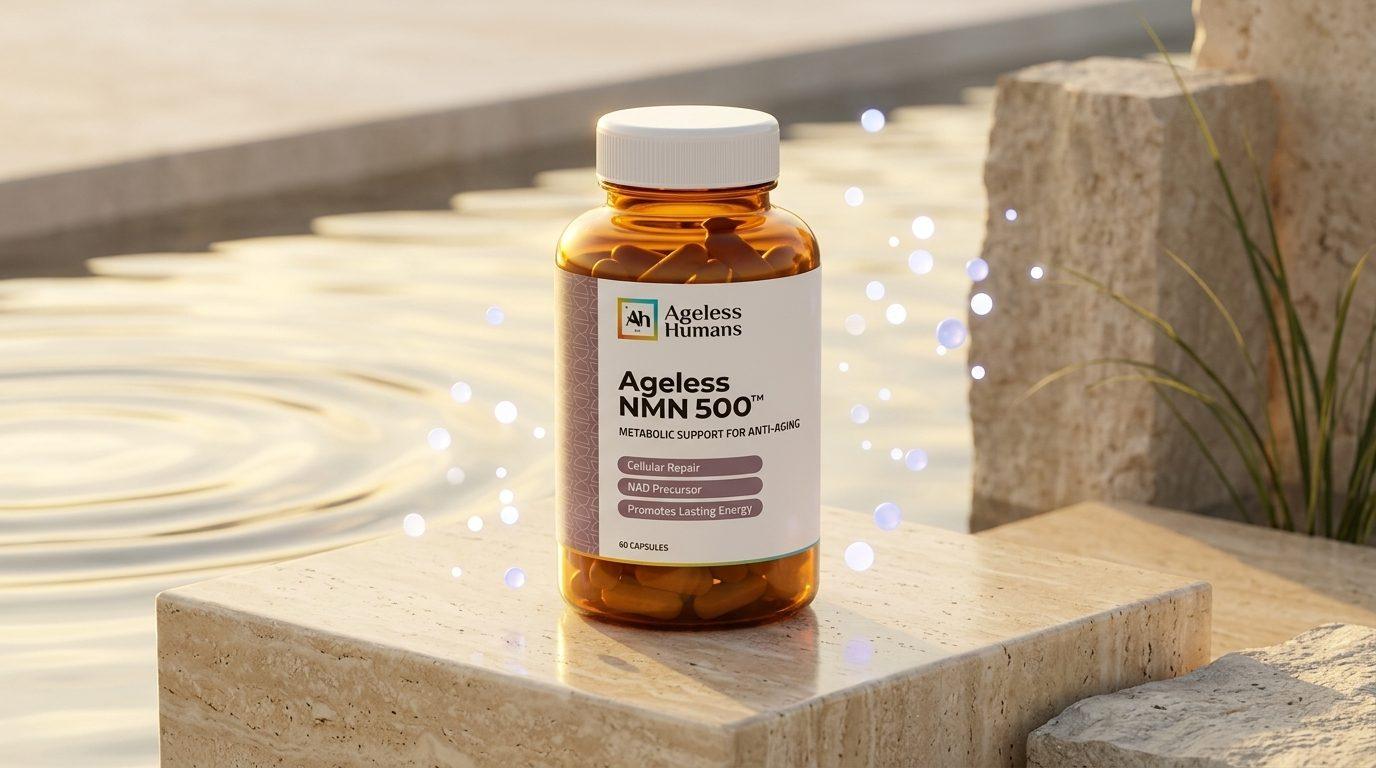
At Ageless Humans, every product is made in our FDA-registered facility in Carlsbad, California. Every lot is third-party lab tested with a COA, and every purchase carries a 60-day money-back guarantee, so you can try a format and switch if it doesn't fit your routine. Some ingredients come in both formats. Our NMN 500 Capsules and Raw NMN Powder contain the same ingredient, so the choice comes down to how you prefer to take it. Our Raw NAD+ Powder suits people who already like measuring and mixing.
Frequently asked questions
Are powder supplements cheaper than capsules?+
Usually, yes. Powders skip the cost of capsule shells, filling machines, and extra packaging, so they typically cost less per gram of active ingredient. To compare fairly, divide the price by the total grams of active ingredient in the container, not by the number of servings. The gap narrows for ingredients with very small servings.
Do capsules or powders absorb better?+
For most ingredients, there is little evidence that a well-made capsule and the same powder differ meaningfully in what your body absorbs. Standard capsule shells dissolve fairly quickly in the stomach, and direct head-to-head research is limited. Ingredient quality, following label directions, and taking it consistently matter far more than format.
Can I open a capsule and mix the powder into a drink?+
Some people do this, but check the product label first, because certain capsules are designed to be swallowed whole. If you often find yourself opening capsules, buying the powder version of the same ingredient is usually more practical and often cheaper per gram. Ask your healthcare provider if you're unsure.
How do I measure powder supplements accurately?+
Use the scoop included with the product as a starting point. Scoops are approximate because fine powders settle and pack differently. A small digital milligram scale gives the most precise measurement. Always measure to the serving amount stated in the label directions.
How should I store powder supplements once opened?+
Reseal the container tightly after every use, always use a dry scoop, and store it in a cool, dry place away from humid rooms like the bathroom. Keep any desiccant packet inside the container. Follow any specific storage or refrigeration guidance printed on the label.
Which is better for a supplement stack, capsules or powder?+
Powders are often easier for larger stacks because you can measure several ingredients into one drink instead of swallowing many capsules. Capsules are better when you need portability or dislike the taste of raw ingredients. Many people use a mix of both, with powders at home and capsules for travel.