
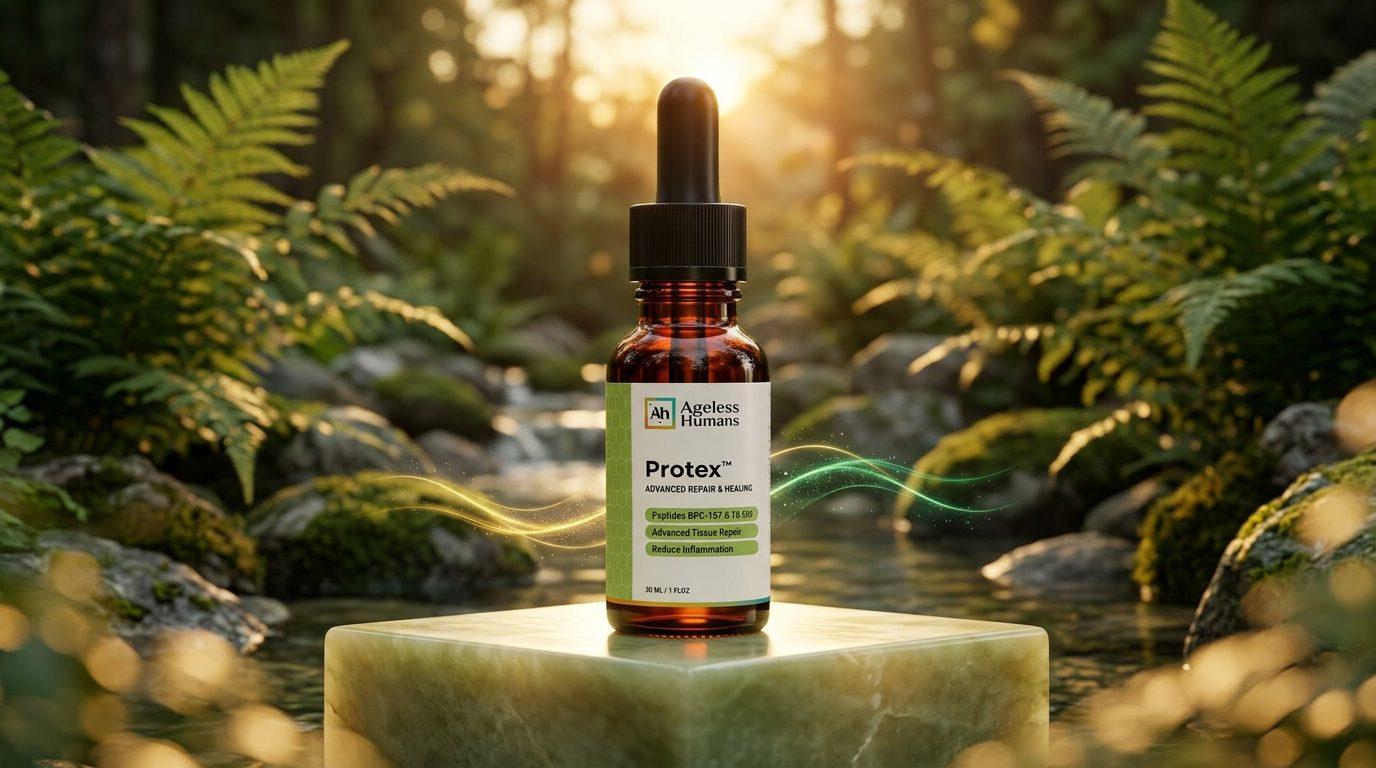
Supplements are broad, daily building blocks such as vitamins, minerals, and compounds like NMN that support baseline body functions. Peptides are short chains of amino acids that act as targeted signals for specific goals like recovery. Most people should build a supplement foundation first, then add a peptide only when they have a clear, specific goal and a vetted source.
The Core Difference: Building Blocks vs. Targeted Signals
Supplements supply materials. Peptides send messages. That one distinction drives almost every other difference between the two categories.
A typical supplement provides something your body uses as raw material or as a cofactor. Magnesium is a mineral your body uses in hundreds of enzyme reactions. Omega-3s are fats built into cell membranes. NMN is a precursor your cells can use to make NAD+, a molecule involved in cellular energy. You take these daily to help maintain normal function across many systems at once.
A peptide is a short chain of amino acids, usually 2 to 50. Your body already makes thousands of them, and many work as signaling molecules that tell specific tissues what to do. Peptide products are typically chosen for one narrow job, such as supporting recovery after hard training, rather than general upkeep.
The word "peptide" is broad, which causes confusion. Collagen peptides are a food-derived protein supplement. Signaling peptides like BPC-157 and TB-500 are studied for targeted effects. Prescription peptide drugs are FDA-approved medications. These are three very different things that share one label.
The Regulatory Difference: Three Buckets, Three Rulebooks
Where a product is sold, and under which rules, matters as much as what's in it. Peptide products fall into three regulatory buckets.
1. Dietary supplements. In the U.S., supplements are regulated under DSHEA (1994). Manufacturers must follow Good Manufacturing Practices and may only make structure/function claims. Products don't need FDA approval before sale, which is why who makes them, and how, matters so much. Collagen peptides and some oral peptide formulas are sold in this category. 2. Prescription peptide drugs. These go through clinical trials and FDA approval. They are prescribed by a clinician for a diagnosed condition. This is a separate world from supplements. 3. "Research use only" peptides. Many injectable peptides online are labeled "not for human consumption." That label means no one is vouching for purity, dose accuracy, or sterility for human use. This is the riskiest bucket by far.
Regulatory status for specific signaling peptides, including BPC-157, has been under active FDA scrutiny, and the picture can change. Competitive athletes should also know that the World Anti-Doping Agency lists BPC-157 and TB-500 as prohibited. If you compete in tested sport, check the current WADA list before taking any peptide product.
The Evidence Difference: What Research Does and Doesn't Show
Many core supplements have a deeper base of human research than most signaling peptides. That gap is the most important thing to understand before you choose.
Well-studied supplement ingredients like magnesium, vitamin D, omega-3s, and creatine have been examined in many human trials over decades. Newer longevity compounds sit in the middle. NMN and other NAD+ precursors have early human studies, and research suggests NAD+ levels tend to decline with age. Researchers are still working out how much supplementation changes long-term outcomes.
Signaling peptides like BPC-157 and TB-500 have been studied mostly in animal and lab models, where researchers have looked at their role in tissue repair and recovery pathways. Human data is limited. That doesn't mean they don't work. It means the evidence is earlier-stage, and anyone telling you otherwise is overselling.
A practical rule: the newer and more targeted the compound, the more you should rely on manufacturing quality, transparent testing, and your own careful tracking, not marketing promises.
Where Peptides Sit in a Supplement Routine
Peptides belong on top of a solid foundation, not in place of one. Think of your routine as a pyramid with three layers.
- Layer 1: Lifestyle. Sleep, protein intake, training, sunlight, and stress management. No supplement or peptide outperforms a broken foundation.
- Layer 2: Foundational supplements. Daily support for common gaps and broad cellular health, such as magnesium, omega-3s, vitamin D, and an NAD+ precursor if cellular energy and healthy aging are priorities. Our complete guide to longevity supplements covers how to build this layer.
- Layer 3: Targeted add-ons. Peptides and other specialized compounds chosen for one defined goal, used for a defined period, and judged against clear results.
This order matters for a simple reason. If you start with a targeted peptide while sleeping five hours a night and missing key nutrients, you can't tell what is working. Building from the bottom up gives you a stable baseline, so when you add something targeted, you can actually see whether it helps.
The Goal-First Decision Tree
Start with your goal, not the product category. Work through these questions in order.
1. Is your goal general: energy, healthy aging, daily wellness? Choose supplements. Broad goals call for broad, daily support. Fill nutrient gaps first, then consider compounds like NMN that support cellular energy pathways.
2. Is your goal specific and physical: recovery from training, joint and tissue comfort, bouncing back after hard sessions? Confirm your foundation is in place: adequate protein, sleep, and the basics. If it is, a recovery-focused peptide is a reasonable targeted add-on. See our breakdown of the best peptides for recovery to compare options.
3. Do you compete in drug-tested sport? Check the WADA prohibited list first. Several popular peptides are banned regardless of how they are sold.
4. Do you have a diagnosed condition, take prescription medication, or are you pregnant or nursing? Talk to your clinician before adding any supplement or peptide. This step isn't optional.
5. Are you considering an injectable "research peptide"? Stop and reconsider. Unregulated, injectable, research-only products carry sterility and purity risks that oral, GMP-manufactured products are designed to avoid.
How to Vet Any Supplement or Peptide Product
Quality control is the deciding factor in both categories, and it matters even more for peptides. Use this checklist before you buy anything.
- Who makes it, and where? Look for a named manufacturer and facility. Ageless Humans products are made in our own FDA-registered facility in Carlsbad, California, so we control the process from start to finish.
- Is every lot third-party tested? Ask for a Certificate of Analysis (COA). Every Ageless Humans lot is third-party lab tested, and a reputable brand should share COAs without hesitation.
- Is it sold for human use? "Research use only" or "not for human consumption" means no one stands behind it for you.
- Are the claims honest? Legitimate products "support" or "help maintain" body functions. Promises to cure, treat, or reverse anything are a red flag in either category.
- Is there a guarantee? A brand confident in its product backs it. Ours carries a 60-day money-back guarantee.
Follow label directions. More is not better, and stacking multiple targeted products at once makes it impossible to know what's helping.
The Bottom Line: It's Not Either/Or
The right answer for most people is supplements first, peptides second, and only with a specific goal. Supplements handle the daily foundation. Peptides are specialized tools for targeted support.
The smartest routine is boring at the base and precise at the top. Get the fundamentals right, add a foundational longevity supplement if healthy aging is your priority, and bring in a peptide when you have a defined goal like recovery. Then give it time, track how you feel and perform, and keep only what earns its place.
Be skeptical of anyone who frames this as a contest. Supplements and peptides solve different problems, and they rest on different levels of evidence. Knowing that difference is what separates a thoughtful routine from an expensive pile of bottles.
Frequently asked questions
What is the difference between supplements and peptides?+
Supplements supply nutrients and compounds your body uses for broad, everyday functions, like vitamins, minerals, and NAD+ precursors. Peptides are short chains of amino acids that typically act as signaling molecules for specific goals, such as supporting recovery. Supplements are usually daily foundations, while peptides are targeted add-ons.
Should I take supplements or peptides first?+
Most people should start with foundational supplements and lifestyle basics like sleep, protein, and training. Once that base is stable, a peptide can be added for a specific goal such as recovery. Starting with the foundation also makes it easier to tell whether a targeted product is actually helping.
Are peptides regulated the same way as supplements?+
No. Peptides fall into different regulatory buckets: some are sold as dietary supplements, some are FDA-approved prescription drugs, and many online peptides are sold as "research use only" and not for human consumption. The research-only category has the least oversight and the most risk. Always check how a product is sold and who manufactures it.
Is there strong research on peptides like BPC-157 and TB-500?+
BPC-157 and TB-500 have been studied mostly in animal and laboratory models for their role in tissue repair and recovery pathways. Human research is still limited. They are best viewed as early-stage compounds, which makes manufacturing quality and third-party testing especially important.
Can I take NMN and peptides together?+
They serve different purposes: NMN is studied for supporting cellular energy through NAD+, while recovery peptides are chosen for targeted physical support. Many people use a foundational supplement alongside a targeted product, following each label's directions. Check with your healthcare provider first if you take medications or have a health condition.
Are peptides allowed in drug-tested sports?+
Many are not. The World Anti-Doping Agency lists BPC-157 and TB-500 as prohibited substances. Competitive athletes in tested sport should check the current WADA list before using any peptide product, however it is sold.