
Sublingual dosing can move a compound into circulation without passing through the gut and liver first. That matters for molecules the liver breaks down heavily before they reach the rest of the body. The advantage only applies to molecules small, fat-friendly, and potent enough to cross the thin lining under your tongue while you hold them there. For most supplements taken in larger amounts, including water-loving compounds like NMN, the evidence that sublingual beats a capsule is thin, and much of a 'sublingual' dose ends up swallowed anyway.
The Core Argument: Skipping First-Pass Metabolism
The whole case for sublingual dosing rests on one idea: bypassing first-pass metabolism. When you swallow a capsule, its contents dissolve in your gut and are absorbed through the intestinal wall. They then travel through the portal vein straight to the liver. The liver and the gut wall can chemically change or break down part of a compound before any of it reaches general circulation. That loss is called first-pass metabolism.
The tissue under your tongue drains differently. Its veins lead toward the large veins returning to the heart, not toward the portal vein. Whatever crosses that tissue reaches the rest of the body before it ever meets the liver. Pharmacology has used this route for decades. Some fast-acting prescription medicines are given under the tongue precisely because swallowing them would send most of the dose to the liver first.
So the mechanism is real. Whether it helps depends on two questions: does the molecule actually suffer major first-pass loss, and can it actually get through the lining of the mouth? If either answer is no, the sublingual argument falls apart.
Why the Mouth Is a Picky Doorway
The tissue under your tongue is thin and full of blood vessels, but it is small and selective. It is the most permeable spot in the mouth because it lacks the tough, keratinized layer that covers your gums and palate. Still, it is a membrane built to keep things out. Molecules mostly cross it by slipping through cell membranes, which are made of fats.
Pharmaceutical scientists generally look for these traits in a good sublingual candidate:
- Small size. Smaller molecules cross more easily. Large molecules struggle.
- Moderate lipophilicity. The molecule needs to dissolve in saliva and pass through fatty cell membranes. Very water-loving or very fat-loving compounds both do poorly.
- Mostly uncharged at mouth pH. Charged molecules cross membranes much less readily.
- Effective in small amounts. The absorbing surface is tiny. A compound that works in micrograms or a few milligrams is a far better fit than one taken in hundreds of milligrams.
Then there is the time problem. Saliva keeps flowing, and most people swallow within a minute or two without noticing. Anything that hasn't crossed by then goes down the normal oral route. In practice, most 'sublingual' supplement doses are a mix of sublingual and swallowed absorption. The bigger the dose, the larger the swallowed share.
Which Molecules Plausibly Benefit (and Which Don't)
Sublingual delivery makes the most sense when a small, potent, membrane-friendly molecule faces heavy first-pass loss. It makes the least sense when a compound is already absorbed well by swallowing, or can't cross the mouth lining in the first place.
Stronger candidates:
- Certain prescription compounds designed for this route. They are the textbook proof that the pathway works.
- Melatonin. It is small, works in low amounts, and is known to undergo substantial first-pass metabolism. It has been studied in both oral and sublingual forms.
Weaker or unproven candidates:
- Vitamin B12. Sublingual B12 is popular, but cobalamin is a large molecule. Research comparing sublingual and oral B12 has generally found them broadly comparable, which suggests the swallowed portion does much of the work.
- Caffeine and similar compounds that the gut already absorbs efficiently. There is little first-pass loss to avoid.
- Fat-soluble vitamins like D. They are typically absorbed with dietary fat in the gut. The mouth offers no clear advantage.
- Large-dose, water-soluble compounds. Hundreds of milligrams of a hydrophilic molecule will mostly be swallowed regardless of where you place it.
The honest takeaway: 'sublingual' describes where you put something, not proof of where it gets absorbed. Unless a specific compound has been studied by that route, assume much of the dose follows the oral path.
Where NMN Fits
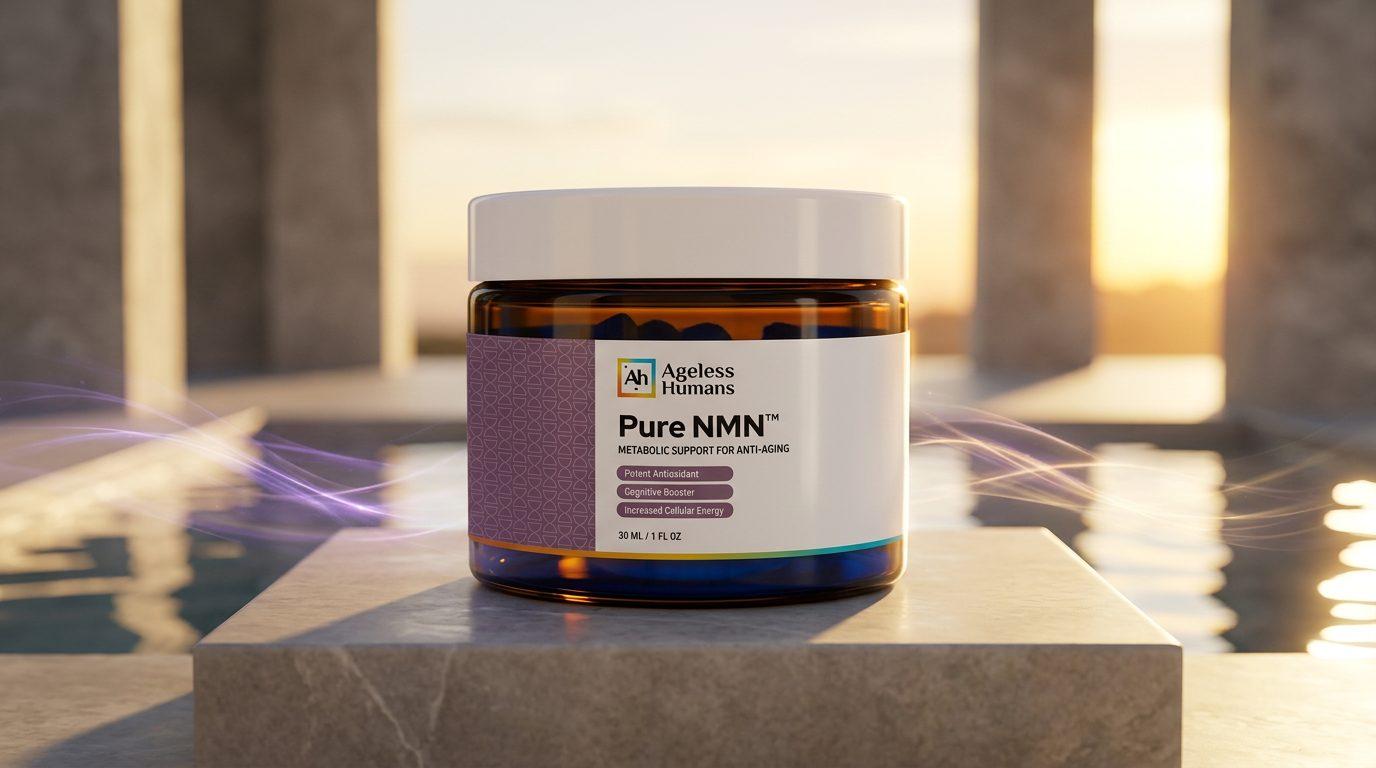
NMN is not an obvious sublingual candidate on chemistry alone, and human research directly comparing sublingual and swallowed NMN is limited. NMN is a small molecule, which helps. It is also highly water-soluble and carries a charged phosphate group, which works against passive diffusion through fatty cell membranes. Typical NMN servings are also measured in hundreds of milligrams, far more than the small surface under the tongue can realistically handle.
The swallowed route has its own story. Animal research has proposed a dedicated NMN transporter in the small intestine. Scientists are still debating how much of oral NMN is absorbed intact and how much is converted to related NAD+ precursors along the way. Either way, NMN is studied for its role in supporting NAD+ levels, and oral intake is the route most research has used. That is a reasonable default.
So choosing between raw NMN powder and NMN 500 capsules is mostly about preference, not a proven absorption edge. Powder gives you flexibility. You can hold it under your tongue, stir it into water, or measure servings as the label directs. Capsules offer no taste, a consistent dose, and easy travel. We break down those trade-offs in detail in NMN powder vs. capsules.
Where Methylene Blue Fits
Methylene blue is a small molecule, and the choice between drops and capsules comes down mostly to dose control and practicality, not dramatic absorption differences. Pharmacokinetic research suggests methylene blue is reasonably well absorbed when swallowed. That weakens the case that holding it under the tongue is essential.
Where liquid drops earn their place is precision and flexibility. Methylene blue is used in very small amounts. A measured liquid makes it easy to follow label directions exactly, and drops can be mixed into water. If you hold drops in your mouth, expect temporary blue staining of your tongue and teeth. Capsules avoid that mess and the taste entirely.
Methylene blue is studied for its role in supporting mitochondrial function and cellular energy. It also has well-documented interactions with certain prescription medications, including some antidepressants. Talk with your healthcare provider before using it, especially if you take any medication. For a side-by-side look, see methylene blue capsules vs. drops.
What Capsules Do Better
For most supplements, capsules are the most consistent, convenient, and stable way to take a known dose. Swallowing is the route the human body is built for, and it is the route most supplement research uses.
Capsules offer concrete advantages:
- Dose consistency. Every capsule holds a measured amount. No guessing with scoops or drops.
- No taste or staining. That matters for bitter or strongly colored compounds.
- Protection from moisture and air. This helps preserve sensitive ingredients like NMN between servings.
- Easy habits. A routine you actually keep usually beats a 'better' route you skip half the time.
The trade-off is flexibility. You can't easily adjust a capsule serving or use it in a drink. If a compound truly loses most of its dose to first-pass metabolism and crosses the mouth lining well, sublingual may win. For everything else, a capsule is a strong, well-supported choice.
How to Choose and How to Read Sublingual Marketing
Pick the format you'll take consistently. Treat dramatic sublingual absorption claims with healthy skepticism. Ask these questions before paying a premium for 'under-the-tongue' delivery:
1. Does this specific compound lose much of its dose to first-pass metabolism? If not, there's little for sublingual to fix. 2. Is it small, membrane-friendly, and effective in low amounts? Large doses of water-soluble compounds mostly get swallowed. 3. Is there human research on this exact compound by this route? General statements about sublingual absorption don't transfer automatically. 4. Is the claim specific or vague? Phrases like 'up to X times better absorption' with no source deserve doubt.
If you do take something sublingually, follow the label. Avoid eating or drinking right before and during, and hold it in place rather than swallowing right away.
Format matters less than what's actually in the product. Every Ageless Humans product is made in our FDA-registered facility in Carlsbad, California. Every lot is third-party lab tested, with a Certificate of Analysis available, and backed by a 60-day money-back guarantee. Whichever format you choose, you know what you're taking.
Frequently asked questions
Is sublingual absorption better than swallowing a capsule?+
Sometimes, but not usually for supplements. Sublingual delivery helps when a small, potent, membrane-friendly molecule would otherwise be heavily broken down by the liver during first-pass metabolism. For most supplements taken in larger amounts, much of a sublingual dose is swallowed anyway, and capsules perform comparably.
What is first-pass metabolism?+
First-pass metabolism is the breakdown of a compound by the gut wall and liver after it is swallowed and before it reaches general circulation. Swallowed substances travel through the portal vein to the liver first. Compounds absorbed under the tongue drain toward the heart instead, which is why sublingual delivery can bypass this step.
Does NMN absorb better under the tongue?+
There is limited human research showing sublingual NMN is absorbed better than swallowed NMN. NMN is highly water-soluble and carries a charge, both of which make crossing the mouth lining harder. Typical servings are also large enough that most of the dose is likely swallowed. Oral intake is the route most NMN research has used, so powder versus capsules is mainly a matter of preference.
Should methylene blue drops be held under the tongue?+
Not necessarily. Research suggests methylene blue is reasonably well absorbed when swallowed, so drops are valued mainly for precise, flexible measuring according to label directions. Holding drops in the mouth will temporarily stain the tongue and teeth blue. Anyone taking prescription medications should consult a healthcare provider first because of known interactions.
Which supplements actually make sense to take sublingually?+
The best candidates are small, moderately fat-soluble molecules that work in low amounts and lose much of their dose to first-pass metabolism. Melatonin is one commonly studied example. Large molecules, fat-soluble vitamins, and high-dose water-soluble compounds generally show little clear benefit from the sublingual route.
How long do you need to hold something under your tongue?+
Follow the product's label directions. Absorption through the mouth lining takes time, and saliva naturally washes compounds toward the throat. Avoiding food and drink and resisting the urge to swallow right away gives a sublingual product its best chance to work as intended.