
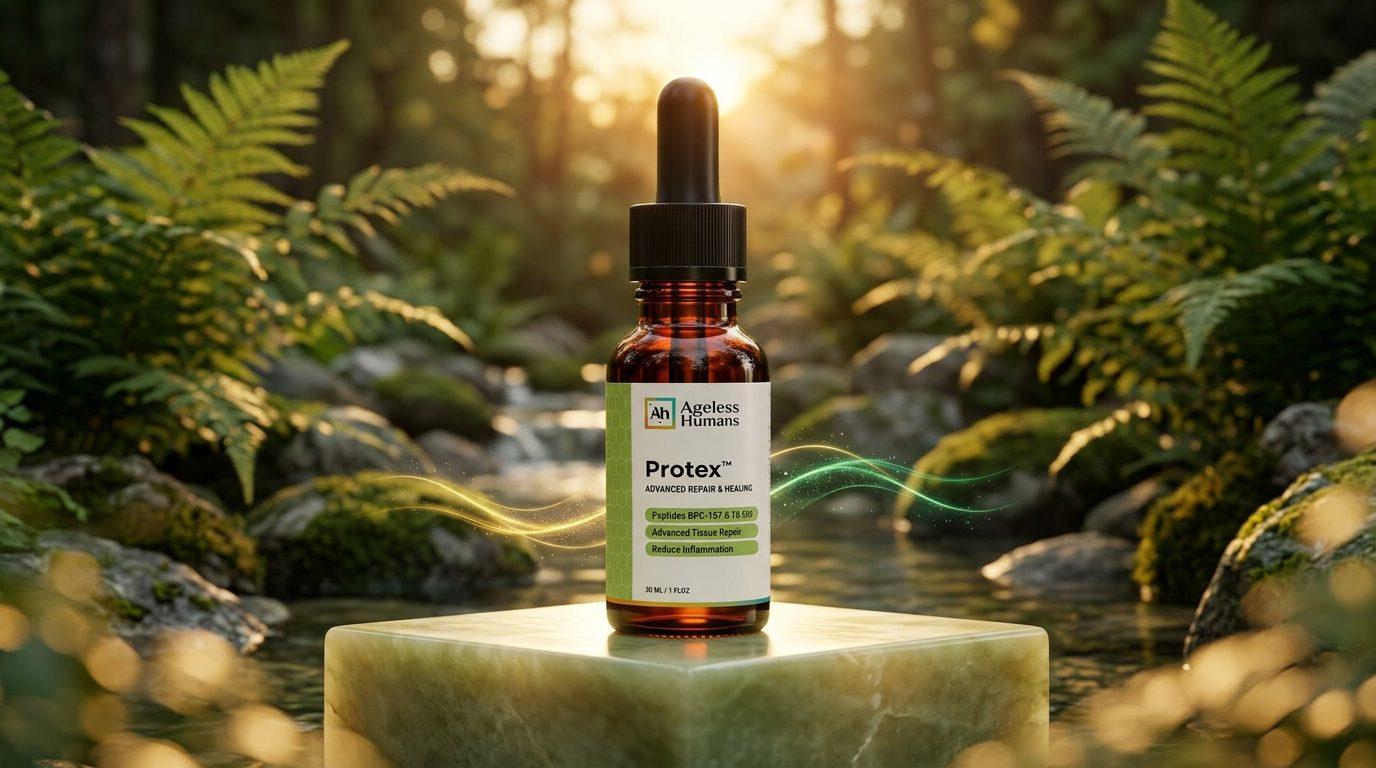
A premade protocol is usually the better fit if you want a coordinated, quality-controlled system with little guesswork. A DIY stack wins if you have narrow goals, already own key ingredients, or need to fine-tune individual pieces. Real cost depends less on the sticker price and more on cost per serving you will actually use, overlap, waste, and whether you take it consistently.
The Short Answer: Who Should Buy the System and Who Should Build
Buy a premade protocol if you are new to longevity supplements, want one quality standard across everything you take, or know you will skip a routine that involves six separate bottles. You trade some control for coherence and convenience.
Build your own stack if you have one or two specific goals, already take several of the core ingredients, or work with a healthcare provider who wants to adjust things one at a time. You gain precision, but you take on the research, sourcing, and quality checks yourself.
Consider a hybrid if you like the idea of a coordinated foundation but have one personal priority it doesn't cover. Plenty of people use a protocol as the base and add a single targeted product on top.
The rest of this guide explains why, so you can make the call with real reasoning instead of a gut feeling.
What You're Actually Comparing
A premade protocol is a set of formulas designed to be taken together. The manufacturer chooses the ingredients, forms, and serving sizes, and plans how the products fit with each other. You follow one set of label directions.
A DIY stack is a collection of individual supplements you select yourself, often from several brands. You decide what goes in, how much (within each label's directions), and when. Our guide on how to build a supplement stack walks through that process step by step.
Neither is better by default. They solve different problems. A protocol solves for coordination and simplicity. A DIY stack solves for customization and control. The right choice depends on which of those problems you actually have.
Cost Comparison, Done Honestly
The honest answer: a DIY stack looks cheaper on paper more often than it is in practice, and a protocol looks pricier on paper more often than it is in practice. Neither is always true. The only fair comparison is cost per serving you will actually use over the same time period.
Here's how to run the math yourself:
1. List every ingredient in the protocol you are considering. 2. Price individual bottles of only the ingredients you would genuinely want, in comparable forms and quality. 3. Convert to cost per daily serving, following each label's directions. A bigger bottle is not cheaper if its serving size differs or it expires before you finish it. 4. Add the hidden DIY costs listed below. 5. Subtract any protocol ingredients you already take or don't need. Paying for them is a real cost too.
Hidden costs of DIY stacks:
- Overlap. Many multi-ingredient products share ingredients, so you may pay twice for the same thing.
- Partial bottles. Mismatched bottle sizes mean staggered reorders and leftovers that expire.
- Multiple shipments from different retailers.
- Trial and error. Products you buy, dislike, and abandon.
- Your time spent researching forms, checking quality, and managing reorders.
Hidden costs of premade protocols:
- Paying for components you don't need, especially if you already take some of them.
- Less ability to scale back one component without dropping the whole system.
If, after this exercise, your DIY list is short and focused, building your own may well cost less. If your DIY list keeps growing to match the protocol, the system often comes out even or ahead once waste and overlap are counted.
Formulation Synergy vs. Flexibility
Synergy is a real design advantage of a protocol, but be skeptical of how far the claim goes. Good protocol design means ingredients are chosen to support complementary pathways, in compatible forms, without accidental duplication. That's valuable, and it's hard to replicate when you combine products from five brands that were never designed together.
What research does and doesn't show matters here. Most supplement research studies single ingredients. Studies of specific multi-ingredient combinations are far less common. So when a brand says its components "work together," the honest version is usually this: the ingredients were selected because research suggests they support related aspects of cellular health, and the formulation avoids conflicts and redundancy. Be wary of anyone claiming a combination is proven to do more than its parts.
Flexibility is the DIY stack's real edge. With individual products you can:
- Start one ingredient at a time and notice how you respond.
- Drop something that doesn't agree with you without losing everything else.
- Shift your stack as your priorities change.
- Work closely with a clinician who wants fine-grained control.
So the trade-off is clear. Choose coherent design if you value a system someone thought through as a whole. Choose granular control if you value adjusting each piece yourself.
Quality Control: One Standard vs. Many
A protocol from a single manufacturer gives you one quality standard. A DIY stack gives you as many standards as you have brands. That difference gets overlooked, and it often matters more than price.
When you build your own, every bottle is its own quality question. Was it third-party tested? Can you see a certificate of analysis (COA) for the lot you received? Where was it made? Multiply those questions by five or six products and quality control becomes a real part-time job.
At Ageless Humans, every product is made in our own FDA-registered facility in Carlsbad, California, and every lot is third-party lab tested with a COA. Whatever path you choose, hold every product to that bar: testing you can verify, lot by lot. If a DIY component can't meet it, that is a reason to replace it, whatever it costs.
The Adherence Factor: The Best Stack Is the One You Take
Consistency usually decides results more than formulation does. A brilliant stack you take three days a week will likely do less for you than a good one you take every day.
DIY stacks tend to grow. One bottle becomes four, then seven, each with its own timing and reorder date. Many people quietly drop pieces along the way, and their carefully designed stack turns into a random one.
Protocols lower that friction: one routine, one set of directions, one reorder. That matters most for busy people, frequent travelers, and anyone who has a cabinet full of half-finished bottles.
Be honest with yourself here. If you have kept up a complex routine for months before, DIY may suit you. If you haven't, simplicity is worth paying for.
The Hybrid Approach: Protocol Base, Personal Add-Ons
For many people the smartest answer is both: a coordinated protocol as the foundation, plus one or two targeted additions. You get a designed core and still keep room for personal priorities.
A few ground rules make a hybrid work:
- Check for overlap first. Read the protocol's full ingredient panel before adding anything, so you don't double up.
- Add one thing at a time so you can tell what each addition is doing.
- Follow every label's directions and talk with your healthcare provider, especially if you take medications or have a health condition.
For example, someone focused on cellular maintenance might start with a system like the Complete Cellular Repair Protocol. Our cellular repair protocol explainer breaks down how it is structured, then layers in a single product tied to a personal goal.
How to Decide in Five Minutes
Answer these five questions honestly and the choice usually becomes obvious:
1. How many ingredients do I actually want? One or two points toward DIY. Five or more points toward a protocol. 2. What do I already take? Heavy overlap with a protocol points toward DIY or a hybrid. 3. Will I stay consistent with multiple bottles? If not, choose a protocol. 4. Do I want to verify quality for each product myself? If not, choose one trusted manufacturer. 5. Do I need fine-grained control, for example under clinician guidance? If so, DIY or a hybrid.
If you're still unsure, take the Ageless Humans quiz. It asks about your goals and routine and points you toward a full system, such as the Metamorphic Anti-Aging Protocol, or a more targeted starting point. Every product is backed by a 60-day money-back guarantee, so you can try a path without being locked into it.
Frequently asked questions
Is a premade supplement protocol cheaper than building my own stack?+
Sometimes, but not always. A DIY stack often looks cheaper at first, yet hidden costs such as overlapping ingredients, expired partial bottles, multiple shipments, and abandoned products can close the gap. The fair test is to compare cost per serving you will actually use over the same period, counting only the ingredients you genuinely want.
Do supplement ingredients really work better together in a protocol?+
A well-designed protocol can combine complementary ingredients in compatible forms and avoid accidental duplication, which is a genuine advantage. However, most supplement research studies single ingredients, and research on specific combinations is more limited. Be cautious of any claim that a combination is proven to outperform its individual parts.
What is the main advantage of a DIY supplement stack?+
The main advantage is flexibility. You can add ingredients one at a time, drop anything that doesn't suit you, and adjust as your goals change, which is especially useful when working with a healthcare provider. The trade-off is that you take on the research, sourcing, and quality checks for every product yourself.
Can I add other supplements to a premade protocol?+
Yes, many people use a protocol as a foundation and add one or two targeted products. Check the protocol's full ingredient list first to avoid doubling up, add one product at a time, and follow every label's directions. Talk with your healthcare provider before combining supplements, especially if you take medications.
How do I check the quality of supplements in a DIY stack?+
Look for products that are third-party lab tested and that provide a certificate of analysis (COA) for the specific lot you receive. Check where and how the product is manufactured, ideally in an FDA-registered facility. Apply the same standard to every bottle, because a DIY stack is only as reliable as its weakest product.
How do I know whether a protocol or a DIY stack is right for me?+
Consider how many ingredients you want, what you already take, whether you will stay consistent with multiple bottles, and how much control you need. Fewer goals and heavy overlap favor DIY, while broad goals and a preference for simplicity favor a protocol. A short goal-based quiz, such as the one Ageless Humans offers, can help you narrow it down.