
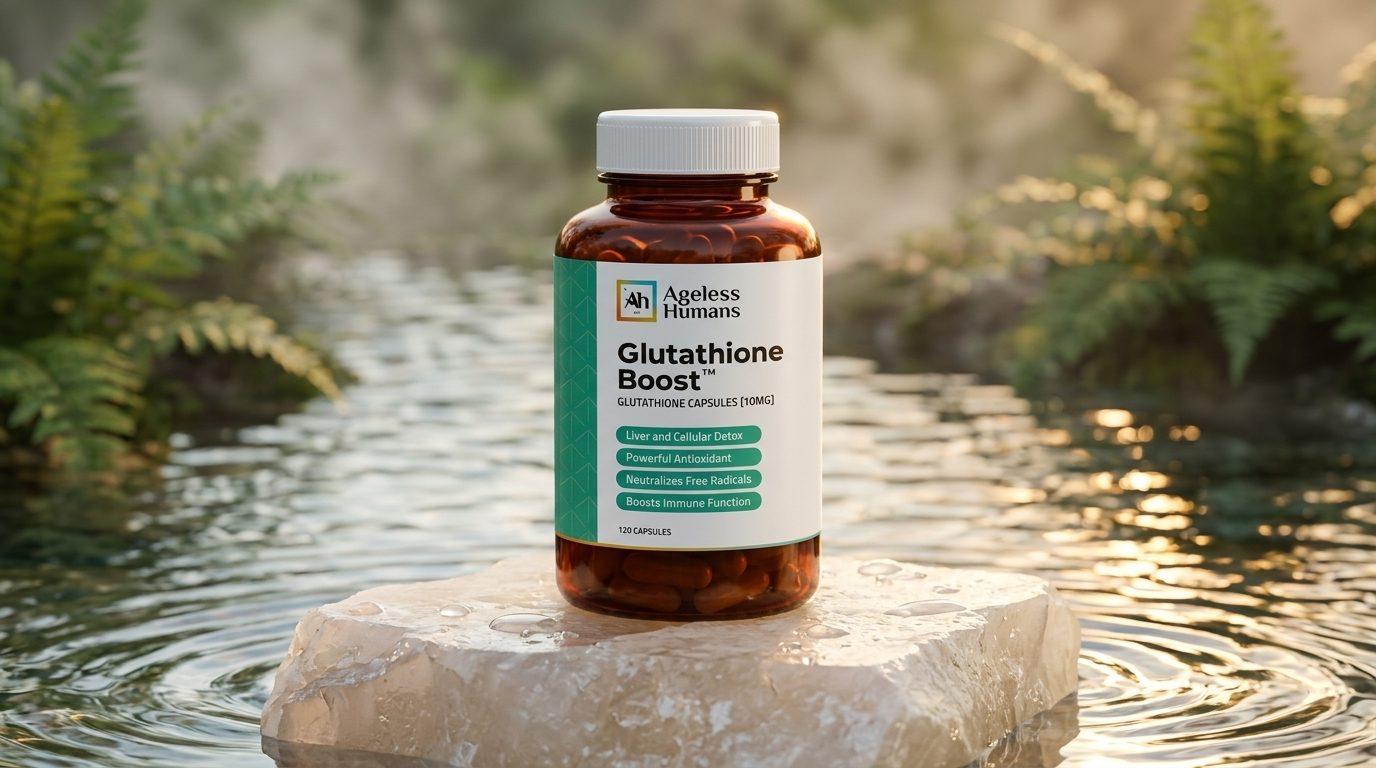
Liposomal delivery wraps a nutrient in tiny fat-based bubbles so more of it may survive digestion and reach your bloodstream. Research suggests this helps a short list of poorly absorbed ingredients, such as vitamin C at higher intakes and glutathione, but it adds little to nutrients your body already absorbs well. Many products labeled 'liposomal' are simple lecithin mixtures with no proof of real encapsulation, so verify before you pay the premium.
What 'Liposomal' Actually Means
A liposome is a microscopic sphere made of phospholipids, the same fat molecules that form your cell membranes. Phospholipids have a water-loving head and a fat-loving tail. In water they line up into a double layer that closes into a hollow ball. Water-soluble nutrients sit in the watery core. Fat-soluble nutrients sit inside the membrane wall.
The technology came from pharmaceutical research, where liposomes have been studied for decades as a way to protect fragile compounds and change how they move through the body. Supplement brands borrowed the idea and the word.
The word alone guarantees nothing. No regulation defines what counts as 'liposomal' on a supplement label. A product can mix sunflower lecithin into a liquid, call it liposomal, and never measure whether a single liposome formed. That gap between the science and the label is the reason this guide exists.
How Liposomes Are Supposed to Work, and the Digestion Problem
The theory is that the phospholipid shell protects the nutrient from stomach acid and digestive enzymes, then helps carry it across the gut lining. Because the shell resembles a cell membrane, liposomes may merge with intestinal cells or be absorbed through fat pathways, including the lymphatic system, instead of relying only on the limited transporters a nutrient normally uses.
The honest complication: your gut is built to break down fat. Bile salts and lipase enzymes dismantle phospholipid structures, so many liposomes likely do not pass through the gut intact. Researchers still debate how much of the benefit comes from whole liposomes being absorbed and how much comes from the phospholipids acting as an emulsifier that keeps the nutrient dispersed and easier to absorb.
For you, the mechanism matters less than the outcome. The useful question is not 'Is it liposomal?' but 'Does this specific product deliver more of the ingredient to my bloodstream than a standard form?' Only product-level testing answers that, and few brands do it.
Where Liposomal Delivery Has the Strongest Case
Liposomal delivery makes the most sense for ingredients with a known absorption ceiling or that break down in the gut. These are the categories where research is most promising:
- Vitamin C at higher intakes. Your gut absorbs vitamin C through transporters that saturate, so absorption efficiency drops as the amount per serving rises. Several small human studies comparing liposomal and standard vitamin C have reported higher blood levels with the liposomal form. The studies are small, but the reasoning is sound.
- Glutathione. Glutathione is a peptide, and digestive enzymes tend to break peptides apart. That is why plain oral glutathione has a mixed research record. Liposomal glutathione has been studied as a way to protect it, with some encouraging early results. Our guide to glutathione benefits covers what this antioxidant does in the body.
- Curcumin and other poorly soluble plant compounds. Curcumin dissolves poorly in water and is cleared quickly. Lipid-based carriers, liposomal and otherwise, are studied to improve that.
- Fat-soluble compounds like CoQ10. These benefit from lipid delivery of almost any kind. A liposome can help, but so can softgels in oil or simply taking them with a meal that contains fat.
Even in these categories, the ingredient-level research does not prove that the bottle in your hand performs the same way. Formulation quality varies widely.
Where Liposomal Is Mostly Marketing
For nutrients your body already absorbs well at typical label amounts, liposomal delivery adds cost without a clear benefit. Many B vitamins, vitamin C at modest amounts, and most well-chosen mineral forms already absorb reasonably well. A more expensive delivery system cannot improve much on an absorption process that already works.
NMN is a good example of hype outrunning evidence. Research suggests NMN is absorbed orally in its standard form, and scientists have proposed specific pathways for how cells take it up. Liposomal NMN is widely marketed, but published head-to-head human data showing a meaningful advantage over well-made standard NMN is limited. Paying a large premium for liposomal NMN is a bet, not a proven upgrade.
Watch for three other warning signs of marketing-first liposomal products:
- Liposomal multivitamins that put a dozen ingredients in one 'encapsulated' formula. Loading many different compounds into stable liposomes is technically difficult.
- Liposomal ingredients that are already oil-based, where the label upgrade does little.
- Claims of 'near-total absorption' or a precise multiplier with no linked study on that exact product.
How to Spot a Fake Liposomal Product
A real liposomal product can show you data. A fake one shows you adjectives. Use this checklist before you buy:
1. Particle size. Ask for it. Credible manufacturers measure liposome size in nanometers using lab methods such as dynamic light scattering. Vague claims like 'nano-sized' without a number are a red flag. 2. Polydispersity index (PDI). This shows how uniform the particles are. A low, reported PDI suggests a controlled process. No answer usually means no measurement. 3. Encapsulation efficiency. This is the share of the ingredient actually inside liposomes rather than floating free. It is the single most revealing number, and the one most brands never publish. 4. Phospholipid type and amount. Look for a named phospholipid source, such as phosphatidylcholine from sunflower or soy, with a stated amount. Generic 'lecithin' low on the ingredient list is a weak sign. 5. Format. True liposomes are usually liquid or gel dispersions. Liposomal claims on dry tablets, gummies, and standard powders deserve extra scrutiny, because drying and compressing can damage liposome structure unless specialized processes are used. 6. Product-specific studies. A study on liposomal glutathione in general is not a study on this bottle.
The home 'water test' is not proof. Stirring a spoonful into water and seeing a milky, even dispersion is consistent with a real emulsion. Oil slicks or quick separation suggest a poor one. But a good emulsion can look identical to a true liposomal formula, so treat this test as a screen, not a verdict.
Liposomes Aren't the Only Way to Improve Absorption
Liposomal delivery is one tool among several, and it is often not the best one for the job. Depending on the ingredient, these approaches may deliver as much benefit, often at lower cost:
- Precursors. Instead of supplementing a fragile compound directly, you can supply the building blocks your body uses to make it. Glutathione is the clearest case, since your cells produce their own from amino acids. Supporting that internal production avoids the digestion problem altogether.
- Taking fat-soluble nutrients with food. A meal containing some fat helps your body absorb vitamins D, E, and K, CoQ10, and omega-3s.
- Better molecular forms. Choosing a well-absorbed chelate or salt of a mineral often matters more than any wrapper.
- Other carriers. Phytosomes, micelles, and cyclodextrin complexes are all studied to improve solubility. Each has its own evidence base, ingredient by ingredient.
The pattern is the same across all of them: match the delivery method to the ingredient's specific absorption barrier. If there is no barrier, there is nothing to fix.
The Honest Buyer's Guide: When to Pay for Liposomal
Pay for liposomal only when three conditions are true: the ingredient has a real absorption barrier, the brand shows proof of encapsulation, and no cheaper strategy solves the same problem. If any one fails, a well-made standard form is usually the smarter buy.
Use this quick decision path:
- Is the ingredient well absorbed already? If yes, skip liposomal.
- Is there a precursor or food-pairing option? If yes, compare it first.
- Does the brand publish particle size, PDI, and encapsulation efficiency? If no, assume you are buying a premium label, not premium delivery.
- Is every lot third-party tested with a Certificate of Analysis (COA)? Delivery technology means nothing if the bottle does not contain what the label says.
That last point applies to every supplement you take. At Ageless Humans, every product is made in our own FDA-registered facility in Carlsbad, California, and every lot is third-party lab tested with a COA. Any brand you buy from should meet the same standard.
Finally, think in systems, not single bottles. Absorption tweaks matter less than choosing the right ingredients, avoiding overlap, and taking them consistently. Our guide on how to build a supplement stack walks through that process step by step. Always follow label directions and talk with your healthcare provider before starting a new supplement.
Frequently asked questions
Are liposomal supplements better than regular supplements?+
Liposomal supplements may be better for a small number of poorly absorbed ingredients, such as glutathione and vitamin C at higher intakes. For nutrients the body already absorbs well, research shows little reason to pay more for liposomal versions. Product quality also varies widely, so a well-made standard supplement can outperform a poorly made liposomal one.
How can I tell if a liposomal supplement is real?+
A real liposomal supplement should come with measurable data: particle size in nanometers, a polydispersity index showing uniformity, and encapsulation efficiency showing how much ingredient is inside the liposomes. It should also name its phospholipid source and amount. If a brand cannot provide these numbers, there is no evidence true liposomes are present.
Does liposomal glutathione work better than regular glutathione?+
Standard oral glutathione is a peptide that digestive enzymes can break down, which is why its research record is mixed. Liposomal glutathione has been studied as a way to protect it, with some encouraging early results. Another option is a glutathione precursor, which supplies the building blocks your body uses to make its own glutathione.
Is liposomal NMN worth the extra cost?+
Research suggests NMN is absorbed orally in its standard form, and published human data showing a clear advantage for liposomal NMN is limited. A high-purity standard NMN supplement with third-party testing is a reasonable choice for most people. Paying a large premium for liposomal NMN is not supported by strong evidence today.
Do liposomes survive stomach acid and digestion?+
Some liposomes likely survive, but bile salts and digestive enzymes break down many of them. Researchers still debate how much of the benefit comes from intact liposomes versus the phospholipids helping the nutrient stay dispersed and absorbable. The practical test is whether the specific product has data showing improved blood levels.
Can liposomal supplements come in capsules or gummies?+
Liposomal supplements are most commonly liquids or gels, because liposomes form and stay stable in water-based dispersions. Drying or compressing them into tablets, gummies, or powders can damage their structure unless specialized processing is used. Treat liposomal claims on solid formats with extra skepticism and ask the brand for particle data.