
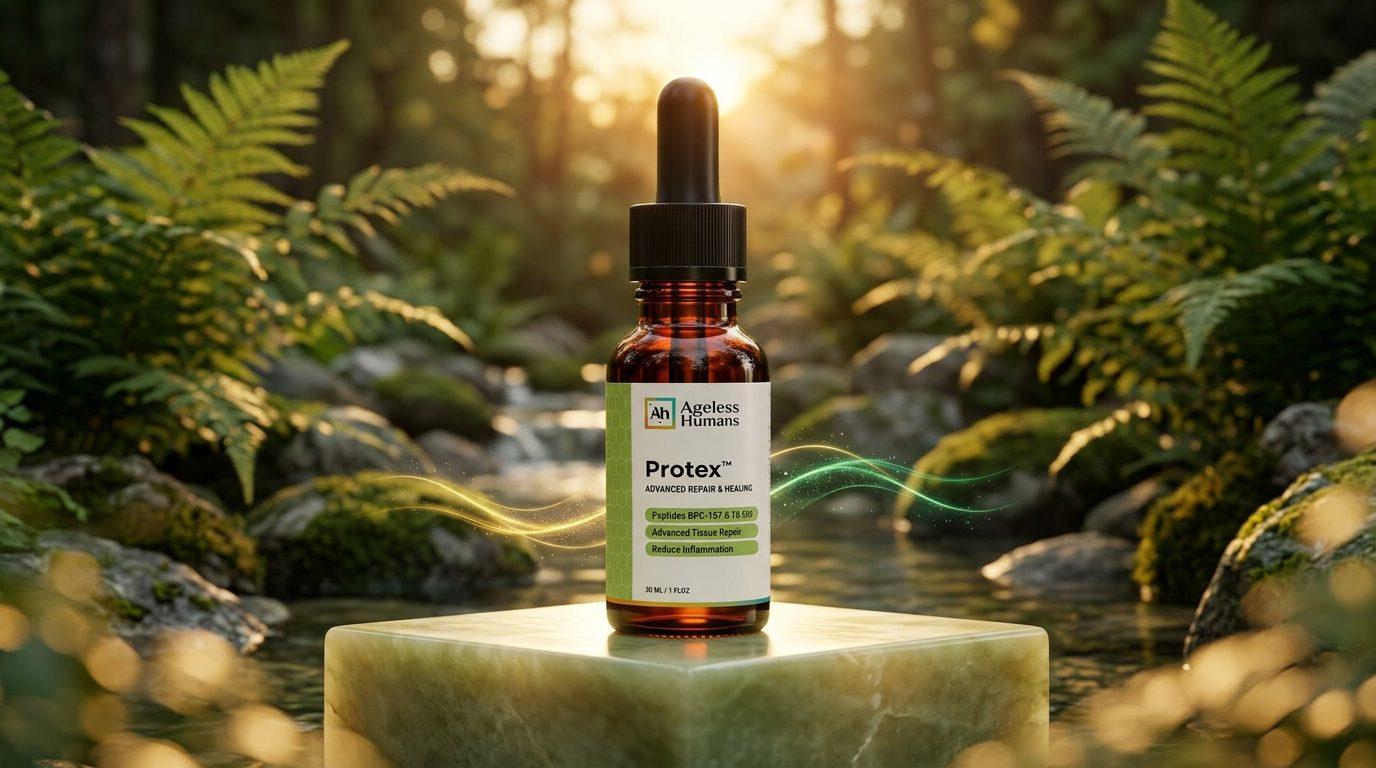
OTC peptide supplements are oral or topical products sold for human use. They must follow dietary supplement or cosmetic manufacturing rules, list their ingredients, and stay within structure/function claims. Research peptides are vials labeled 'for research use only, not for human consumption.' They are sold outside the rules that govern products for people, so no one is accountable for how they perform in a human body. The molecule name on the label can be identical, but the category, the legal standing, and the safety guarantees are not.
The Short Answer: Same Molecule Name, Different Category
The difference is not the peptide. It is the rulebook the product is sold under. A peptide supplement is made and labeled for people to take. A research peptide is sold as a lab chemical, and its label says outright that it is not for human consumption.
That one difference drives everything else:
- Intended use: Supplements are made for human use. Research vials are made for lab use only.
- Manufacturing standards: U.S. dietary supplements must be made under current Good Manufacturing Practices (cGMP). Research chemicals are not held to human-product standards.
- Format: Supplements are capsules, powders, liquids, or topicals. Research peptides are usually freeze-dried powder in vials, often meant to be mixed with water and injected.
- Accountability: A supplement brand is responsible for what's in the bottle and what it says on the label. A research supplier disclaims human use completely.
People blur these categories because the same names, like BPC-157 and TB-500, show up in both. A shared name doesn't make two products the same.
What 'Research Use Only' Actually Means
'Research use only' (RUO) is a legal disclaimer, not a quality grade. It tells you the seller isn't marketing the product for people. It doesn't tell you the product is purer, stronger, or more 'pharmaceutical' than anything else.
Many buyers read RUO as code for 'the real stuff.' That misses the point. The label exists so the seller can operate outside the rules for human products. Once a vial is labeled not for human consumption, the seller usually doesn't have to:
- Follow manufacturing standards built for products people swallow or inject
- Verify sterility or test for bacterial endotoxins, which matters a lot for anything injected
- Back up identity and purity claims to any standard a regulator would review
- Take responsibility for what happens when someone uses it
Some research suppliers post purity reports, often from HPLC testing. That's better than nothing. But a purity percentage on one batch is not the same as a full quality system, and buyers usually can't confirm the report matches the vial they received.
Quality: Who Is Accountable for What's in the Product
With supplements, a specific company is accountable for identity, purity, and labeling. With research peptides, that accountability is disclaimed by design. That gap is the biggest practical difference for anyone weighing safety.
Dietary supplement makers in the U.S. must follow cGMP rules. These cover identity testing of ingredients, batch records, and quality control. The best brands go further with independent, third-party testing. At Ageless Humans, every product is made in our FDA-registered facility in Carlsbad, California, and every lot is third-party lab tested with a Certificate of Analysis (COA).
Research peptides come with a different set of known risks:
- Identity: Is the vial actually the peptide on the label?
- Dose accuracy: Does it contain the amount stated?
- Contaminants: Are there leftover solvents, byproducts from synthesis, or bacterial contamination?
- Sterility: If someone injects it, was it handled in a sterile process?
- Counterfeits: Gray-market channels make it easy for look-alike products to circulate.
None of this means every supplement is good or every research vial is bad. It means one category has a built-in system for accountability and the other is set up to avoid it.
Legality: What the Rules Allow (and What They Don't)
Selling a lab chemical labeled not for human consumption is a different legal act from selling a product for people to take. If a product is marketed or sold with the wink-and-nod idea that buyers will inject it, it falls into murky and often non-compliant territory. This is general information, not legal advice.
Dietary supplements sit inside a defined framework. Brands can make structure/function statements, such as 'supports recovery' or 'helps maintain healthy skin.' They cannot claim a product treats, cures, or prevents disease. Labels must list ingredients, and makers must follow manufacturing rules.
The regulatory landscape for peptides specifically is still evolving. U.S. regulators have scrutinized several peptides in recent years, including how they're used in compounding. Rules and enforcement priorities can shift. That's one more reason to buy from companies that operate openly, put their name and facility on the product, and stand behind it.
Competitive athletes, take note: some peptides, including BPC-157 and TB-500-related compounds, have appeared on anti-doping prohibited lists. If you're tested, check your sport's current rules before using any peptide product, supplement or otherwise.
Oral vs. Injectable: An Honest Look at Delivery
Most research-peptide use involves injection. Supplement-grade peptides are oral or topical. That delivery difference changes the safety profile, and it raises fair questions about how each form behaves in the body.
Injecting anything bypasses the body's natural barriers. That's why sterility and endotoxin testing matter so much, and why self-injecting an untested vial carries risks that swallowing a capsule doesn't.
The honest counterpoint is that peptides are chains of amino acids, and digestion breaks proteins down. Whether a given peptide holds up in the gut is a real question. BPC-157 has drawn interest partly because early research suggests it's unusually stable in gastric conditions. Keep in mind that much of the BPC-157 research to date has been done in animals, and human data is limited. We break down the trade-offs in detail in our guide to oral BPC-157 vs. injection.
For most people, the takeaway is simple: oral and topical formats from an accountable manufacturer remove the biggest avoidable risks of the research-vial route, which are unverified contents and non-sterile injection.
Not Every 'Peptide' Is the Same Kind of Product
'Peptide' covers a wide range of compounds, and several have long, mainstream histories in supplements and skincare. Lumping them all in with gray-market vials leads people to the wrong conclusions.
A few examples of how broad the term is:
- Collagen peptides: Common food-derived supplements studied for skin, hair, and joint support.
- Copper peptides (GHK-Cu): A naturally occurring copper-binding peptide widely used in topical skincare and studied for its role in skin's natural renewal.
- Bioregulators: Short peptides studied for tissue-specific support. Learn more in our explainer, what are bioregulators.
- Signaling peptides like BPC-157 and TB-500: Studied for recovery and tissue support. These are the ones most often sold in research vials.
Topical peptides are a good example of a category with a clear lane. Something like the Radium NAD+ GHK-Cu cream works on the skin surface as a cosmetic and never goes near a syringe.
How to Vet Any Peptide Product: A 7-Point Checklist
A trustworthy peptide product is labeled for human use, made in a named facility, tested by a third party, and sold with clear, modest claims. Run any product through this checklist before you buy:
1. Read the label's intended use. If it says 'research use only' or 'not for human consumption,' believe it. 2. Find the manufacturer. Is there a named company and facility, ideally FDA-registered, or just a website? 3. Ask for a lot-specific COA. It should come from an independent lab and match the batch you're buying. 4. Check the claims. Promises to heal, cure, or replace medical care are a red flag. Legit supplements use structure/function language. 5. Look at the format. Oral and topical products avoid the sterility risks of self-injection. 6. Check the guarantee. Companies confident in their product usually offer a clear refund policy. 7. Talk to your healthcare provider, especially if you take medications, are pregnant or nursing, or are an athlete subject to testing.
Whatever you choose, follow the label directions. If a product doesn't come with clear directions for human use, that tells you which category it belongs to.
Frequently asked questions
Are research peptides the same as peptide supplements?+
No. Research peptides are sold as lab chemicals labeled 'not for human consumption,' while peptide supplements are made, labeled, and regulated for people to take. The molecule name may be the same, but manufacturing standards, testing, legal status, and accountability are different. A shared ingredient name doesn't make two products equivalent.
Is it legal to buy research peptides?+
Research peptides are often sold legally as lab chemicals, but only for research, not for human use. Marketing or using them for human consumption falls into non-compliant territory, and peptide regulations are still evolving. This is general information, not legal advice, so check current rules where you live.
Does 'research grade' mean higher quality?+
Not necessarily. 'Research use only' is a legal disclaimer about intended use, not a quality standard. Research suppliers usually aren't required to follow human-product manufacturing rules or test for sterility and endotoxins, so the label tells you less about quality than many buyers assume.
Are oral peptide supplements effective?+
It depends on the peptide. Digestion breaks down many proteins, but some peptides, including BPC-157, have been studied for unusual stability in gastric conditions. Much of the existing research is in animals, so human evidence is still limited, and results can vary from person to person.
How can I tell if a peptide supplement is high quality?+
Look for a named manufacturer with an FDA-registered facility, a lot-specific Certificate of Analysis from an independent lab, structure/function claims rather than disease claims, and a clear money-back guarantee. Products labeled 'research use only' or 'not for human consumption' are not made for human use.
Can athletes take BPC-157 or TB-500?+
Competitive athletes should be cautious. Some peptides, including BPC-157 and TB-500-related compounds, have appeared on anti-doping prohibited lists, and that can apply whether the product is a supplement or a research vial. Check your sport's current prohibited list before using any peptide product.