
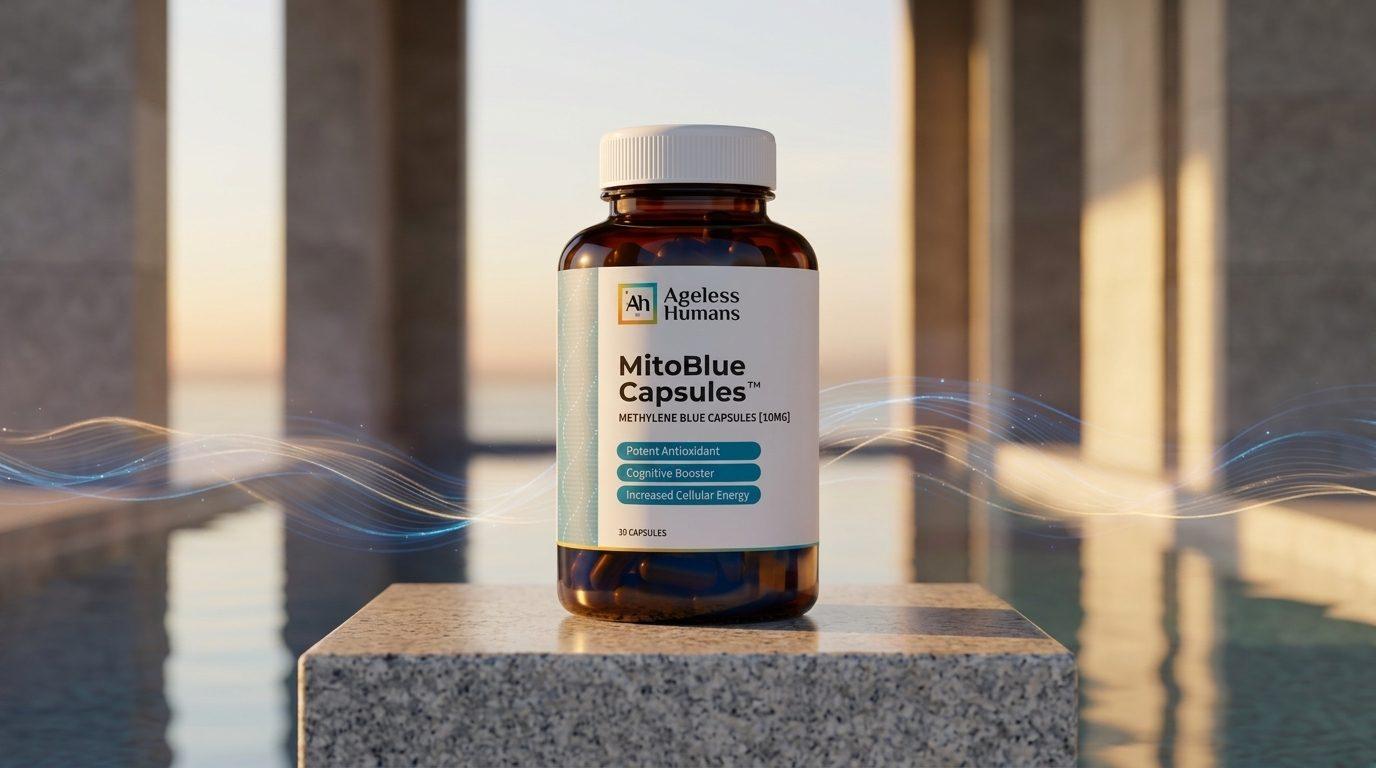
Choose capsules if you want a fast, mess-free, tasteless routine with a fixed amount every time. Choose drops if you want to fine-tune your serving within label directions and don't mind managing taste and blue stains. No published research shows that one form clearly outperforms the other for absorption, so the better choice is the one you'll actually take consistently.
The Quick Verdict: Which Form Fits Which Person
For most people, capsules are the easier daily habit, and drops are the better tool for people who want control. Both deliver the same compound, so the real differences come down to how each form fits your day.
Pick capsules if you:
- Take supplements on the go, at work, or while traveling
- Hate bitter or medicinal tastes
- Don't want blue teeth, a blue tongue, or blue spots on counters and clothes
- Prefer the same measured amount every day with no thinking
Pick drops if you:
- Like adjusting your serving within the range on the label
- Have trouble swallowing pills
- Already mix things into water, tea, or a morning drink
- Don't mind a little cleanup in exchange for flexibility
If you're new to methylene blue and want the background on why people use it at all, start with our guide to methylene blue benefits. Then come back here to choose your format.
Absorption: What the Research Does and Doesn't Show
There is no strong head-to-head evidence that drops absorb meaningfully better than capsules, or the other way around. That's the honest answer, and you'll find it's missing from a lot of marketing.
Research on methylene blue taken by mouth suggests it's absorbed well through the digestive tract. Studies of its effects on cellular energy and mitochondrial function have mostly used oral forms. That matters because a capsule and a swallowed drop solution both end up in the same place: your gut.
The common claim that drops absorb faster usually comes from holding them under the tongue, which is called sublingual use. The idea makes sense, since the tissue under the tongue has many small blood vessels. But in practice, most people dilute drops in water and swallow them, and little published research compares sublingual methylene blue against capsules in healthy adults. Treat "faster absorption" claims as a plausible idea, not a proven advantage.
What actually changes your results more than the form:
- Consistency. Taking it as directed day after day matters more than shaving minutes off absorption.
- Purity. A clean, pharmaceutical-grade product matters more than delivery format (more on this below).
- Following the label. Using the amount on the label beats improvising.
Convenience: How Each Form Fits a Real Routine
Capsules are the clear winner for convenience; drops take a minute more but blend into drink-based routines. Think about where and when you'll actually take it.
Capsules fit:
- Busy mornings. Swallow with water next to your other supplements and you're done.
- Travel and work. No bottle to leak in a bag and nothing to measure in an airport bathroom.
- Stacking. If you use a pill organizer, capsules drop right in.
Drops fit:
- Ritual drinkers. If you already make a morning glass of water, a cold brew, or a pre-workout drink, adding drops takes seconds.
- Home-based routines. Drops work best on a kitchen counter where you can measure calmly and rinse the dropper.
- People who dislike pills. No swallowing required.
One practical tip: whichever form you choose, tie it to a habit you already have, like your first glass of water or your morning coffee. Linking a new supplement to an existing cue is one of the simplest ways to stay consistent.
Staining: The Real-World Downside of Drops
Drops can stain your teeth, tongue, lips, sink, and clothing. Capsules avoid almost all of that. Methylene blue is a powerful dye, and it was used as a stain long before it was a supplement. A single stray drop on a white countertop or shirt is hard to miss.
If you go with drops, these habits cut the mess down a lot:
- Dilute it. Add drops to a full glass of water or another drink instead of putting them straight on your tongue.
- Use a straw. It keeps the liquid off your teeth and lips.
- Rinse after. Swish plain water around your mouth when you finish.
- Measure over the sink. Spills rinse away faster from a sink than a counter or rug.
- Wear dark colors until you have your technique down.
One thing both forms share: methylene blue can turn your urine blue or green. This is a well-known, expected effect of the dye passing through your body, and it happens with capsules and drops alike. Knowing this ahead of time saves you a surprised moment.
Taste, Precision, and Flexibility
Drops give you more control; capsules give you more predictability. Neither is better in general, so it comes down to your personality.
Taste. Methylene blue has a bitter, somewhat metallic taste. Capsules bypass it completely. With drops, diluting in a flavored drink helps, but most people can still taste it a little.
Precision. A capsule delivers the same measured amount every time. Drops depend on your technique: how you hold the dropper, whether you count carefully, and whether you get a partial drop. For people who value simple consistency, capsules remove a variable.
Flexibility. Drops let you take a smaller amount within the range on the label, which some people like when they're starting out and getting a feel for a new supplement. Always stay within the directions printed on the label. If you're unsure what's right for you, talk with your healthcare provider rather than experimenting on your own.
Quality Matters More Than Form
The purity of your methylene blue matters far more than whether it comes as a capsule or a drop. Methylene blue is made in many grades, including industrial and lab grades meant for dyeing and chemistry, not for people. Those grades aren't held to the same purity standards for human use.
When you compare any product, capsule or drop, look for:
- Pharmaceutical-grade methylene blue, clearly stated on the label
- Third-party lab testing with a Certificate of Analysis (COA) you can actually see
- Testing for contaminants such as heavy metals
- A known manufacturer with a registered facility, not an anonymous reseller
At Ageless Humans, every product is made in our FDA-registered facility in Carlsbad, California, and every lot is third-party lab tested with a COA. That applies to both our capsules and our drops, so you can pick based on routine without trading away quality. We also back every product with a 60-day money-back guarantee, which makes it easy to try the format you think fits and switch if it doesn't.
Safety Notes That Apply to Both Forms
Capsules and drops carry the same safety considerations, because the active compound is the same. Switching forms doesn't change who should be careful.
Talk with your healthcare provider before using methylene blue if you:
- Take any prescription medication, especially antidepressants or other drugs that affect serotonin. Methylene blue can interact with these, and the combination can be serious.
- Have a known G6PD enzyme deficiency or aren't sure whether you do.
- Are pregnant, nursing, or planning to become pregnant.
- Have kidney or liver concerns, or any ongoing health condition.
Also, stick to the label directions. Methylene blue is not a case where more is better, and research suggests its effects can change at higher amounts. Store either form out of reach of children; drops in particular look like a fun blue liquid to a curious kid.
Your Decision Checklist
Answer these four questions and your choice usually becomes obvious.
1. Do you take supplements away from home? Yes means capsules. 2. Does a bitter taste or a blue tongue bother you? Yes means capsules. 3. Do you want to adjust your serving within the label range? Yes means drops. 4. Do you struggle to swallow pills? Yes means drops.
If your answers split, go with capsules first. They have the lowest friction, and an easy routine is one you'll stick with. Our methylene blue capsules are built for exactly that grab-and-go habit. If you love a morning drink ritual and want more control, our methylene blue drops slot right into it.
The bottom line: absorption differences between the two are unproven, so don't overthink it. Choose the form that matches how you live, buy a clean, third-party tested product, follow the label, and stay consistent.
Frequently asked questions
Do methylene blue drops absorb better than capsules?+
There is no strong research showing that methylene blue drops absorb meaningfully better than capsules. Studies suggest methylene blue taken by mouth is absorbed well through the digestive tract, and most people swallow diluted drops anyway. Claims of faster absorption usually refer to holding drops under the tongue, which is plausible but not well studied in healthy adults.
Will methylene blue drops stain my teeth?+
Methylene blue drops can temporarily stain your teeth, tongue, and lips because methylene blue is a strong dye. Diluting the drops in a full glass of water, drinking through a straw, and rinsing your mouth afterward greatly reduce staining. Capsules avoid mouth staining entirely.
Why does methylene blue turn urine blue or green?+
Methylene blue is a dye, and some of it leaves the body through urine, which can turn it blue or green. This is a well-known and expected effect. It happens with both capsules and drops, so switching forms won't change it.
Are methylene blue capsules or drops better for beginners?+
Capsules are usually easier for beginners because they deliver the same measured amount every time with no taste or mess. Drops can suit beginners who want a smaller serving within the label range or who can't swallow pills. Either way, follow the label directions and check with a healthcare provider first if you take any medications.
Who should not take methylene blue?+
People who take antidepressants or other medications that affect serotonin should talk to a healthcare provider before using methylene blue, because interactions can be serious. The same applies to anyone with a G6PD enzyme deficiency, anyone who is pregnant or nursing, and anyone with an ongoing health condition. These cautions apply equally to capsules and drops.
How do I know if a methylene blue supplement is high quality?+
Look for pharmaceutical-grade methylene blue, third-party lab testing with a Certificate of Analysis you can review, and testing for contaminants like heavy metals. Industrial and lab grades exist and are not made for human use. A known manufacturer with a registered facility is a better sign than an anonymous seller.