
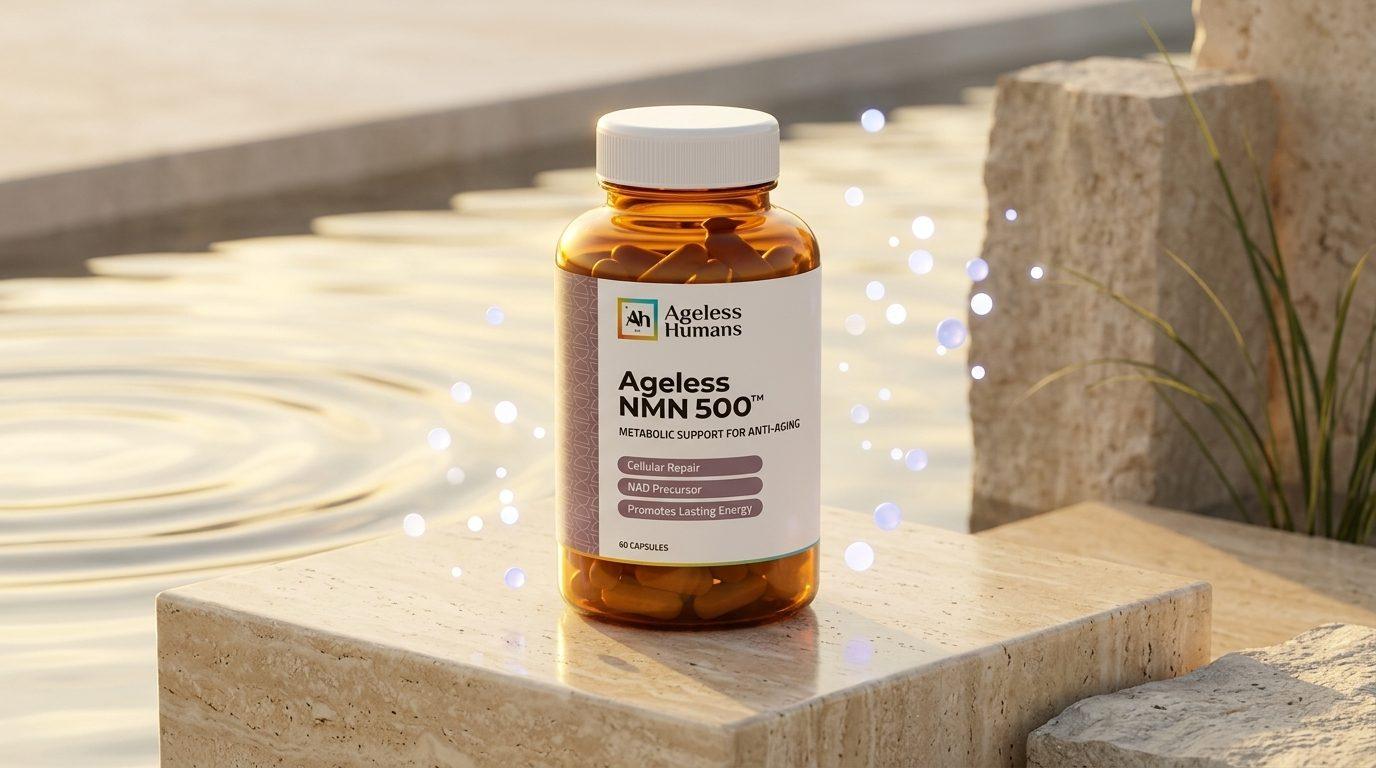
NMN (nicotinamide mononucleotide) is a direct precursor to NAD+, a coenzyme every cell uses to make energy and maintain itself. NMN supplementation is studied mainly for supporting NAD+ levels, cellular energy, and healthy aging. Human trials consistently show NMN can raise blood NAD+ levels. Evidence for broader benefits is promising but still early, and comes mostly from small, short studies.
What Is NMN, and Why Does It Matter?
NMN is a molecule your body uses to build NAD+ (nicotinamide adenine dinucleotide). NAD+ is one of the most important coenzymes in human biology. You make some NMN naturally, and small amounts occur in foods like edamame, broccoli, cabbage, cucumber, and avocado.
NMN matters because of what it becomes. NAD+ helps your mitochondria turn food into usable cellular energy. It also fuels enzymes involved in DNA maintenance and cellular stress responses.
The interest in NMN comes from one observation that shows up again and again in research: NAD+ levels tend to decline with age in several tissues. Researchers want to know whether supplying more raw material can help maintain NAD+ and the processes that depend on it. That question drives nearly every NMN study.
How the NAD+ Pathway Works (In Plain English)
NMN is one step away from NAD+. Your cells recycle NAD+ through a loop called the salvage pathway. In that loop, an enzyme called NAMPT converts nicotinamide into NMN. A second set of enzymes converts NMN into NAD+.
Here is why each piece matters:
- NAMPT activity is often described as the bottleneck step. Research suggests its activity may drop with age, which is one reason NAD+ can fall.
- NAD+ consumers constantly use up NAD+. These include sirtuins (enzymes linked to cellular maintenance), PARPs (involved in DNA repair), and CD38 (an enzyme that tends to increase with age).
- NMN skips the bottleneck. Supplementing NMN supplies the molecule NAMPT would normally make, so the body can move straight to building NAD+.
One honest nuance: scientists still debate exactly how NMN enters cells. Some research points to a dedicated transporter. Other work suggests NMN is partly converted to nicotinamide riboside (NR) first, then rebuilt inside the cell. Either route ends in NAD+, but the details are still being worked out. For a deeper breakdown of how the two molecules relate, see our guide on NAD+ vs NMN.
What NMN Is Studied For: The Main Benefit Areas
NMN is studied for five main areas: NAD+ levels, cellular energy, metabolic health, muscle and physical function, and healthy aging markers. The strength of evidence differs a lot between them.
- Supporting NAD+ levels. This is NMN's best-supported effect. Multiple human trials report that oral NMN raises NAD+ or related metabolites in the blood.
- Cellular energy. Because NAD+ is essential to mitochondrial energy production, NMN is studied for supporting cellular energy and how energetic people feel day to day. Results on subjective energy and fatigue are mixed.
- Metabolic health. Some small trials have looked at how muscle tissue responds to insulin and at other metabolic markers. A few reported favorable changes in specific groups. Others found little effect.
- Muscle and physical function. Studies in older adults have explored walking speed, grip strength, and endurance. Some reported modest improvements in certain measures. Others did not.
- Healthy aging markers. Researchers have measured things like vascular function, sleep quality, and biological age estimates. These are early, exploratory findings.
A large share of NMN's reputation comes from animal research. In aging mice, NMN has been studied across energy metabolism, physical activity, eye health, and blood vessel function, often with striking results. Mouse results do not automatically translate to humans. That gap is the most important thing to understand about NMN today.
What Human Trials Show — and What They Don't
The honest summary: NMN reliably raises NAD+ in humans, appears well tolerated in short-term studies, and shows promising but inconsistent effects on everything else.
What human research supports fairly consistently:
- Oral NMN increases blood NAD+ or its metabolites.
- Short-term use has generally been reported as well tolerated in the trials published so far.
- Effects on NAD+ appear to depend on the amount taken and the length of use.
Where the evidence is still thin:
- Small sample sizes. Many trials enroll a few dozen people or fewer.
- Short durations. Most run for weeks to a few months. Long-term human data is limited.
- Narrow populations. Studies often focus on specific groups, such as older adults or people with particular metabolic profiles. Results may not apply to everyone.
- Blood vs. tissue. Raising NAD+ in blood does not prove NAD+ rises in muscle, brain, or other tissues. Tissue-level data in humans is scarce.
- Outcome mismatch. A higher NAD+ number is a biomarker, not a felt benefit. Several trials raised NAD+ without clear changes in the functional outcomes they measured.
This does not mean NMN doesn't work. It means the science is young. Larger, longer trials are underway, and the picture will sharpen over the next several years. Anyone promising dramatic, guaranteed results from NMN is getting ahead of the evidence.
NMN vs NR vs NAD+: Which Precursor Makes Sense?
NMN, NR, and direct NAD+ all aim to support NAD+ levels, but they enter the pathway at different points.
- NMN sits one step before NAD+ and bypasses the NAMPT bottleneck.
- NR (nicotinamide riboside) sits one step before NMN. Cells convert NR to NMN, then to NAD+. NR has a comparable body of human research showing it raises NAD+.
- NAD+ itself is a larger molecule. Researchers question how well oral NAD+ is absorbed intact, and much of it may be broken down into smaller precursors in the gut.
No head-to-head human research has clearly shown that one precursor is better for long-term outcomes. Choice often comes down to research interest, format, and personal preference. For a full look at what NAD+ does and what supporting it may mean for you, read our overview of NAD+ supplement benefits.
How to Choose a Quality NMN Supplement
Quality matters more with NMN than with most supplements, because purity and identity are hard to verify by eye. NMN is a fine white powder, and a low-quality or mislabeled product looks the same as a good one.
Check for these four things:
1. Third-party testing with a Certificate of Analysis (COA). A COA confirms what is in the product and checks for contaminants. Every Ageless Humans lot is third-party lab tested, and the COA is available. 2. Clear sourcing and manufacturing. Know where and how it was made. All Ageless Humans products are made in our FDA-registered facility in Carlsbad, California. 3. Transparent labeling. The label should state the NMN amount per serving plainly, with no vague proprietary blends. 4. Proper storage. NMN can degrade with heat and moisture. Store it in a cool, dry place and keep containers sealed.
Always follow label directions. If you are pregnant, nursing, taking medications, or managing a health condition, talk with your healthcare provider before starting any new supplement.
Capsules, Powder, or Gummies: Picking a Format
The best NMN format is the one you will take consistently. Research on NAD+ precursors generally looks at regular daily use, not one-off doses, so routine matters.
- Capsules offer pre-measured, tasteless convenience. Our NMN 500 Capsules suit people who want a simple, no-measuring daily routine.
- Powder gives you flexibility to mix into water or a drink. Raw NMN Powder works well for people who prefer to skip capsules. Use the scoop and serving size on the label.
- Gummies are a chewable option for people who dislike pills. If your main goal is everyday energy support in an easy format, Get Up & Go Gummies are part of our energize line.
Whichever you choose, give it time. NAD+ research measures changes over weeks, not days. Track how you feel, keep your sleep, movement, and nutrition steady, and judge the results honestly. Every Ageless Humans product comes with a 60-day money-back guarantee, so you can evaluate it in your own routine.
The Bottom Line on NMN Benefits
NMN is a well-studied NAD+ precursor with a clear mechanism and early, encouraging human data. It reliably supports NAD+ levels. Its effects on energy, metabolism, physical function, and healthy aging are actively being studied, with mixed but promising results.
Think of NMN as one supportive tool, not a shortcut. The habits with the strongest evidence for healthy aging, including regular exercise, quality sleep, and a nutrient-dense diet, also influence NAD+ biology. NMN fits best on top of those foundations.
If you try it, choose a tested product, follow the label, stay consistent, and keep your expectations grounded in what the research actually shows.
Frequently asked questions
What are the main benefits of NMN?+
NMN's best-supported benefit is helping raise NAD+ levels, which human trials have shown consistently. NMN is also studied for supporting cellular energy, metabolic health, muscle function, and healthy aging. Those broader effects are promising but come from small, short human studies with mixed results.
How long does it take for NMN to work?+
Most human studies on NMN run for several weeks to a few months, and changes in NAD+ levels are typically measured over that time frame. Felt effects, if any, vary by person and are less consistent in research. Consistent daily use according to label directions is the approach most studies reflect.
Is NMN better than NR or NAD+ supplements?+
No human research has clearly shown that NMN is better than NR for long-term outcomes; both have been shown to raise NAD+ levels. NMN sits one step closer to NAD+ in the pathway, while oral NAD+ may be broken down before absorption. The best choice often depends on preference and format.
Is NMN safe to take?+
Published short-term human trials have generally reported NMN as well tolerated. Long-term human safety data is still limited. Follow label directions, and talk with a healthcare provider before use if you are pregnant, nursing, taking medications, or managing a health condition.
Can you get NMN from food?+
Yes, NMN occurs naturally in small amounts in foods such as edamame, broccoli, cabbage, cucumber, and avocado. The amounts in food are far lower than what is studied in supplement research. A varied, vegetable-rich diet still supports overall health and NAD+ biology.
Does NMN actually work in humans or just in mice?+
NMN does work in humans for raising blood NAD+ levels, which multiple trials have shown. Many of the more dramatic aging-related findings come from mouse studies and have not been fully confirmed in people. Larger, longer human trials are needed to show which benefits carry over.