
At low supplemental amounts, methylene blue's most common side effects are harmless but surprising: blue or green urine, a tinted tongue, and occasional mild stomach upset or headache. The serious risks are specific. Methylene blue can interact dangerously with serotonergic medications such as SSRIs, SNRIs, and MAOIs, and it is not appropriate for people with G6PD deficiency or for those who are pregnant or breastfeeding. If none of those apply to you and you use a clean, pharmaceutical-grade product at label directions, the safety picture is far more manageable than its reputation suggests.
The Short Answer: Is Methylene Blue Safe?
For most healthy adults who follow label directions and are not on serotonergic medications, methylene blue has a well-understood safety profile. It has been used in clinical settings for more than a century, so its side effects and interactions are better documented than those of most newer supplement ingredients.
That history works in both directions. Researchers know what methylene blue does at low amounts, and they also know where it causes problems. The risks are not vague. They come from a few clear sources:
- Drug interactions, especially with medications that raise serotonin
- G6PD deficiency, an inherited enzyme condition
- Pregnancy and breastfeeding
- Product quality, because non-pharmaceutical grades can carry contaminants
- Taking more than directed, because methylene blue behaves differently at higher amounts
The rest of this guide covers each one, starting with the issue that matters most.
The Serotonin Interaction: The Most Important Safety Issue
Do not take methylene blue if you take any medication that affects serotonin unless your prescribing clinician has approved it. This is the single most important safety rule, and it is not hypothetical.
Methylene blue inhibits monoamine oxidase A (MAO-A), the enzyme that breaks down serotonin. When it is combined with drugs that also raise serotonin, serotonin can build up to unsafe levels. The FDA has issued a safety communication about serious serotonergic reactions in people who received methylene blue while taking serotonergic psychiatric medications. Most of those reports involved intravenous use in hospitals, but the mechanism does not depend on how the compound enters the body. The cautious assumption is that oral use carries the same type of risk.
Medications to discuss with your doctor first include:
- SSRIs and SNRIs (common antidepressants)
- MAOIs
- Tricyclic antidepressants
- Bupropion and buspirone
- Certain pain medications, such as tramadol and some opioids
- Triptans and some other migraine medications
- Supplements that affect serotonin, such as St. John's wort, 5-HTP, and high-dose tryptophan
Signs of excess serotonin activity include agitation, confusion, a rapid heartbeat, high body temperature, heavy sweating, muscle twitching or rigidity, and tremor. These need emergency medical attention. Never stop a prescription medication on your own in order to try methylene blue. Stopping some of these drugs abruptly carries its own risks.
G6PD Deficiency: Why Some People Should Avoid It Entirely
People with G6PD deficiency should not take methylene blue. G6PD is an enzyme that protects red blood cells from oxidative stress. Methylene blue depends on that protective pathway to work as intended. Without enough G6PD, it can damage red blood cells instead of supporting normal cellular function.
G6PD deficiency is one of the most common inherited enzyme conditions in the world. It is more frequent in people with African, Mediterranean, Middle Eastern, and South or Southeast Asian ancestry. Many people with mild forms have never been diagnosed, which is why this risk catches people off guard.
If you are unsure of your status, a simple blood test can check it. Ask your doctor about testing before you start, especially if you have a family history of the condition or have ever reacted badly to fava beans, sulfa drugs, or certain antimalarial medications.
Blue Urine and Other Common, Harmless Side Effects
Blue or green urine is the side effect almost everyone notices, and it is expected and harmless. Methylene blue is a dye, and your kidneys clear part of it unchanged. Depending on your hydration and the amount you take, urine can look blue, teal, or green. It usually fades within a day or two after you stop.
Other common effects at supplemental amounts include:
- Blue tint on the tongue, teeth, or mouth, mostly from liquid or powder forms. Capsules largely avoid this.
- Blue-green tint in stool, which is also harmless.
- Mild stomach upset or nausea. Taking it with food often helps if the label allows.
- Headache or mild dizziness, typically mild and short-lived.
- Increased sensitivity to light. Methylene blue absorbs light, and some people report feeling more sun-sensitive. Use ordinary sun protection.
One practical quirk: methylene blue can make pulse oximeter readings appear falsely low. If you have a medical procedure scheduled or rely on home oxygen monitoring, tell your care team that you take it.
Any effect that is severe, persistent, or worsening is a reason to stop and talk to a clinician, not to push through.
Who Should Avoid Methylene Blue
Skip methylene blue, or get explicit medical clearance first, if any of the following apply to you:
- You take serotonergic medications or supplements (see the list above)
- You have G6PD deficiency or don't know your status and have risk factors
- You are pregnant, trying to conceive, or breastfeeding. It is not considered appropriate during pregnancy or lactation.
- You have significant kidney or liver concerns, since these organs handle clearance
- You are scheduled for surgery or anesthesia. Some anesthesia and pain protocols involve serotonergic drugs, and the oximeter issue matters there.
- You are under 18. Supplemental methylene blue is intended for adults.
- You have had a previous reaction to methylene blue or similar dyes
If you take several prescription medications, the safest approach is to bring the product's label to your pharmacist. Pharmacists are well placed to spot interactions, and the check takes a few minutes.
Why More Is Not Better: Amount and Label Directions
Methylene blue does not follow a "more is better" pattern, so take only what the label directs. Research describes it as having a hormetic, or dose-dependent, profile. Low amounts are studied for supporting mitochondrial electron transport and cellular energy. Higher amounts can push the chemistry the other way, which is part of why clinical uses at higher doses happen under medical supervision.
In practice:
- Follow the label exactly. Don't stack multiple methylene blue products or add extra servings.
- Don't chase effects. If you're not noticing much, more product is not the answer. Some benefits people look for build over time. See how long methylene blue takes to work for realistic expectations.
- Introduce it on its own. Starting it alongside several other new supplements makes it hard to tell what is causing any effect you notice.
If you want to understand what low-dose methylene blue is studied for before deciding whether it's worth trying, our guide to methylene blue benefits walks through the research honestly, including where the evidence is still early.
Product Quality Is a Safety Issue
The grade of methylene blue you take matters as much as the amount. Methylene blue is sold in industrial, laboratory, aquarium, and pharmaceutical grades. Non-pharmaceutical grades are not made for human consumption and may contain heavy metals or other contaminants that you cannot see or taste.
Before buying any methylene blue product, check for:
- Pharmaceutical-grade (USP) methylene blue clearly stated on the label
- Third-party testing with a Certificate of Analysis (COA) for each lot, covering identity, purity, and contaminants such as heavy metals
- A registered manufacturing facility with a named location, not an anonymous reseller
- Clear label directions and warnings, including the serotonergic medication caution
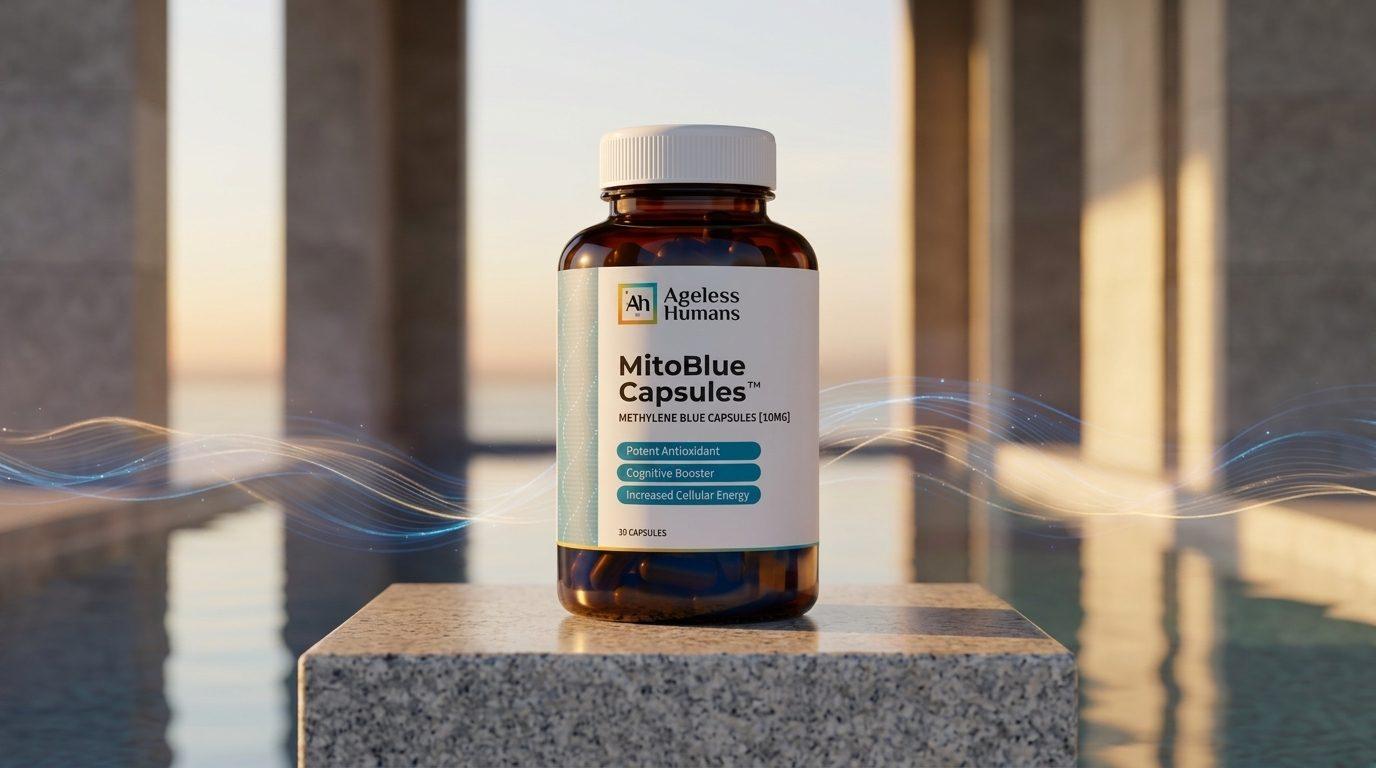
If a seller can't show you a COA, treat that as a dealbreaker. This is also why we manufacture our Methylene Blue Capsules in our own FDA-registered facility in Carlsbad, California, and third-party test every lot.
What the Research Does and Doesn't Show
The short-term safety of methylene blue at low amounts is reasonably well characterized. Long-term data on daily supplemental use in healthy people is limited. Most published safety information comes from clinical and medical settings, where people are monitored, doses are controlled, and use is often brief.
What we can say with confidence:
- The serotonergic interaction is real, documented, and potentially serious.
- G6PD deficiency meaningfully raises risk.
- Discolored urine and mild GI effects are common and benign.
What remains less certain:
- How years of daily low-dose use affects healthy adults
- Precise personal thresholds, which vary from person to person
That gap isn't a reason for alarm. It is a reason to use methylene blue deliberately: screen yourself against the avoid list, stay at label directions, choose a tested product, and check in with a clinician if you have any medical conditions or take prescriptions.
Frequently asked questions
What are the most common side effects of methylene blue?+
The most common side effect is blue or green urine, which is harmless and expected because methylene blue is a dye cleared partly through the kidneys. Some people also notice a tinted tongue or stool, mild stomach upset, headache, or light dizziness. These effects are usually mild at label-directed amounts. Anything severe or persistent is a reason to stop and consult a clinician.
Can I take methylene blue with antidepressants?+
Not without approval from your prescribing clinician. Methylene blue inhibits MAO-A, the enzyme that breaks down serotonin, so combining it with SSRIs, SNRIs, MAOIs, or other serotonergic drugs can cause a dangerous buildup of serotonin. The FDA has issued a safety communication about this interaction. Never stop a prescribed antidepressant on your own in order to take methylene blue.
Why does methylene blue turn your urine blue?+
Methylene blue is an intensely colored dye, and your kidneys excrete part of it unchanged. Depending on the amount and your hydration, urine can appear blue, teal, or green. The color is harmless and typically fades within a day or two after you stop taking it.
Who should not take methylene blue?+
Methylene blue isn't appropriate for people with G6PD deficiency, people taking serotonergic medications or supplements, or people who are pregnant or breastfeeding. Anyone with significant kidney or liver concerns, anyone with upcoming surgery, and anyone under 18 should also avoid it unless a clinician has cleared it. If you take several prescriptions, ask a pharmacist to check for interactions first.
Is methylene blue safe to take every day?+
Many people use low-dose methylene blue daily following label directions, and its short-term safety at low amounts is fairly well understood. Long-term research on daily use in healthy adults is limited, though. Stick to the label, choose a pharmaceutical-grade product with a third-party COA, and talk with a clinician if you have health conditions or take medications.
Does methylene blue affect pulse oximeter readings?+
Yes. Methylene blue can cause pulse oximeters to show falsely low oxygen readings because the dye affects how the device reads light through your skin. If you have a medical procedure scheduled or use home oxygen monitoring, tell your care team that you take methylene blue.