
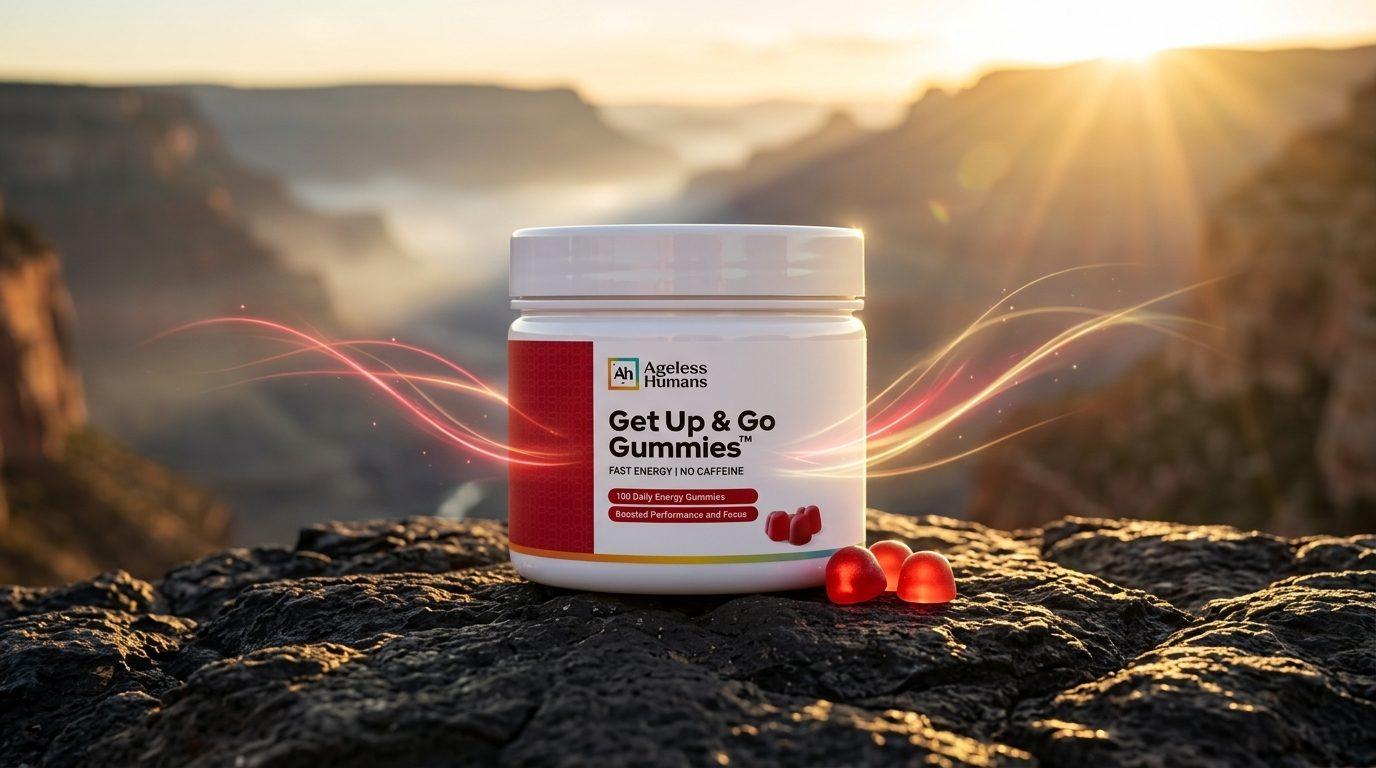
NMN gummies can work as a delivery format. No published human research shows that a gummy absorbs better or worse than a capsule or powder. What matters is whether the NMN survives manufacturing and storage, how much is in each serving, and whether a few grams of sugar per day fits your goals. Gummies suit people who skip pills. They suit people who want the highest NMN amount per serving less well.
The short answer: the format isn't the problem, the execution is
A gummy is just a carrier. Whether an NMN gummy works depends on how it was made, how it's stored, and how much NMN it contains. The format doesn't change what NMN is. It changes the conditions NMN has to survive before it reaches you.
NMN (nicotinamide mononucleotide) is a precursor your body can use to make NAD+, a coenzyme involved in cellular energy metabolism. Research suggests NAD+ levels decline with age, which is why NMN has drawn so much attention. For a deeper look at what the research does and doesn't show, see our guide to NMN benefits.
Most human NMN studies have used capsules or powders. No head-to-head studies compare gummies with capsules for NMN. Anyone who claims gummies are "more bioavailable" or "less effective" is going past the evidence. Judge a gummy on what you can verify:
- the stated amount per serving
- third-party testing
- the ingredient list
- storage conditions
Why stability is the real question for NMN gummies
NMN is sensitive to heat and moisture. Gummy production involves both. That's the main technical challenge of the format, and it's where quality differs most between brands.
Most gummies are made by heating a base of pectin or gelatin with sweeteners. The mix is poured into molds, then cured. A gummy also holds more water than a dry capsule. Both factors can push a heat- and moisture-sensitive compound to break down over time. A well-made product accounts for this. Manufacturers may:
- add sensitive actives at a cooler stage
- control water content during curing
- use protective packaging
You can't see any of this from the outside, so look for proof. A Certificate of Analysis (COA) from a third-party lab confirms that the amount on the label matches what's in the product. Two details make a COA more useful:
- Lot-specific: it tests the batch you're actually holding.
- Assay-based: it measures the active itself, not just contaminants.
Your own habits matter too. Keep gummies in a cool, dry place with the lid closed. Don't leave them in a hot car or a steamy bathroom. Heat that makes a gummy soft or sticky is the same heat that challenges the ingredients inside it.
The sugar trade-off, honestly
Most gummies contain some added sugar, usually a few grams per serving. For most people that's a small trade-off, but it isn't zero. Sugar does real work in a gummy. It provides texture, helps with shelf life, and covers the bitter or sour taste many actives have.
Here's how to think about it:
- In context, it's modest. A few grams a day is less than many flavored coffees, yogurts, or granola bars. If gummies are what keep you consistent, that may be a worthwhile exchange.
- It adds up if you stack. Taking an NMN gummy, a multivitamin gummy, and a sleep gummy every day can add meaningful sugar. Total your gummies before you assume each one is negligible.
- Sugar-free isn't automatically better. Many low-sugar gummies use sugar alcohols such as maltitol, sorbitol, or erythritol. Some people find these cause bloating or digestive upset, especially in larger amounts.
- Timing and pairing. Taking a gummy with a meal, as many labels direct, folds the sugar into food you're already eating instead of making it a standalone treat.
If you track sugar closely, follow a strict low-carb eating pattern, or have been advised to limit sugar, a capsule or powder is probably the cleaner choice. Check with your healthcare provider if you're unsure.
Dose density: why gummies often hold less per serving
Gummies usually deliver less active ingredient per piece than capsules, because most of the gummy is the gummy itself. Pectin or gelatin, sweeteners, flavor, and color take up room that a capsule would fill with the active ingredient.
That has a few practical effects:
- Serving size may be more than one gummy. Read the Supplement Facts panel for the amount per serving, not per piece.
- Bigger amounts mean more gummies and more sugar. If a format needs several pieces to reach its labeled serving, the sugar math changes too.
- Avoid proprietary blends. If the label lumps NMN into a "blend" without listing its own amount, you can't tell how much you're getting. A transparent label lists NMN in milligrams.
Take gummies as the label directs. Don't eat extra because they taste good. More isn't automatically better, and the label serving is what the product was formulated and tested for.
Who NMN gummies actually fit
Gummies fit people for whom consistency is the main obstacle. A supplement only supports you if you actually take it, and for many people a chewable makes that much easier.
Gummies tend to be a good match if you:
- Have pill fatigue. You already take several capsules and dread adding another.
- Have trouble swallowing pills. This is more common than people admit.
- Like routines tied to a ritual. A gummy with breakfast is easy to remember.
- Travel often. There's no shaker bottle or powder to measure.
- Want a lower-friction start. If you're curious about NAD+ support but unsure about committing to a complicated routine, a gummy lowers the barrier.
Gummies are usually a weaker fit if you:
- want the most NMN per serving
- strictly limit sugar or sugar alcohols
- live somewhere hot and humid without good storage
- already take several other gummies daily
Gummies vs. capsules vs. powder at a glance
Each format trades convenience against concentration and control. None is universally best. The right one is the one you'll take consistently and that matches your priorities.
- Gummies: easiest and most enjoyable to take. They usually contain added sugar or sugar alcohols and less active per piece, and they're more sensitive to heat and humidity in storage.
- Capsules: a dry, stable environment for the active, more ingredient per serving, and little to no sugar. The downside is one more pill to swallow.
- Powder: a flexible amount and no fillers needed. It's less convenient, the taste can be an issue, and it needs a dry environment once opened.
You may see claims about sublingual absorption or special delivery systems. Treat them cautiously unless the brand can point to evidence. Format matters less than verified content, honest labeling, and daily consistency.
How to evaluate any NMN gummy before you buy
Buy the gummy that proves what's in it, not the one with the best marketing. Use this checklist:
1. Third-party COA for every lot. It should confirm identity and potency, plus screening for contaminants such as heavy metals and microbes. 2. NMN listed in milligrams. No proprietary blends hiding the amount. 3. Sugar and sweetener disclosure. Know exactly what you're trading for convenience. 4. Known manufacturing. A brand that tells you where and how its products are made, ideally in an FDA-registered facility, is easier to trust. 5. Sensible packaging. A sealed, moisture-resistant container, plus storage directions on the label. 6. A real guarantee. A clear money-back policy shows the brand stands behind the product.
At Ageless Humans, every product is made in our FDA-registered facility in Carlsbad, California. Every lot is third-party lab tested with a COA, and everything is backed by a 60-day money-back guarantee. Hold any brand, including ours, to that standard.
Where gummies fit in an energy routine
NAD+ support is one part of daily energy, not a replacement for the basics. Sleep, movement, protein, hydration, and daylight do most of the work. Supplements are meant to support a routine that's already reasonably solid.
If afternoon slumps are your main complaint, it helps to look at your whole approach. That includes how much you lean on caffeine. Our guide to caffeine-free energy supplements covers options that support energy without the jitters or the late-day crash.
A gummy can be a simple anchor for that routine: take it at breakfast, next to your water glass. Small, repeatable habits beat complicated protocols you abandon in two weeks.
Frequently asked questions
Do NMN gummies work as well as NMN capsules?+
No published human studies directly compare NMN gummies with capsules, so neither format has been shown to be superior. Effectiveness mostly depends on whether the gummy actually contains the labeled amount of NMN after manufacturing and storage. Look for a lot-specific third-party Certificate of Analysis that confirms potency.
Does heat destroy NMN in gummies?+
NMN is sensitive to heat and moisture, and gummy manufacturing involves both, so careful production and storage matter. Well-made products are formulated to protect the active ingredient, and third-party testing can confirm what's in the finished product. At home, store gummies in a cool, dry place and keep them out of hot cars.
How much sugar is in NMN gummies?+
Most gummies contain a few grams of added sugar per serving, but amounts vary by brand, so check the Supplement Facts panel. Sugar-free versions often use sugar alcohols, which some people find cause digestive discomfort. If you take several different gummies daily, add up the total sugar across all of them.
Who should choose NMN gummies over capsules?+
NMN gummies suit people who struggle to swallow pills, have pill fatigue, or find they take supplements more consistently when the format is enjoyable. People who want the highest NMN amount per serving or who strictly limit sugar are usually better served by capsules or powder.
How many NMN gummies should I take?+
Take NMN gummies exactly as the product label directs. The serving size may be more than one gummy, so read the amount per serving on the Supplement Facts panel. Don't exceed the labeled serving, and talk to your healthcare provider if you have questions about whether NMN is right for you.
When is the best time to take NMN gummies?+
Follow the label directions. Many people take energy-focused supplements in the morning, often with breakfast, as part of their daily routine. Pairing a gummy with an existing habit, like your morning meal, makes it easier to stay consistent.