
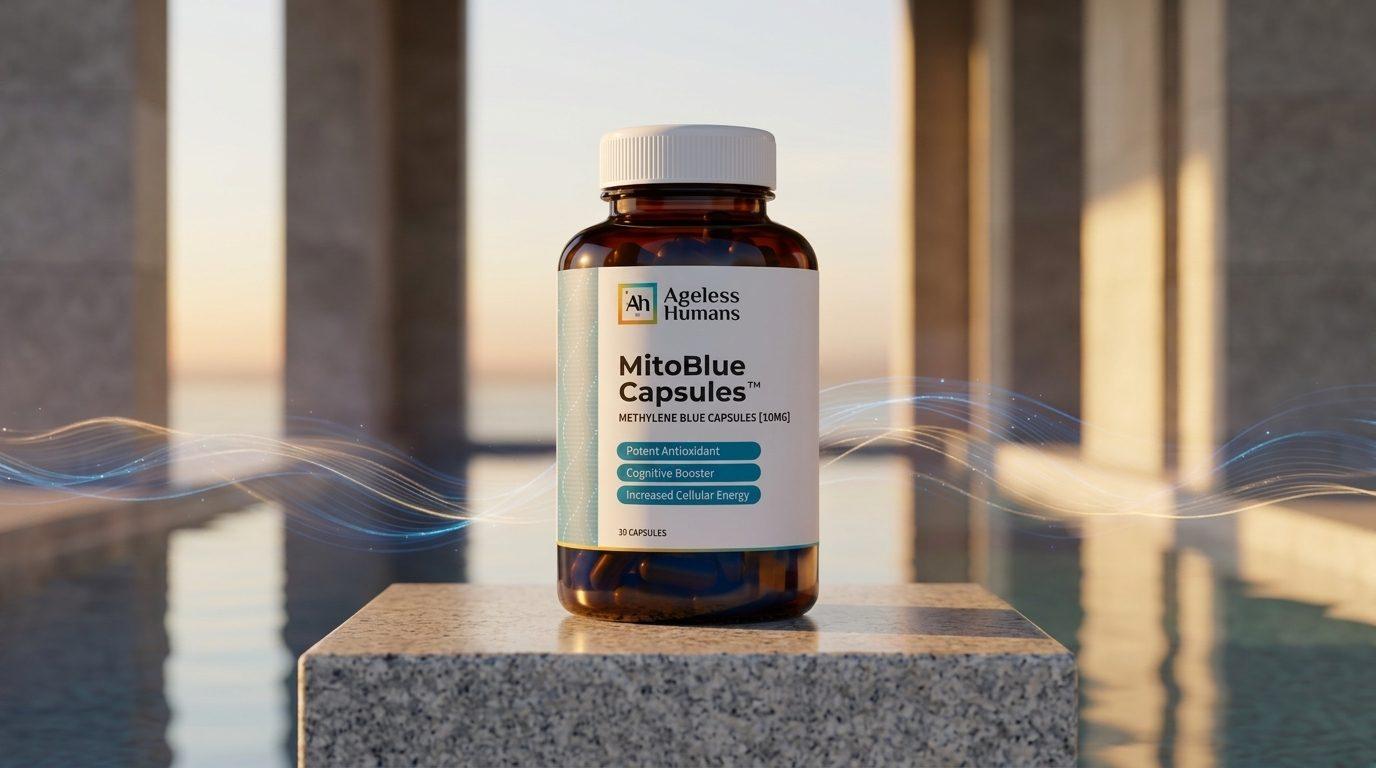
Methylene blue and NAD+ both support mitochondrial energy, but they do different jobs. Methylene blue acts as an electron shuttle that helps keep the energy assembly line moving, while NAD+ is the coenzyme your cells use for energy metabolism and cellular maintenance. Because they act at different points in the same system, you can take both, and many people combine them.
The Short Answer: Different Jobs in the Same Power Plant
Methylene blue supports how efficiently electrons move through your mitochondria. NAD+ supports how much energy currency your cells have to work with. That is the core difference.
Think of a mitochondrion as a power plant. Food is broken down, and its energy is captured as electrons. Those electrons travel down a series of protein complexes called the electron transport chain, which produces ATP, the molecule cells use for energy. NAD+ picks up electrons from food and becomes NADH, which delivers them to the start of the chain. Methylene blue can accept electrons and pass them further down the chain, acting as a backup courier when the usual route slows down.
So the choice is not either/or. One supports the supply of electron carriers. The other supports the flow. If you want the deeper background on each, see our guide to methylene blue benefits and our breakdown of NAD+ vs NMN.
How Methylene Blue Works: An Electron Shuttle
Methylene blue is a redox compound. It can accept electrons and give them away again, over and over. This cycling is what makes it unusual among supplements.
In the mitochondria, methylene blue can take electrons from NADH and hand them to cytochrome c, a carrier further down the electron transport chain. In lab research, this lets electrons partly bypass the early complexes of the chain. Researchers have studied it for this reason: when the early steps are a bottleneck, an alternate route may help maintain ATP output and limit the electron leakage that produces oxidative byproducts.
A few points to understand:
- Dose matters a lot. Research describes a hormetic, bell-shaped response. Low amounts behave like an electron carrier. Larger amounts can act differently, so follow the label.
- It has a long history. Methylene blue is one of the oldest synthetic compounds used in medicine, which is why its safety profile and interactions are well documented.
- It is studied for brain energy. Neurons are energy-hungry, and much of the current interest in methylene blue centers on cognitive energy and focus. Human research is still early and mostly small.
How NAD+ Works: The Coenzyme Your Cells Spend
NAD+ (nicotinamide adenine dinucleotide) is a coenzyme found in every living cell, and it is required for hundreds of reactions. It does two big jobs.
First, it is an electron carrier in energy metabolism. NAD+ collects electrons as your body breaks down glucose and fats, becomes NADH, then drops those electrons off at the electron transport chain. Without enough NAD+, this process slows.
Second, NAD+ is consumed by enzymes that handle cellular maintenance, including sirtuins (involved in gene regulation and metabolic signaling) and PARPs (involved in DNA repair processes). These enzymes use NAD+ up, so your cells must keep making more.
Research suggests NAD+ levels tend to decline with age. That observation is the main reason NAD+ support became a pillar of longevity routines. Because NAD+ itself is a large molecule, many people use precursors like NMN or NR, which cells convert into NAD+. Our NAD+ vs NMN guide explains how those forms compare.
Methylene Blue vs NAD+: Side-by-Side
The clearest way to compare them is by role, speed, and what they ask of you.
- Role: Methylene blue is an electron shuttle that supports electron flow. NAD+ is a coenzyme that supports energy metabolism and cellular maintenance enzymes.
- Where it acts: Methylene blue works mainly inside the electron transport chain. NAD+ works across the whole cell, including the mitochondria, nucleus, and cytoplasm.
- Time frame: People often describe methylene blue effects as noticeable sooner, such as mental clarity. NAD+ support is usually framed as a longer-term, foundational habit.
- What it is: Methylene blue is a synthetic compound not made by your body. NAD+ is made by your body and naturally declines over time.
- Research base: Methylene blue has deep pharmacology history but limited supplement-specific human trials. NAD+ precursors have a growing body of human studies, mostly showing they raise NAD+ levels, with broader outcomes still being studied.
- Key cautions: Methylene blue has important drug interactions and turns urine blue-green. NAD+ precursors are generally well tolerated in studies to date.
Neither is better in the abstract. They answer different questions.
When Each One Fits
Choose based on what you want to support and how you like to build a routine.
Methylene blue may fit if:
- Your main goal is supporting mental energy, focus, and cognitive performance.
- You want a targeted tool rather than another daily foundation supplement.
- You are not taking serotonergic medications (more on this below).
NAD+ support may fit if:
- Your goal is long-term cellular health and healthy aging.
- You want to support the age-related decline in NAD+ that research describes.
- You prefer a foundational daily habit with a well-tolerated profile.
Both may fit if: you want to support the energy system from two angles, supply and flow. This is common for people building a complete mitochondrial routine alongside sleep, exercise, and good nutrition, which remain the biggest levers for cellular energy.
Can You Take Methylene Blue and NAD+ Together?
Yes. Methylene blue and NAD+ support different steps of the same process, so they are considered complementary rather than redundant. There is no known direct conflict between them.
Here is why the pairing makes sense. NAD+ becomes NADH when it collects electrons. To keep metabolism running, NADH has to hand those electrons off and turn back into NAD+. Methylene blue can accept electrons from NADH, which in lab studies helps regenerate NAD+ and shift the NAD+/NADH ratio in a favorable direction. In plain terms: NAD+ supplies the carriers, and methylene blue helps keep them cycling.
Practical guidance for stacking:
- Follow each product's label directions. Do not exceed them, and do not combine them with other methylene blue or NAD+ products.
- Start one at a time. Adding them a week or two apart helps you notice how each one feels for you.
- Check your medications first. The stack is only as safe as its riskiest part, and for most people that is the methylene blue interaction profile.
- Pair with the basics. Neither replaces sleep, movement, and protein-rich meals. Supplements support a system; they do not run it alone.
Safety: What to Know Before You Start
Methylene blue requires more caution than NAD+, mainly because of drug interactions. Here is what matters.
Methylene blue:
- Serotonergic medications: Methylene blue inhibits MAO-A, an enzyme that breaks down serotonin. Combined with SSRIs, SNRIs, MAOIs, certain pain medications, or other serotonergic drugs, it carries a risk of serotonin syndrome. Do not combine without your doctor's approval.
- G6PD deficiency: People with this genetic enzyme deficiency should avoid methylene blue.
- Pregnancy and nursing: Not recommended.
- Harmless but surprising: Urine may turn blue or green. This is expected.
NAD+ and precursors:
- Generally well tolerated in human studies to date. Some people report mild digestive upset or flushing, depending on the form.
- Talk to your healthcare provider if you are pregnant, nursing, managing a medical condition, or taking prescription medication.
When in doubt, bring both labels to your doctor or pharmacist. It takes five minutes and removes the guesswork.
What the Research Does and Does Not Show
Both compounds have strong mechanistic science and promising early human data, but neither has large, long-term human trials proving broad longevity outcomes. Being honest about that is how you make a smart decision.
What research supports: methylene blue's ability to cycle electrons and interact with the electron transport chain is well established in lab settings. NAD+ precursors reliably raise NAD+ levels in human studies. The age-related decline in NAD+ is widely reported.
What is still open: how much these mechanisms translate into noticeable, lasting benefits for healthy people over years. Early human research is encouraging, but sample sizes are small and outcomes vary.
That makes quality and transparency important. Ageless Humans products are made in our FDA-registered facility in Carlsbad, California, and every lot is third-party lab tested with a COA, so you know what is in the bottle. Every product is also backed by a 60-day money-back guarantee.
Frequently asked questions
What is the main difference between methylene blue and NAD+?+
Methylene blue is an electron shuttle that supports the flow of electrons through the mitochondrial electron transport chain. NAD+ is a coenzyme that carries electrons from food into that chain and also fuels cellular maintenance enzymes like sirtuins. One supports the flow of energy production, while the other supports the supply of carriers it depends on.
Can you take methylene blue and NAD+ together?+
Yes, methylene blue and NAD+ are generally considered complementary because they act at different steps of mitochondrial energy production. Lab research suggests methylene blue can accept electrons from NADH, which helps regenerate NAD+. Follow each label, introduce them one at a time, and check with your doctor first if you take serotonergic medications.
Is methylene blue or NAD+ better for energy?+
Neither is universally better because they support energy in different ways. Methylene blue is often chosen for mental energy and focus, while NAD+ support is usually a long-term foundation for cellular energy and healthy aging. Many people use both to support the mitochondrial system from two angles.
Who should not take methylene blue?+
People taking SSRIs, SNRIs, MAOIs, or other serotonergic medications should not take methylene blue without medical approval because of the risk of serotonin syndrome. People with G6PD deficiency and those who are pregnant or nursing should avoid it. Always review your medications with a healthcare provider before starting.
Does methylene blue increase NAD+ levels?+
Lab studies suggest methylene blue can shift the NAD+/NADH ratio toward NAD+ by accepting electrons from NADH. That is not the same as raising total NAD+ the way precursors like NMN are studied to do. This is why the two are often described as complementary rather than interchangeable.
Why does methylene blue turn urine blue?+
Methylene blue is a dye, and your body excretes part of it through the kidneys, which can tint urine blue or green. This is expected and harmless. The color typically fades after you stop taking it.