
ARA 290 (also called cibinetide) is a small, lab-made peptide based on a fragment of erythropoietin (EPO). It is designed to activate tissue-protective signaling without stimulating red blood cell production. Researchers have studied it mainly for nerve health, inflammatory signaling, and metabolic markers in small, early-stage human trials. It is promising but unproven, and it is not an approved drug or a dietary supplement.
What Is ARA 290?
ARA 290 is an 11-amino-acid synthetic peptide modeled on one part of erythropoietin (EPO), the hormone best known for driving red blood cell production. Its research name is cibinetide. It was developed by Araim Pharmaceuticals to separate EPO's tissue-protective effects from its blood-building effects.
The idea came from an observation about EPO itself. Besides raising red blood cell counts, EPO also appeared to help protect stressed tissue in lab and animal research. But using full EPO for that purpose carries a known problem: it thickens the blood. Scientists set out to build a molecule that kept the protective signal and dropped the blood-building one.
ARA 290 is that attempt. It mimics a specific surface of the EPO molecule, called helix B, which interacts with a different receptor than the one EPO uses to make red blood cells. For a broader primer on how short amino acid chains act as signaling molecules, see our guide on what peptides are. For a quick reference card, visit our ARA 290 peptide overview.
How ARA 290 Works: The Innate Repair Receptor
ARA 290 is designed to bind the "innate repair receptor" (IRR), a receptor complex that tends to appear on tissue under stress or injury. It is not designed to bind the classic EPO receptor that drives red blood cell production. That selectivity is the whole point of the molecule.
Here is the mechanism in plain terms:
- The receptor: The IRR is described as a pairing of the EPO receptor with another protein called the beta common receptor (CD131). This pairing is thought to be scarce in healthy tissue and more common where tissue is damaged or inflamed.
- The signal: When activated, the IRR is thought to shift local signaling away from inflammation and cell death and toward tissue preservation and repair.
- The selectivity: Because ARA 290 is built to favor the IRR, research has looked at it as a way to get the protective signal without raising hematocrit (the share of blood made of red cells).
One interesting detail: ARA 290 clears from the bloodstream quickly. Researchers have proposed that a short exposure may start a chain of downstream signaling that outlasts the peptide itself. That hypothesis is still being studied and should not be treated as settled.
What Research Has Studied ARA 290 For
Most ARA 290 research focuses on nerve function, inflammatory signaling, and tissue protection, with a smaller body of work on metabolic markers. The research falls into two tiers: a larger set of cell and animal studies, and a smaller set of early human trials.
Human research context (small, early-stage trials):
- Small nerve fibers: The most visible human work has studied ARA 290 in people with small fiber neuropathy linked to sarcoidosis and to type 2 diabetes. Some trials reported changes in symptom questionnaires and in corneal nerve fiber measurements, an imaging method used to track small nerve fibers.
- Metabolic markers: Some trials in people with type 2 diabetes also tracked exploratory blood sugar and lipid markers alongside nerve outcomes.
Preclinical context (cells and animals):
- Tissue protection in models of reduced blood flow and injury
- Inflammatory signaling and immune cell behavior
- Wound healing and tissue repair models
- Nerve protection in models of nerve stress
These research areas explain why the peptide gets attention in longevity and recovery circles. They do not mean ARA 290 has been shown to deliver any specific benefit to healthy people.
What the Evidence Does and Doesn't Show
The honest summary: ARA 290 has a coherent mechanism and encouraging early signals, but the human evidence is small, short, and not definitive. Treat any claim of "proven benefits" as overstated.
What the research supports so far:
- A plausible, well-described mechanism (IRR selectivity) that separates it from EPO
- Early human trials in specific clinical populations that reported encouraging changes on some measures
- A favorable tolerability profile in those short trials, according to the researchers who ran them
What the research does not show:
- Large, long-term human trials confirming meaningful outcomes
- Any studied benefit in healthy adults, athletes, or people using it for general anti-aging
- Established long-term safety data
- Regulatory approval as a drug in the U.S.
Why the gap matters: Many compounds look strong in animal models and early trials, then fail to hold up in larger studies. Results seen in people with a specific condition also may not carry over to healthy people. Most online claims about ARA 290 for "recovery," "longevity," or "energy" stretch this early research well past what it can support.
ARA 290 vs. EPO vs. Other Popular Peptides
ARA 290 differs from EPO in one key way: it is designed to deliver tissue-protective signaling without stimulating red blood cell production. It also works through a different pathway than other peptides people often compare it to.
| Compound | Origin | Main research focus | Blood-building effect |
|---|---|---|---|
| EPO | Natural hormone | Red blood cell production | Yes, by design |
| ARA 290 | Synthetic EPO fragment | Tissue protection, nerve signaling | Designed to avoid it |
| BPC-157 | Derived from a gastric protein sequence | Tissue and gut lining research | No |
| TB-500 | Based on thymosin beta-4 | Tissue repair and cell migration research | No |
The comparison matters because people often lump "repair peptides" together. They are not interchangeable. Each one has a different origin, receptor target, and evidence base. A finding for one tells you nothing reliable about another.
ARA 290 is also different from bioregulators, the very short peptides studied for tissue-specific gene signaling. If you are sorting through the categories, our explainer on what bioregulators are lays out how they differ from signaling peptides like ARA 290.
Safety, Legal Status, and the Research Peptide Market
ARA 290 is an investigational compound, not an FDA-approved drug and not a dietary supplement. Any ARA 290 sold online is typically labeled "for research use only," which means it is not intended for human use and has not been reviewed for it.
That creates real risks for anyone buying it:
- Identity and purity: Gray-market peptides may not contain what the label says, at the stated amount, or free of contaminants.
- No manufacturing oversight: "Research use" products are not made under supplement or drug manufacturing standards.
- Unknown long-term profile: Published trials were short and involved specific populations.
- Injection-based use: Research has used injected forms, which adds sterility concerns when sourced outside clinical settings.
- Sport rules: Because ARA 290 is derived from EPO, competitive athletes should check current anti-doping rules before going near it.
If ARA 290 interests you, the responsible path is to follow the clinical research and talk with a qualified healthcare provider. Do not self-experiment with unregulated material.
How to Support Recovery and Resilience With What's Actually Available
Ageless Humans does not sell ARA 290, and no supplement is a substitute for it. If what drew you here is a broader interest in recovery, tissue support, and healthy aging, there are legal, transparent options built for those goals.
The foundations come first, because they drive the same systems peptide researchers care about:
- Sleep: Most tissue maintenance and repair signaling happens during deep sleep.
- Protein intake: Amino acids are the raw material for every peptide and protein your body makes.
- Movement and load management: Training stress followed by real recovery supports healthy tissue adaptation.
- Metabolic basics: Steady blood sugar, daily activity, and a whole-food diet support nerve and vascular health.
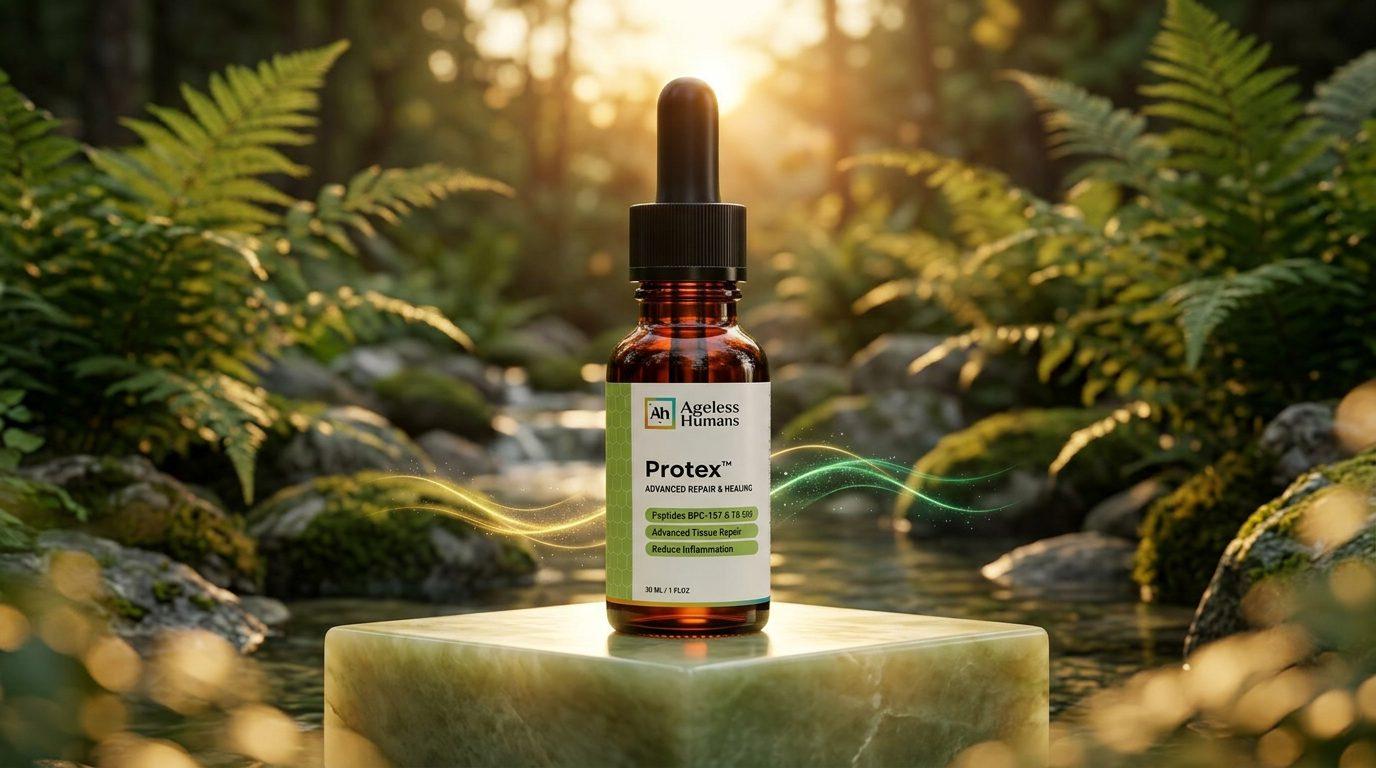
For people who want targeted support on top of those habits, oral peptide formulas are one option. **ProTex BPC-157 & TB-500 Oral** is formulated to support the body's natural recovery and tissue maintenance processes. It is a different compound category from ARA 290, with its own separate research context. It is not a replacement or an equivalent.
Every Ageless Humans product is made in our FDA-registered facility in Carlsbad, California. Each lot is third-party lab tested, with a Certificate of Analysis (COA), and backed by a 60-day money-back guarantee. That transparency is exactly what the research-peptide market lacks.
The Bottom Line on ARA 290
ARA 290 is a scientifically interesting peptide with a clear mechanism and encouraging early data, but it remains investigational. Its claimed benefits for healthy people are not established.
What makes ARA 290 worth knowing about is the idea behind it. It shows that the body has repair-signaling pathways that can, in principle, be activated selectively. Larger, longer human trials will decide whether that idea becomes a validated therapy.
In the meantime, the most reliable levers for healthy aging are the ones you control daily. If you want a structured approach that brings several support systems together, the **Metamorphic Anti-Aging Protocol** is designed to support healthy aging, cellular energy, and recovery as part of a consistent routine, used as directed on the label.
Frequently asked questions
What is ARA 290?+
ARA 290, also called cibinetide, is a synthetic 11-amino-acid peptide based on a fragment of erythropoietin (EPO). It is designed to activate the innate repair receptor, which is linked to tissue-protective signaling, without stimulating red blood cell production. It is an investigational compound, not an approved drug or dietary supplement.
What has ARA 290 been studied for?+
ARA 290 has mainly been studied for nerve function, inflammatory signaling, and tissue protection. Small, early-stage human trials examined it in people with small fiber neuropathy linked to sarcoidosis and type 2 diabetes. Larger bodies of cell and animal research have explored tissue protection and wound healing. Results are preliminary and have not been confirmed in large, long-term trials.
Is ARA 290 the same as EPO?+
No. ARA 290 is derived from one surface of the EPO molecule (helix B), but it is designed to bind a different receptor complex. EPO's main role is driving red blood cell production. ARA 290 was built to keep EPO's tissue-protective signaling while avoiding that blood-building effect.
Is ARA 290 FDA approved?+
No. ARA 290 is not an FDA-approved drug, and it is not a dietary supplement. Products sold online are generally labeled "for research use only," which means they are not intended or reviewed for human use. Their purity and identity cannot be assumed.
Is ARA 290 safe?+
Researchers in short, early human trials described ARA 290 as generally well tolerated. However, those studies were small, brief, and limited to specific populations, so long-term safety is not established. Gray-market versions add risks around purity, contamination, and sterility. Anyone considering it should speak with a qualified healthcare provider.
Does Ageless Humans sell ARA 290?+
No. Ageless Humans does not sell ARA 290, and this guide is purely educational. The brand offers oral formulas, including ProTex BPC-157 & TB-500 Oral and the Metamorphic Anti-Aging Protocol, that are designed to support recovery and healthy aging. These are different products, not ARA 290 equivalents. All are made in an FDA-registered Carlsbad, California facility and third-party tested with a COA.