
Autophagy is your cells' built-in recycling system. It breaks down worn-out proteins and organelles and reuses the parts. You support it mainly through fasting or time-restricted eating, regular exercise, and good sleep. Supplements built around studied compounds, such as spermidine, may support those processes, but they are an addition to the fundamentals, not a replacement.
What Is Autophagy?
Autophagy is the process cells use to clean out and recycle their own damaged or unneeded parts. The word comes from Greek and means "self-eating." Inside the cell, a membrane wraps around old proteins, damaged mitochondria, and other debris. That package then fuses with a lysosome, the cell's recycling center, where the contents are broken down into raw materials the cell can reuse.
This is housekeeping your cells do every day. Yoshinori Ohsumi received the 2016 Nobel Prize in Physiology or Medicine for discovering key mechanisms behind it, and since then autophagy has become one of the most studied topics in aging biology.
You may also see the term mitophagy. It is a specific form of autophagy that targets mitochondria, the structures that produce cellular energy. Clearing out worn mitochondria helps make room for healthier ones, which is why mitophagy comes up so often in longevity research.
Why Autophagy Matters for Healthy Aging
Researchers study autophagy because cellular cleanup appears to become less efficient with age, and efficient cleanup is linked to healthy cell function. When recycling slows, damaged components can build up inside cells. Much of the interest in autophagy comes from that observation.
In animal models such as yeast, worms, flies, and mice, interventions that increase autophagy have been studied for their effects on lifespan and healthspan. These findings are promising, but they come largely from lab organisms. Human research is earlier and harder to do, partly because autophagy is difficult to measure directly in living people.
The honest takeaway is that autophagy is a core part of how cells help maintain themselves. Supporting it is a reasonable goal within a healthy-aging lifestyle. No pill, fast, or workout gives you a measurable, guaranteed autophagy "score."
Fasting and Autophagy: What the Research Actually Shows
Fasting is the best-known way to support autophagy, because nutrient scarcity is one of the strongest natural signals that turns cellular recycling up. When food is plentiful, a growth pathway called mTOR stays active and tells cells to build. When nutrients drop, mTOR quiets down and an energy-sensing pathway called AMPK rises. Together, these shifts push cells toward cleanup and recycling.
Here is where online content often overreaches. You will see confident claims that autophagy "starts at hour X" of a fast. Those timelines mostly come from animal studies or indirect markers. Research has not established a precise hour when autophagy switches on in humans, and it likely varies by person, tissue, activity level, and what you ate before.
Common approaches people use include:
- Time-restricted eating: eating within a consistent daily window
- Longer overnight fasts: finishing dinner earlier and pushing breakfast later
- Periodic longer fasts: done less often, ideally with professional guidance
Fasting is not right for everyone. Talk with your healthcare provider before starting any fasting routine, especially if you take medication, are pregnant or nursing, or have a history of disordered eating.
Lifestyle Levers Beyond Fasting
Exercise, sleep, and overall diet quality are the other major non-supplement ways to support autophagy. They cost nothing and back up anything else you add.
- Exercise: Physical activity creates energy demand in muscle and other tissues, which activates AMPK. Research suggests both endurance and resistance training engage autophagy-related pathways.
- Sleep: Many cellular maintenance processes follow your circadian rhythm. Consistent, adequate sleep supports the body's normal repair cycles.
- Diet quality: Polyphenol-rich plants such as berries, green tea, and colorful vegetables, along with whole grains and legumes, supply many of the compounds researchers study for autophagy support.
- Avoiding constant grazing: Eating around the clock keeps growth signaling high. Defined meal times give your body real "off" periods.
If you are building a broader routine, our guide to biohacking explains how to layer habits, tracking, and supplements without overcomplicating things.
Autophagy Supplements: The Compounds Being Studied
The most studied autophagy-related compounds are spermidine, urolithin A, resveratrol, and several plant polyphenols. Most of the evidence comes from cell and animal research, and human data is still developing. Here is what each one is and why researchers care about it.
- Spermidine: A polyamine found in wheat germ, aged cheese, mushrooms, soybeans, and legumes. It is one of the most researched compounds for autophagy. Animal studies link it to autophagy activation and longevity outcomes, and observational research in humans has looked at dietary spermidine intake. Levels in the body tend to decline with age, which is part of why it gets so much attention.
- Urolithin A: A compound your gut bacteria make from ellagitannins in pomegranates, walnuts, and berries. It is mainly studied for mitophagy and muscle cell function. Gut production varies widely between people, which makes direct supplementation interesting to researchers.
- Resveratrol: A polyphenol from grape skins and Japanese knotweed. It is studied for its effects on sirtuin and AMPK signaling, both connected to autophagy pathways.
- Green tea catechins (EGCG), curcumin, and quercetin: Plant polyphenols studied in lab settings for their influence on autophagy-related signaling.
- Berberine: A plant alkaloid studied mostly for AMPK activation.
- Trehalose: A naturally occurring sugar studied in lab models as an mTOR-independent autophagy inducer.
These compounds act on different pathways, so formulas often combine several of them. Always follow label directions, and check with your healthcare provider if you take medication. Some of these compounds, berberine in particular, can interact with prescriptions.
Realistic Expectations: What Autophagy Supplements Can and Can't Do
An autophagy supplement can support your body's natural cellular renewal processes, but you should not expect to feel autophagy or see dramatic, overnight changes. Autophagy happens at the cellular level. No simple at-home test shows it rising or falling, so be wary of any brand that promises specific, measurable results.
What is reasonable to expect:
- Long-game support, not a quick fix. Cellular maintenance supplements are meant for consistent daily use as part of a routine.
- Better results alongside the fundamentals. A supplement adds to fasting windows, exercise, and sleep. It does not replace them.
- Variable individual response. Diet, gut bacteria, age, and activity level all shape how your body handles these compounds.
What is not reasonable to expect:
- Weight loss, "detox," or disease-related outcomes from an autophagy supplement
- Proof that autophagy "went up" after a few weeks
- Results that make up for chronic poor sleep or no movement
The research on autophagy is exciting, and much of it is still early. A good brand will tell you that plainly.
How to Choose a Quality Autophagy Supplement
Choose a formula with clearly disclosed ingredients and amounts, published third-party testing, and a manufacturer you can verify. The supplement market varies widely in quality, and autophagy is a trendy label that gets slapped on weak products.
Use this checklist:
1. Transparent label: Every ingredient and its amount is listed. Avoid formulas that hide behind vague "proprietary blends." 2. Studied compounds: Look for ingredients that actually appear in autophagy research, such as spermidine-class polyamines and well-characterized polyphenols. 3. Third-party testing: Ask for a Certificate of Analysis (COA) for the specific lot you buy. It verifies identity and checks for contaminants. 4. Manufacturing standards: Find out where and how the product is made. A registered facility with quality controls matters. 5. Honest claims: Credible products say "supports" and "promotes." Products that promise to cure or reverse anything are a red flag. 6. A real guarantee: Brands confident in their quality stand behind it.
At Ageless Humans, every product is made in our FDA-registered facility in Carlsbad, California, every lot is third-party lab tested with a COA, and every order comes with a 60-day money-back guarantee.
A Simple Plan to Support Autophagy
Start with a consistent eating window, daily movement, and protected sleep. Then consider a quality supplement as a final layer. Order matters because the lifestyle signals do most of the work.
- Step 1: Set an eating window. Pick a consistent daily window and stop late-night snacking. Check with your provider first if you have health concerns.
- Step 2: Move every day. Combine some cardio with resistance training across the week.
- Step 3: Protect your sleep. Keep consistent bed and wake times.
- Step 4: Eat for polyphenols and polyamines. Add berries, green tea, mushrooms, legumes, whole grains, and wheat germ.
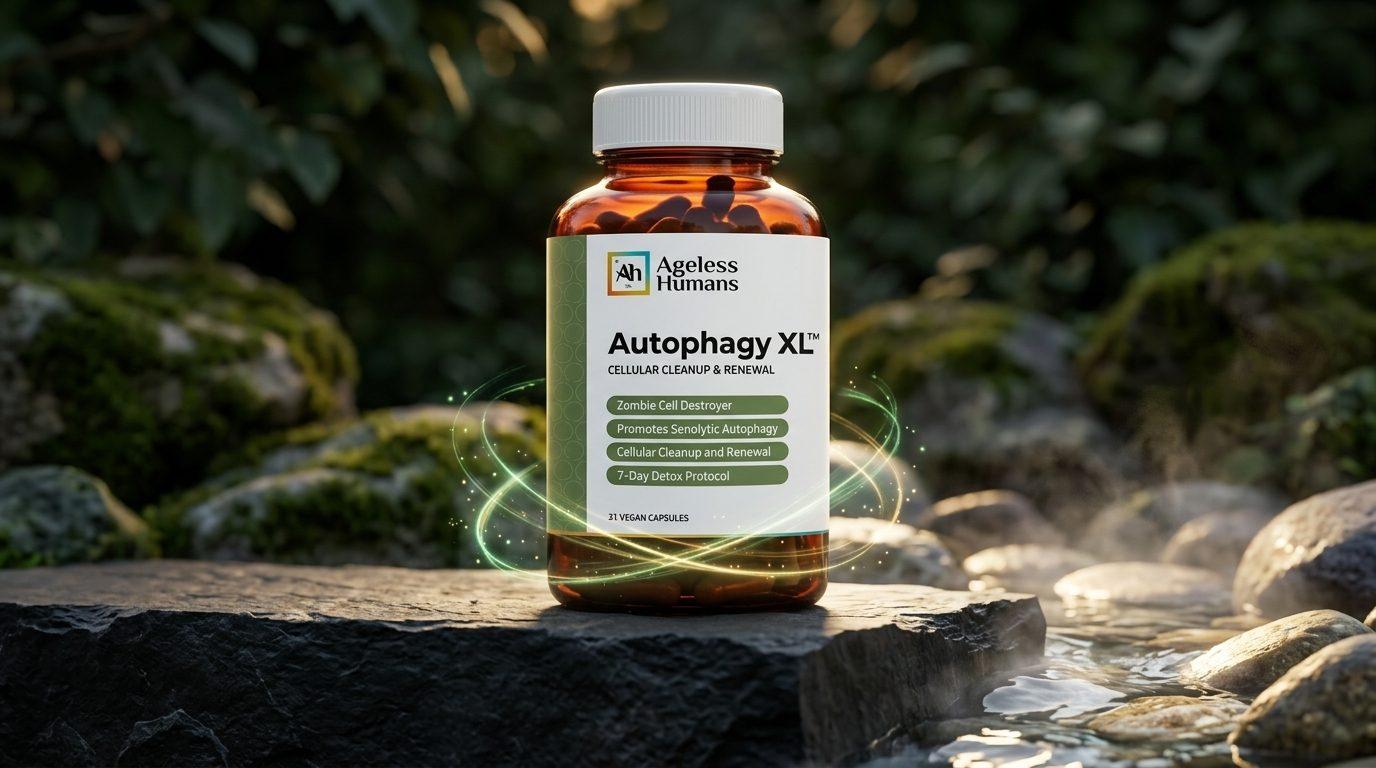
- Step 5: Add targeted support. If you want a supplement, choose one with transparent, studied ingredients and lot testing, such as Autophagy XL. Follow the label.
Give any routine at least a couple of months before judging how you feel. Stack habits gradually rather than changing everything at once, so you can tell what actually fits your life.
Frequently asked questions
What is the best supplement for autophagy?+
No single supplement is proven best for autophagy in humans. Spermidine is among the most researched compounds, and urolithin A, resveratrol, and plant polyphenols like EGCG are also studied for their effects on autophagy-related pathways. Choose a formula with transparent ingredient amounts and third-party testing, and use it alongside fasting windows, exercise, and sleep.
How long do you have to fast to trigger autophagy?+
Research has not established an exact fasting duration that switches on autophagy in humans. Specific hour counts you see online mostly come from animal studies or indirect markers. Autophagy responds to nutrient scarcity on a spectrum, and timing likely varies by person and tissue. Consult your healthcare provider before starting any fasting routine.
Does spermidine induce autophagy?+
Spermidine is one of the most studied compounds for autophagy support. Research in cells and animals links it to autophagy activation, and observational studies in humans have looked at dietary spermidine intake. Human clinical evidence is still developing, so spermidine is best viewed as a promising, research-backed way to support cellular renewal rather than a guaranteed trigger.
Can you take autophagy supplements while fasting?+
Many people take autophagy supplements during their eating window, while others take them during a fast. Some capsules contain minimal calories, but whether that matters depends on your fasting goals. Follow the product's label directions, and ask your healthcare provider if you take medications or have health conditions.
How do I know if autophagy is happening?+
You can't directly feel or measure autophagy at home. It happens inside cells, and even researchers rely on lab techniques and indirect markers to assess it. Be skeptical of any product or test claiming to show your autophagy level. Focus on consistent habits known to support it: defined eating windows, regular exercise, and good sleep.
Does exercise support autophagy?+
Yes, research suggests exercise engages autophagy-related pathways. Physical activity creates energy demand that activates AMPK, a cellular energy sensor connected to cleanup and recycling processes. Both endurance and resistance training have been studied in this context, which makes regular movement one of the simplest ways to support cellular renewal.