
The best-researched nootropic peptides for focus and calm are Semax (focus and mental stamina) and Selank (calm, steady attention). Both have decades of clinical use in Russia but limited Western trials. Cerebrolysin has the largest clinical literature, but it was studied in medical settings, not in healthy people. Pinealon rests on a small body of mostly single-group research, and Dihexa's memory reputation comes almost entirely from animal studies.
The Short Answer: Which Peptide Matches Which Goal
Pick by goal first, then check the evidence. Most "best nootropic peptide" lists rank by hype. A better way is to match a peptide to what you want, then ask how much real human research supports it.
- Focus and mental stamina: Semax. It is the most studied option for alertness and attention, mostly in Russian clinical literature.
- Calm focus and stress resilience: Selank. Its research points to a settled but clear-headed state, not sedation.
- Memory, with clinical context: Cerebrolysin. It has the most published trials, but those trials involved medical populations and injections given under supervision.
- Memory, healthy aging angle: Pinealon. It is an interesting short peptide with thin, mostly single-group evidence.
- Memory, speculative: Dihexa. Its animal data is striking. It has no meaningful published human research.
If you are choosing between the two most common options, our Selank vs Semax comparison goes deeper on how they differ in daily use.
How We Graded the Evidence
We sorted each peptide by the kind of research behind it, not by how many people talk about it online. In this article, "evidence" means published research. Forum reports and vendor claims do not count.
- Tier 1, clinical but context-limited: There are multiple human trials, but in specific medical populations. You cannot apply the results directly to healthy people who want an edge.
- Tier 2, regional clinical use: The peptide is approved and used in one country or region. Its published human studies are small, often not in English, and rarely replicated elsewhere.
- Tier 3, early human or single-group: There are a few small studies, often from one research team, plus cell and animal work.
- Tier 4, preclinical only: Only animal or cell studies exist, with no meaningful published human data.
On this scale, Cerebrolysin sits in Tier 1. Semax and Selank are Tier 2. Pinealon is Tier 3, and Dihexa is Tier 4. None of these peptides has strong, independently replicated Western trial data showing cognitive enhancement in healthy adults. Anyone who tells you otherwise is overselling.
Semax: The Focus Pick (Tier 2)
Semax is the strongest candidate if your goal is sharper focus and mental endurance. It is a synthetic peptide built from a fragment of ACTH, a natural hormone, with a short chain added to make it more stable. It was developed in Russia and is typically given as a nasal spray.
Research interest centers on how Semax may affect BDNF (brain-derived neurotrophic factor). BDNF is a protein involved in how nerve cells grow and adapt. Animal and small human studies suggest Semax may influence BDNF signaling and the brain's dopamine and serotonin systems. That would fit with the alertness and attention effects users describe.
What the research doesn't show: There are no large, independent, placebo-controlled trials of Semax in healthy Western populations. Much of the clinical literature comes from Russian institutions and was studied in recovery and medical settings. For a full breakdown of mechanisms and the limits of the research, see our guide to Semax benefits.
Selank: The Calm-Focus Pick (Tier 2)
Selank fits best if your focus problem is really a stress problem. Some people can't concentrate because their mind is racing, not because they lack drive. Selank is a synthetic version of tuftsin, a small peptide the immune system makes, with added amino acids for stability. Like Semax, it was developed in Russia and is usually given nasally.
Research suggests Selank may affect GABA signaling, the brain's main "calming" system, and the balance of certain mood-related neurotransmitters. In Russian clinical studies, it has been studied in people with stress- and anxiety-related conditions. Researchers reported calming effects without the drowsiness linked to classic sedatives. Users who prefer it tend to describe "quiet focus" rather than stimulation.
What the research doesn't show: The human studies are small, mostly regional and rarely replicated. There is little data on long-term use in healthy people. Selank should be treated as a promising research compound, not a proven tool.
Cerebrolysin and Pinealon: The Memory-Adjacent Options
Cerebrolysin has more clinical research than any other peptide on this list, but that research does not support using it as a nootropic for healthy people. Cerebrolysin is not a single peptide. It is a mix of peptides taken from pig brain tissue. In some countries it is a prescription injectable, and it has been studied mainly in clinical settings involving brain injury recovery and age-related cognitive decline. Those trials involved infusions given under medical supervision, and the results have been mixed.
In practice, Cerebrolysin is a medical product, not a lifestyle nootropic. Its evidence comes from a context that has little in common with someone hoping to remember names better at work.
Pinealon is a different kind of compound. It is a very short peptide of three amino acids (glutamic acid, aspartic acid and arginine). It comes out of Russian research on so-called "bioregulator" peptides. Researchers suggest it may support how brain cells respond to oxidative stress and how they regulate gene activity. Most of the published work is cell and animal research, plus small human studies from one research group.
Bottom line: Pinealon belongs in Tier 3. It is interesting, worth watching, and not well established.
Dihexa: Big Claims, Animal-Only Data (Tier 4)
Dihexa has the boldest memory claims and the weakest human evidence on this list. It was developed from angiotensin IV research at a US university. In animal studies, it appeared to strongly promote synapse formation, meaning new connections between nerve cells, through the HGF/c-Met growth-factor pathway. Those results are where the "millions of times more potent than BDNF" claims you see online come from.
That potency comparison comes from lab measurements. It does not describe effects in humans. No meaningful peer-reviewed human trials of Dihexa have been published. Some researchers have also raised a theoretical concern: the growth pathway Dihexa acts on is involved in cell growth throughout the body, and its long-term safety is unknown.
Honest verdict: Dihexa is a research compound. If someone is selling it as a proven memory booster, that alone tells you something about the seller.
The Reality Check: Legal Status, Sourcing and Safety
None of these five peptides is a dietary supplement in the United States, and most are sold as "research chemicals not for human consumption." That label has real consequences:
- No manufacturing oversight for consumer use. Purity, dose accuracy and sterility depend entirely on the seller.
- Contamination and mislabeling risk. Independent testing of gray-market peptides has repeatedly turned up products whose contents didn't match their labels.
- Injectable products carry added risk. Anything injected must be sterile, and most gray-market peptides are not made to pharmaceutical standards.
- Shifting regulation. FDA policy on peptides and compounding keeps changing. A product's legal status today may not hold next year.
If you are seriously considering a research peptide, talk to a qualified healthcare provider first. This matters even more if you take prescription medication, are pregnant or nursing, or have a medical condition. We do not provide peptide dosing protocols, and you should be wary of anyone online who does.
Supporting Focus With Verifiable, Supplement-Grade Options
If you want focus support you can verify, start with the basics before trying research compounds. The foundations are sleep, steady blood sugar, daylight exposure and exercise. After that, look at nutrients that support how brain cells make energy. Your brain uses a large share of your body's energy, and mitochondria, the parts of cells that produce energy, are where that work happens.
Two compounds are widely studied for supporting cellular energy:
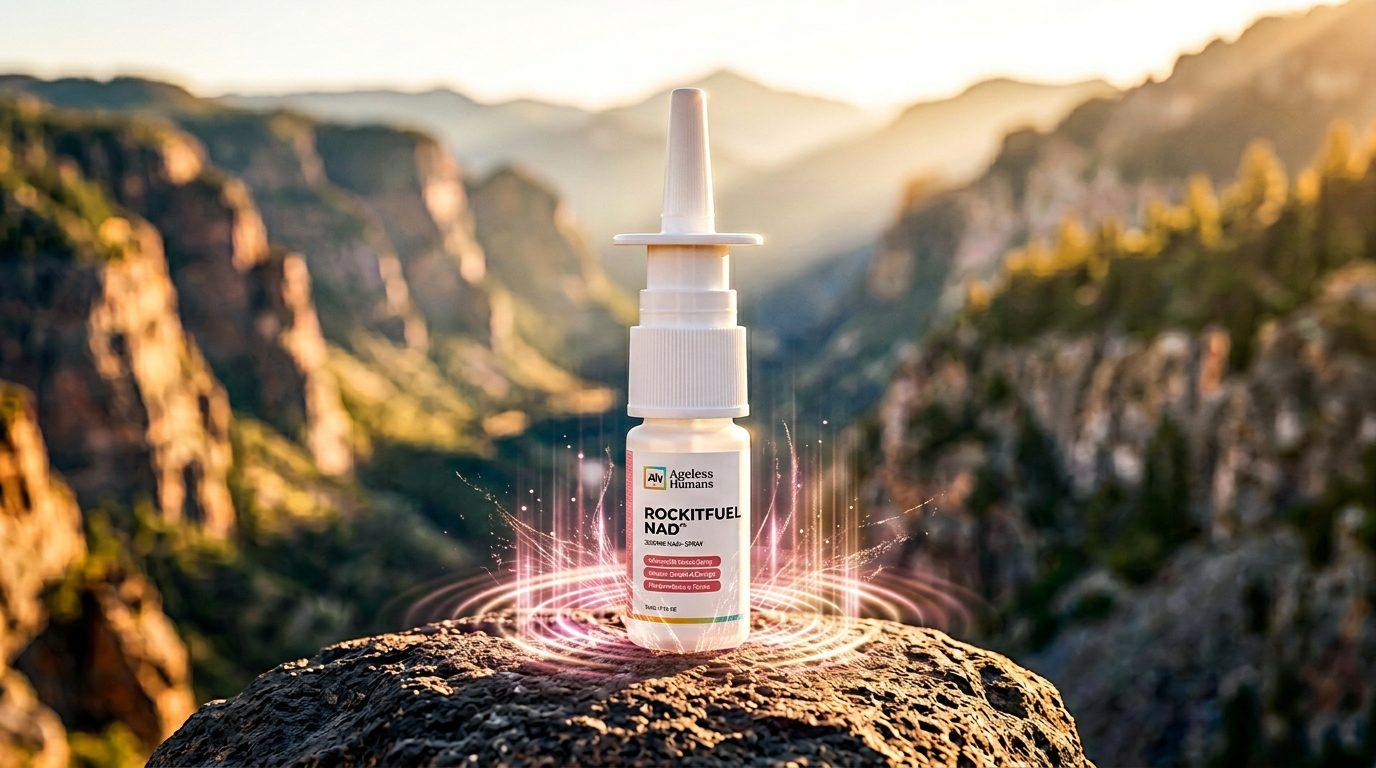
- NAD+ is a coenzyme involved in cellular energy metabolism, and natural levels tend to decline with age. Our RockitFuel with Focus NAD+ Nasal Spray uses the same nasal route people like about Semax and Selank, paired with a supplement-grade formula.
- Methylene blue has been studied for its role in mitochondrial electron transport, the process cells use to produce energy. Our Methylene Blue Capsules are an option for people building a daily routine for mental energy.
Every Ageless Humans product is made in our FDA-registered facility in Carlsbad, California. Every lot is third-party lab tested with a published COA, and every product comes with a 60-day money-back guarantee. For the full framework, including sleep, nutrition and habits, read our focus and clarity guide.
Frequently asked questions
What is the best nootropic peptide for focus?+
Semax has the most research behind it for focus and mental stamina among nootropic peptides. Most of that research comes from Russian clinical literature rather than large Western trials. Semax is a synthetic peptide derived from a fragment of the hormone ACTH, and it is studied for its possible effects on BDNF and on dopamine and serotonin signaling. It is not a dietary supplement in the US.
Is Selank or Semax better?+
It depends on your goal. Semax is generally associated with alertness and drive. Selank is associated with calm, steady focus and stress resilience. Both were developed in Russia and are usually given nasally, and both have small, mostly regional human studies. Neither has strong independent Western trial data in healthy adults.
Does Dihexa work for memory in humans?+
No published, peer-reviewed human trials show that Dihexa improves memory. Its reputation comes from animal and lab studies suggesting it strongly promotes synapse formation through the HGF/c-Met pathway. Researchers have raised theoretical long-term safety questions because that pathway is involved in cell growth throughout the body.
Is Cerebrolysin a nootropic?+
Cerebrolysin is better described as a medical product than a nootropic. It is a mix of peptides taken from pig brain tissue, and in some countries it is a prescription injectable studied mainly in clinical populations. Its research does not show cognitive enhancement in healthy people, and it is typically given by infusion under medical supervision.
Are nootropic peptides legal in the US?+
Semax, Selank, Dihexa, Cerebrolysin and Pinealon are not approved as dietary supplements or drugs in the United States. They are mostly sold as research chemicals labeled not for human consumption. That means there is no consumer-grade oversight of purity or dosing, and FDA policy on peptides continues to change.
What can I take for focus instead of research peptides?+
Start with sleep, exercise, nutrition and daylight exposure. Then consider supplement-grade compounds studied for supporting cellular energy, such as NAD+ and methylene blue, which are researched for their roles in mitochondrial energy production. Choose products made in FDA-registered facilities with third-party lab testing and a certificate of analysis (COA) for each lot.