
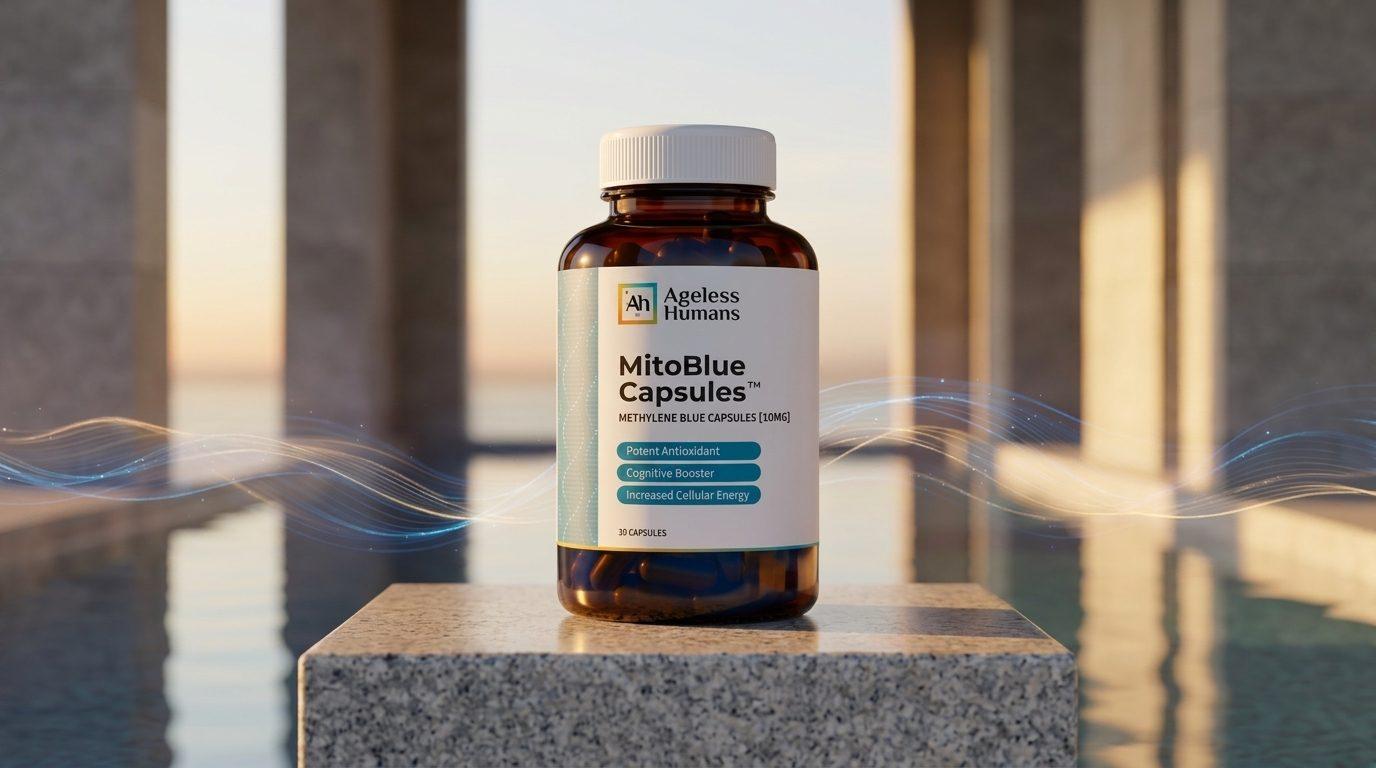
Pharmaceutical-grade methylene blue is made and tested to meet a recognized standard, such as the USP monograph, which sets limits on purity, heavy metals, and related impurities. Industrial, lab, and aquarium grades are made for dyeing, staining, or fish tanks, not for people, and are not tested for the contaminants that matter when something is swallowed. Before you buy any methylene blue, ask for a lot-specific, third-party Certificate of Analysis (COA) that shows purity, identity, and heavy-metal results.
The Short Answer: Only Human-Use Grade Belongs in Your Body
If you plan to take methylene blue, use a product made for human consumption, tested against a recognized pharmacopeial standard, and backed by a third-party COA. Everything else, from aquarium treatments to chemical-supply powders, was made for a different job.
Methylene blue (MB) is one compound with many uses. Textile mills use it as a dye. Labs use it as a stain. Fish keepers use it in tanks. It has a long history in medicine, and it is now being studied for how it supports mitochondrial energy production and cognitive function. You can read more about that research in our guide to methylene blue benefits.
The molecule is the same across all those uses. The purity and the contaminant testing are not. Most of the safety gap between grades lives in that difference.
The Grades of Methylene Blue, Explained
Methylene blue is sold in roughly five tiers, and only one is made with human use in mind. Here is how they compare:
- USP / pharmacopeial grade. Made to meet the methylene blue monograph in the United States Pharmacopeia (or its European or British equivalents). The monograph defines identity tests, assay (purity) range, and limits for heavy metals and related substances. This is the standard to look for.
- "Pharmaceutical grade" (unqualified). A marketing phrase that has no legal definition for supplements. It means something only when it is backed by documented compliance with USP, EP, or BP specifications.
- Reagent / ACS / lab grade. Often high in dye content and made for analytical work. It is not necessarily tested against the heavy-metal and impurity limits that apply to products people ingest.
- Technical / industrial grade. Made for dyeing textiles, paper, and other industrial jobs. Purity can vary a lot, and contaminant testing for human safety is not the goal.
- Aquarium grade. Usually a diluted solution sold to treat fish tanks. These products are typically labeled "not for human consumption" and may contain other ingredients.
The takeaway is simple. "High purity" and "safe to ingest" are not the same claim. A lab reagent can be very pure methylene blue and still carry no testing for what else is in the bottle.
What Contaminants Can Hide in Non-Pharmaceutical Methylene Blue
The main concerns with industrial and aquarium MB are heavy metals, manufacturing byproducts, and additives that were never meant to be swallowed. No grade is guaranteed to be contaminated, but non-human grades are not tested to rule these out.
Heavy metals. Methylene blue synthesis has historically involved metal-containing reagents, and some industrial forms have been produced as metal salts, such as zinc chloride double salts. Arsenic, lead, cadmium, mercury, and other metals can carry into the finished product if purification and testing are not built for human use. Pharmacopeial standards set limits on these. Industrial specs often do not.
Related dye compounds. Methylene blue can contain structurally similar compounds formed during manufacturing or breakdown, such as azure B and other demethylated forms. Pharmacopeial methods test for and limit these related substances. Lower grades may simply report total dye content.
Additives and solvents. Aquarium products may include other ingredients for tank use, and industrial powders may carry residual solvents or fillers. None of these are disclosed or tested with a human user in mind.
This is also why buying a cheap "99% pure" MB powder from a chemical supplier misses the point. The question isn't only how much methylene blue is in the bottle. It's what else is in there, and whether anyone checked.
What USP Purity Actually Means
USP grade means the material meets the specifications in the official USP monograph for methylene blue, verified by defined test methods. It's a public, documented standard, not a brand's own claim.
A pharmacopeial monograph typically covers:
- Identity: confirms the material really is methylene blue.
- Assay: confirms the amount of methylene blue falls inside a defined range.
- Heavy metals / elemental impurities: limits on toxic metals.
- Related substances: limits on byproducts like azure compounds.
- Other quality tests: such as water content and residue on ignition.
Two honest caveats. First, USP compliance describes the raw material. The finished capsule or drop still depends on clean manufacturing and finished-product testing. Second, a label that simply says "USP" means little unless the brand can show documentation for the specific lot you are buying. Standards matter. Proof matters more.
How to Verify Any Methylene Blue Before You Buy
Ask for a lot-specific Certificate of Analysis from an independent, accredited lab, then check that it matches the bottle in your hand. A legitimate brand can provide this. Here is your checklist:
1. Lot number match. The COA lot number should match the lot printed on your product. A generic "sample" COA proves nothing about your bottle. 2. Third-party lab. Look for an independent testing lab's name, not just the seller's in-house results. 3. Identity test. Confirms the compound is methylene blue. 4. Purity / assay result. A number with a stated method, not just "99%+" in marketing copy. 5. Heavy metals panel. Results for at least lead, arsenic, cadmium, and mercury, shown against limits. 6. Microbial testing (for liquids). Drops and solutions should show results for microbial contamination. 7. Recent date. The testing date should be reasonably close to the manufacture date of your lot.
Also check the label. A human-use product will have a Supplement Facts panel, label directions, a lot number, an expiration date, and a manufacturer you can identify. If any of these are missing, keep looking.
Red Flags: When to Walk Away
Walk away from any methylene blue labeled "not for human consumption," sold for aquariums or lab use, or offered without a lot-specific COA. That label is the manufacturer telling you directly what the product is and isn't for.
Other warning signs:
- Only a CAS number and a purity percentage. That's how chemicals are sold, not supplements.
- "Pharmaceutical grade" with no documentation. Ask which standard and request the proof.
- COAs that are blurry, undated, unlabeled, or the same across every lot.
- No identifiable manufacturer or facility.
- Bulk powder with DIY mixing instructions. Self-measuring a potent dye at home makes consistent amounts hard to achieve.
- Pricing that seems too low for verified human-use material. Testing and clean manufacturing have real costs.
One more check: if a seller gets evasive when you ask for testing data, treat that as your answer.
Purity Is Step One. Using MB Responsibly Is Step Two.
Even the cleanest methylene blue is a biologically active compound, so the grade you buy is only part of using it safely. Purity removes avoidable risks from contaminants. It does not change how MB itself interacts with your body.
A few points every buyer should know:
- Medication interactions. Methylene blue has monoamine oxidase (MAO)-inhibiting activity. People taking serotonergic medications, such as certain antidepressants, should talk with a clinician before using it.
- Individual conditions. People with G6PD deficiency, those who are pregnant or nursing, and anyone managing a health condition should get medical guidance first.
- Expected effects. Blue-green urine is common and expected. Our methylene blue side effects guide covers what's normal and what isn't.
- Follow label directions. Don't exceed the amount on the label, and don't combine multiple MB products.
Pure product plus responsible use is the full safety picture. Skipping either half leaves a gap.
Capsules vs. Drops: Does Format Change the Purity Question?
No. The same verification rules apply to every format, though each one has its own quality checks. Capsules and drops can both be made from high-purity material. Both should be backed by a lot-specific COA.
Capsules give you a premeasured amount, no staining, and no taste. Check that the capsule shell and any fillers are listed on the label. Drops offer flexibility and absorption through the mouth, but liquids should also show microbial testing, and the concentration should be clearly stated so the label directions are easy to follow.
Choose the format that fits your routine. Then hold it to the same standard: human-use grade, clean manufacturing, verified by an independent lab.
Frequently asked questions
Is it safe to take aquarium methylene blue?+
No. Aquarium methylene blue is made to treat fish tanks, is usually labeled not for human consumption, and is not tested for heavy metals or impurities at levels relevant to people. It may also contain other ingredients meant for tank use. Choose a human-use product backed by a lot-specific third-party COA instead.
What is the difference between USP and pharmaceutical grade methylene blue?+
USP grade means the material meets the official United States Pharmacopeia monograph for methylene blue, which defines identity, purity, heavy-metal limits, and limits on related substances. "Pharmaceutical grade" is a marketing term with no legal definition for supplements. It is meaningful only when the brand can show documented compliance with USP or an equivalent pharmacopeia standard.
Is lab-grade or reagent-grade methylene blue safe to ingest?+
Lab and reagent grades can be high in methylene blue content, but they are made for analytical work, not for people to swallow. They are not necessarily tested against the heavy-metal and impurity limits that apply to human-use products. High purity is not the same as verified safety for ingestion.
How do I know if my methylene blue is pharmaceutical grade?+
Ask the seller for a Certificate of Analysis from an independent lab with a lot number that matches your bottle. The COA should show an identity test, a purity result with a stated method, and a heavy-metals panel covering at least lead, arsenic, cadmium, and mercury. A Supplement Facts label, an expiration date, and an identifiable manufacturer are also good signs.
What contaminants are found in industrial methylene blue?+
Industrial methylene blue may contain heavy metals such as arsenic, lead, cadmium, or mercury carried over from manufacturing, plus related dye byproducts like azure B. It can also contain residual solvents or fillers. Industrial grades are not tested with human safety in mind, so these contaminants may not be measured or limited.
Does high-purity methylene blue have side effects?+
Yes, even pure methylene blue is biologically active. Blue-green urine is common, and MB has MAO-inhibiting activity that can interact with serotonergic medications. Anyone taking prescription medications, who is pregnant or nursing, or who has G6PD deficiency should talk with a clinician first and follow label directions.