
NMN and CoQ10 are not competitors. They do different jobs in the same energy pathway inside your mitochondria. NMN is a precursor your cells convert into NAD+, the molecule that picks up electrons from food. CoQ10 is the carrier that moves those electrons down the chain that makes ATP. Research suggests levels of both decline with age, so choosing between them depends on which part of the process you want to support, and many people use both.
The Short Answer: Two Jobs on the Same Assembly Line
NMN supports the supply of NAD+. CoQ10 supports the handoff of electrons inside the mitochondria. Both are needed for cells to turn food into usable energy (ATP), but they work at different steps.
Think of a relay race. NAD+ grabs electrons from the breakdown of carbohydrates and fats and becomes NADH. NADH passes those electrons to the first station of the electron transport chain. CoQ10 then carries electrons from that station to the next one. If either runner is slow, the whole relay slows down.
So the real question is not which one is better. It is which part of your cellular energy system you want to support. For the full picture of how ATP is made, see our complete guide to cellular energy.
What NMN Does: Feeding the NAD+ Supply
NMN (nicotinamide mononucleotide) is a direct building block of NAD+. Inside cells, NMN is converted to NAD+ in one enzymatic step, which is why it is studied as an efficient way to support NAD+ levels.
NAD+ has two broad roles:
- Energy metabolism. NAD+ accepts electrons during glycolysis and the Krebs cycle, becoming NADH. NADH delivers those electrons to Complex I of the electron transport chain.
- Cellular maintenance signaling. NAD+ is also used up by enzymes such as sirtuins and PARPs, which are involved in DNA upkeep, stress responses, and metabolic regulation. These enzymes consume NAD+, so cells need a steady supply.
That second role is what makes NMN different from CoQ10. NMN's reach extends beyond the electron transport chain into how cells regulate repair and metabolism. Learn more in our deep dive on NMN benefits.
What CoQ10 Does: The Electron Shuttle in the Membrane
CoQ10 (coenzyme Q10) is a fat-soluble molecule that carries electrons within the inner mitochondrial membrane. It collects electrons from Complex I and Complex II and delivers them to Complex III. Without it, electrons cannot move efficiently down the chain toward ATP production.
CoQ10 exists in two forms that cycle back and forth:
- Ubiquinone, the oxidized form, which picks up electrons.
- Ubiquinol, the reduced form, which carries electrons and also acts as a fat-soluble antioxidant in cell membranes.
That antioxidant role is CoQ10's second job. It helps protect membrane lipids from oxidative stress, which matters most in energy-demanding tissues. CoQ10 is especially concentrated in the heart, muscles, and liver, which is why it is often studied for supporting heart health and physical energy.
How NMN and CoQ10 Work Together
NMN and CoQ10 are complementary because they support consecutive steps in the same pathway. NAD+ (from NMN) loads electrons into the chain as NADH. CoQ10 moves those electrons forward. Supporting one does not replace the other.
Here is the simplified sequence:
1. Food is broken down, and NAD+ collects electrons, becoming NADH. 2. NADH hands electrons to Complex I. 3. CoQ10 carries electrons from Complexes I and II to Complex III. 4. Electrons continue to Complex IV and oxygen, driving the pump that powers ATP synthase.
This is why many people interested in mitochondrial function consider both. NMN addresses the input side and the broader NAD+ economy. CoQ10 addresses the transport step and membrane protection. There is no established research showing that taking them together produces a specific combined effect, so think of the pairing as logical coverage of two steps rather than a proven synergy.
Why Both Decline With Age, and What Research Does and Doesn't Show
Research suggests that NAD+ levels and the body's own CoQ10 production both tend to decline with age, though the amount varies by person and tissue.
For NAD+, studies point to two pressures: cells may make less of it, and NAD+-consuming enzymes may use more of it as people get older. For CoQ10, the body makes its own supply through the same mevalonate pathway used to make cholesterol, and production appears to slow with age. Diet provides only modest amounts of either.
Here is the honest part:
- What research supports: Both molecules are essential to mitochondrial energy production. Declines with age have been observed in studies. Supplementation has been shown in human research to raise blood levels of NAD+-related compounds (for NMN) and CoQ10.
- What is still being studied: How much raising these levels translates into noticeable everyday benefits. Human NMN research is newer and is mostly in small, short-term trials. CoQ10 has a longer research history, but results vary by population and outcome.
If an article promises dramatic results from either one, be skeptical. These are tools for supporting normal cellular function, not quick fixes.
NMN vs CoQ10 Side by Side
The key difference is that NMN supports NAD+ supply while CoQ10 supports electron transport and membrane antioxidant activity.
- What it is: NMN is a water-soluble NAD+ precursor. CoQ10 is a fat-soluble coenzyme.
- Where it works: NMN converts to NAD+ in the cytoplasm, mitochondria, and nucleus. CoQ10 works mainly in the inner mitochondrial membrane and other cell membranes.
- Primary role: NMN supports energy metabolism and NAD+-dependent enzymes like sirtuins. CoQ10 supports electron transport and antioxidant protection of membranes.
- Made by the body? Both. NAD+ is built from several precursors, and CoQ10 is made through the mevalonate pathway.
- Absorption notes: NMN dissolves in water. CoQ10 is fat-soluble, which is why many labels suggest taking it with a meal.
- Research maturity: NMN human research is early and growing. CoQ10 has a longer history of human study.
Neither is better overall. They answer different questions about the same system.
Which Should You Choose? A Simple Decision Guide
Choose based on the job you want to support: NMN for NAD+ and cellular maintenance, CoQ10 for electron transport and membrane antioxidant support, or both for broader coverage.
Lean toward NMN if:
- Your main interest is healthy aging at the cellular level, including NAD+-dependent processes like sirtuin activity and DNA upkeep.
- You want to support overall metabolic and energy function rather than one tissue.
- You are interested in the research on NAD+ decline with age.
Lean toward CoQ10 if:
- Your priority is supporting heart and muscle energy, where CoQ10 is most concentrated.
- You want fat-soluble antioxidant support in cell membranes.
- You take a prescription medication that acts on the mevalonate pathway. Some cholesterol-related medications work this way, so talk with your clinician about whether CoQ10 makes sense for you.
Consider both if:
- You want to support both the input (NAD+) and transport (CoQ10) steps of mitochondrial energy production.
- You are building a focused routine around cellular energy and healthy aging.
Whatever you choose, follow label directions and check with your healthcare provider, especially if you are pregnant, nursing, or taking medications.
What to Look for in Quality
Quality matters more than the ingredient name on the front of the bottle. NMN and CoQ10 can both vary in purity, form, and stability.
- Third-party testing: Look for a Certificate of Analysis (COA) for each lot confirming identity and purity.
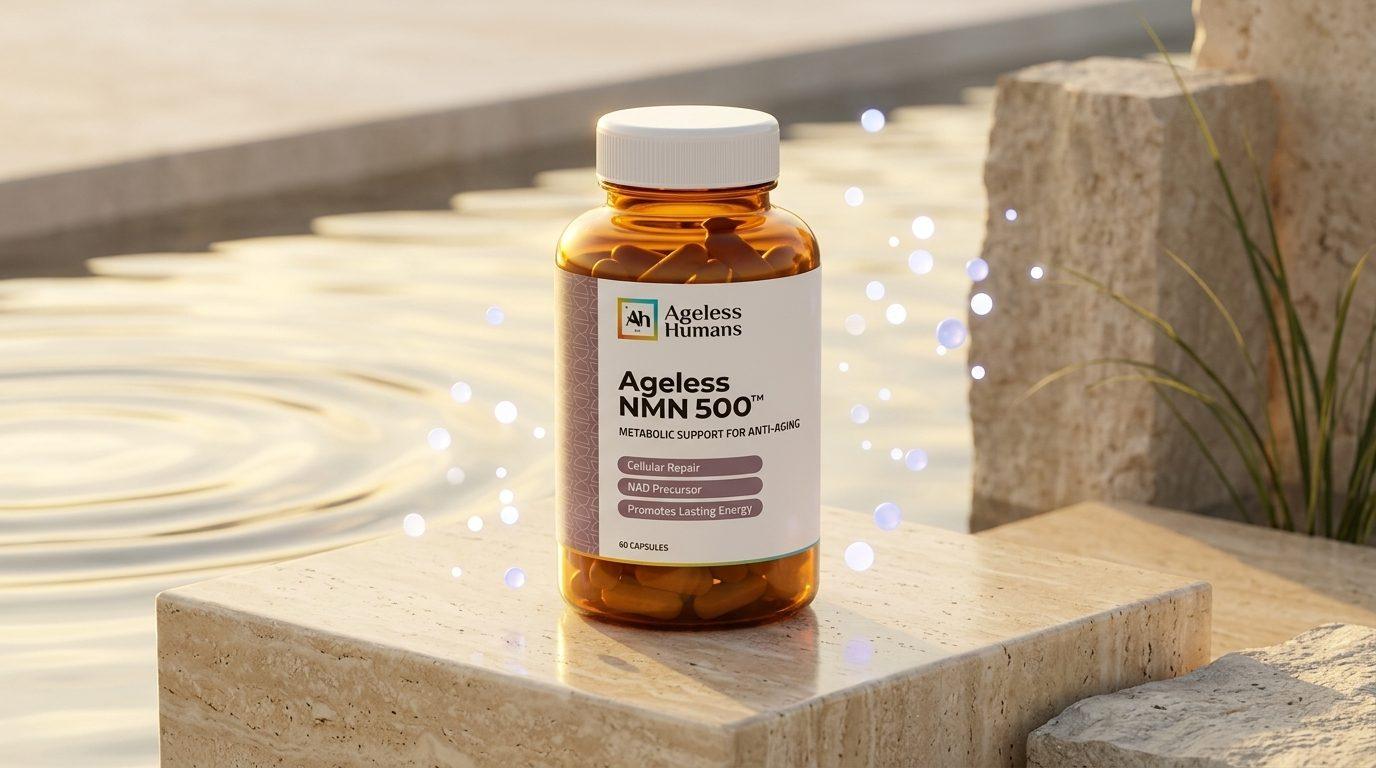
- Form: For NMN, choose a format that fits your routine. Our NMN 500 capsules offer simple daily convenience. For CoQ10, check whether the product uses ubiquinone or ubiquinol and how it is formulated for absorption.
- Manufacturing transparency: Know where and how it is made.
At Ageless Humans, every product is made in our FDA-registered facility in Carlsbad, California, and every lot is third-party lab tested with a COA. Each purchase is backed by a 60-day money-back guarantee.
Frequently asked questions
Can I take NMN and CoQ10 together?+
Many people take NMN and CoQ10 together because they support different steps of mitochondrial energy production. NMN supports NAD+ supply, while CoQ10 supports electron transport and membrane antioxidant activity. There is no established research showing a specific combined effect, so the pairing is about covering two steps. Follow each label's directions and check with your healthcare provider if you take medications.
Is NMN or CoQ10 better for energy?+
Neither is universally better because they support different parts of the energy process. NMN helps maintain NAD+, which collects electrons from food and supports broader cellular maintenance. CoQ10 carries those electrons through the electron transport chain and is concentrated in high-energy tissues like the heart and muscles. Your choice depends on which part of cellular energy you want to support.
Do NAD+ and CoQ10 levels decline with age?+
Research suggests both tend to decline with age. NAD+ levels appear to drop as production slows and NAD+-consuming enzymes become more active. The body's own CoQ10 production also appears to decrease over time. The degree of decline varies by person and tissue.
What is the difference between an NAD+ precursor and an electron carrier?+
An NAD+ precursor, like NMN, is a raw material cells use to make NAD+. NAD+ picks up electrons from nutrients and delivers them to the mitochondria as NADH. An electron carrier, like CoQ10, shuttles those electrons between complexes in the mitochondrial membrane so ATP can be produced. Both are needed for the same energy pathway.
Should I take CoQ10 with food?+
CoQ10 is fat-soluble, which is why many product labels suggest taking it with a meal that contains some fat. NMN is water-soluble and does not have the same requirement. Always follow the directions on your specific product's label.
Is ubiquinol better than ubiquinone?+
Ubiquinone and ubiquinol are two forms of CoQ10, and the body converts between them as part of normal function. Ubiquinol is the reduced, antioxidant-active form, and some people prefer it, while ubiquinone has a longer research history. Both can support CoQ10 levels, and the formulation often matters as much as the form.